




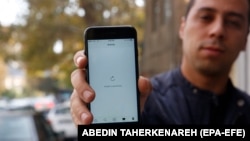
Iranians are living through one of the longest Internet shutdowns in history, with the authorities imposing a digital blackout since launching a bloody crackdown on antiestablishment protesters on January 8.
While the authorities have quelled the weekslong demonstrations against Iran's clerical rulers with the use of unprecedented brute force, it remains unclear when they will restore access to the Internet.
Even when services resume, Iranians could be permanently cut off from the global Internet as the authorities force its citizens to use a domestically designed "intranet," which works independently from the world's Internet, digital experts warn.

NetBlocks, an Internet monitoring organization, said on January 20 that a review of traffic from some restricted services and platforms suggests the government may be experimentally moving toward "whitelist-based connectivity."
Whitelisting is a type of Internet censorship where authorities block access to much of the global Internet while selectively allowing a limited number of approved websites, apps, and services.
Filterbaan, an Iranian digital rights organization affiliated with the Texas-based Miaan Group, says the Islamic republic's Internet policy has crossed into "absolute blockage," with disconnection now the default and access granted only selectively.
The analysis describes a shift from "widespread filtering" to what Filterbaan calls "barracks-style governance over communications," where officials treat connectivity as an exception rather than the norm.
A government official vowed on January 19 that Internet access would return to "normal" by the end of the week. But the news website IranWire reported on January 15 that government spokeswoman Fatemeh Mohajerani told journalists that international web access would not be available until at least the Persian New Year in March.
The ongoing Internet shutdown has caused widespread damage to Iran's digital economy.
Reza Olfatsefat, secretary of the country's Internet Business Association, said the shutdown has already caused more than 400 trillion rials ($288 million) in financial losses to small and large businesses.
History Of Shutdowns
Iran has been regulating access to popular social media platforms since 2009, when mass protests erupted after the disputed reelection of populist President Mahmud Ahmadinejad.
During protests in November 2019 over a sudden increase in fuel prices, Iranian authorities for the first time imposed a nationwide Internet blackout as they cracked down violently on demonstrators.
Internet disruptions were also imposed during the monthslong Women, Life, Freedom protests in 2022.
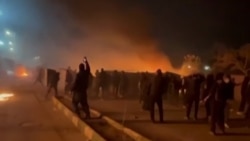

Hard-liners in Iran support the ongoing digital blackout, subscribing to the official line that shutting off the Internet is crucial to protecting national security during times of unrest.
Even if the authorities reinstate Internet access, however limited, there appears to be no plan to restore access to popular social media apps -- including Instagram, WhatsApp, and Telegram -- that Iranians could previously access.
"Given the country's current conditions, there is no place for restoring access to foreign messenger apps," said Ahmad Nirumand, head of Iran's Digital Transformation Commission, a state-affiliated entity, signaling a post-blackout Internet locked to state-approved channels only.
Iranian authorities have for years tried to encourage people to use domestic social media apps by blocking access to popular foreign alternatives with little luck. Blocked foreign social media apps remain popular, with many Iranians using VPNs to bypass government controls.