




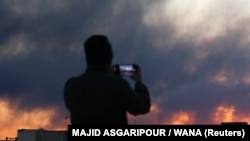
Iranians are gripped by fear -- and hope -- as the United States and Israel wage a massive bombardment designed to cripple the country's clerical rulers.
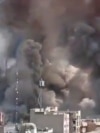
The air strikes since February 28 have decimated much of Iran's leadership, including killing Supreme Leader Ayatollah Ali Khamenei. But they have also resulted in the deaths of hundreds of civilians, according to local humanitarian groups, and destroyed schools and hospitals.
"We were happy with the news of Khamenei's death," a 56-year-old man in Tehran, speaking on condition of anonymity for security reasons, told Radio Farda. "But now these heavy bombings are worrying me. Iran should not be destroyed and disintegrated. I hope the future is bright."
The death of Khamenei, an autocrat who ruled the country with an iron fist for nearly 40 years, was celebrated by some on the streets of Iran. But for many, attention has quickly turned to what comes next.
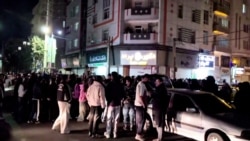

The US and Israeli air campaign poses an existential threat to Iran's theocracy. If the Islamic republic collapses, some fear the multiethnic country of some 90 million people could slide into civil war and anarchy like its neighbors Iraq and Afghanistan.
"The bombings are terrifying, and we heard them [US and Israeli air strikes] hitting residential areas," a 49-year-old mother in Tehran told RFE/RL's Radio Farda.
"We can't sleep at night, and one of my dogs hides in the bathroom out of fear," she added.
The United States and Israel have urged Iranians to rise up and "take over your government."
But there has been no sign of an uprising on the eerily quiet streets of major Iranian cities that are patrolled by the Islamic Revolutionary Guards Corps (IRGC) and Basij paramilitary force.
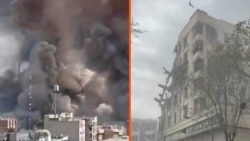
In January, the authorities waged a brutal crackdown on mass protests, killing thousands of people, in the biggest threat to their rule in decades.
In Tehran, a city of 10 million people, many are staying indoors as the United States and Israel continue to pound security and government targets.
The number of people killed in the country since the US-Iran attacks began on February 28 reached 787 on March 3, according to the Iran's Red Crescent Society. Meanwhile, the US-based Human Rights Activists in Iran reported that 742 civilians have died, including 176 children.
"Many were waiting to hear the news of the leader's [Khamenei's] death, but the sounds of missiles and explosions, and children and people losing their lives, have left little room for joy," said a 27-year-old woman in Tehran.

