



We are now closing the live blog for the day. We'll be back at 7:30 a.m. Central European time to cover the latest events across the Middle East.
Iran Threatens To Retaliate Against Any New US Attacks On Oil Tankers
Iran has threatened to retaliate against any new US attacks on its oil tankers, warning American oil and gas interests in the Persian Gulf could be targeted.
US forces hit three Iranian oil tankers on September 5, including one near Kharg Island, Iran's main oil export hub, according to US Central Command. The strikes came after Iran attacked US warships operating in the region.
"Strike our assets and you get struck," Iranian Parliament Speaker Mohammad Baqer Qalibaf said in a post on X.
His warning appeared to be a response to US Defense Secretary Pete Hegseth, who had labeled Iran's oil tanker fleet as "defenseless."
"It's simple: The oil and gas production chain here is sprawling, accessible, and exposed. American oil and gas companies across these waters and facilities share that exposure," added Qalibaf, who is also Iran's top negotiator with the United States.
Estimate: Iran War Costing US Consumers $100 Billion In Extra Fuel Costs
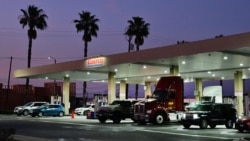
According to an estimate based on Brown University’s Iran War Energy Cost Tracker, US consumers have incurred roughly $100 billion in additional gasoline and diesel costs since the war with Iran began, with the figure rising by about $1 million every 2 minutes.
The estimate was reported on September 7 based on the tracker developed by Brown’s Climate Solutions Lab at the Watson School of International and Public Affairs. The tracker measures the additional amount Americans have paid for gasoline and diesel compared with an estimated "no-war" price trajectory since the start of the conflict on February 28.
The additional cost amounts to roughly $763 per US household, based on an estimated 131 million households nationwide.
Fuel prices have surged amid disruption to energy supplies linked to the war and the conflict over the Strait of Hormuz. About 20 percent of global oil flows through the strategic waterway, which Iran has said will remain closed until its conditions for reopening are met.
The United States maintains that the Strait of Hormuz is an international waterway and rejects any claim that Iran controls the right of passage. Current Reuters reporting describes the strait as largely closed to tanker traffic.
Last month, President Donald Trump urged Americans to accept higher gasoline prices, saying at a rally in New York that "for you to pay a tiny little bit more for your gasoline" was worthwhile because it would help ensure that "a very evil country" did not obtain a nuclear weapon.
The national average gasoline price was $4.15 per gallon on September 7, a record for the Labor Day weekend. California;s average was about $5.86 per gallon, while Hawaii’s was $5.39, according to figures cited from Browns tracker.
UAE: Restoring Trust With Iran Could Take Decades
A senior adviser to the president of the United Arab Emirates (UAE) has warned that restoring trust between his nation and Iran could take years or even decades.
Anwar Gargash was speaking at the third annual Hili International Forum in Abu Dhabi, bringing together regional policymakers, government officials, academics, and business leaders, on September 7.
"Our dialogue with Iran should be ambitious...and address the larger strategic questions confronting the Gulf: security, non-interference, freedom of navigation, economic cooperation, and ultimately the rebuilding of confidence," Gargash said.
"Trust is the mountain we will have to climb, and there is something worth climbing toward," he added.
The UAE is among the Gulf states that have been targeted by frequent Iranian drone and missile attacks since the beginning of the conflict on February 28.
Gargash also told the conference about efforts by the UAE to build alternative export routes amid ongoing disruption to the Strait of Hormuz.
"Our energy exports will not be held hostage, nor will our trade and economic activity," he said.
Grossi Urges Iran To Restore IAEA Nuclear Oversight
IAEA Director-General Rafael Grossi has reiterated that the agency is unable to verify the status of Iran's declared nuclear material and facilities due to a lack of access and information from Tehran.
Iran stopped granting the IAEA access to sites hit by US and Israeli strikes on its nuclear facilities in June last year.
Speaking at the opening of the United Nations atomic watchdog's Board of Governors meeting in Vienna on September 7, Grossi described the situation as a "matter of serious proliferation concern" that needed to be addressed with "the utmost urgency."

Grossi called on Iran to engage constructively with the IAEA and urged a return to diplomacy and negotiations over its nuclear program.
"I call on Iran to engage with the Agency constructively in order to make possible the full and effective implementation of Agency safeguards in Iran and to fulfill its responsibilities," Grossi stated.
UN Rights Chief Urges US-Iran Talks, Warns Of Iran Executions
UN High Commissioner for Human Rights Volker Turk said on September 7 that he was alarmed by the resumption of attacks between the United States and Iran, warning the violence was affecting the wider Persian Gulf region.
"Recent reports of civilian deaths and injuries, including at a wedding in Hormozgan Province, are particularly concerning," Turk said on September 7 while addressing the Human Rights Council in Geneva.
Turk was referring to reports in Iranian and international media that a wedding party was hit by a US strike on September 1.
Moin Arjmand, director of the Balochistan Human Rights Documentation Network, a foreign-based monitoring group that documents human rights abuses in Iran, told RFE/RL's Radio Farda on September 2 that the wedding site was located close to a telecommunications tower that was destroyed in the alleged strike.
US Vice President JD Vance said on September 3 that the United States is investigating but that he was "skeptical" of reports coming out of Tehran.
Turk criticized the Iranian authorities in his comments on September 7, accusing them of using the war as a pretext to pursue even more brutal oppression.
"Since March 2026, 59 people have been executed on national security-related charges -- more than the number put to death on the same charges in the whole of 2025," he said.
Iran Warns South Korea Not To Get Involved In Hormuz
Iran has warned South Korea of "serious consequences" if it were to become part of operations ensuring safe passage of vessels through the Strait of Hormuz.
The comments follow local media reports last week that Seoul was considering sending forces to aid US efforts at ensuring navigation in the strait.
Foreign Ministry spokesman Esmaeil Baqaei said in a Korean-language social media post on September 7 that South Korea must not send military forces to the Persian Gulf or the Strait of Hormuz.
Any such act, Baqaei warned, can "only be regarded as directly supporting" the United States and would "lead to serious consequences."
Iran has consistently targeted its Gulf neighbors -- the United Arab Emirates, Qatar, Kuwait, Jordan, and Saudi Arabia -- with missiles and drones since the beginning of the conflict on February 28.
Iranian Security Personnel Reportedly Killed Near Pakistan Border
Two Iranian security personnel were killed in an armed attack near the city of Zahedan in Iran's Sistan-Baluchistan Province, which borders Pakistan, according to Iran's official news agency, IRNA.
Quoting the provincial deputy security chief, Ali Khalilabadi, IRNA reported that the men came under attack on September 6 while carrying food and equipment for the Basij militia.
No group has claimed responsibility for the attack.
Iran's Sistan-Balochistan Province has been experiencing a low-intensity insurgency with Sunni Baluch militants and other separatist groups, most notably Jaish al-Adl (formerly Jundallah), launching occasional attacks against security forces.
The insurgents have used the porous, roughly 900-kilometer Iran-Pakistan border to retreat into neighboring Pakistan. In Pakistan, ethnic Baloch militants are also waging an insurgency, seeking independence from Pakistan.
The security situation on both sides of the border, as well as the involvement of ethnic Baloch populations, has long been a source of tension between Iran and Pakistan.
In January 2024, Iranian security forces, while pursuing a group of retreating militants, fired missiles and shells inside Pakistani Balochistan. In response, Pakistani jets carried out strikes inside Iran claiming that they had targeted the hideouts of anti-Pakistan militants.
Iran Raising Gasoline Prices For Heavy Users As Sanctions, Blockade Bite
The Iranian government said it is raising fuel prices for heavier consumers -- those using more than 110 liters a month -- as US sanctions and a blockade of the country's ports continue to cripple the domestic economy.
Government spokeswoman Fatemeh Mohajerani said the price of the first and second quotas, which allow up to 110 liters, will remain unchanged.
However, the price of the third quota will be doubled to 100,000 Iranian rials per liter, or about 4.5 US cents based on free-market rates.
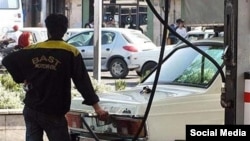
The new rates will take effect on September 8, officials said.
Other motorists will still be able to purchase 60 liters at 15,000 rials a liter and an additional 50 liters at 30,000 rials a liter, Mohajerani said.
Iranian gasoline prices are among the lowest in the world. A wider increase in prices was discussed, but the authorities held off, likely worried it could lead to new street protests.
Iran is a major producer of oil and has for years heavily subsidized prices, meaning that any changes can be politically sensitive. In 2019, widespread protests erupted after a previous price hike.
With reporting by RFE/RL's Radio Farda and Reuters
Qalibaf Threatens 'Heavier' Response To US Attacks
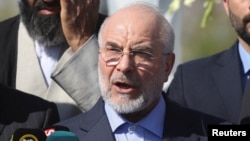
Iranian Parliament Speaker Mohammad Baqer Qalibaf has warned that Iran will respond more forcefully to any further attacks on its interests and security, saying the era of “proportionate responses” was over.
Speaking during an open parliamentary session on September 6, Qalibaf said: “Any aggression against Iran’s interests and security will receive a faster, heavier and more painful response.”
Qalibaf spoke a day after the US military said it had targeted and destroyed three Iranian oil tankers near the islands of Khark and Jask as well as in the Gulf of Oman.
The US military's Central Command (CENTCOM) said the strikes came in response to ballistic missile attacks by the Islamic Revolutionary Guards Corps (IRGC) against two US warships, which caused no American casualties.
CENTCOM commander Brad Cooper warned that continued Iranian attacks on US vessels would be met with greater economic costs and the destruction of Iranian oil tankers.
Iran’s Foreign Ministry condemned the US strikes as “illegal and aggressive,” while a spokesman for the Khatam al-Anbiya Central Headquarters -- Iran’s military central command -- warned that attacks on the US military could intensify and expand if the naval blockade continued.