




Iraq Reports Losses Of $45 Billion In Oil Exports
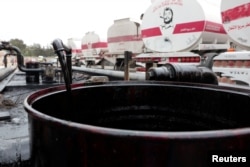
Iraq has lost an estimated $40 billion to $45 billion in revenue since the outbreak of the US-Iran war, largely because of a sharp drop in oil exports following the disruption of shipping through the Strait of Hormuz, a senior Iraqi official said on July 22.
Mazhar Saleh, financial adviser to Prime Minister Mohammed Shia al-Sudani, said Iraq's oil exports had fallen by about 90 percent, resulting in losses of up to $45 billion as of June. If the conflict and disruptions to shipping continue, losses could rise to around $50 billion, he said.
The conflict, which began with US-Israeli strikes on Iran on February 28, and the subsequent closure of the Strait of Hormuz by Iran's Islamic Revolutionary Guarda Corps (IRGC), has severely disrupted oil shipments and affected production across the region.
Before the conflict, Iraq produced about 4 million barrels of crude oil per day and exported roughly 3.5 million barrels daily, most of it through the Strait of Hormuz. Since then, Baghdad has sharply reduced production as storage facilities filled, redirecting limited exports through alternative routes, including pipelines to Turkey's Mediterranean port of Ceyhan and overland shipments through Syria.
Iraqi Oil Minister Bassem Mohammed Khudair said the ministry's monthly transfers to the state treasury had fallen from $7–8 billion before the conflict to about $1.5 billion today.
Oil exports typically account for about 90 percent of Iraq's government revenue.
Men Arrested Near UK Air Base Used By US Forces In Iran War
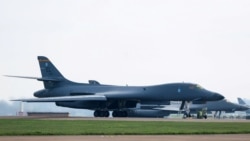
British police have arrested several men on suspicion of explosives offenses near an air base used by US forces, prompting the evacuation of residents from nearby homes.
Police declared a major incident on September 27 near RAF Fairford in Gloucestershire, western England, and said army bomb-disposal experts were examining several vehicles.
RAF Fairford is used by the US Air Force and has been used for US military operations against Iran.
Several properties in the nearby village of Whelford were evacuated, and residents were taken to a local leisure center, police said.
Armed police were seen blocking access to the main gate of the base, according to Reuters.
In March, Britain granted the United States permission to use RAF Fairford and another British base for what the government described as specific and limited defensive action against Iranian missile facilities. The permission was later extended to missile sites and capabilities threatening shipping in the Strait of Hormuz.
Iran's Islamic Revolutionary Guards Corps warned in July that any base used for strikes against Iran would be considered a legitimate target, according to Reuters.
There was no immediate indication that the arrests were connected to Iran or to any foreign government.
The US Air Force said it remained vigilant and would take appropriate measures to protect US personnel, civilians, contractors, and their families, according to Reuters.
British authorities have also warned in recent months about the threat of hostile activity and possible sabotage by state actors, including Russia. The British government has said it does not comment on specific intelligence or security threats.
Gloucestershire police said it believed the incident was contained.
We are now closing the live blog for the day. We'll be back at 7:30 a.m. Central European time to cover the latest events across the Middle East.
US Treasury Chief Hails Success Of New Economic Measures On Iran
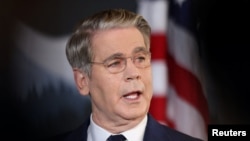
US Treasury chief Scott Bessent said he had deployed representatives around the globe to pressure countries to economically isolate Iran, citing new restrictions that have targeted the Islamic republic's airline and banking sectors.
"At my direction, teams were dispatched across the globe to engage with countries and demand action against the Iranian regime," he wrote on X. "These efforts are delivering results."
Bessent said the United Arab Emirates has stopped all flights by Iranian airlines and that Turkey and Oman have halted incoming flights from Mahan Air.
The UAE's emirate of Dubai is a major destination for Iranian carriers, with multiple flights each day, and a large Iranian community.
A Wall Street Journal article shared by Bessent said Treasury's assistant secretary for terrorist financing traveled across the Middle East and Europe over two weeks to press the plan to impose what Bessent called "economic D-Day" on Iran.
Discussions were held with more than 50 countries, the Journal reported.
With reporting by AFP
Saudis Call On Global Community To Help Ensure Free Sea Traffic In Region
Saudi Arabia called on UN members to join efforts to defend freedom of navigation in vital Middle East waterways, calling the current situation a threat to global energy security.
"The international community has been absent from assuming its responsibilities in confronting all that threatens international peace and security," Foreign Minister Faisal bin Farhan told the UN General Assembly on September 26.
Iran has disrupted shipping through the Strait of Hormuz, and its Houthi allies in Yemen have done similar actions in the Bab al-Mandab Strait. Both are crucial routes for transit of oil and gas exports.
"The kingdom stresses the importance of guaranteeing the protection of freedom of navigation in all international waterways, foremost among them the Strait of Hormuz, the Bab al-Mandab Strait, the Red Sea, the Gulf of Aden," he said.
He also demanded "the return of conditions in the Strait of Hormuz to what they were before February 28, without imposing any fees or taxes.”
Tehran has insisted it has the right to charge transit charges or similar fees to allow sea traffic to flow through the Strait of Hormuz, while the global community insists that the passage is an international waterway and not under the control of any one nation.
With reporting by AFP
Iraq In Talks With US Over Exemption From Sanctions On Iranian Airlines
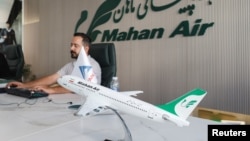
The Iraqi government said on September 26 that it was in talks with Washington to secure an exemption from US sanctions on Iranian airlines that have grounded Tehran's civilian fleet in several countries where they operate.
"The Iraqi government is holding direct talks with the American side to exempt certain Iraqi airports from these measures," the Iraqi prime minister's media office said, adding that the move would allow flights to resume "for humanitarian reasons, including medical treatment, education, religious visits."
Earlier in the week, after a number of countries, including the Middle East's biggest travel hub, the United Arab Emirates, restricted flights to and from Iran, Iraq suspended such flights at the country's airports in Baghdad, Najaf, Erbil, and Sulaimaniya.
Iran's ambassador to Iraq Mohammad Kazem Al-Sadegh said in an interview with the Iranian news agency ISNA that Tehran was in contact with the Baghdad to find a way to restore the flights, adding that there are "roughly 25 daily flights from Iran to Najaf and about 15 flights to Baghdad."
Iraqi airlines stopped flying to Iran when the conflict in the Middle East began earlier this year.
With reporting by AFP.
Trump Rejects Iran's Plan To Reopen Strait Of Hormuz
US President Donald Trump said on September 26 that he was "rejecting" Iran's seven-day plan to reopen the key Strait of Hormuz as unacceptable.
"I'm rejecting their deal. They want to make a deal where they open the strait immediately because they're losing so badly," Trump told reporters outside the White House. "I like making a deal, too, but that deal would not be acceptable."
A day earlier, Iranian Foreign Minister Abbas Araqchi said Tehran had given Washington a "concrete" plan to reopen the strait, requiring steps similar to those outlined in a memorandum the two countries signed in Islamabad earlier this year.
The effective closure of the Strait of Hormuz has been a major obstacle to a negotiated settlement aimed at ending the war between the United States and Iran.
In response to US and Israeli attacks, Tehran restricted access to the strait at the start of the war, disrupting global oil markets and sending prices soaring. Washington, in turn, imposed a naval blockade on Iran, diverting ships and preventing them from reaching the country's ports.
Trump said the United States had "total control" over the Strait of Hormuz. He said that "massive amounts of oil" were moving through the waterway, with 29 ships crossing the chokepoint over the past day.
"They outsmarted themselves," the US president added, saying Washington had cut off one of Tehran's main sources of income with its naval blockade. "They don't have any money now, because they wanted to close the strait, and we closed it on them."
UPDATE: Iranian Foreign Minister Abbas Araqchi said on September 27 that Tehran had seen the reported remarks by Trump to its proposal but had not yet received an official response through mediators.
Araqchi said Iran was waiting for the mediators to convey the definitive US position and would make a decision based on it.
The foreign minister said that only diplomacy can end the conflict.
"Our conditions are clear, and any move toward reopening the Strait of Hormuz is contingent on these conditions being met," he said. "Only a negotiated solution can get them out of this deadlock."
Trump Warned Xi Against Supporting Iran, US Ambassador Says
WASHINGTON -- US President Donald Trump directly warned Chinese President Xi Jinping against providing assistance to Iran during their talks in Washington, according to the US ambassador to China, offering new details about an issue that had loomed over Xi's visit.
Ambassador David Perdue, who attended the bilateral meetings, told CNBC that Trump made clear that any Chinese assistance to Tehran -- including intelligence, components, or military equipment -- was "totally unacceptable."
“There’s been indirect support we think, but there’s no direct evidence. We’re very concerned about this indirect work and we’ve made that very clear,” Perdue said.
In a separate interview with Fox News, Perdue said Beijing had given Washington assurances that it was not providing such assistance.
“We've seen movement...on that already. That's what the commitment is. They assured us yesterday they're not doing that,” he said.
The comments come after US lawmakers and national-security experts had urged Trump to confront Xi over allegations that Chinese entities have helped Iran through satellite intelligence, weapons components, and purchases of sanctioned Iranian oil.
Beijing has denied providing Tehran with military or intelligence support.
Xi instead publicly called for Washington and Tehran to return to negotiations aimed at ending the war and reopening the Strait of Hormuz.
Iran Says It Gave US 'Concrete' Plan To Reopen Strait Of Hormuz
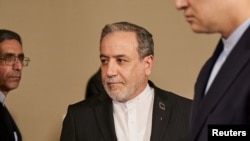
Tehran has given Washington a "concrete" plan to reopen the key Strait of Hormuz, Iranian Foreign Minister Abbas Araqchi said on September 25.
"If the necessary conditions are met, the strait can be reopened, a normal maritime passage restored within seven days. The choice now rests with the United States," he told reporters at the United Nations.
"The actions that the United States should take are not new," Araqchi added. He did not specify the steps Washington would have to take but said they were similar to those outlined in a memorandum of understanding the two countries had signed in Islamabad earlier this year.
The effective closure of the Strait of Hormuz has long been a central issue in the war between the United States and Iran and a major obstacle to a negotiated settlement aimed at ending the broader conflict in the Middle East.
Since the early days of the war, Tehran has restricted access to the waterway in response to US and Israeli attacks on Iran, disrupting global oil markets and sending prices soaring. In the following months, it also sought to impose a toll on vessels passing through the strait.
The United States, in turn, imposed a naval blockade on Iran in mid-April and reinstated it in July, diverting ships and preventing them from reaching Iranian ports.
Yemen’s President Calls On Yemenis To Mobilize Amid Houthi Attacks
Rashid al-Alimi, the Riyadh-based president of Yemen’s Saudi-backed, internationally recognized government, called on Yemenis on September 25 to mobilize and join the armed forces.
Al-Alimi also offered a future general amnesty to Iran-backed Houthi fighters and affiliates who leave the group on or after September 26.
Yemen descended into civil war in 2014 when the Houthis seized the capital, Sanaa, ousting the internationally recognized, Saudi-backed government. A 2022 truce had largely held until recently.
In July, a spate of attacks began after the Houthis welcomed an Iranian plane to Sanaa.
Earlier this month, Houthi rebels seized nearly all of Yemen’s Red Sea coastline, giving the militant group control of the Bab al-Mandab Strait, a key chokepoint for global trade. They have also intensified attacks on energy facilities in Saudi Arabia, the world’s biggest oil exporter.
With reporting by Reuters.
Iraqi Airports Suspend Iranian Flights As US Targets Tehran’s Aviation Sector
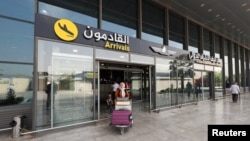
Iraqi airports have suspended flights operated by Iranian airlines after the United States targeted Tehran’s aviation sector. At least five other countries have imposed similar restrictions.
All flights to and from Iran have been suspended at airports in Baghdad, Najaf, Erbil, and Sulaimaniya, according to Iraqi state media and sources cited by Reuters on September 25.
Two days earlier, Washington had announced that it would impose sanctions on any company doing business with Iranian airlines, aiming to ground Tehran's entire civilian fleet worldwide.
The announcement was followed by flight suspensions in Oman, Azerbaijan, Georgia, Turkmenistan, and the United Arab Emirates, the Middle East’s biggest travel hub.