



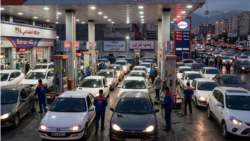

Iran Warns Of Possible Winter Gas Shortages
Iranian government spokeswoman Fatemeh Mohajerani warned on September 29 that damage to energy infrastructure during the war could cause gas supply problems in the country's northern provinces this winter.
"We suffered damage due to the attacks on the energy sector," Mohajerani said at her weekly press conference. "230 million cubic meters were lost as a result of the attacks, and we are trying to restore 100 million cubic meters of that."
She said the government was working to prevent shortages but acknowledged that northern provinces could face problems and that governors had been warned.
Earlier, Golestan Deputy Governor Seyed Mehdi Mahiai said that the provinces of Golestan, Mazandaran, and North Khorasan could face gas outages or restrictions lasting 60 to 90 days. The National Iranian Gas Company later rejected that figure as an official forecast.
Golestan officials have conducted gas-cutoff drills at bakeries to test alternative fuels.
An ISPA survey found that 66.1 percent of respondents said they were highly concerned or very highly concerned about energy shortages and rationing.
US Sanctions Networks Accused Of Procuring Weapons For Iran's Military
The United States imposed sanctions on 10 individuals and entities on September 29 over what it said were networks procuring weapons and components for Iran’s military.
The US Treasury Department said the targets, based in Iran, China, Hong Kong, Pakistan, Saudi Arabia, and Turkey, had supported Iran’s Ministry of Defense and Armed Forces Logistics (MODAFL), which is responsible for weapons research, production, and acquisition. It also oversees organizations involved in developing ballistic missiles and drones.
Treasury Secretary Scott Bessent said Washington would continue targeting those providing “material, technological, or financial support” that enables Tehran to sustain what he called its “terrorist enterprise.”
Among those sanctioned was Seyyed Asghar Alizadeh Tabatabai, whom Treasury described as a MODAFL representative in Beijing who coordinates the procurement of weapons systems and dual-use components in China.
The Treasury also targeted Iran-based Kavoshcom Asia R and D Group and people and companies it said helped procure electronic components for Iranian drone and ballistic-missile programs.
The sanctions also targeted Pakistani businessman Waseem Pasha Tajammal and three companies in Pakistan, Saudi Arabia, and Turkey that the Treasury said acted as intermediaries to “procure and distribute weapons” on MODAFL’s behalf.
The measures block US-based assets of those designated and generally bar Americans from doing business with them.
The action is part of Washington’s Operation Economic Outcast, launched in August to intensify economic pressure on Tehran.
Iraqi Airways Plans October Return To Iran After Reported US Waiver
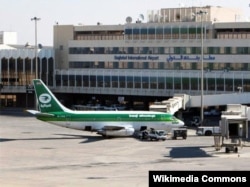
Iraqi Airways is preparing to resume flights to Iran in October after Baghdad secured a temporary exemption from US sanctions restricting services to Iranian airlines, Iraq’s Transport Ministry said on September 29.
Iraq suspended flights to and from Iran on September 25 and sought exemptions for travel related to religious pilgrimages, medical treatment, and education.
The ministry said services would initially operate from Najaf, a major Shi’ite pilgrimage center, once regulatory and technical requirements were completed. A source at Iraq’s Transport Ministry told Reuters that the US Treasury granted the exemption for one month, although the number of permitted flights had yet to be determined.
Washington this month sanctioned remaining Iranian airlines not already under US restrictions, saying Iran’s aviation sector had been used to move weapons, personnel, and illicit cargo.
Reuters reported that Baghdad offered safeguards including passenger screening and information sharing, as well as measures intended to prevent the flights from carrying weapons, sanctioned individuals, or illicit funds.
The waiver follows protests in Najaf over the flight restrictions. Reuters reported that a longer-term exemption could follow.
Several countries in the region suspended Iranian flights following the sanctions, although services to some destinations, including Turkey, Armenia, China, Malaysia and Thailand, have continued.
With reporting by Reuters and RFE/RL's Radio Farda
Trump Says He Offered Iran ‘Nothing’ In Push For Deal
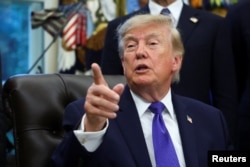
US President Donald Trump says he offered Iran no concessions to end the seven-month war, rejecting media reports that Washington was prepared to ease sanctions and release frozen Iranian funds in return for progress on Tehran’s nuclear program.
“This is untrue. I offered them NOTHING,” Trump wrote on Truth Social on September 29 after Axios and CNN cited unidentified US officials saying sanctions relief could form part of a final agreement if Iran demonstrated “concrete progress” on the nuclear issue.
Tehran says its nuclear program is peaceful and denies seeking nuclear weapons. Iranian President Masoud Pezeshkian said in an interview with CBS broadcast on September 27 that Tehran remained willing to negotiate, while rejecting what he described as “bullying and coercion intended to force us into submission”.
US and Iranian officials spoke separately with mediators on September 28 as part of renewed efforts to end the war.
Iranian Foreign Minister Abbas Araqchi has linked reopening the Strait of Hormuz and a pause in regional fighting to an agreement.
Trump rejected the Iranian proposal on September 26, saying Tehran wanted a deal because it was “losing so badly.”.
Araqchi said mediators had yet to formally communicate Washington’s position.
With reporting by Reuters
Stablecoin Giant Tether Says It Helped Freeze $550 Million In Iran-Linked Crypto

Tether, the company behind USDT, the world's largest dollar-backed stablecoin, said on September 28 that it had supported the freezing of nearly $550 million in cryptocurrency linked to Iran this year, including assets associated with the Central Bank of Iran and other Iranian sanctions networks.
In a statement, Tether said it had helped the US government freeze more than $344 million in USDT across two addresses in April, based on information provided by the US Treasury Department's Office of Foreign Assets Control and US law enforcement agencies.
The following day, OFAC added the same addresses to its sanctions listing as digital-currency identifiers for the Central Bank of Iran, Tether said.
In July, Tether said it froze more than $130 million in USDT across four wallets after Treasury added four more TRON addresses to the CBI's sanctions designation. Chainalysis separately reported that $131 million in stablecoins was frozen at those addresses.
Treasury launched its Operation Economic Outcast campaign against Iran in August, identifying digital assets as one of five sectors subject to expanded sanctions.
"Tether has consistently demonstrated that USDT is not a haven for sanctioned actors, terrorist organizations, or criminal networks,” Tether CEO Paolo Ardoino said.
Iranian Rial Falls As US Dollar Reaches Record High
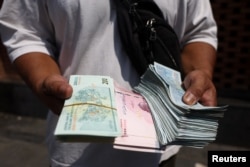
The US dollar reached a new record on Iran's free market on September 29, rising to around 2.5 million rials as the national currency weakened further.
The dollar rose from about 2,495,000 rials to 2,500,200 rials within an hour, according to Iranian market reports. On September 28, it had traded at around 2,437,000 rials, putting the next day's increase at roughly 63,000 rials.
The euro also rose above 2.83 million rials, while the British pound entered the 3.3 million rial range.
Gold and coin prices also increased. The Emami gold coin rose from below 2.48 billion rials on September 28 to nearly 2.52 billion rials on September 29.
The currency's decline came as US President Donald Trump rejected reports that Washington had offered sanctions relief and access to frozen Iranian funds in exchange for concessions on Tehran's nuclear program. "I offered them NOTHING," Trump wrote on Truth Social.
The Wall Street Journal has reported that US officials believe the naval blockade is placing significant pressure on Iran's economy. US and Gulf officials have also said Iran is losing control of the Strait of Hormuz, although those are officials' assessments rather than an independently established measure of control.
Oil Prices Rise For Second Session Amid Supply Concerns
Oil prices rose for a second consecutive session on September 29 as concerns over supply disruptions from the Middle East outweighed signs that crude exports from the region were recovering.
Brent crude futures rose 63 cents, or 0.6 percent, to $105.91 a barrel by 00:02 GMT, while US West Texas Intermediate crude gained 72 cents, or 0.8 percent, to $93.32. Prices later rose further, with Brent reaching $106.77 and WTI $93.94 in early trading.
Preliminary data from Kpler showed crude exports from major Middle Eastern producers reached 12.8 million barrels per day in September, the highest level since February, driven by increased shipments from Saudi Arabia and the United Arab Emirates.
However, much of the recovery has relied on costly workarounds, including ship-to-ship transfers, rather than normal shipping routes. Middle East exports remain below pre-war levels, while uncertainty surrounding the US-Iran conflict and the Strait of Hormuz continues to support prices.
With reporting by Reuters
UK Police Release On Bail 5 Men Held Over Air Base Incident
British police released five men on bail on September 28 after arresting them near RAF Fairford, an airbase in Gloucestershire used by the United States in operations against Iran, as authorities investigated a suspected terrorism plot and whether a foreign state may have been involved.
The men, all British nationals in their 20s and from London, were detained early on September 27 after a member of the public reported suspicious vehicles and masked individuals near the base. Police said they were initially arrested on suspicion of explosives offenses and later on suspicion of preparing an act of terrorism. They remain under investigation and are subject to conditions while inquiries continue.
Counterterrorism police said investigators were pursuing several lines of inquiry, including whether the suspects may have been acting knowingly or unknowingly on behalf of a foreign state. No country has been publicly identified by British police.
US Secretary of State Marco Rubio said the incident appeared to involve "the hands of a foreign actor," without providing further details. President Donald Trump said he was surprised that the suspects had been released on bail and that he would not have taken the same approach.
Prime Minister Andy Burnham chaired an emergency COBRA meeting on September 28 to assess the incident and ensure officials had a full understanding of the investigation.
Iran has denied any involvement in the suspected plot, rejecting claims linking Tehran to the incident as unfounded.
In New Statement, Khamenei Says Iran Will 'Protect' Strait Of Hormuz
As reports emerged about efforts to resume talks between Iran and the United States, Iranian Supreme Leader Ayatollah Mojtaba Khamenei said in a statement released by his office that Iran remained committed to preserving the "blessed Strait of Hormuz."
The statement came amid an ongoing military and diplomatic confrontation between the two countries. The conflict began with US-Israeli strikes on Iran on February 28, after which Iran effectively closed the Strait of Hormuz to shipping.
Khamenei said various sectors of Iranian society were maintaining their positions, including on preserving the strategic waterway.
His remarks came as oil flows through the strait have increased in recent weeks with US military assistance. US President Donald Trump told Axios on September 27 that more than 20 million barrels of oil had passed through the Strait of Hormuz over the weekend. A US defense official told Axios that 22 million barrels had moved through the waterway on the night of September 25-26.
Iranian oil exports, meanwhile, have been sharply curtailed by a US naval blockade imposed in July. Reuters reported that Iranian crude loadings had fallen from about 2 million barrels per day in March to roughly 220,000–255,000 barrels per day in August.
Khamenei, who has not appeared in public since the start of the war, also said the United States would eventually be forced to leave the Middle East after suffering what he described as "painful blows." He said US forces would soon be unable to venture beyond the Arabian Sea.
The Arabian Sea stretches from the Arabian Peninsula eastward toward India and forms a major maritime corridor connecting the region with the waters off Iran and the Strait of Hormuz.
Trump Denies Offering Iran Sanctions Relief, Release Of Frozen Funds
US President Donald Trump denied he had offered sanctions relief and the release of frozen funds in return for nuclear concessions from Tehran after a media publication claimed the president was "willing" to make such moves.
"This is untrue. I offered them NOTHING," Trump wrote on Truth Social, after Axios reported that he was willing to provide the relief in return for nuclear concessions amid fresh indirect talks on September 28.
"Axios’ story, like most others, is a HOAX, used only for purposes of satisfying their Trump Derangement Syndrome. They should withdraw this fake story, IMMEDIATELY!" he wrote.
The Axios story cited unnamed US officials.
CNN, citing an unidentified US official, also reported that Trump was willing to offer sanctions relief and release frozen funds as part of a final deal, on the condition that Tehran provide "concrete progress" on the nuclear issue.
Earlier, Trump told reporters that US officials had spoken on September 28 with mediators seeking to end the US war with Iran and added that the US would win the war "very soon."
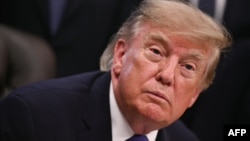
"We're going to win, as far as I'm concerned, it's going to be one way or the other," Trump said. "It's going to go pretty quickly."
Meanwhile, Iranian Foreign Minister Abbas Araqchi said Tehran has presented a proposal to mediators for a "peaceful solution" to the war, but he added that conditions stressed by Iran's supreme leader "must be implemented" for the crucial Strait of Hormuz to be reopened.
According to Iranian state media, Araqchi said he hopes to get a final response through Qatari mediators on September 29.
"If the Americans claim they are seeking an agreement or a peaceful solution, we have presented that solution," Araqchi said, speaking in New York on the sidelines of UN General Assembly activities.
Supreme Leader Mojtaba Khamenei said in a statement released by his office that Iran insists on being a custodian of the strait.
In the statement, Khamenei, who has not been seen in public since being elected to the position in March, declared that Iran will not be forced back to “the era the enemy wants it to be in.”