




Pentagon Watchdog Warns Of US Munitions Shortfalls After Iran War
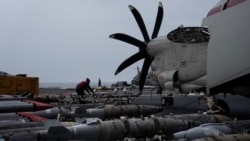
The United States is facing a potential shortfall in ammunition as a result of its war against Iran, according to a Pentagon inspector-general's report providing fullest official accounting of the conflict's costs to date.
The report, using Operation Epic Fury (OEF) as the name for the ongoing US strikes on Iran, noted that "the munitions expenditure on OEF has resulted in strategic inventory shortfalls and revealed industrial base bottlenecks for munitions resupply."
In a first-of-its-kind mandatory report to the US Congress released on September 14, the inspector-general said that between February 28 and June 30, the US military operation against Iran had cost an estimated $33.4 billion, of which $22.3 billion was spent on expended munitions alone.
The Pentagon has repeatedly pushed back against reports of any munitions shortage, saying the US military has all the weapons it needs to fight any conflict.
President Donald Trump said in a post on Truth Social on September 14 that "the United States is producing more Exquisite and Elite Weapons than at any time in our History."
"They are being delivered on a daily basis to our Forces in the Middle East, and beyond," he added.
The inspector-general's report also said that "Iranian strikes damaged and destroyed hundreds of buildings and structures at US bases in Kuwait, Bahrain, Qatar, UAE, Saudi Arabia, Iraq, Oman, and Jordan during the conflict."
"In addition, dozens of US aircraft were destroyed or damaged during OEF," it added.
With reporting by AP and CBS News
Second Sunni Cleric Killed In Less Than A Week
Sunni Baluch cleric Yousef Gorgij was shot dead by unidentified attackers outside his home in Zahedan, the capital of Iran's southeastern Sistan-Baluchistan Province, on September 14.
His death marked the second killing of a Sunni cleric in Iran in less than a week.
On September 9, Sunni Kurdish cleric Mohammad Nazhati was killed in West Azerbaijan Province in northwestern Iran. Another Sunni cleric, Mohammad Anvar Rigi, was shot dead by unidentified gunmen in Sistan-Baluchistan on July 20, according to Iranian state media.
All three clerics were reported to be supporters of the Iranian government. No group has claimed responsibility for the killings.
The state-run Mehr News outlet described Gorgij as a pro-government Sunni cleric and blamed what it called “Zionist mercenaries” for his killing, without providing evidence or further details.
Separately, in a statement released to media, Iran’s Revolutionary Guards blamed Nazhati's killing in West Azerbaijan on "Zionist-American Kurdish separatist groups."
Sistan-Baluchistan, which borders Pakistan and Afghanistan, and West Azerbaijan, near Iran's borders with Turkey and Iraq, are home to large ethnic and religious minority populations.
Both regions have experienced long-running insurgencies that have frequently targeted figures associated with the Iranian state.
US Sanctions Russia’s VTB Bank Over Iran Ties, Warns Foreign Banks
The United States has imposed new sanctions on Russia’s VTB Bank, accusing one of the country’s largest lenders of helping Iran evade US sanctions through banking relationships and payment arrangements.
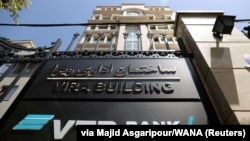
The Treasury Department said on September 14 that VTB had established correspondent relationships with sanctioned Iranian financial institutions, opened offices in Iran, taken steps to facilitate trade, and helped move billions of dollars in Iranian assets.
The move is part of Washington’s expanding “Operation Economic Outcast,” a campaign launched last month to identify and disrupt the networks Iran uses to generate revenue, evade sanctions, and finance the government and its regional allies.
Russia’s second-largest financial institution, VTB was already under extensive US sanctions over Moscow’s war on Ukraine.
The latest designation targets the bank under Iran sanctions authorities, potentially increasing the risks for foreign financial institutions that continue to do business with it.
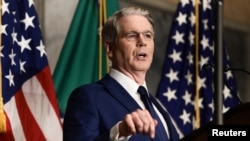
Treasury Secretary Scott Bessent said Washington would continue targeting institutions that provide financial or technological support to Iran and warned that foreign banks facilitating sanctions evasion could face secondary sanctions.
The move comes after a series of recent US actions against companies and financial networks in Turkey, the United Arab Emirates, and elsewhere as Washington seeks to close alternative channels available to Tehran.
On September 10, Treasury also shifted its policy toward a presumption of denial for most Iran-related specific license applications.
Brett Erickson, a sanctions and financial-crime expert at Obsidian Risk Advisors, told RFE/RL that the latest measure could have a limited immediate effect compared with the global effects of the ongoing US war with Iran, which has fueled a surge in oil prices and rattled financial markets.
“Another incremental sanctions measure may shorten Tehran’s runway at the margins, but that is a terrible trade when the broader global crisis is consuming the world’s economic timeline by the mile,” Erickson said.
Trump Says US 'Open' To Deal With Iran
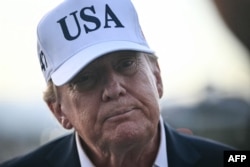
US President Donald Trump has said Washington is open to making a deal with Iran to end the six-month-long war.
In a Truth Social post on September 14, Trump said Tehran “wants to make a deal, quickly and badly.”
“I will determine whether or not the U.S.A. will choose to engage -- The concept of which we are open to,” Trump added.
In June, Tehran and Washington signed a memorandum of understanding aimed at ending hostilities, but the agreement unraveled within weeks.
Since then, the sides have sporadically traded strikes.
There have been no official negotiations between US and Iranian officials since a meeting in Switzerland in late June.
Hours after Trump's social media post, Iran's Supreme National Security Council secretary Mohsen Rezaee seemingly rejected any talks with the US until "Iran's conditions are met."
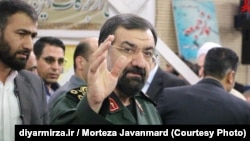
"Don’t get distracted by the U.S. president’s mixed signals—from “no negotiations” to “we’re ready to talk,” Rezaee wrote in his X post on September 14. "The stakes around oil and the straits have changed," he added.
Iran Denies Role In Saudi Pipeline Attack
Iran has rejected suggestions that Tehran had prior knowledge of or played any role in the attack on Saudi Arabia's strategic East-West oil pipeline, calling the accusation a "lie."
Addressing his weekly press briefing on September 14, Iranian Foreign Ministry spokesman Esmail Baqaei responded to comments from US officials about the attack on the pipeline, saying, "the Americans are producing fake news at no cost whatsoever."
Baqei added that, in Tehran’s view, actors from outside the Middle East are "seeking to increase tensions" among regional states by spreading this kind of news, and said Tehran "categorically" denies the allegations.
The pipeline was struck by drones on September 10, forcing Saudi Arabia to announced the next day that it had temporarily shut down the route.
US President Donald Trump named Iran on September 12 as the likely party responsible for the attack.
Speaking to reporters in Dublin when asked whether Iran was responsible, Trump said, "I think they are, probably they are."
Saudi Arabia has said the attack was carried out by a drone launched from Iraqi territory. No group has yet claimed responsibility.
The East-West pipeline is one of Saudi Arabia's most important routes for transporting oil to the Red Sea without passing through the Strait of Hormuz.
Iran Protests Nuclear Chief's Reported Exclusion From UN Atomic Conference
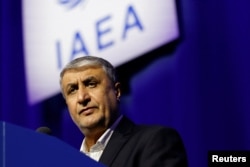
Iran's nuclear chief was barred from attending the UN atomic watchdog's annual conference in Vienna, Iranian state television said on September 14, prompting Tehran to protest to Austria.
Mohammad Eslami and his delegation flew to Vienna on September 12 but were prevented from attending the International Atomic Energy Agency gathering and returned to Tehran, state TV reported.
A diplomatic source in Vienna, speaking on condition of anonymity, told the AFP news agency that Eslami had been refused entry to Austria due to US pressure.
Iran's Foreign Ministry summoned Austria's charge d'affaires over the decision. Ministry spokesman Esmail Baqaei accused Washington of pressuring Vienna, an allegation the United States has not publicly addressed.
Senior Iranian atomic official Behruz Kamalvandi told AFP that denying the delegation access set a precedent that could affect other countries, accusing Washington of "bullying political pressure."
Western powers have long suspected Iran of seeking a nuclear weapons capability, which Tehran denies.
With reporting by AFP and RFE/RL's Radio Farda
Hormuz Vessel Traffic Remains Far Below Average Over Weekend
Commodity vessel traffic through the Strait of Hormuz, the narrow waterway through which roughly one-fifth of the world's seaborne oil trade usually passes, fell to single-digit levels per day over the weekend, according to preliminary ship-tracking data as of September 14.
The figures were well below the 10-day average of 14 vessels per day. The data showed that four vessels exited the Gulf through the strait over the weekend, while 10 entered.
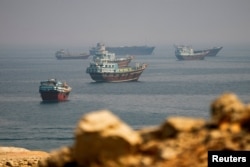
The figures may understate actual traffic, as they exclude vessels that may have transited the strait with their Automatic Identification System transponders switched off to avoid detection.
Before the Iran war began on February 28, the strait typically handled about 125 large commercial vessels per day, including tankers, gas carriers, bulk carriers, and container vessels.
Shortly after the outbreak of the war, Iran largely blocked traffic through the strait by threatening and attacking ships.
The US Navy, for its part, has imposed a naval blockade on Iranian ports.
With reporting by Reuters and dpa
Trump Downplays Report China Aided Tehran In Attack On US Troops
US President Donald Trump brushed aside a report that Tehran acquired satellite images of a base in Jordan from Chinese entities before an attack that killed three US troops in July.
The report came from The Wall Street Journal, which cited unnamed US officials regarding the attack.
The WSJ report, which has not been confirmed by other news outlets, said the US officials declined to identify the Chinese entities that supplied the imagery to Tehran and did not allege direct involvement by the Chinese government.
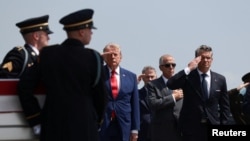
When asked on September 13 if he would bring up the matter at an upcoming meeting with Chinese President Xi Jinping, Trump did not directly answer.
However, he suggested the United States conducted the same type of surveillance activities that China does.
"They basically do what we do. When they say China spies on us, I say you're right and we spy on them too," he told reporters on Air Force One.
Trump and Xi are expected to meet in the United States on September 24, although Beijing has yet to confirm the date and place.
With reporting by the WSJ and Reuters
Oil Prices On The Rise Again As Middle East Tensions Heighten
Oil prices surged early on September 14 amid escalating tensions in the Middle East and renewed fears of disruptions to global energy supplies.
Brent crude for November delivery rose 2.8 percent to $107.54 a barrel, while US benchmark West Texas Intermediate for October gained 2.3 percent to $102.34.
Both contracts extended gains from last week after rising above the $100 level.
Saudi Arabia temporarily shut its East-West pipeline following drone attacks, most likely from Houthi rebels in Yemen, while a merchant ship was struck in the Strait of Hormuz on September 13, killing one person and injuring three others, Iranian authorities said.
Talks that were scheduled in Oman for September 14 between Iran and the Gulf Arab states were postponed pending more conducive conditions for dialogue, officials said.
With reporting by AFP
Pezeshkian Reiterates Opposition To Nukes As MPs Push NPT Exit
Iranian President Masud Pezeshkian has again said Tehran is not seeking nuclear weapons, even as a lawmaker said parliamentarians were preparing a bill for Iran to withdraw from the Nuclear Non-Proliferation Treaty and called for the country to conduct the tests needed to develop a nuclear weapon.
Speaking to India Today during a visit to India in comments published on September 14, Pezeshkian said Iran would not have joined the NPT if it had intended to develop nuclear weapons.
“If we were seeking nuclear weapons, we would not have joined the NPT,” Pezeshkian said, according to the report.
Pezeshkian also dismissed allegations that Iran was seeking to build nuclear weapons as a “pretext” for attacks on Iranian territory.
His comments came as hard-line MP Hossein-Ali Haji-Deligani said on September 12 that a group of lawmakers had prepared an emergency bill calling for Iran to withdraw from the NPT.
“It is better to conduct the necessary tests for a nuclear weapon as soon as possible, because today the country needs nuclear deterrence,” he said, charging that possession of nuclear weapons is an “unavoidable necessity” for Iran.
The International Atomic Energy Agency (IAEA) Board of Governors voted on September 9 to refer Iran’s nuclear issue to the UN Security Council, escalating international pressure on Tehran over its nuclear activities and its cooperation with inspectors.
The following day, Mohsen Rezaei, secretary of Iran’s Supreme National Security Council, said that the IAEA’s “political” actions could push countries toward withdrawing from the NPT.