




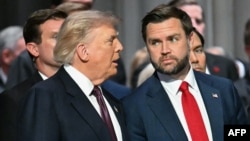
President Donald Trump spent the final weeks of the US midterm campaign predicting that the war with Iran would end "right after the election."
With the votes now in and his Republican Party reeling from losing both chambers of Congress in a rout that his own vice president blamed squarely on the conflict.
"The reason we lost is the war," Vice President JD Vance wrote on X on November 4. Trump called the assessment "largely true" but said he would make the same decision again because “you can’t let Iran have a nuclear weapon.”
That leaves Trump, with roughly two months before a Democratic Congress takes control of the budget and committee subpoenas, facing a set of less-than-ideal options: negotiate, escalate, or sit tight.
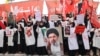
"Democrats don't take power today," Shayan Samii, a national-security expert based in the United States, told RFE/RL’s Radio Farda. "Trump has two months to act, free of any electoral considerations, if he wants to restart the military campaign."
A president can justify military action on national-security grounds, Samii said, and any bill curbing the war would need Trump's signature or a two-thirds vote in both the House and the Senate to override a veto.
"Some experts believe the Democrats can change the course of military confrontation with the Islamic republic. I don't see it that way,” he said.
Scenario 1: Full Resumption Of War
Trump has repeatedly hinted that he could resume large-scale strikes after the vote, and Israeli Prime Minister Benjamin Netanyahu has reportedly pressed him to do so.
A renewed campaign would likely revisit the April playbook, when US and Israeli strikes hit bridges, rail lines, and power infrastructure and Trump threatened to leave "every power plant in Iran" burning.
Kharg Island, Iran's main oil export terminal, has so far been struck only at military sites. Hitting its energy infrastructure is a step Washington has not yet taken and hasn’t needed to since the blockade of Iranian ports has driven Iranian oil exports to near-zero.
Shahin Modarres, an Iranian security expert based in Rome, expects that line to be crossed.
"Unfortunately, what I see is a severe war ahead," he told Radio Farda.

He explained that Washington has moved in stages: first deterrence, then, after a memorandum of understanding in June he described as generous to Tehran collapsed, a campaign of economic pressure that included heavy sanctions, cuts to flights, and partial closures of Iran's land borders. With that pressure failing to produce results, he said, the next phase is forcing Tehran to capitulate.
In that phase, Modarres said, "the country's infrastructure, the energy sector, economic sectors" would all be targets, along with what remains of Iran's nuclear and missile programs, "especially Pickaxe Mountain" -- a fortified underground complex near Natanz that Trump has threatened since July.
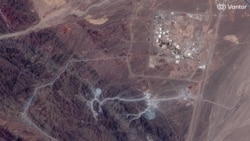

The aim would be to push the country toward collapse until the Islamic republic surrenders, allowing "a layer of this regime" -- elements of the existing leadership -- to take control, "at least for a while." Such a surrender, he added, would also sharply increase the chances of the system falling altogether.
But Tehran has spent recent weeks warning about the repercussions of renewed conflict.
On October 31, Supreme Leader Mojtaba Khamenei ordered commanders to prepare an "immediate, impactful, and geographically unrestricted response" to any new attack and to expand their target lists.

The Islamic Revolutionary Guards Corps (IRGC) has also threatened to target undersea communications cables in the Persian Gulf while insisting that US bases beyond the Middle East and regional energy infrastructure will also be targeted.
Iran’s hinted that unlike the 40-day war, which Tehran regionalized, the next conflict would pull in even more countries. A full resumption of hostilities will also drive up fuel prices even more.
Scenario 2: One 'Big Shot,' Then An Exit
Though unlikely, a middle path may appeal to a president who wants a win without a long war.
Reports in late October claimed that the Trump administration had warned its allies in the region that a short, intense campaign against Iran after the elections was possible.
One key target could be Pickaxe Mountain. He could then declare Iran's nuclear program sufficiently damaged and pursue a deal that sees the Strait of Hormuz reopened in exchange for some level of sanctions relief and postpones nuclear talks.

Parts of the site are believed to be buried 80 to 100 meters underground, making any claim of destruction hard to verify. And Iran's military command, the Khatam al-Anbiya Central Headquarters, has warned that bombing the mountain would amount to a renewal of war across the region.
So, while the United States might hope for a short campaign, Iran may seek to drag it out in the hopes of raising the political and financial costs for Trump.
Scenario 3: No War, No Peace
Trump could also simply keep the current posture, launching "defensive" strikes, maintaining the naval blockade, and continuing US Navy escorts for shipping through Hormuz.
But the status quo is unstable and Iran’s President Masud Pezeshkian said in late October that the country needs to move on from the “no war, no peace” ordeal.

Samii also doubts that half-measures like the odd strike on military facilities on Iranian islands can last.
From mid-2027, he said, Washington's attention will turn to the 2028 presidential race, and candidates from both parties will demand a lasting answer on Iran rather than inherit the problem.
Scenario 4: An Interim Deal
The most active diplomatic track is a narrow, Qatari-mediated arrangement resembling the memorandum of understanding signed in June, which briefly paused the fighting and lifted the blockade before collapsing.
Markets seem to be betting on something like this. Brent crude fell below $100 a barrel on November 4.
Iran has offered to reopen the Strait of Hormuz within two days if Washington meets its seven conditions, including the lifting of the naval blockade, easing of sanctions, guaranteeing an end to strikes, and a regional cease-fire that includes Lebanon.

A broader settlement covering Iran's nuclear program looks further off. Washington demands a verifiable commitment that Iran will not rebuild the program; Tehran says nuclear talks can begin only once its conditions are met.
Modarres argued that diplomacy and escalation are not mutually exclusive.
He said both Vance and US Secretary of State Marco Rubio are likely 2028 contenders and each wants to claim credit for any success and pin any failure on the other. But in effect, they are playing "good cop and bad cop," keeping "a half-open door" until the last moment, "even after the war starts," so that Tehran still has a way to give in.
The Spoilers
Several factors could upend any of these paths.
Israel may act on its own if it sees Washington drifting toward a deal it opposes.
Inside Iran, the collapse of the June memorandum of understanding was partly attributed to hard-line factions directing attacks on shipping, a reminder that a deal can be sunk from Tehran as easily as from Washington.

Meanwhile, Tehran is already reading the midterm results as a vindication. Analysts argued before the vote that Iran believed it was winning the war; a Democratic sweep could encourage it to raise its price and wait out a weakened, more constrained president.
And then there is Trump himself.
Asked on November 4 when the war with Iran will end, he gave the same reply as he did on October 27: "Whenever I want it to."