



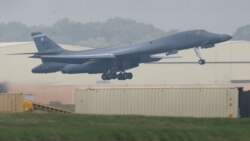

US Withdraws Bombers From UK Base Amid Reports Of Iran Plot
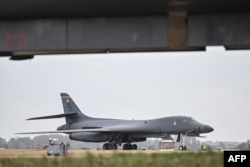
The United States withdrew about a dozen B-1 long-range bombers from a military base in Britain after intelligence pointed to a possible Iranian drone attack, US media reported, citing American and European officials.
The Wall Street Journal said Iran's Islamic Revolutionary Guards Corps was suspected of planning an attack on RAF Fairford aimed at destroying aircraft and killing personnel, including US pilots. The base has been used in recent US strikes on Iran.
US President Donald Trump acknowledged a threat and said those responsible "would be linked to Iran," while Vice President JD Vance said the aircraft were moved out of an abundance of caution. Secretary of State Marco Rubio, however, said there was no direct link between the withdrawal and the suspected plot.
The reports come after five British men were arrested near Fairford in late September on suspicion of preparing terrorist acts. A sixth suspect, a dual British-Iranian national, was detained days later. All six were subsequently released on bail.
Iran has rejected accusations of involvement as baseless. Foreign Minister Abbas Araqchi said Britain was "barking up the wrong tree."
The Pentagon said all US bombers deployed to Fairford had returned to their home bases in the United States.
With reporting by Reuters and dpa
Montenegro Extradites Iranian Accused Of Revolutionary Guards-Linked Hacks To US

Montenegro has extradited Iranian-Turkish dual national Amir Barati to the United States to face charges over an alleged hacking campaign that US prosecutors say stole research and intellectual property from American universities for the benefit of Iran's Islamic Revolutionary Guards Corps (IRGC) and other Iranian entities.
Barati, 40, was arrested in Montenegro in June and is among 17 people charged in connection with alleged cyberoperations linked to the Tehran-based Mabna Institute. The US Justice Department said the hacking campaign targeted some 150 US universities and nearly 180 universities in other countries, compromising thousands of professor email accounts and stealing academic data and intellectual property.
According to US prosecutors, the hackers stole more than 31 terabytes of academic data and intellectual property. American universities had spent approximately $3.4 billion to procure and access the material targeted by the hackers.
The Justice Department says the Mabna Institute conducted its university hacking campaign on behalf of the IRGC and also worked for other Iranian government entities and universities.
Barati is accused of helping monitor spear-phishing campaigns, exchanging compromised credentials, identifying potential targets and conducting network reconnaissance.
US Says 13 Ships Destroyed In Iran Blockade Since July
US forces redirected a 130th commercial vessel in the Middle East on October 5 as Washington continued enforcing its naval blockade against Iran, the American military's Central Command (CENTCOM) said.
CENTCOM said the blockade against vessels seeking to enter or leave Iranian ports resumed on July 14 at President Donald Trump's direction.
US forces have also disabled three ships that refused to comply and destroyed 13 commercial vessels over the past 12 weeks for violating the blockade or allegedly forming part of the Islamic Revolutionary Guard Corps' shadow network.
"The military remains intensely focused on this mission," CENTCOM commander Admiral Brad Cooper said, adding that forces would "swiftly act against any vessels trying to run the blockade."
CENTCOM advised mariners operating near the Gulf of Oman and Strait of Hormuz to monitor US naval notices.
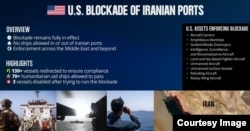
The United States initially imposed the blockade from April 13 to June 18, before lifting it amid a temporary easing of hostilities with Tehran. Washington reinstated it on July 14 as fighting with Iran resumed, again targeting maritime traffic entering and leaving Iranian ports.
US Treasury Warns Foreign Financial Institutions Over Iran Ties
Foreign financial institutions continuing to do business with Iran or its financial sector may face sanctions under "Operation Economic Outcast," the US Treasury Department said in an alert on October 5.
The Treasury urged institutions to immediately terminate transactions and relationships with sanctioned Iranian financial entities.
"Foreign financial institutions continuing to transact with sanctioned Iranian financial institutions could be targeted at any time without advance notification and should take immediate action to terminate such activity and relationships," it said.
Operation Economic Outcast was launched by the Trump administration in August as a broad campaign to further isolate Iran from the global financial system and target revenue streams, financial networks, and intermediaries that Washington says enable Tehran to evade sanctions.
The campaign has since included sanctions and other measures targeting Iranian aviation, military procurement, and industrial sectors, as well as financial networks used to move funds and circumvent existing restrictions.
Yemeni Government Claims Key Gains In Counteroffensive Against Houthis
Saudi-backed Yemeni government forces said on October 5 that they had secured effective control of the Bab el-Mandeb Strait after advancing rapidly along the coast with heavy Saudi air support, though fighting with Iran-backed Houthi forces continued in the area.
Yemeni Information Minister Moammar al-Eryani told Reuters that government forces had seized key positions around Dhubab, at the strait’s narrowest point, including an airstrip, and had cut off remaining Houthi forces.
Another government source said fighting continued at a nearby military base, while the Houthis denied government forces had made gains.
Elsewhere, the Houthis reportedly made gains around Taiz, with government military sources saying their advances had effectively encircled the government-held the city, although another government source disputed that a key road had been cut.
The Houthis also warned that Saudi airspace “will be the theatre of operations of our armed forces.”
The Yemeni government launched its counteroffensive with extensive Saudi air support after the Houthis seized stretches of Red Sea coastline in September.
The renewed fighting has displaced some 184,000 people and threatens shipping through Bab el-Mandeb, a vital chokepoint linking the Red Sea and Gulf of Aden.
With reporting by AFP and Reuters
'Don't You Have A Smart TV?': Iranian General's Smartwatch Defense Fuels Security Concerns
- By Kian Sharifi
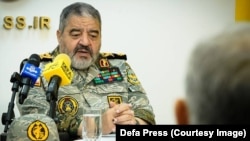
"Don't you have a smart TV at home?"
That was the response of Brigadier General Gholamreza Jalali, the longtime head of Iran's Passive Defense Organization, when asked about security risks after being photographed last week wearing a smartwatch.
In the wake of the assassinations of several Iranian officials -- including Supreme Leader Ayatollah Ali Khamenei earlier this year -- the remark has sparked widespread criticism over security in a country mired in a conflict that continues to flare up at a moment's notice.
When pressed by a reporter, Jalali doubled down on his stance.
“If we were at war, there would be no flights,” he added as he played down concerns about the security risks associated with senior officials having smart gadgets which are susceptible to being tracked.
The Islamic republic has suffered a string of major security breaches in recent years, from the theft of its nuclear archive in 2018 to the assassination of Hamas leader Ismail Haniyeh in a Tehran guesthouse in 2024.
Read more here
Iran Executes Two More Isfahan Protesters, Rights Group Announce

Two more defendants in the Alikhani Square case in Isfahan, were reportedly executed in the early morning of October 5 at Dastgerd Prison in Isfahan. Alireza Sepahi and Alireza Raisi had been arrested during the January 2026 protests.
The reported executions came after Iranian human rights organizations had raised concerns about the imminent execution of Sepahi, a 25-year-old protester sentenced to death in the case. Iran Human Rights and the Washington-based Human Rights Activists News Agency (HRANA) reported that Sepahi had been transferred to solitary confinement and that his family had been summoned for a prison visit, developments that raised fears that his execution was imminent.
On the evening of October 4, Iran Human Rights reported that Sepahi was at imminent risk of execution. On October 5, reports emerged that the executions had been carried. Relatives of Raisi also reportedly announced his execution on social media.
The Alikhani Square case arose from the deaths of four members of Iran’s security forces on January 8 in Isfahan during the mass nationwide protests that month. Iranian state media broadcast videos described as confessions by some defendants, as well as footage of interrogations, crime-scene reconstructions, and court proceedings. Human rights organizations, however, have questioned the validity of such confessions, particularly because defendants in these cases have alleged coercion and ill-treatment.
Before the reported executions of Sepahi and Raisi, five defendants in the Alikhani Square case had already been executed: Erfan Esfandiari, Gol-Mohammad Mohammadi, Abolfazl Sepahi Badjani, Amirhossein Safari Hosseinabadi, and Qaem Hosseini.
The case has drawn international concern over Iran’s increasing use of the death penalty against people accused of involvement in protests. Human rights organizations and foreign governments have repeatedly criticized Iran for using capital punishment in protest-related cases and have warned that executions can be used to intimidate society and deter further dissent.
According to Amnesty International, Iran executed at least 2,159 people in 2025, the highest annual number recorded by the organization for Iran in more than four decades.
Yemen Announces Major Offensive Against Iran-Backed Houthi Forces
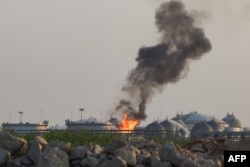
Yemen’s internationally recognized government announced a major military offensive against the Iran-backed Houthi movement on October 4, aiming to retake territory controlled by the group and restore state authority across the country.
Rashad al-Alimi, head of Yemen’s Presidential Leadership Council, announced the operation in a televised address, saying he had instructed the armed forces, security services, and other military formations to begin implementing approved operational plans. Reuters reported that Saudi Arabia and its Yemeni allies had been preparing an assault, with Saudi forces expected to lead air operations while Yemeni government forces fight on the ground.
On October 5, a committee of the Turkey-Saudi Arabia-Pakistan Mecca defense pact met in Riyadh to discuss the security situation in the region.
The escalation follows renewed fighting that has threatened key supply routes around Taiz, a major city in southwestern Yemen. Military and security sources reported that Houthi advances had cut or threatened the main road linking Taiz with Aden, the government’s principal southern base. The developments raised concerns that Taiz could become effectively besieged.
The Houthis, formally known as Ansar Allah, have controlled Yemen’s capital, Sanaa, and much of the country’s northwest since 2014. Saudi Arabia intervened in Yemen’s civil war in 2015 to support the internationally recognized government.
Iran's Oil Minister Resigns Amid Collapse In Crude Loadings
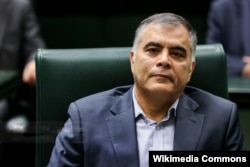
Iranian Oil Minister Mohsen Paknejad resigned on October 4, with President Masud Pezeshkian accepting his resignation and appointing Hamid Bovard, chief executive of the state-owned National Iranian Oil Company, as acting oil minister. Iranian officials said Paknejad had originally submitted his resignation some time ago for personal reasons, but Pezeshkian had initially rejected it.
The resignation comes as Iran faces severe pressure on its oil industry following the US naval blockade of Iranian ports, announced in July. US Treasury Secretary Scott Bessent said on October 1 that Iran loaded zero barrels of crude onto tankers in September, describing the development as evidence that Washington's campaign was cutting off one of Tehran's most important sources of revenue.
Preliminary tanker-tracking data compiled by Bloomberg, as well as data from Kpler and Vortexa, also showed no Iranian crude loadings during September, down from roughly 250,000 barrels per day in August.
Bessent said in September that roughly 15 million barrels of Iranian oil remained at sea, largely destined for China, and predicted that Iran could have little left to trade once those shipments were delivered.
Meanwhile, the United States has intensified sanctions under Operation Economic Outcast, launched in August. Treasury subsequently sanctioned Iran's remaining airlines and continued targeting financial, industrial and oil-related networks.
Despite the disruption to Iranian exports, oil shipments from other Gulf producers have rebounded sharply, with September exports approaching or exceeding pre-war levels.
US Removes B-1 Bombers From UK Base After Suspected Terrorist Arrests
The Pentagon said it had removed its B-1 bombers from a UK air base a week after several men were arrested there on suspicion of preparing terrorist acts.
One dozen B-1 bombers were stationed at RAF Fairford northwest of London. The planes had been used for US strikes during the war with Iran.
"While operational security precluded us from confirming the movement of our assets and forces in real-time, we can acknowledge now that all US bombers that were deployed to RAF Fairford have re-deployed to their home stations in the United States," a Pentagon spokesman wrote in an email on October 4.
British Prime Minister Andy Burnham said London has "strong indications" Iran was involved in a suspected plot targeting the base. Tehran has rejected the accusations.