



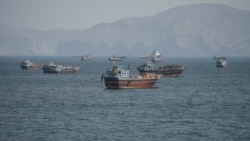

Iran, Oman Working On New Hormuz Maritime Traffic Settings
"The Strait of Hormuz has no more than two coastal countries, and these two countries are simply the Islamic Republic of Iran and the Sultanate of Oman,” declared Iran’s Deputy Foreign Minister Kazem Gharibabadi to the country’s state media on August 25.
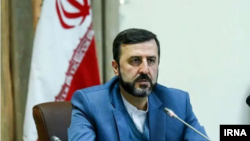
Gharibabadi's interview came hours after foreign ministers of Oman and Iran said in a joint statement that they had discussed a phased framework, including the establishment of a temporary joint shipping corridor and the implementation of a joint project to clear mines from the Strait of Hormuz to resume "safe passage" for ships through the waterway.
Gharibabadi said Iran is still in the state of war and that the Strait of Hormuz is now a matter of Iran's national security and fundamental changes must be made in the entry and exit routes.
According to the official, the working agreement between Oman and Iran is that the new naval traffic route will work like a "round-trip highway" with the entry route to the Persian Gulf through Iranian waters and the exit route through Omani territorial waters and ships passing through Iranian waters on both routes.
The southern route of the Strait of Hormuz is to be closed and the matter will be reported to the International Maritime Organization.
This arrangement is supposed to be temporary, and Tehran and Muscat allow themselves up to 60 days to come up with a permanent agreement.
Gharibabadi reiterated that the entire traffic through Hormuz will remain closed until the United States among other things lifts the economic blockade of Iran and ends the war on all fronts, including Lebanon.
Omani Foreign Minister Badr Al Busaidi discussed the Strait of Hormuz with Iranian Foreign Minister Abbas Araqchi on August 25 in Tehran.
Following the meeting, Araqchi wrote on X that he hoped to soon be able "to announce the establishment of a temporary corridor for the Strait of Hormuz and practical arrangements to restore safe shipping."
Separately, US President Donald Trump announced on Truth Social on August 25 -- citing reports from the US Navy and US Central Command (CENTCOM)-- that "all mines have been removed and/or detonated from within the International Waters of the Strait of Hormuz" and declared the shipping lanes open for maritime traffic. Gharibabadi rejected that as propaganda.
Attacks On Hormuz Shipping Hit Wartime High
Attacks on commercial ships in and around the Strait of Hormuz have surged to their highest daily level since the US-Israeli war with Iran began in late February, with at least 10 ships attacked in recent days, according to maritime security reports.
Singapore's Maritime and Port Authority said two Singapore-registered container ships were struck by unidentified projectiles on October 13 and 14. The GFS Pride caught fire and sank, but all 21 crew members were evacuated safely. The second vessel, GFS Giselle, sustained hull damage but reached a safe anchorage, with all 22 crew members accounted for and safe.
Vanguard Maritime Security reported four attacks on October 13, including one involving the tanker Alfonso, whose fate remained unknown at the time of reporting.
Iran's Islamic Revolutionary Guards Corps Navy separately said a container ship sank after striking a naval mine while using a route Tehran considered unauthorized. It did not clearly identify the vessel as the GFS Pride.
According to AFP, 23 attacks on ships had been recorded in the region since the beginning of October. The International Maritime Organization had recorded 106 confirmed incidents and 24 seafarer fatalities as of October 13.
The attacks have heightened concerns about commercial shipping and global energy supplies, as the Strait of Hormuz is a vital route for oil exports from the Persian Gulf. Although shipping activity and energy exports had reportedly recovered in recent weeks, the latest incidents threaten that progress.
The escalation comes amid a broader confrontation between Washington and Tehran, including a US naval blockade of Iranian ports. Responsibility for individual attacks remains unconfirmed in cases where authorities have identified projectiles but not their origin.
IRGC Spokesman Says Renewed Conflict A Possibility
The spokesman for Iran's Islamic Revolutionary Guards Corps (IRGC) said on October 14 that a renewed US attack on Iran remains possible, despite President Donald Trump's earlier statement that he would not strike the country before the November midterm elections.
"Although starting a new war against Iran is irrational for the United States, the possibility of it happening still very much exists, because the Trump administration needs an achievement before the midterm elections," IRGC spokesman Hossein Mohebbi said in an interview with Iranian state television.
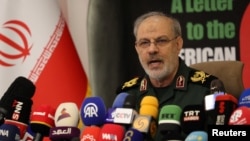
The remarks by a senior IRGC official may indicate that authorities in Tehran remain concerned about a renewed US and Israeli attack on Iranian territory.
On October 11, Mohsen Rezaei, secretary of Iran's Supreme National Security Council, warned that if the United States attacked again, Iranian forces would target "cables, data centers, and artificial intelligence facilities" in the Middle East.
Mohebbi's comments may have been a response to a report published on October 13 by the news website Axios, which, citing unnamed sources, said Trump had discussed with Israeli Prime Minister Benjamin Netanyahu the possibility of striking Iran again before the elections, now just weeks away.
Police Officer, Women's Basij Commander Killed in Iran's Sistan-Baluchistan
A police officer and a commander of the women's branch of the Basij paramilitary force have been killed in separate attacks in Mehrestan County in Iran's southeastern Sistan-Baluchistan Province, Iranian media reported.
The officer, identified as Mohammad Ali Shahriari, died of his injuries in a hospital on October 14 after gunmen opened fire on a police vehicle, according to Iranian news agencies.
The Tasnim news agency, which is close to the Islamic Revolutionary Guards Corps (IRGC), said the attack led to an exchange of fire between the assailants and police but officers were unable to apprehend the attackers.
Haalvsh, a news website focusing on human rights in Sistan-Baluchistan, reported the same and added three other police officers were wounded in the attack.
Shortly afterward, Tasnim reported the killing of a woman whom it described as the commander of a women's Basij branch in Mehrestan, in the south of the province.
The commander was identified as Afsaneh Aqila, who was killed in front of her home. A native of Zabol, she headed the women's Basij unit in Mehrestan’s Afzal district.
For several weeks, various parts of Sistan-Baluchistan have been the scene of clashes and armed attacks between gunmen and police forces. The attacks, which in some weeks have occurred on consecutive days or several times in a single day, have killed a number of police officers and security personnel.
Houthis Vow 'Harsh And Painful Response' After Saudi-Led Forces Target Sanaa Oil Depot
Yemen's Iran-aligned Houthi rebels said Saudi-led forces struck an oil depot on the outskirts of Sanaa on October 13, marking a new escalation in fighting following a week of Houthi missile and drone attacks on Saudi Arabia.
Houthi-run Al-Masirah television reported that the Saudi-led coalition had targeted a Yemen Petroleum Company facility near the country's capital, which the Houthis control. The company said the depot held no petroleum stocks and that the strike had not disrupted fuel supplies.
Houthi military spokesman Yahya Saree threatened a "harsh and painful" response, warning that Saudi oil facilities, including Saudi Aramco's headquarters in Dhahran and a refinery in Riyadh, could be targeted.
The escalation follows a Houthi ballistic missile strike on Riyadh airport on October 10 that killed 13 people, the deadliest such attack in Saudi Arabia in a decade. . Another person was killed in a separate strike on the airport the following day, bringing the death toll from the two attacks to 14.
Saudi Arabia resumed its military campaign in Yemen after the Houthis seized territory along the Red Sea coast near the strategically important Bab el-Mandeb Strait. Saudi-backed forces of Yemen's internationally recognized government have since pushed the rebels back from areas closest to the waterway, although the Houthis have made gains elsewhere, including around the city of Taiz.
The strait has become increasingly important to regional energy shipments following disruptions to traffic through the Strait of Hormuz during the US-Iran war.
Turkish President Recep Tayyip Erdogan told Saudi Crown Prince Mohammed bin Salman that Ankara stood by Riyadh, while US President Donald Trump said the Houthis were "behaving very badly" and suggested Turkey could help Saudi Arabia.
Iran, Saudi Arabia's longtime regional rival, has offered to mediate between Riyadh and the Houthis.
The Houthis, who control much of northern Yemen, including Sanaa, have fought forces backed by a Saudi-led coalition since 2015, although large-scale fighting eased following a UN-brokered truce in 2022. The conflict has intensified sharply in recent months amid the wider US-Iran war.
With reporting by Reuters
Amnesty Slams Iran's Execution Of 5 Protesters

Amnesty International has accused Iran of using executions to intimidate the population and discourage further protests, following the execution of five men convicted in connection with anti-government demonstrations in January.
In a statement issued on October 13, the human rights organization condemned the executions, carried out between September 30 and October 5, saying the men had been convicted following "grossly unfair torture-tainted trials."
Diana Eltahawy, Amnesty's deputy regional director for the Middle East and North Africa, said the executions demonstrated how the Iranian authorities "weaponize the death penalty" to intimidate opponents and prevent further unrest.
She said the judicial proceedings had involved the denial of access to lawyers, allegations of torture, and the use of televised forced confessions.
"Such proceedings make a mockery of justice, laying bare the Iranian authorities’ utter disregard for the right to life," Eltahawy said.
The five men were Ali Hemmati Sistanian, Majid Nikandish, Siavash Jamshidi Kheirabadi, Alireza Sepahi, and Alireza Raisi.
Sistanian and Nikandish were executed in Mashhad on September 30, Jamshidi Kheirabadi in Shahr-e Kord on October 3, and Sepahi and Raisi in Isfahan on October 5, according to the Iranian judiciary's Mizan news agency.
Amnesty said Sepahi reported "being subjected to torture and other ill-treatment and was denied access to a lawyer during interrogations at the investigation stage."
The rights organization warned that "scores of people including dissidents and protesters remain at risk of politically motivated executions" as the authorities intensify repression, citing so-called wartime conditions and national-security threats.
Amnesty called for coordinated international diplomatic pressure to halt further executions and urged the United Nations to pursue mechanisms for holding Iranian officials accountable.
It said Iranian authorities had executed at least 34 people in connection with the January 2026 protests.
Amnesty has repeatedly criticized Iran's use of the death penalty, particularly against protesters and political dissidents.
Meanwhile, human rights organizations and activists have continued their campaigns against executions in Iran.
Gina Romero, the UN special rapporteur freedom of association and assembly, announced plans to go on hunger strike on October 13 in solidarity with Iran's "No to Execution Tuesdays" campaign.
With reporting by RFE/RL's Radio Farda
Prominent Iranian Human Rights Lawyer Arrested
- By Radio Farda
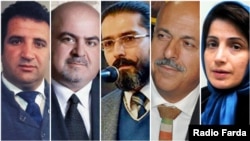
A prominent human rights lawyer and activist has been arrested in Iran, sources close to him told RFE/RL’s Radio Farda.
Amirsalar Davoodi was arrested in court in the central city of Isfahan on October 11 while defending a client, said the sources who spoke on condition of anonymity for security reasons.
The charges against him are unknown, and it is unclear where he is being held.
Davoodi’s arrest comes amid an intensifying crackdown on dissent in the Islamic republic, where the authorities have jailed lawyers, activists, journalists, and intellectuals.
Read more here
Burnham Says Iran's Revolutionary Guards 'Almost Certainly' Directed Plot Against UK Airbase
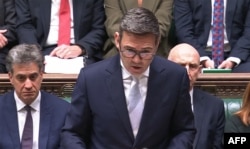
UK Prime Minister Andy Burnham has said Iran very probably orchestrated a suspected plot to attack a British airbase used by US bombers to carry out strikes on Iran.
“I can confirm our assessment that it is highly likely to have been coordinated in Iran, almost certainly directed by Iran's Islamic Revolutionary Guard (IRGC),” Burnham told parliament on October 12.
Five British men were arrested near RAF Fairford on September 27 on suspicion of terrorism and explosives offences. Police found petrol but no viable explosives in three vans near the base. The men were released without charge, as were two others arrested in connection with the investigation.
US officials told Reuters that the suspected plot involved a possible drone attack. President Donald Trump said last week that the threat had prompted the withdrawal of US bombers from the base.
Iran denied involvement, calling the allegations “unfounded and malicious speculations”.
Burnham said Britain would "crack down on Iran's use of criminal networks" and would "bring further sanctions to restrict the capacity of Iran and the IRGC to do us harm."
With reporting by Reuters and AFP
Iran Executes Alleged Separatist In Sistan-Baluchistan

Iran has executed a man convicted of membership in the Baluch militant group Jaish al-Adl and of “aiding armed rebellion,” the judiciary’s Mizan news agency reported on October 12.
Mizan identified the man as Omar Darastaran. It did not give his age or hometown, name the court that tried him, or say where he was hanged.
According to the judiciary, Darastaran provided support for Jaish al-Adl attacks on police and Islamic Revolutionary Guards Corps (IRGC) bases in Rask and Chabahar in the southeastern Sistan-Baluchistan Province in April 2024. Mizan said the Supreme Court upheld his sentence.
Iran and the United States have both designated Jaish al-Adl a terrorist group. The group says it is fighting for the rights of Iran’s Baluch minority. In December 2025, the group rebranded in an attempt to gain legitimacy as an Iranian opposition group, but has continued to claim responsibility for deadly attacks against security forces.
Sistan-Baluchistan, which borders Pakistan and Afghanistan, is one of Iran’s poorest provinces and has long been a flashpoint for unrest. Its predominantly Sunni Baluch population has faced discrimination and economic marginalization in Shi'a-majority Iran.
The execution was announced as police spokesman Saeed Montazerolmahdi said a “terrorist team” linked to recent assassinations in the province had been dismantled.
Rights groups say Tehran uses executions to spread fear and deter protests. Amnesty International says Iran executed at least 2,159 people in 2025.
Iran Claims US Accepted Some Terms For Talks, But Calls Response 'Inadequate'
The secretary of Iran's Supreme National Security Council (SNSC) claimed the United States has agreed to some of Iran's conditions to restart negotiations aimed at ending the more than seven-month war.
In a late-night post on X on October 11, Mohsen Rezaei wrote on X that Iran still finds the US response insufficient to resume diplomacy.
"The US has agreed to some of Iran's seven conditions, but we consider its response INADEQUATE," Rezaei wrote in English. "Iranian diplomacy has changed and there will be no return to the status quo ante."
RFE/RL has reached out to the White House for comment.
Rezaei last month publicly outlined five of the seven conditions, which include releasing Iran's frozen assets, ending the war on all fronts, halting interference in Iranian affairs, stopping attacks on Iranian territory, and lifting the US naval blockade.
President Donald Trump said last week that the United States will not launch further military strikes against Iran prior to the November midterm elections, though he insisted Iran has yet to offer the right terms to finalize a broader deal.
Saudi Allies Issue Stark Warning Against Houthis
Terming the latest Houthi attacks on Saudi Arabia that claimed several lives and damaged key infrastructure a "dangerous escalation," Saudi allies Pakistan, Turkey, and Egypt said such attacks "cannot be justified or accepted under any pretext."
In a joint statement on October 11, the R4 Group reaffirmed its support for Riyadh's "all legitimate measures and steps it takes to counter these attacks, deter the source of their threat and prevent their recurrence."
"The Group holds the Houthi militia fully accountable for the results of these attacks and any repercussions that come with it that threaten regional and international peace and security," the statement said.
Saudi authorities said one person was killed and 11 others injured in a fresh attack on Riyadh's international airport early on October 12.
Key Saudi infrastructure has been under missile attacks from the Iran-aligned Houthis over the past week. On October 10, a strike on King Khalid International Airport killed 13 people and wounded more than 300.
The latest flare-up in the conflict started following the September capture of the Red Sea port city of Mocha and other area around the Bab-el-Mandeb Strait by the Houthi rebels. The waterway is a key route for Saudi oil exports to Asia.
Earlier this month, Saudi defense forces claimed the retaking control of the strait from the Houthis.
The Houthis, who control much of northern Yemen, including the capital, Sanaa, have fought forces backed by a Saudi-led coalition since 2015, although large-scale fighting eased following a UN-brokered truce in 2022.
US President Donald Trump on October 10 said the United States "may" join Saudi strikes on the Houthis in the conflict, although he said no decisions have been made on the matter.