


House Passes Sanctions Package Extending US Pressure on Iran
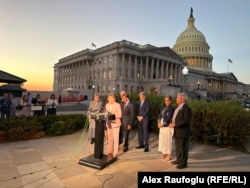
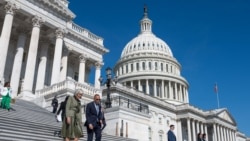
The US House of Representatives on September 16 passed a sweeping sanctions bill that extends a key element of Washington's sanctions regime against Iran through 2031, sending the legislation to President Donald Trump for his signature. The measure, known as the Lindsey O. Graham Sanctioning Russia and Iran Act of 2026, passed by 262–159, with 58 Democrats joining most Republicans in support.
For Iran, the most significant provision is the five-year extension of the Iran Sanctions Act of 1996, which had been due to expire at the end of 2026. The law provides for sanctions against certain foreign companies and individuals involved in investments and transactions connected to Iran’s energy sector and other specified activities.
The extension does not create an entirely new sanctions framework, but it ensures that the United States retains a longstanding legal mechanism for targeting Iran’s oil and gas sector. That could continue to deter foreign companies and financial institutions from investing in or facilitating transactions involving Iranian energy.
The move comes as the Trump administration is separately stepping up efforts to restrict Iran’s access to international finance. On September 16, the US Treasury also held discussions with global financial institutions aimed at disrupting Iranian revenue and procurement networks.
The legislation also contains major measures targeting Russia and gives Trump authority to impose tariffs of up to 100 percent on countries purchasing Russian energy.
Trump Says Iran Reached Out Directly As Washington Eyes Postwar Talks
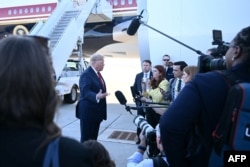
US President Donald Trump said on September 16 that Iran had contacted the United States directly and was seeking a deal, as he suggested the seven-month war could be nearing an end.
Speaking to reporters after arriving in North Carolina on September 16, Trump said, "Hopefully we are toward the end of the war," and added that Iran "wants to make a deal."
Asked whether the contact had come directly from Tehran or through intermediaries, Trump replied that it was direct. He did not provide details, and there has been no public confirmation from Iranian officials of such contact.
Trump later told a campaign rally in Gastonia that the conflict could have a "really good ending," while suggesting it might enter a different phase after the November US midterm elections.
Vice President JD Vance has similarly said the war could enter a "fundamentally different phase" within the next month or two, without specifying whether that would mean reduced fighting, escalation, or diplomacy.
The comments come despite a recent hard-line public message from Iran's Supreme National Security Council secretary, Mohsen Rezaei. On September 14, Rezaei said Tehran would not negotiate with Washington until Iran's conditions were met.
Meanwhile, Axios reported that Trump is expected to meet Gulf Arab leaders in New York on September 22 on the sidelines of the UN General Assembly. The meeting is expected to focus on Washington's proposed postwar strategy for Iran, although the plans have not been publicly confirmed by the White House.
House Passes Sanctions Package Extending US Pressure on Iran
The US House of Representatives on September 16 passed a sweeping sanctions bill that extends a key element of Washington's sanctions regime against Iran through 2031, sending the legislation to President Donald Trump for his signature. The measure, known as the Lindsey O. Graham Sanctioning Russia and Iran Act of 2026, passed by 262–159, with 58 Democrats joining most Republicans in support.
For Iran, the most significant provision is the five-year extension of the Iran Sanctions Act of 1996, which had been due to expire at the end of 2026. The law provides for sanctions against certain foreign companies and individuals involved in investments and transactions connected to Iran’s energy sector and other specified activities.
The extension does not create an entirely new sanctions framework, but it ensures that the United States retains a longstanding legal mechanism for targeting Iran’s oil and gas sector. That could continue to deter foreign companies and financial institutions from investing in or facilitating transactions involving Iranian energy.
The move comes as the Trump administration is separately stepping up efforts to restrict Iran’s access to international finance. On September 16, the US Treasury also held discussions with global financial institutions aimed at disrupting Iranian revenue and procurement networks.
The legislation also contains major measures targeting Russia and gives Trump authority to impose tariffs of up to 100 percent on countries purchasing Russian energy.
Women, Life, Freedom Leaves Its Mark On A New Wave Of Iranian Cinema
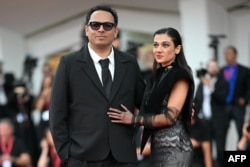
Four years after the death of Mahsa Amini sparked Iran's largest protest movement in decades, the impact of Women, Life, Freedom is in Iranian society.
One of the movement's most lasting effects has been on the way Iranian filmmakers portray women. Characters who once had to navigate the restrictions imposed by Iran's censorship system are increasingly being presented as women who simply refuse to accept them.
In Jafar Panahi's film It Was Just An Accident, one of the central female characters is unveiled, resolute, and pragmatic, forcing those around her to confront uncomfortable truths. Panahi has described the character as reflecting the women who took control of their own destinies during the Women, Life, Freedom protests.
A growing group of Iranian filmmakers have produced films outside the rules imposed by the Culture Ministry and without the official permits traditionally required to make and release a movie in Iran.
They include Navid Mihandoust's The Cafe, Karim Lakzadeh's Dark Matter, Mehrnoush Aliya's A Thousand and One Frames, Sahand Kabiri's The Group, Mohammad Shirvani's Cesarean Weekend, Abbas Nezamdoost's Dual, and Ali Asgari's A Little Light, among others.
The significance of these films lies not only in what they depict, but in how they are made.
To read the full report, click here.
Amini's Parents Pay Tribute On Fourth Anniversary Of Daughter's Death
The fourth anniversary of the death of 22-year-old Mahsa Amini after her detention by Iran's morality police in Tehran has been accompanied by widespread reactions on social media and heightened security measures in Kurdish cities in Iran.
Amini was a student from Saqqez who died at Kasra Hospital in Tehran on September 16, 2022, three days after she was arrested in Tehran by Iran's so-called morality police for an alleged violation of the compulsory hijab rules for women.
Her death triggered nationwide protests that developed into the Woman, Life, Freedom movement and attracted international attention.
Messages and commemorations began appearing on Persian-language social networks in the days before the fourth anniversary.
Amjad Amini, Mahsa's father, published a message on Instagram on September 16 thanking people who had participated in the general strike in Kurdistan and those inside and outside of Iran who had remembered his daughter. He wrote that, amid economic and livelihood difficulties, "keeping a shop closed and stopping work is not easy for anyone."
Reports indicated that shopkeepers and market traders in numerous Kurdish cities had closed their businesses in observance of the strike on September 16. The reported cities included Saqqez, Sanandaj, Kamyaran, Baneh, Marivan, Mahabad, Oshnavieh, Piranshahr, Divandarreh and Bukan, among others. Different sources reported participation in different numbers of cities: the Kurdistan Human Rights Network documented strikes in nine cities, while other organizations reported strikes in at least 11 or 20 cities.
Websites and human-rights organizations covering Iran's Kurdish regions, including Hana, Kurdpa, Hengaw, and the Kurdistan Human Rights Network, published reports and images concerning shop closures and the strike.
Meanwhile, reports and images indicated a heightened security presence in several Kurdish cities, including the deployment of security and military forces and checkpoints. In Saqqez, reports described extensive patrols, security vehicles, and the blocking of routes leading to Aichi Cemetery, where Amini is buried.
The Coalition of Political Forces of Iranian Kurdistan had previously called for a general strike in Kurdish cities on September 16.
In his message, Amjad Amini also said security forces had blocked routes leading to Aichi Cemetery.
On September 15, Mojgan Eftekhari, Mahsa Amini's mother, published a message commemorating her daughter. She wrote: "I gave birth to you once and I was born once from the pain of your relentless absence. You were so close to the love of God that those who look from every corner of the world will see your name on the sky."
CENTCOM Says Hormuz 'Remains Open' As Houthi-Saudi Fighting Threatens Another Key Waterway
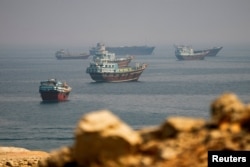
The US military says traffic in the Strait of Hormuz continues to gain momentum amid concerns that escalating fighting between Saudi Arabia and Iran-aligned Houthi rebels in Yemen threatens another vital artery for global oil supplies in the region.
CENTCOM said in a statement to RFE/RL on September 16 that the strait "remains open for transit." A key artery for global energy supplies, the strategic waterway has been a focal point in the war between the United States and Iran.
"Traffic is flowing and momentum is building despite Iranian attempts to intimidate and harm innocent civilian crews," the statement said.
To read the full report, click here.
Four Years On, Iranian Woman Seeks Justice For Brother Killed In Women, Life, Freedom Protests
Shahriar Mohammadi was among the hundreds killed in Iran's bloody crackdown on the Women, Life, Freedom protests that erupted four years ago.
The nationwide demonstrations were triggered by the death in custody of Mahsa Amini, a young woman who was accused of violating the country's controversial hijab law.
The protests began as a rebuke of the brutal enforcement of the Islamic head scarf but grew into one of the most sustained challenges to Iran's clerical rulers, who used lethal force to crush the rallies, killing around 500 people, human rights groups said.
Mohammadi was shot in the northwestern city of Bukan in November 2022. Iranian security forces fired on his vehicle, and the 28-year-old later died in hospital from his wounds, his family has said.
"It's very difficult to put these four years into words," Asrin Mohammadi, his sister, told RFE/RL's Radio Farda. "Our lives were completely transformed and turned upside down."
To read the full report, click here.
Amnesty Urges UN Justice Mechanism For "Crimes Against Humanity' In 2022 Iran Protests
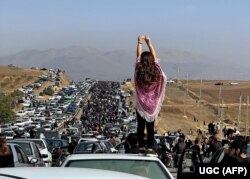
Amnesty International said Iranian authorities committed crimes against humanity during their suppression of the 2022 “Women, Life, Freedom” protests, which were sparked by the death of Mahsa Amini in police custody. It also identified 87 officials it said should face criminal investigation over their roles in the crackdown.
In a report of more than 1,000 pages, the rights group said security forces carried out murder, torture, enforced disappearance, imprisonment, rape, and persecution as part of a widespread and systematic attack on protesters. It said the Islamic Revolutionary Guards Corps and police implemented a state policy of lethal force through coordinated chains of command.
Amnesty's secretary-general, Agnes Callamard, said "extensive evidence gathered and analyzed in our report leaves no doubt: Iranian authorities committed crimes against humanity" to suppress the 2022 protests.
The rights group documented the deaths of 377 protesters and bystanders, including 56 children, and said ethnic Kurdish and Baluchi communities were disproportionately affected. Its investigation drew on interviews with 270 people, more than 2,000 videos and official, leaked, judicial, and forensic documents.
Those identified range from senior national officials to provincial and local security commanders. Amnesty said its list was not exhaustive.
The group called on the UN General Assembly to establish an international criminal justice mechanism for Iran and urged prosecutors in other countries to pursue cases under universal or other extraterritorial jurisdiction.
Amnesty said it had sent its findings to senior Iranian authorities and sought responses from the officials identified. It said none had responded by the time of publication
Four Years After Mahsa Amini's Death, Iranian Women Defy Hijab Law
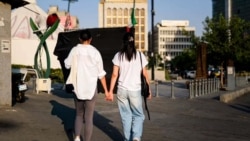
Four years after Mahsa Amini died in police custody following her detention over Iran’s mandatory hijab law, increasing numbers of Iranian women are appearing in public without head scarves. Amini's death became the catalyst for the 2022 Woman, Life, Freedom protest movement.
The defiance has grown amid war with the United States and mounting political and economic pressures.
While Iran's so-called morality police have largely disappeared from public life across major cities, questions remain about whether the relaxation is a tactical retreat rather than a policy shift. (Video by By RFE/RL's Radio Farda, Hannah Kaviani, and Austin Malloy)

At Least 100 Iran Protesters Sentenced To Death, Rights Group Says
At least 100 people detained in connection with Iran's January protests have been sentenced to death, including five women and at least five people who were under 18 at the time of their alleged offenses, the Norway-based Iran Human Rights (IHR) group said.
IHR said the cases, documented across 13 of Iran's 31 provinces, represented only a fraction of protesters potentially facing the death penalty. Only five of the 100 cases had been announced by official sources, it said.
All 100 have received at least a preliminary death sentence, while some have had their sentences upheld by Iran's Supreme Court.
IHR Director Mahmood Amiry-Moghaddam said the protesters had been sentenced by Revolutionary Courts in proceedings that "fail to meet minimum fair-trial standards."
The group said defendants in protest-related cases were routinely denied lawyers of their choosing and alleged that torture and coerced confessions were systematically used.
Since March 18, Iran has executed 31 protesters, including 29 detained over the January protests and two linked to the earlier "Woman, Life, Freedom" movement, according to IHR.
The group's latest figures show 561 people have been executed in Iran since the start of 2026.
Shipping Data Shows Hormuz Traffic Falls To Just 4 Vessels
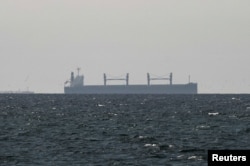
Ship traffic through the Strait of Hormuz fell to just four vessels on September 15, down from seven a day earlier and well below the 10-day average of 18, preliminary shipping data showed.
Two vessels entered and two exited the strait, with no very large crude carriers or liquefied natural gas tankers recorded. The figures may understate actual traffic because some ships are sailing with their tracking transponders switched off.
Three of the four recorded vessels used the so-called Iranian route -- a northern corridor through waters controlled by Iran that Tehran has sought to establish as the authorized passage through the strait. Another vessel used an unidentified "dark" route.
Commercial traffic through Hormuz has plunged since the Iran war began in February. Tehran has sought to assert control over navigation through the strait and has attacked commercial vessels, while the United States is enforcing a naval blockade aimed at preventing ships from serving Iranian ports and has also attacked Iran-linked vessels.
Before the war, the Strait of Hormuz handled about one-fifth of the world's oil and liquefied natural gas supplies, making it one of the world's most important energy chokepoints. Around 125 large commercial vessels a day typically passed through the waterway before the conflict.
Elsewhere in the Middle East, 22 vessels passed through the Bab el-Mandeb Strait, little changed from 24 a day earlier, amid concerns over recent advances by Yemen's Iran-aligned Houthi rebels near the waterway. The strait, at the southern entrance to the Red Sea, is another major global shipping chokepoint, linking the Red Sea and Suez Canal route with the Gulf of Aden and Indian Ocean.