




British-Iranian Man Arrested as RAF Fairford Investigation Expands
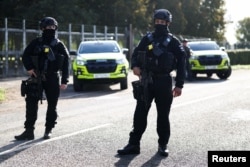
British counterterrorism officers arrested a 27-year-old dual British-Iranian citizen in London on October 1 as part of an investigation into suspicious activity linked to RAF Fairford in Gloucestershire.
The man was detained in Westminster on suspicion of preparing terrorist acts under Section 5 of the Terrorism Act 2006, according to Reuters and Britain's Counter Terrorism Policing. Investigators also questioned a 26-year-old British man under caution and searched two London properties.
The investigation began on September 27, when police detained five British men close to RAF Fairford. The men, who were between 23 and 25 years old and lived in London, had been traveling in three vehicles that attracted the attention of police. They were initially detained under the Explosives Act and were later investigated on suspicion of preparing a terrorist act.
All five were released on police bail the following day and remain under investigation. Police have emphasized that their release was not an indication that the case had been closed and said restrictions had been imposed on those released.
Subsequent searches of the vehicles found no improvised explosive devices, police said. Officers did, however, recover a quantity of petrol.
RAF Fairford, a Royal Air Force station in Gloucestershire, is regularly used by the U.S. military and has supported U.S. bomber operations against Iran.
The new arrest came as British officials were examining a possible Iranian connection to the incident. On September 30, Prime Minister Andy Burnham said there were “strong indications” that Iran had been involved, while declining to discuss details that could affect the ongoing investigation.
Tehran has rejected the allegation. On October 1, Iranian authorities summoned Britain's ambassador in Tehran, Hugo Shorter, to protest the British government's claims.
British authorities have not publicly explained what specific evidence led to the latest arrest. Counter Terrorism Policing has described the case as complex and said investigators are pursuing several lines of inquiry, including the possibility of involvement by a foreign state.
Oil Exports Find A Way Past Iranian Attacks, But Refinery Bottleneck Persists
Exports of crude oil from the Middle East hit their highest level in September since the war with Iran began, reinforcing a trend of increased supplies despite Iranian attacks on shipping in the Strait of Hormuz, according to analysis of shipping and commodity market data by industry observers.
But while crude levels have risen, the refinery bottleneck that has caused a global spike in diesel prices persists. European Union figures published on October 1 showed diesel pump prices at record levels. Prices have also surged in the United States despite the recovery in oil exports.
"More oil is coming out of the Middle East Gulf than many expected that would be possible even just a few months ago," Richard Meade, chief editor of Lloyds List, told an online briefing on October 1.
To read the full report, click here.
NATO Chief Calls US Iran Nuclear Strikes 'Absolutely Essential'
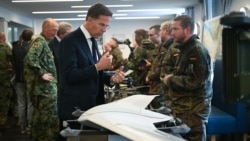
NATO Secretary-General Mark Rutte described the US military operation against Iran's nuclear program as "absolutely essential," while saying Europe currently lacks the capabilities to carry out such an operation itself.
Speaking on September 30 at the Euronews Defence & Space Summit in Brussels, Rutte said the United States had been capable of degrading Iran's nuclear capabilities, while European countries lacked the necessary means. He said Europe should develop such capabilities within the next 10 years.
"It should also be us taking care of the Houthis in the Red Sea and not the Americans," Rutte said, adding that the US operation against Iran has had consequences but was, in his view, "absolutely essential." He stressed that this was his own assessment and not necessarily the position of the wider NATO alliance.
Israel launched its war against Iran on June 13, 2025, striking Iranian military and nuclear facilities over 12 days. On June 22, 2025, the United States carried out strikes on Iran’s nuclear facilities at Fordow, Natanz and Isfahan using B-2 bombers and Tomahawk missiles. US officials reported the facilities were severely damaged, with President Donald Trump describing the sites as "completely and totally obliterated."
The head of the UN's International Atomic Energy Association, Director-General Rafael Grossi, has continued to raise concerns over Iran's stockpile of more than 400 kilograms of uranium enriched to 60 percent and the agency's inability to verify its whereabouts. Iranian authorities have not permitted inspectors to fully access the damaged facilities.
Iranian President Masud Pezeshkian has expressed readiness to dilute the enriched uranium while maintaining that Iran will not abandon its nuclear knowledge.
Will Iran 'Flex Its Muscles' In Iraq After US Military Pullout?
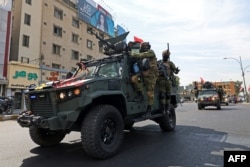
The departure of US forces from Iraq will embolden Iran, experts say, warning that Tehran could seek to exploit a potential security vacuum to expand its influence in the smaller neighboring country.
Iran is already a key political and economic player in Iraq, where it backs powerful Shi'ite militias, some of which operate within the state security apparatus but have considerable autonomy.
The Islamic republic cast the end of the two-decade US military presence on September 30 as a major victory in its goal of driving American forces from the Middle East.
"Iran views any US weakness as a chance to push and be more aggressive, so I would expect to see the Iranians attempt to take advantage of the new status quo by flexing their muscles in Iraq," said Colin Clarke, executive director of the Soufan Center, a New York-based think tank.
Experts also warn the US pullout could provide an opening for the resurgence of the Islamic State (IS) extremist group, which has been significantly weakened but remains active in Iraq.
To read the full report, click here.
Pakistan Stresses Commitment To Iran Sanctions
Pakistan says it is committed to all sanctions against Iran in accordance with international and domestic laws.
Foreign Ministry spokesman Sajjad Haider Khan told his weekly press briefing on October 1 that his country values its "enduring and multifaceted" partnership with the United States and that Islamabad remains committed to further strengthening its diplomatic, economic, and security ties with Washington.
Khan was responding to a question regarding an earlier comment by his office stating that Pakistan would continue bilateral trade with Iran in accordance with international law.
Quoting Tahir Andarabi, an outgoing spokesman for the Pakistan ministry, Iran's official news agency, IRNA, reported on August 27 that "Pakistan has consistently rejected unilateral measures and does not accept unilateral sanctions imposed by the United States."
However, Khan clarified that IRNA had quoted Andarabi "out of context." He added that being a responsible member of the international community, Pakistan "adheres to and shall continue to adhere to all applicable sanctions regimes in accordance with international as well as domestic laws."
He said Iran and the United States should resolve all their outstanding issues through dialogue and by honoring their respective commitments under the Islamabad Memorandum of Understanding.
Pakistan has been acting as a mediator between Iran and the United States since the start of the conflict on February 28. In April, Islamabad hosted the first face-to-face talks between US and Iranian delegations since the 1980s.
Tehran Air Traffic Falls 42 Percent After US Targets Iranian Airlines
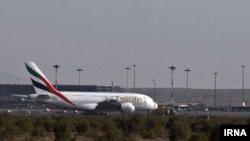
International flights to and from Tehran’s main airport have fallen 42 percent since new US restrictions targeting Iranian airlines took effect on September 23, flight-tracking data shows, although several major routes remain in operation.
Imam Khomeini International Airport has averaged 53 international flights a day since the measures took effect, down from 91 previously, according to data compiled up to September 30 by air-traffic tracker Flightradar24. Services to Georgia, Oman and Azerbaijan have stopped, while flights to the United Arab Emirates and Iraq have also been sharply curtailed.
No flights between Iraq and Tehran have taken off since September 25, but Iraq’s Transport Ministry said the United States had given permission for the country’s national carrier to resume flights between the Shi’ite holy city of Najaf and Iran in October.
Flights between Tehran and China have remained steady at an average of eight a day, while traffic to Turkey, the airport’s busiest international route, has fallen by 19 percent. Services have also continued to countries including Armenia, Russia, Afghanistan, Pakistan, and Qatar.
The restrictions are part of a broader US campaign announced by Treasury Secretary Scott Bessent in August aimed at isolating Iran economically. In September, the US Treasury sanctioned Iran’s remaining active airlines and warned foreign companies supporting them that they risked being cut off from the US financial system.
Air traffic had already fallen sharply after Israeli-American strikes on Iran in February led to the closure of Iranian airspace.
With reporting by AFP
UK PM Links Iran To Airbase Incident
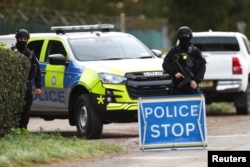
There are "strong indications" that Tehran was involved in suspicious activity close to a British airbase used by US forces to strike Iran, UK Prime Minister Andy Burnham said on September 30.
In an incident which triggered a huge police response, five British men in their 20s were arrested on September 27 on suspected terrorism and explosive offences near RAF Fairford in western England.
All five of the suspects live in London. They were later released on bail as the investigation continues.
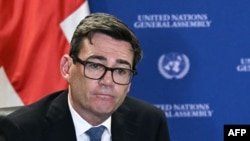
"There are strong indications that Iran played a part in what happened over the weekend at RAF Fairford, but of course it remains an ongoing, complex, and serious police investigation," Burnham told the BBC in an interview.
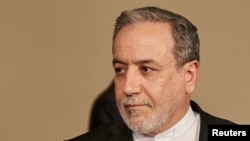
Iranian Foreign Minister Abbas Araqchi rejected UK's allegations saying London "barks up the wrong tree." In a social media post on September 30, hours after Burnham's statement, Araqchi wrote that releasing "supposed terrorists" who were allegedly working for a foreign state "says it all."
Until Burnham's remarks, Britain had not linked the Fairford events to Iran, though counterterrorism police have said their investigation included the possibility of foreign state involvement and the involvement of proxies "knowingly or unknowingly working on behalf of a foreign state."
With reporting by Reuters
Three Ships Struck By Unknown Projectiles In Hormuz Strait, Says UK Maritime Agency
Three tankers were struck by unknown projectiles in the Strait of Hormuz on September 29, a British maritime security agency said, amid renewed attacks on shipping in the strategic waterway.
The United Kingdom Maritime Trade Operations (UKMTO) said on September 30 that three tankers were hit in separate incidents the previous day.
There was no immediate claim of responsibility.
A spokesman for Iran's Islamic Revolutionary Guards Corps (IRGC) said on September 30 that “military confrontations occur in the Strait of Hormuz within every 24-hour period,” adding that the United States had recently not been responding.
Iran has restricted commercial traffic through the strait during its conflict with the United States and has threatened or attacked vessels it accuses of unauthorized passage.
The United States has responded by targeting Iranian vessels and imposing a counterblockade on Iranian ports aimed at restricting Tehran’s oil exports.
Before the war, around one-fifth of global oil and liquefied natural gas passed through the strait.
With reporting by AFP and dpa
Iran Says US Proposal Presented To President
Iranian Foreign Minister Abbas Araqchi presented a US proposal to President Masud Pezeshkian during a cabinet meeting on September 30, the government spokeswoman said, as Tehran weighs conditions for reopening the strategically vital Strait of Hormuz.
Fatemeh Mohajerani said Araqchi briefed the cabinet on his recent trip to New York and his meetings with foreign officials, including discussions about Iran's conditions for reopening the strait through intermediaries.
She did not disclose details of the conditions or the US proposal.
Mohajerani said Iranian officials had held meetings with European countries, Gulf Arab states, and other governments during Araqchi's trip, despite what she described as efforts by Iran's “enemies” to isolate the country.
She said Tehran was seriously pursuing diplomatic efforts to resolve issues in its foreign policy.
Iran presented the United States with a proposal to resume talks and reopen the Strait of Hormuz as part of a seven-day plan during the Iranian delegation's trip to New York for the UN General Assembly.
US President Donald Trump rejected the proposal and later denied an Axios report that he had offered Tehran sanctions relief and the release of frozen Iranian funds.
Iran Warns Of 'Dangerous Consequences' Of Netanyahu Trip To UAE
Iran has condemned Israeli Prime Minister Benjamin Netanyahu's weekend visit to the United Arab Emirates, and a senior lawmaker warned that “the palaces” of US-aligned regional states pushing for renewed war would be "legitimate targets" in any future conflict.
Netanyahu met UAE President Sheikh Mohamed bin Zayed Al Nahyan in Abu Dhabi on September 27. The trip was first reported by Israel's Channel 12 and later confirmed by both governments.
In a statement late on September 29, Iran's Foreign Ministry denounced the trip and warned of the "very dangerous consequences" of Israel's presence in the region. It urged regional governments not to let their territory become a platform for "destabilizing actions" against their neighbors but stopped short of criticizing the UAE by name.
Lawmaker Ebrahim Rezaei went further, saying "America's colonies in the region" were pushing for another war and had agreed to cover its costs.
Rezaei, who serves as the spokesman of the parliament’s influential National Security and Foreign Policy Committee, did not name any country or offer evidence for the claim.
CNN, citing an Israeli source, reported that Netanyahu shared new intelligence claiming Iran was resuming progress on its nuclear program.
The visit comes a month before Israeli elections.