



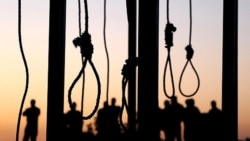

Iran Executes Two More Isfahan Protesters, Rights Group Announce
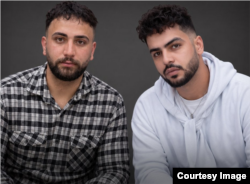
Two more defendants in the Alikhani Square case in Isfahan, were reportedly executed in the early morning of October 5 at Dastgerd Prison in Isfahan. Alireza Sepahi and Alireza Raisi had been arrested during the January 2026 protests.
The reported executions came after Iranian human rights organizations had raised concerns about the imminent execution of Sepahi, a 25-year-old protester sentenced to death in the case. Iran Human Rights and the Washington-based Human Rights Activists News Agency (HRANA) reported that Sepahi had been transferred to solitary confinement and that his family had been summoned for a prison visit, developments that raised fears that his execution was imminent.
On the evening of October 4, Iran Human Rights reported that Sepahi was at imminent risk of execution. On October 5, reports emerged that the executions had been carried. Relatives of Raisi also reportedly announced his execution on social media.
The Alikhani Square case arose from the deaths of four members of Iran’s security forces on January 8 in Isfahan during the mass nationwide protests that month. Iranian state media broadcast videos described as confessions by some defendants, as well as footage of interrogations, crime-scene reconstructions, and court proceedings. Human rights organizations, however, have questioned the validity of such confessions, particularly because defendants in these cases have alleged coercion and ill-treatment.
Before the reported executions of Sepahi and Raisi, five defendants in the Alikhani Square case had already been executed: Erfan Esfandiari, Gol-Mohammad Mohammadi, Abolfazl Sepahi Badjani, Amirhossein Safari Hosseinabadi, and Qaem Hosseini.
The case has drawn international concern over Iran’s increasing use of the death penalty against people accused of involvement in protests. Human rights organizations and foreign governments have repeatedly criticized Iran for using capital punishment in protest-related cases and have warned that executions can be used to intimidate society and deter further dissent.
According to Amnesty International, Iran executed at least 2,159 people in 2025, the highest annual number recorded by the organization for Iran in more than four decades.
'Don't You Have A Smart TV?': Iranian General's Smartwatch Defense Fuels Security Concerns
- By Kian Sharifi
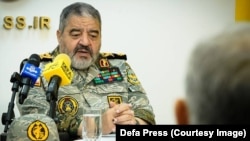
"Don't you have a smart TV at home?"
That was the response of Brigadier General Gholamreza Jalali, the longtime head of Iran's Passive Defense Organization, when asked about security risks after being photographed last week wearing a smartwatch.
In the wake of the assassinations of several Iranian officials -- including Supreme Leader Ayatollah Ali Khamenei earlier this year -- the remark has sparked widespread criticism over security in a country mired in a conflict that continues to flare up at a moment's notice.
When pressed by a reporter, Jalali doubled down on his stance.
“If we were at war, there would be no flights,” he added as he played down concerns about the security risks associated with senior officials having smart gadgets which are susceptible to being tracked.
The Islamic republic has suffered a string of major security breaches in recent years, from the theft of its nuclear archive in 2018 to the assassination of Hamas leader Ismail Haniyeh in a Tehran guesthouse in 2024.
Read more here
'Don't You Have A Smart TV?': Iranian General's Smartwatch Defense Fuels Security Concerns
- By Kian Sharifi
"Don't you have a smart TV at home?"
That was the response of Brigadier General Gholamreza Jalali, the longtime head of Iran's Passive Defense Organization, when asked about security risks after being photographed last week wearing a smartwatch.
In the wake of the assassinations of several Iranian officials -- including Supreme Leader Ayatollah Ali Khamenei earlier this year -- the remark has sparked widespread criticism over security in a country mired in a conflict that continues to flare up at a moment's notice.
When pressed by a reporter, Jalali doubled down on his stance.
“If we were at war, there would be no flights,” he added as he played down concerns about the security risks associated with senior officials having smart gadgets which are susceptible to being tracked.
The Islamic republic has suffered a string of major security breaches in recent years, from the theft of its nuclear archive in 2018 to the assassination of Hamas leader Ismail Haniyeh in a Tehran guesthouse in 2024.
Read more here
Iran Executes Two More Isfahan Protesters, Rights Group Announce
Two more defendants in the Alikhani Square case in Isfahan, were reportedly executed in the early morning of October 5 at Dastgerd Prison in Isfahan. Alireza Sepahi and Alireza Raisi had been arrested during the January 2026 protests.
The reported executions came after Iranian human rights organizations had raised concerns about the imminent execution of Sepahi, a 25-year-old protester sentenced to death in the case. Iran Human Rights and the Washington-based Human Rights Activists News Agency (HRANA) reported that Sepahi had been transferred to solitary confinement and that his family had been summoned for a prison visit, developments that raised fears that his execution was imminent.
On the evening of October 4, Iran Human Rights reported that Sepahi was at imminent risk of execution. On October 5, reports emerged that the executions had been carried. Relatives of Raisi also reportedly announced his execution on social media.
The Alikhani Square case arose from the deaths of four members of Iran’s security forces on January 8 in Isfahan during the mass nationwide protests that month. Iranian state media broadcast videos described as confessions by some defendants, as well as footage of interrogations, crime-scene reconstructions, and court proceedings. Human rights organizations, however, have questioned the validity of such confessions, particularly because defendants in these cases have alleged coercion and ill-treatment.
Before the reported executions of Sepahi and Raisi, five defendants in the Alikhani Square case had already been executed: Erfan Esfandiari, Gol-Mohammad Mohammadi, Abolfazl Sepahi Badjani, Amirhossein Safari Hosseinabadi, and Qaem Hosseini.
The case has drawn international concern over Iran’s increasing use of the death penalty against people accused of involvement in protests. Human rights organizations and foreign governments have repeatedly criticized Iran for using capital punishment in protest-related cases and have warned that executions can be used to intimidate society and deter further dissent.
According to Amnesty International, Iran executed at least 2,159 people in 2025, the highest annual number recorded by the organization for Iran in more than four decades.
Yemen Announces Major Offensive Against Iran-Backed Houthi Forces
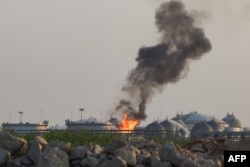
Yemen’s internationally recognized government announced a major military offensive against the Iran-backed Houthi movement on October 4, aiming to retake territory controlled by the group and restore state authority across the country.
Rashad al-Alimi, head of Yemen’s Presidential Leadership Council, announced the operation in a televised address, saying he had instructed the armed forces, security services, and other military formations to begin implementing approved operational plans. Reuters reported that Saudi Arabia and its Yemeni allies had been preparing an assault, with Saudi forces expected to lead air operations while Yemeni government forces fight on the ground.
On October 5, a committee of the Turkey-Saudi Arabia-Pakistan Mecca defense pact met in Riyadh to discuss the security situation in the region.
The escalation follows renewed fighting that has threatened key supply routes around Taiz, a major city in southwestern Yemen. Military and security sources reported that Houthi advances had cut or threatened the main road linking Taiz with Aden, the government’s principal southern base. The developments raised concerns that Taiz could become effectively besieged.
The Houthis, formally known as Ansar Allah, have controlled Yemen’s capital, Sanaa, and much of the country’s northwest since 2014. Saudi Arabia intervened in Yemen’s civil war in 2015 to support the internationally recognized government.
Iran's Oil Minister Resigns Amid Collapse In Crude Loadings
Iranian Oil Minister Mohsen Paknejad resigned on October 4, with President Masud Pezeshkian accepting his resignation and appointing Hamid Bovard, chief executive of the state-owned National Iranian Oil Company, as acting oil minister. Iranian officials said Paknejad had originally submitted his resignation some time ago for personal reasons, but Pezeshkian had initially rejected it.
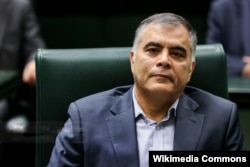
The resignation comes as Iran faces severe pressure on its oil industry following the US naval blockade of Iranian ports, announced in July. US Treasury Secretary Scott Bessent said on October 1 that Iran loaded zero barrels of crude onto tankers in September, describing the development as evidence that Washington's campaign was cutting off one of Tehran's most important sources of revenue.
Preliminary tanker-tracking data compiled by Bloomberg, as well as data from Kpler and Vortexa, also showed no Iranian crude loadings during September, down from roughly 250,000 barrels per day in August.
Bessent said in September that roughly 15 million barrels of Iranian oil remained at sea, largely destined for China, and predicted that Iran could have little left to trade once those shipments were delivered.
Meanwhile, the United States has intensified sanctions under Operation Economic Outcast, launched in August. Treasury subsequently sanctioned Iran's remaining airlines and continued targeting financial, industrial and oil-related networks.
Despite the disruption to Iranian exports, oil shipments from other Gulf producers have rebounded sharply, with September exports approaching or exceeding pre-war levels.
US Removes B-1 Bombers From UK Base After Suspected Terrorist Arrests
The Pentagon said it had removed its B-1 bombers from a UK air base a week after several men were arrested there on suspicion of preparing terrorist acts.
One dozen B-1 bombers were stationed at RAF Fairford northwest of London. The planes had been used for US strikes during the war with Iran.
"While operational security precluded us from confirming the movement of our assets and forces in real-time, we can acknowledge now that all US bombers that were deployed to RAF Fairford have re-deployed to their home stations in the United States," a Pentagon spokesman wrote in an email on October 4.
British Prime Minister Andy Burnham said London has "strong indications" Iran was involved in a suspected plot targeting the base. Tehran has rejected the accusations.
With reporting by Reuters and The Wall Street Journal
US 'Kicked Out' 2 Iranian UN Delegation Members Who Had Remained Despite Leave Order
Two members of Iran's UN delegation have been "kicked out" of the United States after they ignored an order to leave the country, the State Department said on October 3.
"Two more members of the Iranian delegation were found still in [New York] long after the United Nations General Assembly had passed. They have now been kicked out of the US," a US official told AFP, adding that Secretary of State Marco Rubio "means business."
US media reports said the State Department had told Iranian Foreign Minister Abbas Araqchi and his delegation to leave the country and resorted to expelling the two members after learning from Iran's UN mission that they were still in the country as of October 2.
One member left late on October 2, while the second departed early on October 3, Axios reported.
Talks between Washington and Tehran to end their conflict and reopen the important Strait of Hormuz have appeared to reach an impasse, with no new discussions scheduled at this time.
With reporting by AFP and Axios
Houthis Claim Attack On Saudi Aramco Site Near Riyadh
Saudi Arabia and Yemen's Iran-allied Houthi rebels reportedly exchanged air strikes on October 3, with the Western journalists spotting flames and smoke billowing from multiple sites.
The Houthis claimed an attack on an oil facility near the Saudi capital, Riyadh and accused Saudi forces of striking the rebel-held Yemeni capital, Sanaa, dozens of times.
The bitter enemies have exchanged strikes since the Houthis seized all of Yemen's Red Sea coast and took control of the Bab al-Mandab strait in a September offensive.
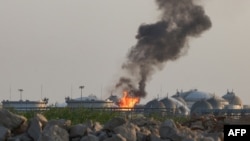
The Houthis' Al-Masirah TV reported that "Saudi enemy aircraft" hit Sanaa with 26 strikes, and two AFP journalists in the city reported hearing loud explosions and seeing warplanes firing missiles at multiple sites.
The internationally recognized -- and Saudi-backed -- government of Yemen is now based in the city of Aden after the rebels captured Sanaa in 2014.
Meanwhile, an AFP journalist in neighboring Saudi Arabia reported seeing flames and smoke at an Aramco oil facility south of Riyadh.
Saudi Arabia did not immediately confirm the attack on the Aramco site. The Houthis last week said they had attacked Aramco facilities in Yanbu with missiles and drones.
With reporting by AFP and Reuters
Two UK Terror Cases Raise Questions Over Possible Iran Involvement
Two separate counterterrorism investigations in Britain involving Iranian nationals have raised questions over alleged plots targeting Jewish and military sites.
Two Iranian men, Rahman Salehi, 34, and Salam Ahmadyan, 36, were charged in London on October 3 over an alleged plot to target Manchester's Jewish community with a homemade bomb.
Prosecutors allege they obtained instructions to make a chlorine bomb, acquired components for an improvised explosive device and carried out reconnaissance of potential targets, including Heaton Park synagogue and Manchester's Jewish Museum.
The men, who arrived in Britain by small boat, were arrested in Manchester on the eve of the Jewish holy day of Yom Kippur.
Prosecutors allege they were directed by an Iranian individual believed to be in Iran. Both were remanded in custody.
Separately, a 25-year-old British-Iranian dual national arrested over a major incident near the RAF Fairford air base was released on bail, police said.
Five other men arrested in connection with the incident were also released on bail.
Police were called after reports of suspicious vans near the Gloucestershire air base, which is used by the US military. No explosives were found.
British officials have cited possible Iranian involvement, while Tehran has rejected the allegations.
Iran Hangs Man Detained During January Protests As Executions Continue
Iran has executed Siavash Jamshidi, who was arrested during the deadly January protests.
The Iranian judiciary’s Mizan news agency on October 3 said Jamshidi was convicted of “mohrebeh” -- or waging war against God -- for allegedly carrying and firing a firearm, as well as “assembly and collusion against national security.”
The report claimed that Jamshidi had a criminal record and opened fire on security forces in Shahrekord on January 8, the height of the protests, before fleeing. He was arrested two days later. His death sentence was upheld by Iran’s Supreme Court, Mizan said.
The report provided no details about the timing of his trial, due process, or whether he had access to a lawyer of his choice.
His execution came days after 46 countries condemned Iran’s continued use of the death penalty in a joint statement to the UN Human Rights Council, citing concerns over unfair trials, torture, and executions used to suppress dissent.
Iran has acknowledged executing more than 30 people detained during the protests. Rights groups say dozens more remain at risk of execution. UN Special Rapporteur Mai Sato has called for an immediate halt to executions.