





X Suspends 13,000 Accounts In Iran, Russia, China Disinformation Probe
Social media platform X said it had suspended more than 13,000 accounts linked to three suspected foreign influence operations associated with Iran, Russia, and China that targeted political debate in the United States.
The company announced the suspensions on October 14, saying the networks had used fake accounts to publish and amplify political content targeting candidates and public figures across the political spectrum.
X said it had identified the accounts through proactive reviews and internal investigations. It did not disclose how many of the suspended accounts were associated with each of the three operations.
The company also outlined its policies on election-related content ahead of the November 3 US midterm elections, including restrictions on misleading information about when, where, and how to vote, as well as attempts to suppress turnout or intimidate voters.

The announcement came less than a week after OpenAI reported that it had banned a cluster of ChatGPT accounts originating in Iran that were used to support a covert influence operation involving fabricated journalist identities.
On October 8, OpenAI said it had identified almost 100 articles published or syndicated under seven fabricated bylines across roughly a dozen online publications worldwide.
The operators used ChatGPT to refine articles and editorial pitches, as well as generate social media comments. The fabricated journalist personas generally presented themselves as Western journalists, usually American, with backgrounds in international politics, the Middle East, human rights, or conflict.
OpenAI said the articles focused largely on the US-Iran conflict. It assessed that the operation appeared consistent with a commercial influence campaign conducted for a client, but said it had been unable to identify the actor behind it.
German Court Jails 2 Over Iran-Linked Plots Against Jewish Targets
A court in Hamburg sentenced two men to prison on October 15 for espionage on behalf of Iran and involvement in preparations for attacks against Jewish and pro-Israel targets in Germany.
The Hanseatic Higher Regional Court sentenced the main defendant, a 54-year-old man identified as Ali S., to 8 1/2 years in prison. His 43-year-old co-defendant, Tawab M., received a sentence of 4 1/2 years.

According to Germany's Federal Public Prosecutor's Office, Ali S. received assignments directly from officers of the Islamic Revolutionary Guards Corps' Quds Force, its overseas operations unit.
The court found that the men had scouted potential targets, including Josef Schuster, president of the Central Council of Jews in Germany, and Volker Beck, president of the German-Israeli Association and a former member of parliament.
The main defendant also prepared an arson attack against a kosher grocery store in Berlin. Prosecutors said he tried to recruit Tawab M. to help arrange the assassination of Beck or find someone else to carry it out.
The planned attacks were not carried out. Beck had sought to join the proceedings as a private plaintiff but the court rejected his request, according to German public broadcaster Tagesschau.
Both men lived in Denmark. Ali S., a Danish citizen of Afghan origin, was arrested in Aarhus in June 2025 and transferred to Germany. Tawab M., an Afghan national, was arrested in Denmark in November 2025.
The Federal Public Prosecutor's Office indicted the men in May, and their trial began in Hamburg in June. Prosecutors sought the sentences ultimately imposed by the court, while defense lawyers called for acquittals.
Iran previously denied allegations linking Ali S. to its intelligence services.
The verdict came four months after 24 countries issued a joint statement condemning alleged Iranian state-linked plots and other hostile activities targeting dissidents, journalists, and Jewish and Israeli communities in Europe, North America, and Australia. The statement specifically named the IRGC's Intelligence Organization, the Quds Force, and Iran's Intelligence and Security Ministry.
UN Warns Middle East War Could Push 130 Million Into Poverty
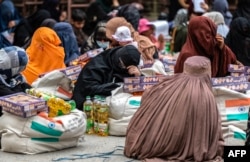
The United Nations Development Program (UNDP) warned that rising food and energy prices linked to the Middle East war could push an additional 130 million people into poverty this year if governments cannot shield consumers from higher costs.
UNDP chief Alexander De Croo told AFP that developing countries were struggling to sustain subsidies after successive shocks, including the COVID-19 pandemic and Russia's war in Ukraine. Rising debt and borrowing costs have further weakened their ability to support vulnerable households.
In a report published on October 11, UNDP said governments had increasingly limited financial resources to cushion the impact of higher energy and food prices. The agency recommended replacing broad subsidies with temporary, targeted assistance for the most vulnerable and called on wealthy countries and international financial institutions to provide developing economies with more affordable financing.
The warning comes amid broader evidence of worsening poverty. The World Bank's September update estimated that 824.3 million people worldwide, or 10.1 percent of the global population, lived in extreme poverty. It said rates were rising in the Middle East, North Africa, Afghanistan, and Pakistan.
CENTCOM Says US Forces Destroyed Iran-Linked Vessel In Gulf Of Oman
The US military Central Command (CENTCOM) said American forces destroyed an Iranian-affiliated vessel in the Gulf of Oman after observing what it described as surveillance and targeting activity against US Navy ships.
In a statement published on October 14, CENTCOM said the operation had taken place on October 6. The command described the vessel as a dhow -- a traditional wooden sailboat -- and released video footage of the destruction.
CENTCOM said the crew had been safely removed before the vessel was destroyed and that efforts to repatriate them were ongoing. It did not disclose the number or identities of the crew members.
In the same statement, CENTCOM accused Iran's Islamic Revolutionary Guards Corps (IRGC) of targeting thousands of civilian mariners transiting regional waters over the previous seven months, in addition to US Navy warships.
Separately, Iranian media reported on October 14 that a fishing boat had been struck by a drone near Sirik, in the southern province of Hormozgan, injuring three crew members.
Iran's IRGC-linked Tasnim news agency cited local sources describing the incident as a US drone attack. However, provincial authorities said the source of the drone had not been identified, and the circumstances of the incident remained unclear.
There was no confirmed information linking the fishing-boat incident to the US operation announced by CENTCOM.
Iran Opens Case Against Satirist Over Khamenei Impression
Iranian authorities have opened a criminal case against Saeed Shakiba, a popular Instagram satirist, after a video in which he impersonates former Supreme Leader Ali Khamenei went viral.
Mizan, the judiciary’s news agency, said on October 14 that Tehran prosecutors had charged Shakiba with “publishing insulting and offensive content” and that “appropriate action” had been taken against him.
In the video clip, Shakiba parodies Khamenei’s frequent meetings with poets.
In recent days, pro-establishment social media users had shared the video and demanded legal action against him. Fars news agency, an affiliate of the Islamic Revolutionary Guards Corps (IRGC), called it “insulting and offensive” and said it contained “vile and obscene language.”
Shakiba’s supporters argue he was exercising his right to freedom of expression.
Shakiba’s Instagram page, which has around 1 million followers, has been shut down by the authorities all posts on his page have disappeared.
Shakiba is known mainly for voice impressions and comedy videos. He has criticized the Islamic republic and its policies, including after the deadly January protests when thousands were killed in the state's crackdown.
Attacks On Hormuz Shipping Hit Wartime High
Attacks on commercial ships in and around the Strait of Hormuz have surged to their highest daily level since the US-Israeli war with Iran began in late February, with at least 10 ships attacked in recent days, according to maritime security reports.
Singapore's Maritime and Port Authority said two Singapore-registered container ships were struck by unidentified projectiles on October 13 and 14. The GFS Pride caught fire and sank, but all 21 crew members were evacuated safely. The second vessel, GFS Giselle, sustained hull damage but reached a safe anchorage, with all 22 crew members accounted for and safe.
Vanguard Maritime Security reported four attacks on October 13, including one involving the tanker Alfonso, whose fate remained unknown at the time of reporting.
Iran's Islamic Revolutionary Guards Corps Navy separately said a container ship sank after striking a naval mine while using a route Tehran considered unauthorized. It did not clearly identify the vessel as the GFS Pride.
According to AFP, 23 attacks on ships had been recorded in the region since the beginning of October. The International Maritime Organization had recorded 106 confirmed incidents and 24 seafarer fatalities as of October 13.
The attacks have heightened concerns about commercial shipping and global energy supplies, as the Strait of Hormuz is a vital route for oil exports from the Persian Gulf. Although shipping activity and energy exports had reportedly recovered in recent weeks, the latest incidents threaten that progress.
The escalation comes amid a broader confrontation between Washington and Tehran, including a US naval blockade of Iranian ports. Responsibility for individual attacks remains unconfirmed in cases where authorities have identified projectiles but not their origin.
IRGC Spokesman Says Renewed Conflict A Possibility
The spokesman for Iran's Islamic Revolutionary Guards Corps (IRGC) said on October 14 that a renewed US attack on Iran remains possible, despite President Donald Trump's earlier statement that he would not strike the country before the November midterm elections.
"Although starting a new war against Iran is irrational for the United States, the possibility of it happening still very much exists, because the Trump administration needs an achievement before the midterm elections," IRGC spokesman Hossein Mohebbi said in an interview with Iranian state television.
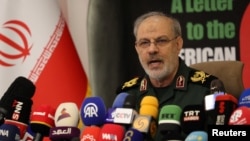
The remarks by a senior IRGC official may indicate that authorities in Tehran remain concerned about a renewed US and Israeli attack on Iranian territory.
On October 11, Mohsen Rezaei, secretary of Iran's Supreme National Security Council, warned that if the United States attacked again, Iranian forces would target "cables, data centers, and artificial intelligence facilities" in the Middle East.
Mohebbi's comments may have been a response to a report published on October 13 by the news website Axios, which, citing unnamed sources, said Trump had discussed with Israeli Prime Minister Benjamin Netanyahu the possibility of striking Iran again before the elections, now just weeks away.
Police Officer, Women's Basij Commander Killed in Iran's Sistan-Baluchistan
A police officer and a commander of the women's branch of the Basij paramilitary force have been killed in separate attacks in Mehrestan County in Iran's southeastern Sistan-Baluchistan Province, Iranian media reported.
The officer, identified as Mohammad Ali Shahriari, died of his injuries in a hospital on October 14 after gunmen opened fire on a police vehicle, according to Iranian news agencies.
The Tasnim news agency, which is close to the Islamic Revolutionary Guards Corps (IRGC), said the attack led to an exchange of fire between the assailants and police but officers were unable to apprehend the attackers.
Haalvsh, a news website focusing on human rights in Sistan-Baluchistan, reported the same and added three other police officers were wounded in the attack.
Shortly afterward, Tasnim reported the killing of a woman whom it described as the commander of a women's Basij branch in Mehrestan, in the south of the province.
The commander was identified as Afsaneh Aqila, who was killed in front of her home. A native of Zabol, she headed the women's Basij unit in Mehrestan’s Afzal district.
For several weeks, various parts of Sistan-Baluchistan have been the scene of clashes and armed attacks between gunmen and police forces. The attacks, which in some weeks have occurred on consecutive days or several times in a single day, have killed a number of police officers and security personnel.
Houthis Vow 'Harsh And Painful Response' After Saudi-Led Forces Target Sanaa Oil Depot
Yemen's Iran-aligned Houthi rebels said Saudi-led forces struck an oil depot on the outskirts of Sanaa on October 13, marking a new escalation in fighting following a week of Houthi missile and drone attacks on Saudi Arabia.
Houthi-run Al-Masirah television reported that the Saudi-led coalition had targeted a Yemen Petroleum Company facility near the country's capital, which the Houthis control. The company said the depot held no petroleum stocks and that the strike had not disrupted fuel supplies.
Houthi military spokesman Yahya Saree threatened a "harsh and painful" response, warning that Saudi oil facilities, including Saudi Aramco's headquarters in Dhahran and a refinery in Riyadh, could be targeted.
The escalation follows a Houthi ballistic missile strike on Riyadh airport on October 10 that killed 13 people, the deadliest such attack in Saudi Arabia in a decade. . Another person was killed in a separate strike on the airport the following day, bringing the death toll from the two attacks to 14.
Saudi Arabia resumed its military campaign in Yemen after the Houthis seized territory along the Red Sea coast near the strategically important Bab el-Mandeb Strait. Saudi-backed forces of Yemen's internationally recognized government have since pushed the rebels back from areas closest to the waterway, although the Houthis have made gains elsewhere, including around the city of Taiz.
The strait has become increasingly important to regional energy shipments following disruptions to traffic through the Strait of Hormuz during the US-Iran war.
Turkish President Recep Tayyip Erdogan told Saudi Crown Prince Mohammed bin Salman that Ankara stood by Riyadh, while US President Donald Trump said the Houthis were "behaving very badly" and suggested Turkey could help Saudi Arabia.
Iran, Saudi Arabia's longtime regional rival, has offered to mediate between Riyadh and the Houthis.
The Houthis, who control much of northern Yemen, including Sanaa, have fought forces backed by a Saudi-led coalition since 2015, although large-scale fighting eased following a UN-brokered truce in 2022. The conflict has intensified sharply in recent months amid the wider US-Iran war.
With reporting by Reuters
Amnesty Slams Iran's Execution Of 5 Protesters

Amnesty International has accused Iran of using executions to intimidate the population and discourage further protests, following the execution of five men convicted in connection with anti-government demonstrations in January.
In a statement issued on October 13, the human rights organization condemned the executions, carried out between September 30 and October 5, saying the men had been convicted following "grossly unfair torture-tainted trials."
Diana Eltahawy, Amnesty's deputy regional director for the Middle East and North Africa, said the executions demonstrated how the Iranian authorities "weaponize the death penalty" to intimidate opponents and prevent further unrest.
She said the judicial proceedings had involved the denial of access to lawyers, allegations of torture, and the use of televised forced confessions.
"Such proceedings make a mockery of justice, laying bare the Iranian authorities’ utter disregard for the right to life," Eltahawy said.
The five men were Ali Hemmati Sistanian, Majid Nikandish, Siavash Jamshidi Kheirabadi, Alireza Sepahi, and Alireza Raisi.
Sistanian and Nikandish were executed in Mashhad on September 30, Jamshidi Kheirabadi in Shahr-e Kord on October 3, and Sepahi and Raisi in Isfahan on October 5, according to the Iranian judiciary's Mizan news agency.
Amnesty said Sepahi reported "being subjected to torture and other ill-treatment and was denied access to a lawyer during interrogations at the investigation stage."
The rights organization warned that "scores of people including dissidents and protesters remain at risk of politically motivated executions" as the authorities intensify repression, citing so-called wartime conditions and national-security threats.
Amnesty called for coordinated international diplomatic pressure to halt further executions and urged the United Nations to pursue mechanisms for holding Iranian officials accountable.
It said Iranian authorities had executed at least 34 people in connection with the January 2026 protests.
Amnesty has repeatedly criticized Iran's use of the death penalty, particularly against protesters and political dissidents.
Meanwhile, human rights organizations and activists have continued their campaigns against executions in Iran.
Gina Romero, the UN special rapporteur freedom of association and assembly, announced plans to go on hunger strike on October 13 in solidarity with Iran's "No to Execution Tuesdays" campaign.