





Sentenced To 15 Years For Photography: The Images Of Iranian Yalda Moaiery
- By RFE/RL
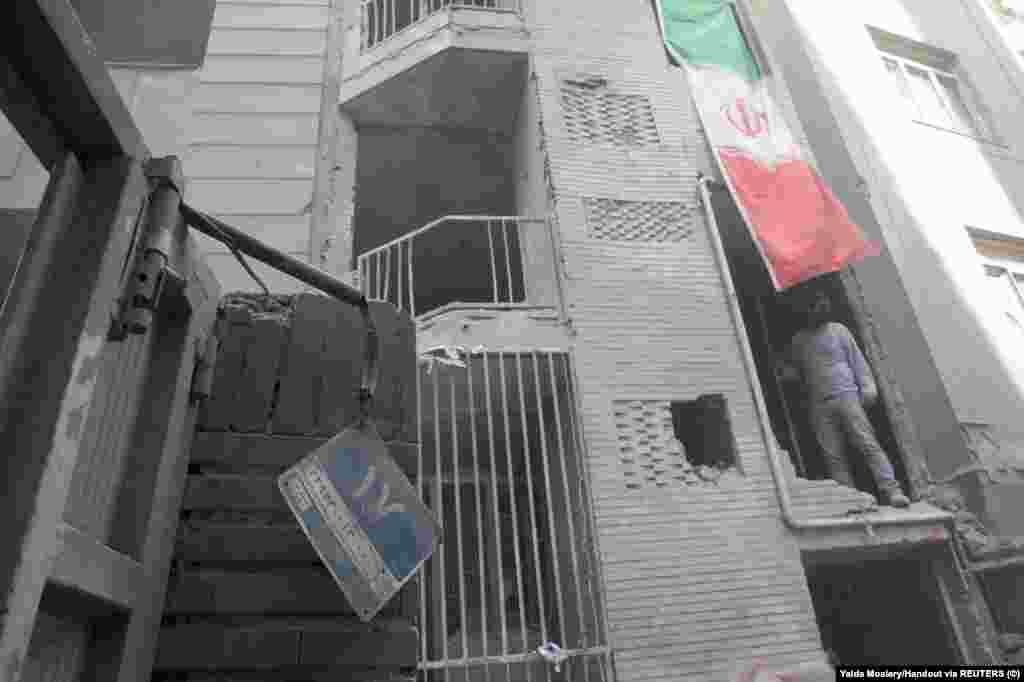
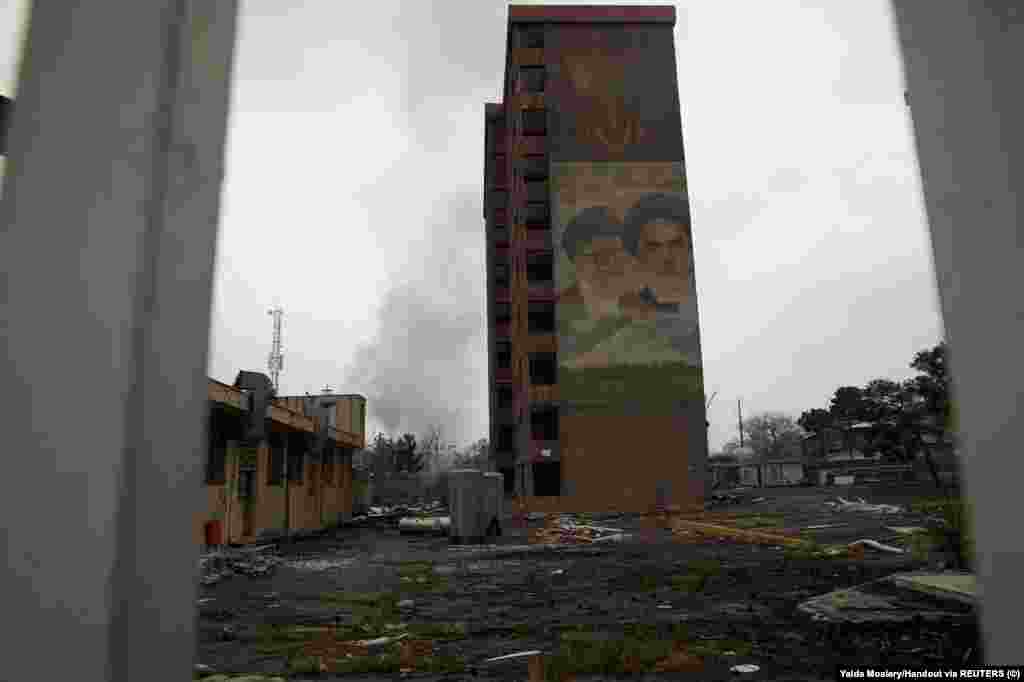
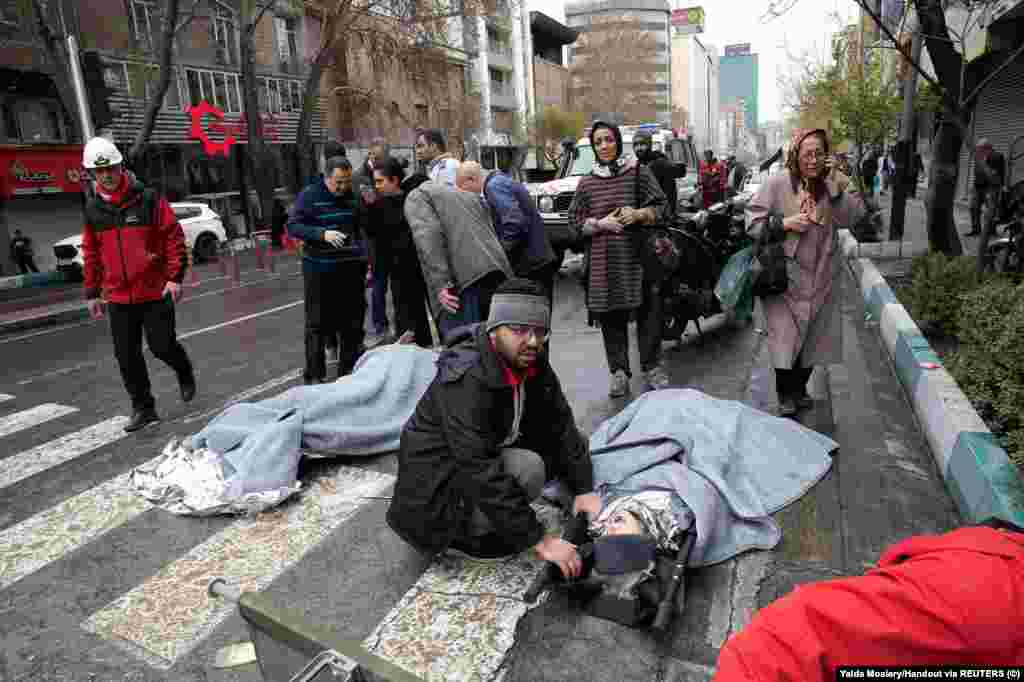
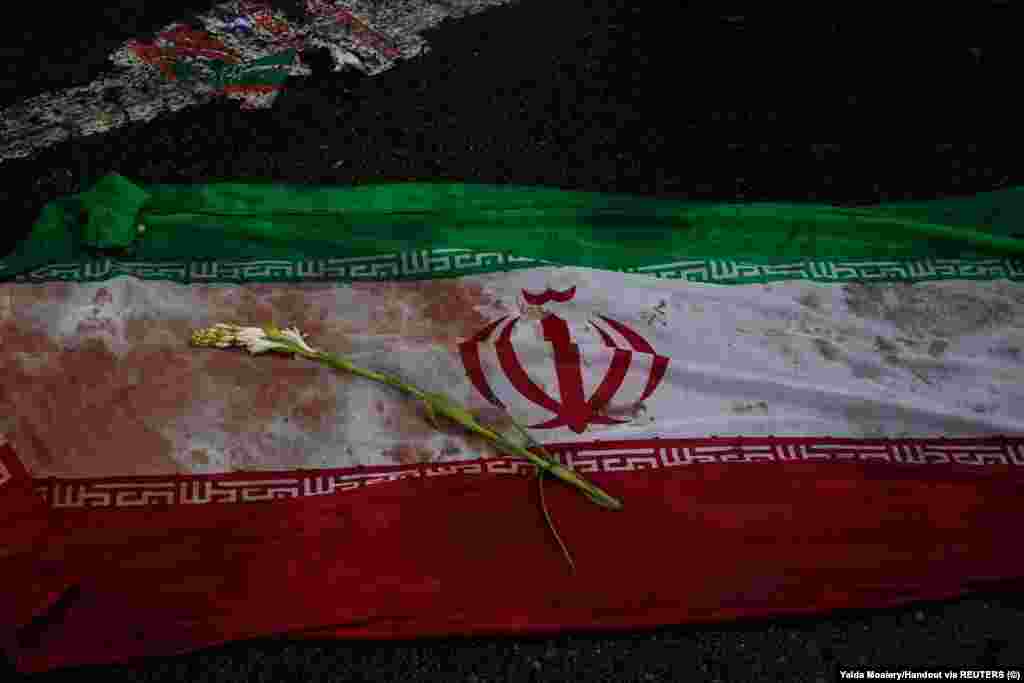
Prominent Iranian photojournalist Yalda Moaiery has been sentenced to a 15-year prison term for her work covering the US-Israeli war with Iran. Here are some of the images she captured of the conflict before the shock sentence was announced.
Sentenced To 15 Years For Photography In Iran: The Images Of Iranian Yalda Moaiery





Gulf Cooperation Council Condemns Attack On UAE Vessels
The Gulf Cooperation Council (GCC) on August 14 condemned "Iran's attack" on two fuel tankers operated by the Abu Dhabi National Oil Company (ADNOC).
Calling the assault a "dangerous and unacceptable escalation," the six-member, Riyadh-based group of oil-producing countries said in a statement that the United Arab Emirates (UAE)-owned tankers came under attack while exiting the Strait of Hormuz.
The GCC said the attack was a "direct threat to the security and safety of maritime navigation" and urged the international community to take a firm stance to stop these "dangerous attacks."
The group also reiterated its solidarity with the UAE and support for measures taken by Abu Dhabi to protect its security, sovereignty, and interests.
The attack also drew condemnation from the Egyptian Foreign Ministry, which said it threatened the safety of maritime navigation and freedom of movement through a key international waterway.
In a statement on August 7, ADNOC said that 15 of its vessels had been attacked with missiles and drones while transiting the Strait of Hormuz since the start of the conflict in the Middle East.
UAE Blames Iran For Tanker Strikes In Strait Of Hormuz
The British shipping security monitor United Kingdom Maritime Trade Operations (UKMTO) has reported two near-identical incidents involving drone strikes on tankers in the Strait of Hormuz, while the United Arab Emirates (UAE) blamed Iran for attacks on two vessels linked to its state-owned oil company.
Reporting the incidents, UKMTO said the two vessels sustained “minor damage” on August 13, while both crews were “safe and accounted for.” It added that no environmental impact had been reported.
Meanwhile, the UAE Foreign Ministry strongly condemned and denounced what it called a "hostile Iranian attack" targeting two vessels affiliated with the Abu Dhabi National Oil Company (ADNOC) as they transited the Strait of Hormuz. The ministry said no injuries were reported in either incident.
The UAE also urged Iran to halt what it described as "unprovoked attacks" and called for the complete and unconditional reopening of the Strait of Hormuz.
Tehran claims the Strait of Hormuz is “under Iran’s control and management,” while it has repeatedly targeted commercial vessels and sought to impose transit fees, a move strongly opposed by Washington.
Bessent Warns Iran Will Be Economically Isolated 'Like The World Has Never Seen Before'
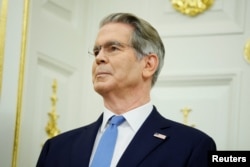
US Treasury Secretary Scott Bessent has said that the United States is going to apply measures that have "never been seen" against Iran.
"Watch this space for more announcements coming next week because we are going to apply measures like [those] that have never been seen in the history of economic isolation of a country," Bessent said in an interview with the US cable news channel Newsmax on August 13.
"It will be a combination of economic isolation like the world has never seen before and the continued blockade of the Strait of Hormuz that will keep anything from going in or out of Iranian ports," Bessent added.
Asked about Bessent's comments later in the day, White House Press Secretary Karoline Leavitt, without providing details, said the United States had "more tools" to continue pressuring the Iranian regime and "crippling its economy," which she said was already in a "very weak spot."
Earlier, US President Donald Trump suggested that he was willing to let economic pressure force the Islamic republic to reach a long-elusive peace deal, appearing to back off threats of immediate military action against Iran, despite ongoing disputes with Tehran over the Strait of Hormuz,.
"We are low-keying it," Trump told the Axios news outlet in a brief phone conversation on August 9.
"We are only semi-negotiating with them. We are just watching Iran with its huge inflation and the fact that they have no money," he was quoted as saying.
This blog post was updated.
US Central Command Announces 'First-Ever' Multinational Drone Force
US Central Command (CENTCOM) announced on August 13 that it was in the process of establishing what it described as "the first-ever multi-domain, multinational attack drone task force."
"The unit, called Task Force Falcon Strike, will employ one-way attack drones consisting of unmanned systems from above, on, and below the sea operated by military support staff from the United States and regional partners," CENTCOM said in a statement.
As Washington began consultations with its partners in the Middle East, US Navy Admiral Brad Cooper said that jointly deploying these new capabilities "will help us rapidly realize the new possibilities that are on the horizon."
"The United States military has a lot of strong partnerships and friends in the region," Cooper said. "We are collectively stronger when we integrate and deploy new capabilities together."
Iranians Wait In Long Lines For Gas Amid Fuel Shortage
- By RFE/RL
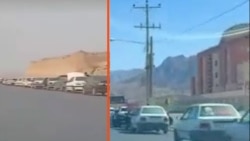
Long lines are forming at gas stations in Iran as the ongoing war with the United States disrupts fuel supplies. Iranian authorities have rationed fuel and considered other measures that would raise prices in an effort to curb consumption. Previous price hikes on gas have sparked social unrest in the country.

Hegseth: US Can Maintain Naval Blockade Against Iran 'Indefinitely'

US forces have the resources to maintain the naval blockade of Iranian ports for as long as necessary, Defense Secretary Pete Hegseth said on August 13, as Washington and Tehran remain at odds over control of the Strait of Hormuz.
"Indefinitely the United States Navy can maintain a blockade," Hegseth told reporters after addressing the crew of the guided-missile destroyer USS Gridley during the PANAMAX 2026 multinational military exercises in Panama. The Gridley had previously been deployed to the Middle East.
Hegseth added that the United States could sustain the blockade because it was able to "rotate ships in and out" of the area and would continue to redeploy its forces as needed.
His comments came after Washington and Tehran clashed over who had full control over the Strait of Hormuz, a key waterway that accounted for around one-fifth of the global oil and gas supplies before the war.
President Donald Trump has insisted that the United States controls the strait, while Iranian military officials have disputed that assertion, saying that Tehran remains in control and continues to manage traffic through the waterway.
Iran Lurching Toward 'Severe Economic Collapse' As War Takes Its Toll

Every week, the shopping lists of Iranians become shorter as inflation soars and purchasing power plunges.
“As things disappear from the dining table, fruit goes first, then dairy products, then anything considered non-essential,” a woman in the Iranian capital, Tehran, said in an audio message sent to RFE/RL’s Radio Farda.
“Ultimately, everything we buy is only essentials, but even then, nothing is affordable,” added the woman, who spoke on condition of anonymity for security reasons.
She is among the millions of Iranians who are grappling with the economic fallout from Iran’s five-month-long war with the United States and Israel.
Read the full article by Roya Maleki and Frud Bezhan here
US Says 59 Ships Redirected In Iran Blockade
The US military's Central Command (CENTCOM) says that as of August 12 its forces had diverted 59 commercial ships as part of Washington's naval blockade of Iran.
In an X post on August 13, CENTCOM that it had disabled three vessels and boarded two others "to ensure full compliance with the blockade."
US President Donald Trump reiterated on August 12 that the United States had "total control" of the Strait of Hormuz and intended to "keep it."
Iran, however, claims it has de facto control of a large part of the strategic waterway and that the United States must accept all of Tehran's conditions for it to open, including receiving compensation from the US for war damages.
Iran, Trump Clash Over Who Controls The Strait Of Hormuz
- By Kian Sharifi
Iran’s new Basij Paramilitary chief says the Strait of Hormuz is under Iran’s control, disputing the United States’ assertion that its forces control the chokepoint.
The crisis in Hormuz has led to dwindling oil stockpiles and higher global energy prices as traffic through the narrow strait has come to a standstill after almost six months of war between the United States and Iran.
US President Donald Trump has insisted that America controls the strait. On August 12, he told reporters that the Iranian’s “don’t have control.”
“We have total control. We own it,” he said.
Hossein Taeb, the notorious former head of the intelligence organization of the Islamic Revolutionary Guards Corps (IRGC) whose return to the center of Iranian politics last week saw him named as the head of the IRGC Basij Organization, challenged Trump's statement.
“The Strait of Hormuz is under the control and management of the Islamic Republic of Iran, and the country continues on its path in absolute security,” he said on August 13 during a meeting with religious leaders in the holy city of Qom.
Iran has shut down the critical waterway, using it as an essential card in its negotiations with Washington to end their war.
Although Trump initially said the elimination of Tehran's nuclear threat was the major aim of the US-Israeli war with Iran, which began on February 28, in recent weeks he has focused on the free flow of traffic through the important Strait of Hormuz, through which some 20 percent of the world's oil and natural gas supplies transited prewar.