




Iran's Oil Stockpiles Could Run Out by Mid-October
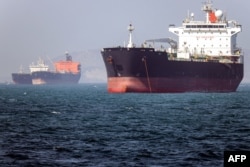
Iranian crude stored aboard tankers outside the US blockade zone has fallen from about 90 million barrels in mid-July to roughly 29 million barrels, according to data from shipping-analytics firm Kpler featured in a Wall Street Journal report published on September 7.
Kpler estimates that at the current rate of deliveries these floating stockpiles could be exhausted by mid-October.
The figures reflect the impact of the US naval blockade, which Washington announced on July 13 and reinstated on July 14. No Iranian crude cargo has successfully crossed the blockade since then, according to Kpler.
Reuters, citing Kpler, Vortexa, and TankerTrackers.com, has similarly reported that Iranian crude exports through the Strait of Hormuz have effectively stalled.
Iran is still loading some oil onto tankers inside the Persian Gulf, but those shipments remain unable to reach international buyers. Kpler estimates that Iran loaded approximately 255,000 barrels per day in August, about 85 percent below its average from February through April. Reuters puts August loading at roughly 220,000–255,000 barrels per day, compared with around 2 million barrels per day in March.
Kpler estimates that roughly 1 million barrels per day are still being delivered from Iranian crude already held outside the blockade, mostly to China. At that rate, the remaining floating stockpile could run out by mid-October.
Payments for oil already delivered could continue somewhat longer but, according to the Wall Street Journal, may largely dry up by mid-December.
Houthi Attacks On Saudi Arabia Injure 73 As Yemen Fighting Intensifies
Iran-backed Houthi forces in Yemen launched a new wave of attacks on Saudi Arabia on September 8, injuring 73 civilians, including women and children, according to Saudi authorities. The escalation comes amid renewed fighting between the Houthis and Saudi-backed Yemeni government forces.
Saudi-led coalition spokesman Major General Turki al-Maliki said the Houthi attacks targeted civilian and economic sites in Abha, Khamis, Mushait, Jizan, and Najran. Saudi authorities vowed to take measures to deter further attacks and protect the country's territory and infrastructure.
The Saudi Energy Ministry separately reported that attacks struck energy facilities in the southern region, starting fires and temporarily disrupting some operations. Emergency teams were deployed to contain the fires and assess damage. The Financial Times also reported that Saudi Aramco's oil infrastructure in Jizan had been hit.
The Houthis have claimed responsibility for attacks on Saudi targets, describing them as retaliation for Saudi-backed military operations in Yemen. Not all of the militants' groups claims can be independently verified.
The attacks come amid the sharpest escalation in Yemen in years. Fighting between Houthi forces and Saudi-backed, internationally recognised government forces has intensified along the western coast, particularly around Taiz, Hodeidah, and the strategic Bab al-Mandab area. More than 300 people have reportedly been killed or wounded in recent fighting, although casualty figures remain fluid.
The current escalation follows the collapse in July of a fragile truce that had substantially reduced fighting since 2022. Government forces have launched counterattacks and say they intend to regain territory, while the Houthis have sought to expand their positions toward the Red Sea corridor.
US-Iranian Kamran Hekmati Released From Tehran Prison But Can't Leave Country
An Iranian-American citizen, Kamran Hekmati, has been released from Tehran's notorious Evin Prison, sources have told RFE/RL's Radio Farda, but he is unable to leave the country due to a travel ban.
The release has not yet been officially confirmed by Iranian authorities.
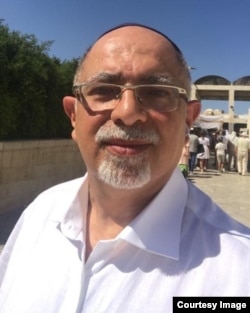
Hekmati, who was designated as a wrongfully detained person by US Secretary of State Marco Rubio in March, is believed to have been released on September 5.
His release was also reported by The Jerusalem Post, an Israeli media outlet which cited Iranian sources.
The 71-year-old traveled to Iran to visit relatives on his Iranian passport in May 2025 and was detained by the authorities two months later. Tehran's Revolutionary Court subsequently sentenced him to four years in prison for having traveled to Israel for a religious ceremony over a decade earlier. Holders of Iranian passports are barred from traveling to Israel.
His sentence was later reduced to two years after a change in the law governing such travel.
To read the full report, click here.
CENTCOM Says US Has Diverted 94 Commercial Ships During Blockade
The US Central Command, CENTCOM, announced on September 7 that US forces have so far diverted 94 commercial ships during the new round of naval blockade of Iranian ports.
CENTCOM also added that during this period, the US military had decommissioned three ships and inspected and boarded two ships.
The US military headquarters emphasized that these measures were taken to ensure full compliance with the naval blockade of Iran.
Clashes Reported Between Iranian, Iraqi Students At Semnan University
Iranian and Iraqi students clashed on September 7 at the university in the Iranian city of Semnan.
Semnam Province Chief Justice Mohammad Sadeq Akbari said the clash took place in front of the Iraqi students' accommodation, adding that "judicial investigations are ongoing to identify all those responsible for this incident."
Images published on social media show a crowd of Semnan residents gathering in front of the Iraqi students' accommodation, after which point a clash broke out.
Akbari said the involved parties will be dealt with in accordance with the law.
The main reason for the clash is still unclear, however, reports indicate that the Iraqi embassy in Iran has ordered the formation of a joint committee to follow up on the incident.
Semnan University also issued a statement on September 7, emphasizing that Iranian students at the university had no role in the incident, saying that since the incident occurred outside the university's main campus, it would be handled by the police.
Iran Threatens To Retaliate Against Any New US Attacks On Oil Tankers
Iran has threatened to retaliate against any new US attacks on its oil tankers, warning American oil and gas interests in the Persian Gulf could be targeted.
US forces hit three Iranian oil tankers on September 5, including one near Kharg Island, Iran's main oil export hub, according to US Central Command. The strikes came after Iran attacked US warships operating in the region.
"Strike our assets and you get struck," Iranian Parliament Speaker Mohammad Baqer Qalibaf said in a post on X.
His warning appeared to be a response to US Defense Secretary Pete Hegseth, who had labeled Iran's oil tanker fleet as "defenseless."
"It's simple: The oil and gas production chain here is sprawling, accessible, and exposed. American oil and gas companies across these waters and facilities share that exposure," added Qalibaf, who is also Iran's top negotiator with the United States.
Estimate: Iran War Costing US Consumers $100 Billion In Extra Fuel Costs
According to an estimate based on Brown University’s Iran War Energy Cost Tracker, US consumers have incurred roughly $100 billion in additional gasoline and diesel costs since the war with Iran began, with the figure rising by about $1 million every 2 minutes.
The estimate was reported on September 7 based on the tracker developed by Brown’s Climate Solutions Lab at the Watson School of International and Public Affairs. The tracker measures the additional amount Americans have paid for gasoline and diesel compared with an estimated "no-war" price trajectory since the start of the conflict on February 28.
The additional cost amounts to roughly $763 per US household, based on an estimated 131 million households nationwide.
Fuel prices have surged amid disruption to energy supplies linked to the war and the conflict over the Strait of Hormuz. About 20 percent of global oil flows through the strategic waterway, which Iran has said will remain closed until its conditions for reopening are met.
The United States maintains that the Strait of Hormuz is an international waterway and rejects any claim that Iran controls the right of passage. Current Reuters reporting describes the strait as largely closed to tanker traffic.
Last month, President Donald Trump urged Americans to accept higher gasoline prices, saying at a rally in New York that "for you to pay a tiny little bit more for your gasoline" was worthwhile because it would help ensure that "a very evil country" did not obtain a nuclear weapon.
The national average gasoline price was $4.15 per gallon on September 7, a record for the Labor Day weekend. California;s average was about $5.86 per gallon, while Hawaii’s was $5.39, according to figures cited from Browns tracker.
UAE: Restoring Trust With Iran Could Take Decades
A senior adviser to the president of the United Arab Emirates (UAE) has warned that restoring trust between his nation and Iran could take years or even decades.
Anwar Gargash was speaking at the third annual Hili International Forum in Abu Dhabi, bringing together regional policymakers, government officials, academics, and business leaders, on September 7.
"Our dialogue with Iran should be ambitious...and address the larger strategic questions confronting the Gulf: security, non-interference, freedom of navigation, economic cooperation, and ultimately the rebuilding of confidence," Gargash said.
"Trust is the mountain we will have to climb, and there is something worth climbing toward," he added.
The UAE is among the Gulf states that have been targeted by frequent Iranian drone and missile attacks since the beginning of the conflict on February 28.
Gargash also told the conference about efforts by the UAE to build alternative export routes amid ongoing disruption to the Strait of Hormuz.
"Our energy exports will not be held hostage, nor will our trade and economic activity," he said.
Grossi Urges Iran To Restore IAEA Nuclear Oversight
IAEA Director-General Rafael Grossi has reiterated that the agency is unable to verify the status of Iran's declared nuclear material and facilities due to a lack of access and information from Tehran.
Iran stopped granting the IAEA access to sites hit by US and Israeli strikes on its nuclear facilities in June last year.
Speaking at the opening of the United Nations atomic watchdog's Board of Governors meeting in Vienna on September 7, Grossi described the situation as a "matter of serious proliferation concern" that needed to be addressed with "the utmost urgency."

Grossi called on Iran to engage constructively with the IAEA and urged a return to diplomacy and negotiations over its nuclear program.
"I call on Iran to engage with the Agency constructively in order to make possible the full and effective implementation of Agency safeguards in Iran and to fulfill its responsibilities," Grossi stated.
UN Rights Chief Urges US-Iran Talks, Warns Of Iran Executions
UN High Commissioner for Human Rights Volker Turk said on September 7 that he was alarmed by the resumption of attacks between the United States and Iran, warning the violence was affecting the wider Persian Gulf region.
"Recent reports of civilian deaths and injuries, including at a wedding in Hormozgan Province, are particularly concerning," Turk said on September 7 while addressing the Human Rights Council in Geneva.
Turk was referring to reports in Iranian and international media that a wedding party was hit by a US strike on September 1.
Moin Arjmand, director of the Balochistan Human Rights Documentation Network, a foreign-based monitoring group that documents human rights abuses in Iran, told RFE/RL's Radio Farda on September 2 that the wedding site was located close to a telecommunications tower that was destroyed in the alleged strike.
US Vice President JD Vance said on September 3 that the United States is investigating but that he was "skeptical" of reports coming out of Tehran.
Turk criticized the Iranian authorities in his comments on September 7, accusing them of using the war as a pretext to pursue even more brutal oppression.
"Since March 2026, 59 people have been executed on national security-related charges -- more than the number put to death on the same charges in the whole of 2025," he said.