




Chinese Refiners Turn To Iraqi, Qatari Crude As Iranian Supplies Fall
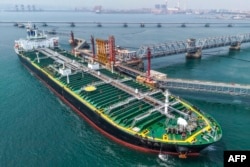
China's independent refiners have increased purchases of crude oil from Iraq and Qatar for delivery in October and November as supplies of Iranian oil have declined.
According to Reuters, traders said Chinese refiners had purchased at least 12 million barrels of Iraqi and Qatari crude, while one source estimated total purchases at between 15 million and 20 million barrels.
The bulk of the cargoes are Iraqi Basra Medium and Basra Heavy crude, which are among the cheapest grades available in the Middle East. Chinese refiners have also purchased 3 million barrels of Qatari Al-Shaheen crude for arrival in early November.
China's imports of Iranian oil nearly halved year-on-year in September to about 590,000 barrels per day, the lowest level since January 2023, according to data from analytics firm Kpler.
Kpler also said the volume of Iranian crude stored on tankers outside the US blockade zone had fallen to about 45 million barrels from 100 million barrels in late July.
The company's data showed that Iran loaded no crude for export in September, the first time this had occurred since Kpler began tracking Iranian oil flows in 2013.
Reuters said China's independent refiners have relied heavily on discounted crude from sanctioned producers, particularly Iran, in recent years.
Attacks On Saudi International Airports Leave 3 Dead, 36 Injured
Saudi Arabia's General Authority of Civil Aviation said on October 7 that attacks on two international airports had killed three people and injured 36, without assigning responsibility for the attacks.
On October 6 and 7, Abha International Airport and King Khalid International Airport were struck by "attacks targeting their facilities," the authority said in a statement.
According to the authority, two female residents, a Moroccan and an Algerian, were killed at Abha airport while a Sudanese resident was killed at King Khalid International Airport in Riyadh.
A total of 36 people were injured in the two attacks, including 28 at Abha and eight at King Khalid.
The Iran-aligned Houthi rebels in Yemen earlier on October 7 claimed responsibility for attacks on Saudi targets, including an attack on the Riyadh airport. The group's military spokesman said the Houthis had used missiles and drones against the airport and targeted Abha Airport with ballistic missiles and drones. The claims were not independently verified.
The attacks came as fighting between Houthi forces and Saudi-backed Yemeni government forces intensified along Yemen's Red Sea coast. The Houthis seized the strategic port city of Mokha and other areas near the Bab al-Mandeb strait in September.
The UN International Organization for Migration said on October 7 that more than 200,000 people had been displaced within Yemen since fighting intensified, with nearly all of those displaced since September 1.
France Summons Iranian Ambassador Over 'Disinformation Campaign' About Protests
France summoned Iran's ambassador to Paris on October 7 over what it called a "disinformation campaign" by Iranian authorities concerning student protests that have swept the country.
The French Foreign Ministry said in a statement that the ambassador had been summoned at the request of Foreign Minister Jean-Noel Barrot and told that "false content" disseminated online by official Iranian Foreign Ministry accounts was "absolutely unacceptable."
The ministry also said Iran's decision to summon the French ambassador in Tehran on October 6 was "unfounded."
Iranian Foreign Ministry spokesman Esmaeil Baqaei wrote on X on October 6 that France had in January called on Iran to respect "peaceful assembly without fear of reprisals" and to show restraint toward protesters.
He contrasted that with France's response to the current protests, saying demonstrations by French students were being described as "urban violence" and that the interior minister was calling for the "swift and decisive intervention" of security forces and the use of force to restore order.
Baghaei also said the French government was attributing the unrest to "political manipulation" and the involvement of far-left groups. He accused France of applying double standards to the right to protest and human rights.
Iran has criticized France's handling of the protests, while Iranian security forces used lethal force during a crackdown on nationwide anti-government protests in January.
Amnesty International has said Iranian security forces used firearms and other prohibited weapons against protesters and that thousands of protesters and bystanders were killed, primarily on January 8 and 9. The organization said verified videos and eyewitness accounts showed security forces repeatedly firing at protesters.
Iran's Foreign Ministry summoned French Ambassador Pierre Cochard in Tehran on October 6, accusing France of a violent response to student protests and widespread human rights violations.
Iranian state media quoted the Foreign Ministry as saying it had reminded France of its human rights commitments and called for respect for the fundamental rights and freedoms of its citizens.
France subsequently described the Iranian summons of its ambassador as "unfounded."
IEA: Another 100 Million Barrels Could Hit Oil Market
The International Energy Agency (IEA) said on October 7 that its member governments support accelerating the release of oil stocks pledged under a major emergency program launched in March, with priority given to diesel supplies amid tight market conditions.
The IEA said approximately 325 million barrels of the 400 million barrels pledged in March have already been released. Completing the remaining commitments could bring about another 100 million barrels of oil to the market. The agency stressed that this is an acceleration of the existing program rather than a new 100-million-barrel release.
IEA Executive Director Fatih Birol said member governments also supported prioritizing the release of diesel stocks wherever possible, reflecting particularly tight conditions in diesel markets. The agency did not specify how the remaining volume would be divided between crude oil and refined products.
The move follows mounting pressure on global energy markets caused by disruptions linked to the Middle East conflict and reduced flows through the Strait of Hormuz. The IEA has also said that Ukrainian attacks on Russian refineries have further tightened diesel supplies.
On October 2, G7 leaders called for the March oil-stock commitments to be fully implemented and urged measures to increase refined-product production, particularly diesel.
The IEA said its member countries still hold around 1.1 billion barrels of publicly held emergency oil stocks, including more than 200 million barrels of diesel, and will review the situation at the next Governing Board meeting.
US Reports 81 US Aircraft Lost Or Damaged In Iran War
An updated report by the nonpartisan Congressional Research Service (CRS) says 81 US fixed-wing and rotary-wing aircraft, including drones, have been lost or damaged during US military operations against Iran since February 28.
These included 45 MQ-9 Reaper drones, followed by 12 F-15E Strike Eagles, seven KC-135 Stratotankers, two A-10 Thunderbolt IIs, two MC-130J Commando II special-operations aircraft, one F-35A, one E-3 Sentry, and several other unmanned and rotary-wing aircraft.
Among the F-15E losses, three were mistakenly shot down by Kuwaiti air defenses over Kuwait on March 2. Another F-15E was shot down over Iran on April 2 during a combat mission; both crew members were subsequently rescued.
The report also includes aircraft damaged in Iranian attacks, accidents, and search-and-rescue operations. Two MC-130Js were deliberately destroyed by US forces after becoming unable to depart Iran during the rescue operation, while four AH-6 helicopters were also destroyed during the operation.
Separately, the Congressional Budget Office estimated that replacing equipment lost in the conflict as of August 1 could cost $1.9 billion to $3.3 billion, while total Defense Department costs were about $38 billion.
No Safe Haven: How Iran And Russia Target Exile Enemies

On a Thursday lunchtime in early March, Milad Pourtalebian came home to find his apartment had been broken into and trashed. He then noticed a chilling detail suggesting that this was not a burglary: His "Make Iran Great Again" baseball cap had been skewered to the wall with a large kitchen knife.
Pourtalebian is an Iranian citizen who, since arriving in Canada in 2024, has been organizing exile opposition rallies in his adopted hometown of Saskatoon, Saskatchewan.
The break-in, days after US and Israeli air strikes launched a war with Iran, followed a series of online threats to the 32-year-old relating to his activities. He immediately reported the incident to local police, telling them he had been targeted for political reasons.
"The incident was initially extremely frightening for me," he told RFE/RL, adding that he has since overcome this feeling. "I decided not to allow fear to stop me from expressing my political views. I think about the thousands of Iranians who have lost their lives seeking freedom."
To read the full report, click here.
Vance Says Iran Must Significantly Reduce Uranium Enrichment To End War
US Vice President JD Vance said Iran must significantly reduce its uranium-enrichment capacity to end the war, adding that Washington would not be satisfied with verbal commitments and wanted concrete action from Tehran.
In an interview with Reuters published on October 6, Vance said the United States was in contact with and negotiating with Iranian President Masud Pezeshkian and Foreign Minister Abbas Araqchi. He said, however, that Washington was uncertain about the extent of their authority within Iran's current political structure, following the death of former Supreme Leader Ali Khamenei in US-Israeli strikes.
"If you don't want nuclear weapons, then why do you need 60 percent enriched fuel?" Vance said, arguing that Iran would need to take meaningful action on its enrichment capacity to demonstrate that it did not intend to build nuclear weapons. "We are not going to trade words for actions," he added.

Tehran and Washington have exchanged proposals in recent weeks aimed at ending the war and restoring security in the Strait of Hormuz, but the two sides remain divided over the scope of negotiations and the nuclear issue.
Iranian Foreign Ministry spokesman Esmail Baqaei said on October 4 that Tehran would convey additional points on the US proposals through mediators, adding that Iran's immediate focus was the Strait of Hormuz rather than negotiations over its nuclear activities.
Baqaei said restoring security in the waterway was conditional on US actions, including ending disruptions to Iranian commercial shipping, lifting sanctions, and ending what he described as Washington's interventionist actions.
Qatar, which has served as an intermediary between Tehran and Washington in recent weeks, said its mediation was continuing, with dialogue and exchanges of messages between the two sides ongoing.
Tanker Captains Offered Up To $100,000 A Month To Transit Strait Of Hormuz
Oil tanker captains navigating the Strait of Hormuz are being offered up to $100,000 a month, along with bonuses of up to $50,000 for each transit, as shipowners seek to persuade crews to continue operating in the increasingly dangerous waterway, the Financial Times (FT) reported on October 6.
The newspaper, citing three people close to tanker owners and crews, said the payments were being offered as additional compensation for the risks involved in transiting the strait and maintaining Gulf oil exports.
Tanker captains normally earn about $15,000 a month, while other crew members can earn as little as $1,500. Crews operating in the southern Red Sea and Gulf of Oman can receive double their normal wages, while those transiting the Strait of Hormuz can receive four to six times their usual pay, according to the FT.
The cost of transporting oil through the strait has also surged. Freight rates have reached about $1.3 million per day, while war-risk insurance for some tankers can cost up to $20 million per voyage, the FT reported.
The International Maritime Organization had confirmed 93 maritime incidents in the Strait of Hormuz and the wider region as of October 6, while 24 seafarers had been killed.
Meanwhile, Kpler data showed that the seven-day moving average of Middle Eastern crude exports reached 18.3 million barrels per day on September 30. Exports exceeded pre-war levels on 14 days in September, Reuters reported.
The Strait of Hormuz normally handles about 125 large commercial vessels a day and accounts for roughly 20 percent of global crude oil and LNG supplies.
Yemen's Iran-Aligned Houthi Target Riyadh, Aden Airports In New Attacks
Iran-aligned Houthi rebels said they targeted King Khalid International Airport in the Saudi capital, Riyadh, with a ballistic missile on October 7, as the group launched a fresh wave of attacks on Saudi Arabia and Yemen's government-held south.
"Our armed forces have just targeted King Khalid Airport in Riyadh with a ballistic missile. The strike was accurate, by God's grace, and led to a disruption of air traffic at the airport," Houthi military spokesman Yahya Saree said in a statement on X.
The Saudi-led coalition backing Yemen's internationally recognized government said its forces had intercepted a ballistic missile north of Riyadh fired by the Houthis.
The attacks came as Yemen's Transport Ministry said the Houthis had also targeted Aden International Airport, the main international gateway for areas outside Houthi control, with drones and ballistic missiles.
The ministry said one missile landed near a runway minutes before a flight from Cairo was due to land, forcing authorities to cancel the landing and divert the plane to Jeddah in Saudi Arabia. The Houthis separately said they had targeted military supplies at a camp near the airport.
The flurry of attacks came as fighting intensified following a counteroffensive by Yemeni government forces backed by Saudi-led coalition air power.
Earlier this week, Yemen's military said its forces had driven Houthi fighters from areas around the Bab al-Mandab Strait, a key Red Sea shipping chokepoint, and the port city of Mocha.
Claims by both sides have been difficult to independently verify, with the situation on the ground moving rapidly and access for journalists limited.
After a four-year cease-fire, the Houthis, who control most of northwest Yemen, seized nearly all of Yemen's Red Sea coastline last month in the country's deadliest fighting in years.
The renewed fighting has reignited Yemen's long-running civil conflict, adding to a wider Middle East war that has disrupted global energy markets and trade routes.
With reporting by Reuters. This blog post has been updated.
Iranian Judiciary Targets Artists And Minorities To Stifle Dissent

Iranian authorities are intensifying their crackdown on artists, writers, poets, musicians, and other cultural figures, according to the latest report by a human rights organization issued on October 6.
In the report, the Center for Human Rights in Iran says “peaceful voices” from the country’s culture sphere are becoming victims of the wide suppression of decent alongside political figures and outspoken activists.
“In recent weeks, cultural figures have been arbitrarily arrested, detained incommunicado, prosecuted, and imprisoned for songs, poems, paintings, books, social media activity, and other forms of peaceful expression,” says the report.
The report claims coerced confessions and sham judiciary processes seem to be aimed especially at ethnic minorities, including Ahwazi Arabs, Kurds, and Lurs.
Citing cases, such as judicial proceedings against Mehdi Naseri, Asad Halfi, or poet Nima Saffar imprisoned for one year over Instagram posts, the center quotes anonymous source saying that “this behavior stems from the authorities’ fear of protests erupting, particularly in deprived areas and among economically disadvantaged citizens.” It pointed out that the targeted artists tend to come from unprivileged and marginalized communities.
The Center for Human Rights in Iran is a New York-based team of journalists, researchers, and human rights advocates which monitors the situation of the ground in collaboration with investigators, civil society activists, and human rights defenders inside Iran.