Iran is marking the 40th anniversary of the 1979 Islamic Revolution that toppled the shah and ended centuries of monarchy in the country.
On February 1, 1979, Ayatollah Ruhollah Khomeini returned from France after 14 years in exile to become the supreme leader of the Islamic Republic of Iran.
Across Iran on February 1, sirens blared at 9:33 a.m. – the exact time Khomeini’s plane touched down at Tehran’s international airport 40 years ago.
Known as the Ten Days of Dawn, the anniversary ends on February 11, the date Mohammad Reza Pahlavi’s government collapsed, bringing hard-line Shi’ite clerics to power.
February 1979: Ayatollah Khomeini Returns To Iran From Exile
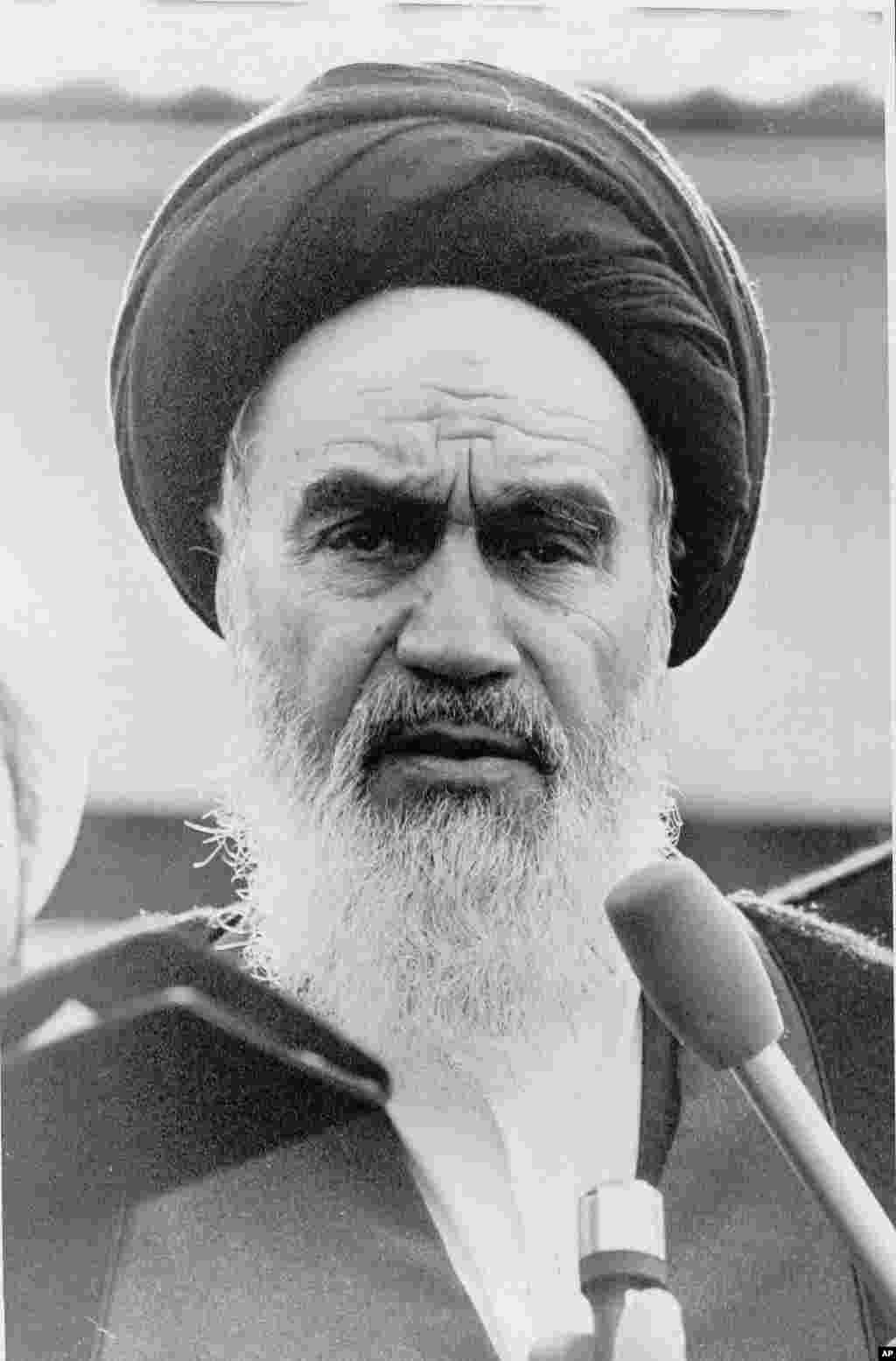
1/14Ayatollah Ruhollah Khomeini, Iran's exiled religious leader, speaks on January 25, 1979, at a news conference following morning prayers in Paris. Through an interpreter, he told international journalists that he was postponing his return to Tehran because of the Iranian Army's closure of the airports.
The return of Ayatollah Ruhollah Khomeini to Iran on February 1, 1979, marked a turning point in Iranian history. Millions of followers turned out in Tehran to greet Khomeini as he arrived from Paris, where he had spent 14 years in exile as an outlawed cleric. Iran's ruler at the time, Shah Mohammad Reza Pahlavi, had fled the country two weeks before Khomeini came back. In March, Khomeini led the drafting of a constitution for the renamed Islamic Republic of Iran. He was officially installed as supreme leader after a referendum in November 1979.
Show moreShow less
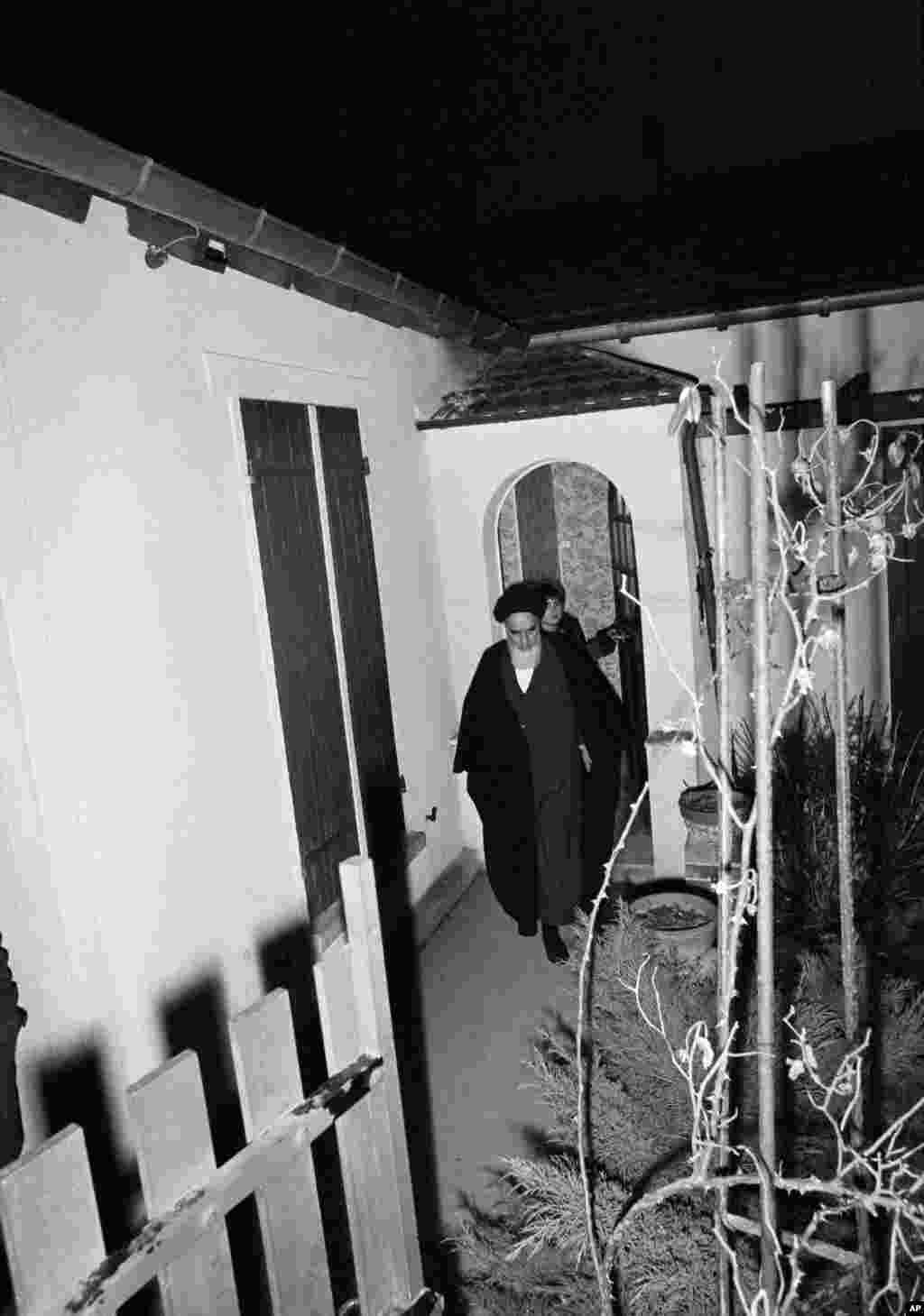
2/14Khomeini leaves his residence in suburban Neauphle-le-Chateau for an evening prayer, just hours before leaving for Charles de Gaulle Airport in Paris on January 31, 1979.
The return of Ayatollah Ruhollah Khomeini to Iran on February 1, 1979, marked a turning point in Iranian history. Millions of followers turned out in Tehran to greet Khomeini as he arrived from Paris, where he had spent 14 years in exile as an outlawed cleric. Iran's ruler at the time, Shah Mohammad Reza Pahlavi, had fled the country two weeks before Khomeini came back. In March, Khomeini led the drafting of a constitution for the renamed Islamic Republic of Iran. He was officially installed as supreme leader after a referendum in November 1979.
Show moreShow less
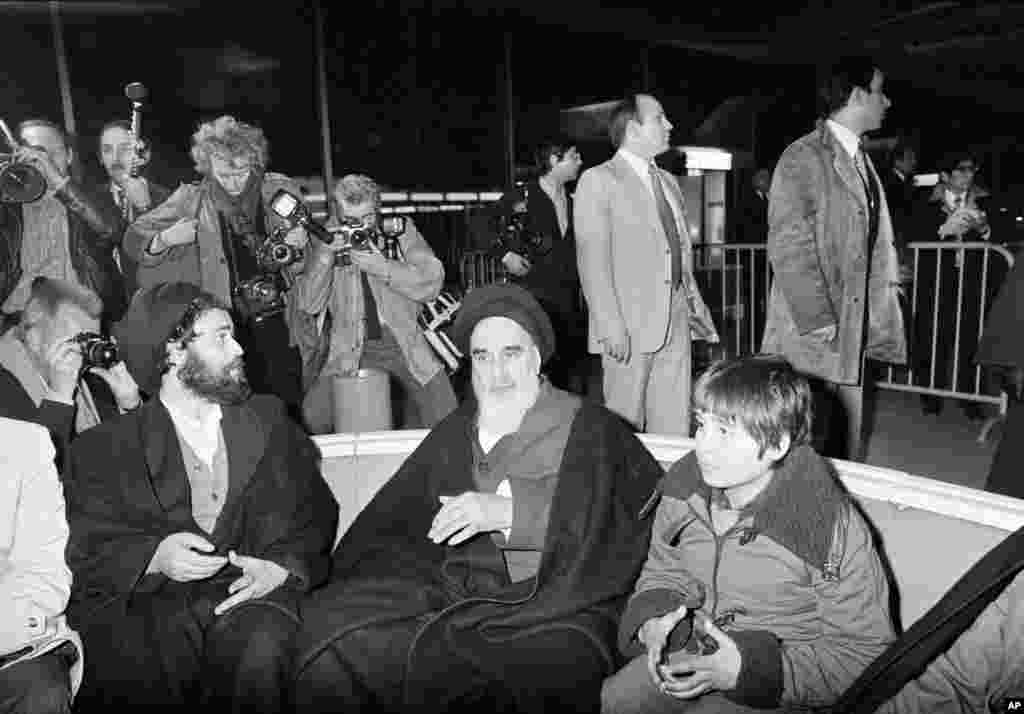
3/14Khomeini talks briefly with reporters at Charles de Gaulle Airport in Paris, January 31, 1979, minutes before boarding a chartered airplane which was to fly him back to Iran after 14 years exile. His grandson is seen at his side.
The return of Ayatollah Ruhollah Khomeini to Iran on February 1, 1979, marked a turning point in Iranian history. Millions of followers turned out in Tehran to greet Khomeini as he arrived from Paris, where he had spent 14 years in exile as an outlawed cleric. Iran's ruler at the time, Shah Mohammad Reza Pahlavi, had fled the country two weeks before Khomeini came back. In March, Khomeini led the drafting of a constitution for the renamed Islamic Republic of Iran. He was officially installed as supreme leader after a referendum in November 1979.
Show moreShow less
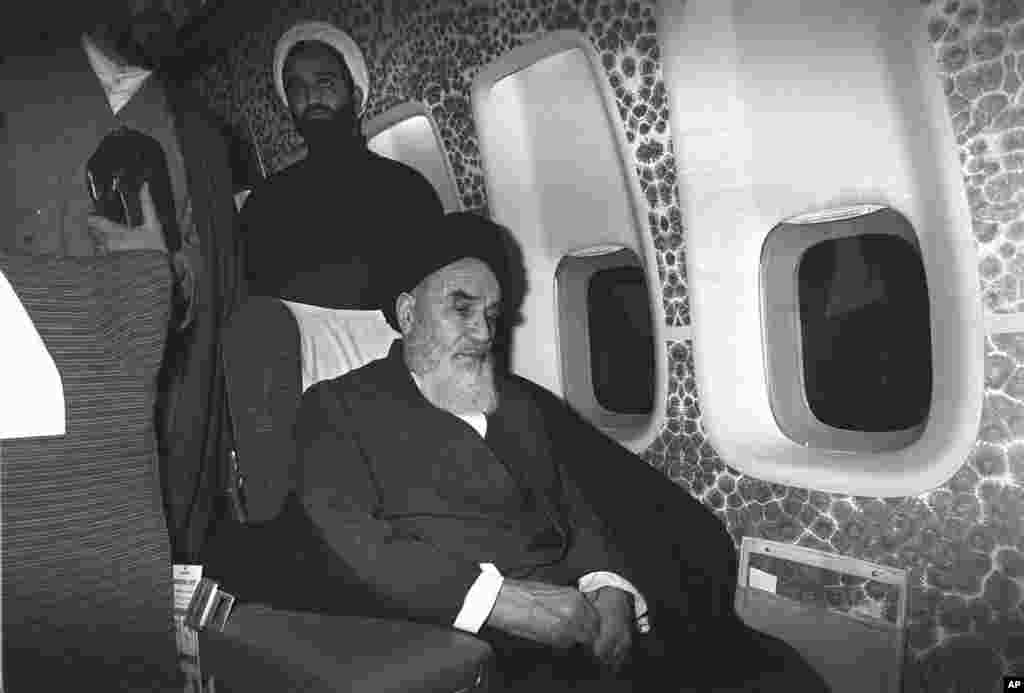
4/14Khomeini sits inside the chartered airplane which was to fly him back to Iran.
The return of Ayatollah Ruhollah Khomeini to Iran on February 1, 1979, marked a turning point in Iranian history. Millions of followers turned out in Tehran to greet Khomeini as he arrived from Paris, where he had spent 14 years in exile as an outlawed cleric. Iran's ruler at the time, Shah Mohammad Reza Pahlavi, had fled the country two weeks before Khomeini came back. In March, Khomeini led the drafting of a constitution for the renamed Islamic Republic of Iran. He was officially installed as supreme leader after a referendum in November 1979.
Show moreShow less
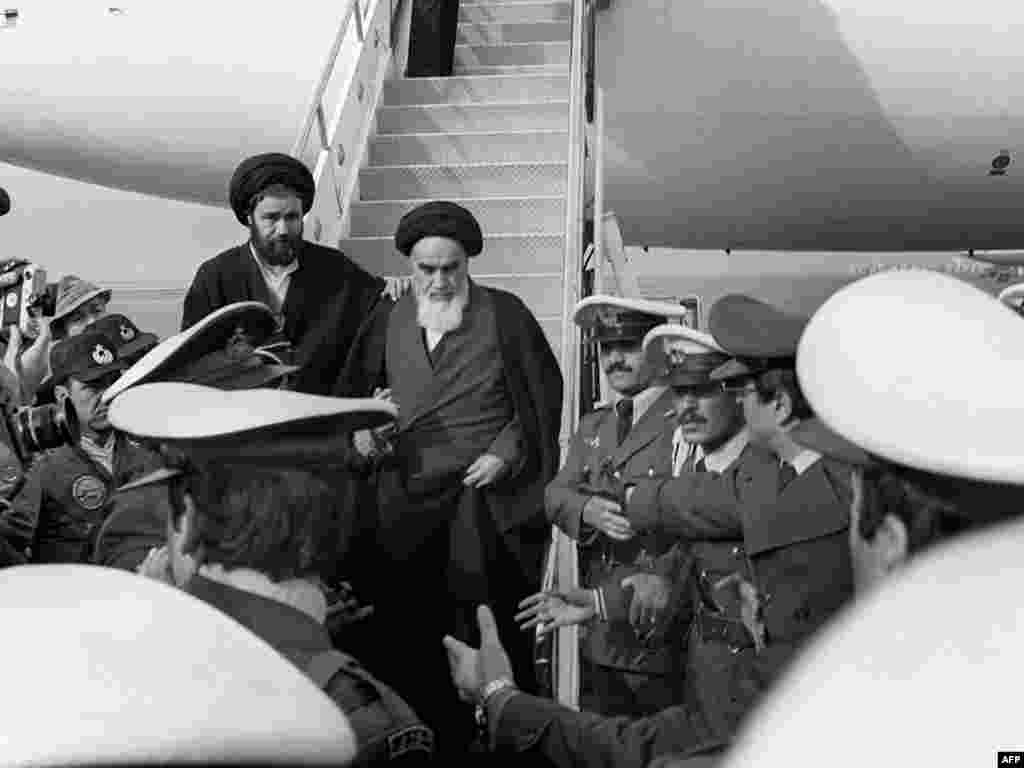
5/14Khomeini leaving the jet in Tehran on February 1, 1979. Some 120 journalists accompanied him on the flight from Paris.
The return of Ayatollah Ruhollah Khomeini to Iran on February 1, 1979, marked a turning point in Iranian history. Millions of followers turned out in Tehran to greet Khomeini as he arrived from Paris, where he had spent 14 years in exile as an outlawed cleric. Iran's ruler at the time, Shah Mohammad Reza Pahlavi, had fled the country two weeks before Khomeini came back. In March, Khomeini led the drafting of a constitution for the renamed Islamic Republic of Iran. He was officially installed as supreme leader after a referendum in November 1979.
Show moreShow less
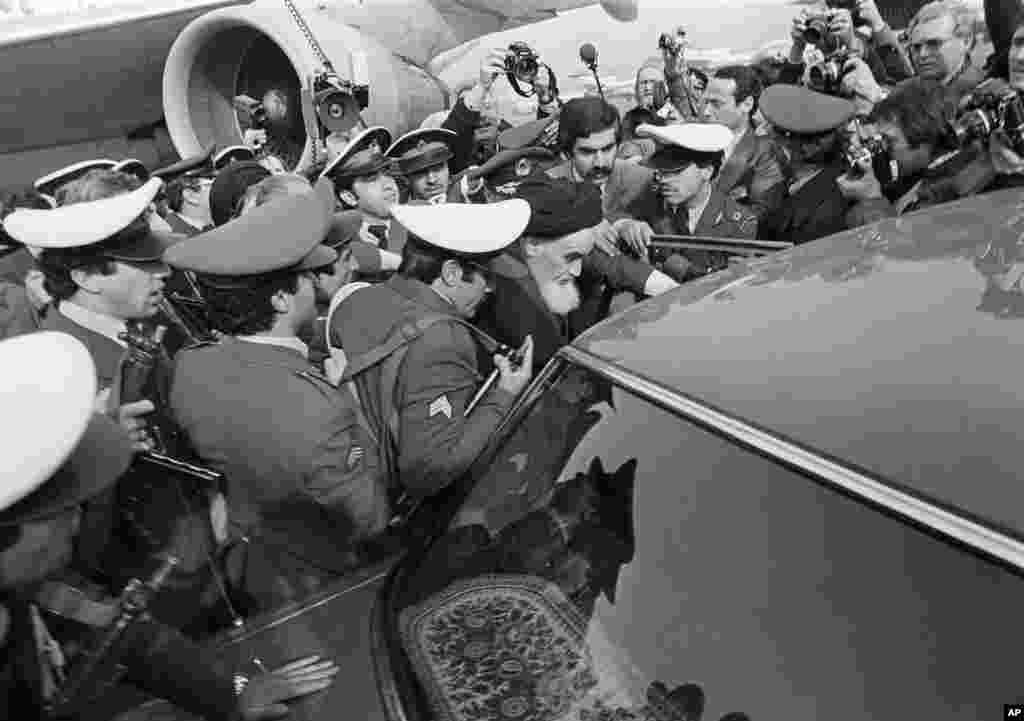
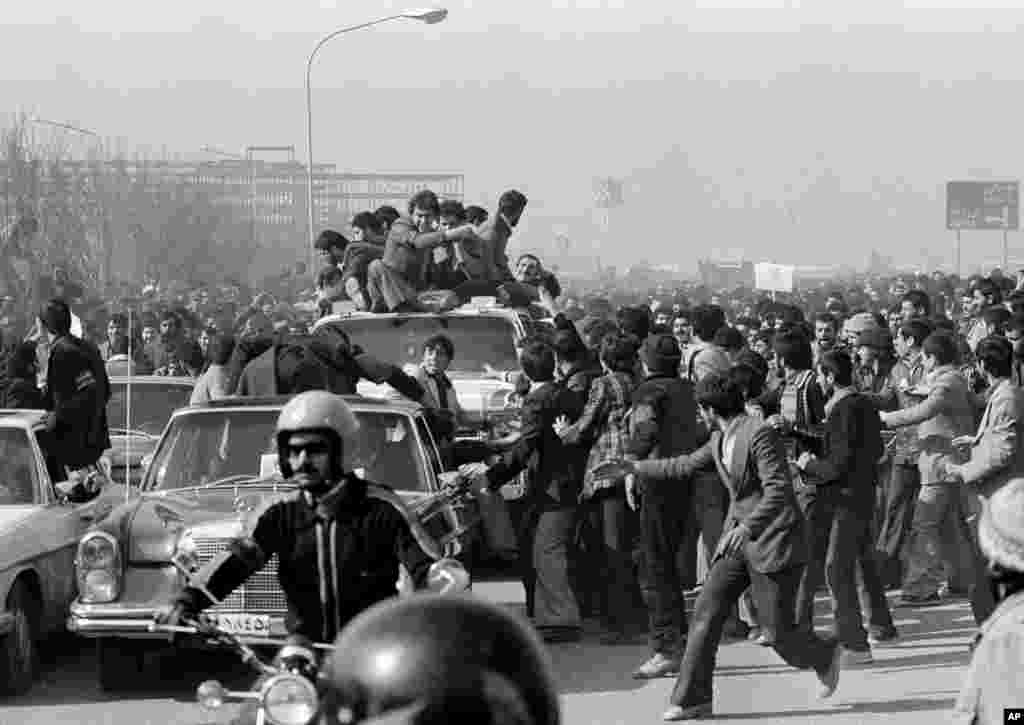
6/14Khomeini has a heavy escort as he tries to leave the airport for his ride through Tehran to Behesht-e Zahra cemetery.
The return of Ayatollah Ruhollah Khomeini to Iran on February 1, 1979, marked a turning point in Iranian history. Millions of followers turned out in Tehran to greet Khomeini as he arrived from Paris, where he had spent 14 years in exile as an outlawed cleric. Iran's ruler at the time, Shah Mohammad Reza Pahlavi, had fled the country two weeks before Khomeini came back. In March, Khomeini led the drafting of a constitution for the renamed Islamic Republic of Iran. He was officially installed as supreme leader after a referendum in November 1979.
Show moreShow less
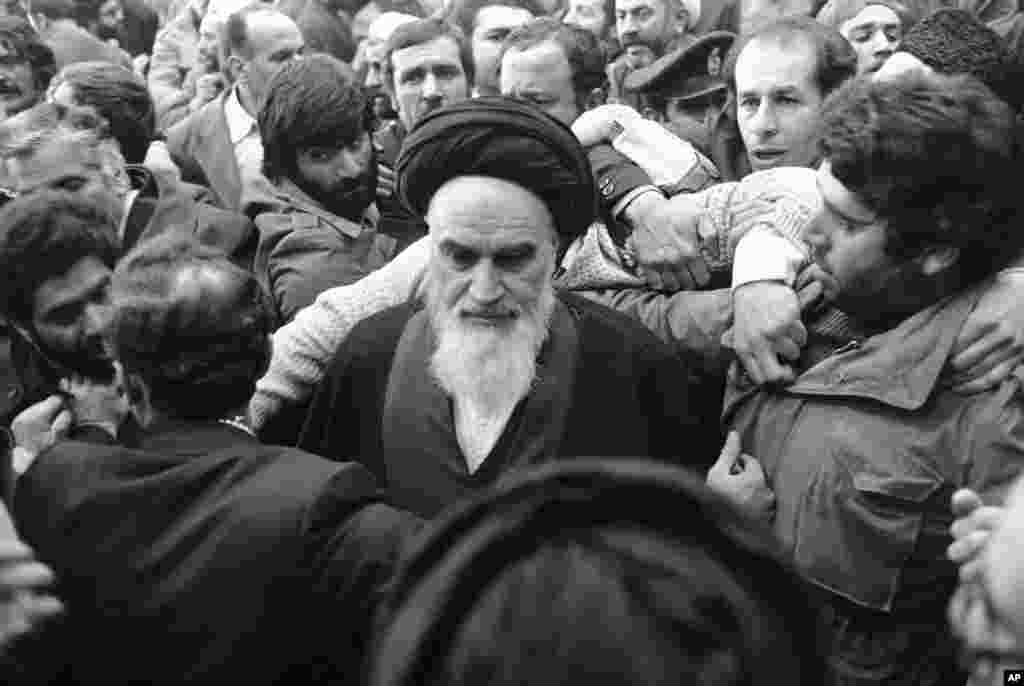
7/14Khomeini is thronged by his supporters at Tehran's airport.
The return of Ayatollah Ruhollah Khomeini to Iran on February 1, 1979, marked a turning point in Iranian history. Millions of followers turned out in Tehran to greet Khomeini as he arrived from Paris, where he had spent 14 years in exile as an outlawed cleric. Iran's ruler at the time, Shah Mohammad Reza Pahlavi, had fled the country two weeks before Khomeini came back. In March, Khomeini led the drafting of a constitution for the renamed Islamic Republic of Iran. He was officially installed as supreme leader after a referendum in November 1979.
Show moreShow less
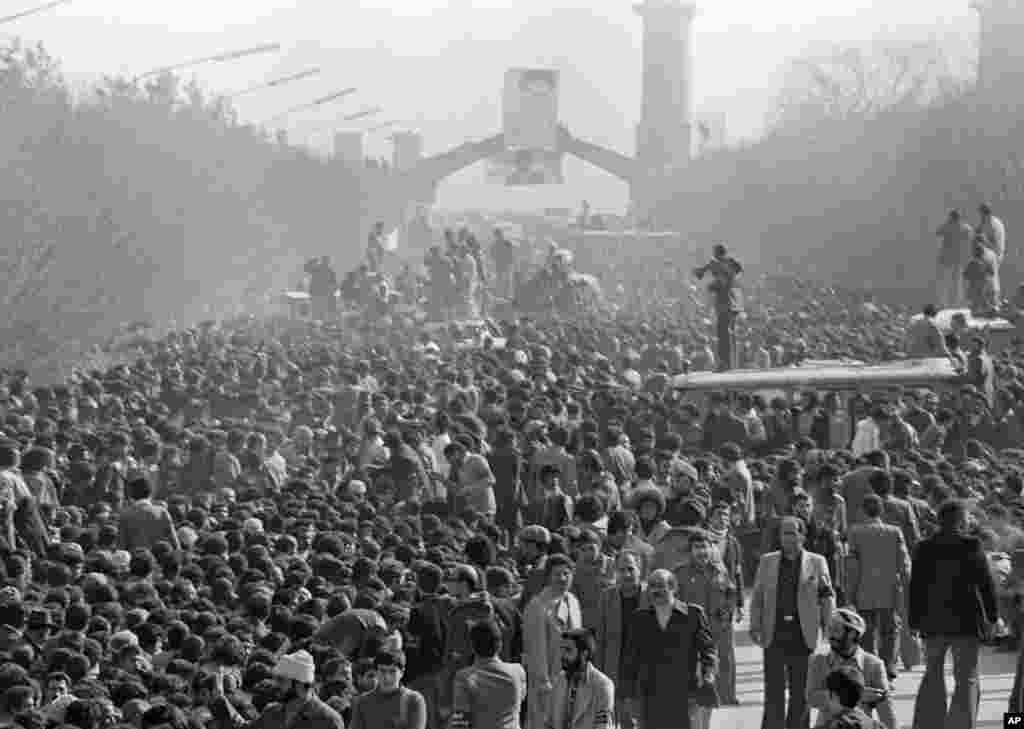
8/14Supporters lined the streets for Khomeini's motorcade to Behesht-e Zahra cemetery.
The return of Ayatollah Ruhollah Khomeini to Iran on February 1, 1979, marked a turning point in Iranian history. Millions of followers turned out in Tehran to greet Khomeini as he arrived from Paris, where he had spent 14 years in exile as an outlawed cleric. Iran's ruler at the time, Shah Mohammad Reza Pahlavi, had fled the country two weeks before Khomeini came back. In March, Khomeini led the drafting of a constitution for the renamed Islamic Republic of Iran. He was officially installed as supreme leader after a referendum in November 1979.
Show moreShow less
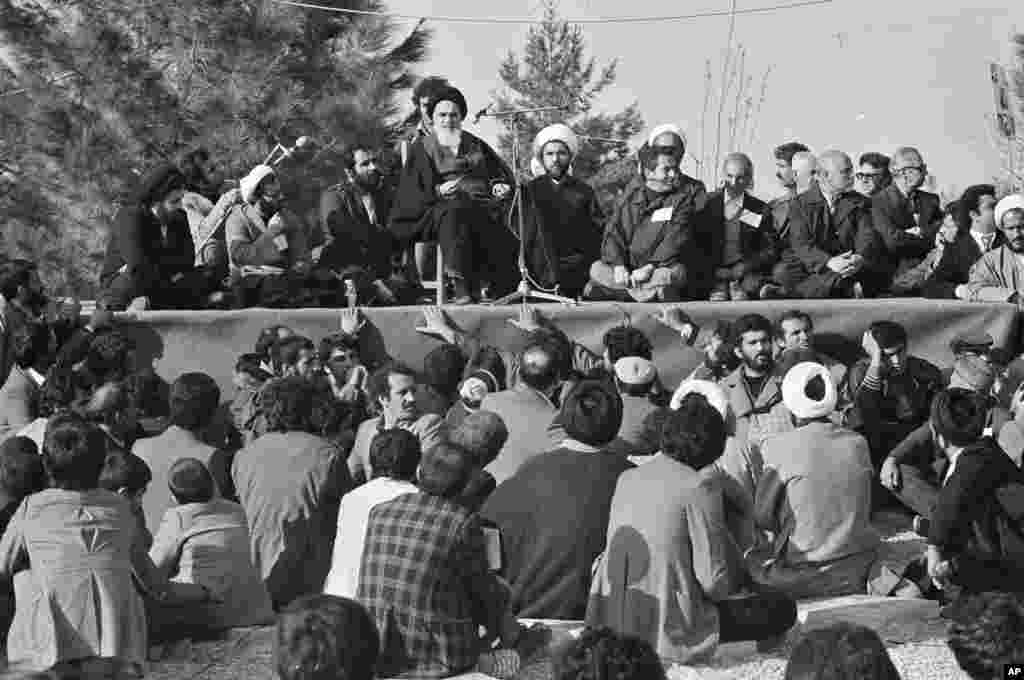
9/14Khomeini gives his speech at the Behesht-e Zahra cemetery after his return from exile.
The return of Ayatollah Ruhollah Khomeini to Iran on February 1, 1979, marked a turning point in Iranian history. Millions of followers turned out in Tehran to greet Khomeini as he arrived from Paris, where he had spent 14 years in exile as an outlawed cleric. Iran's ruler at the time, Shah Mohammad Reza Pahlavi, had fled the country two weeks before Khomeini came back. In March, Khomeini led the drafting of a constitution for the renamed Islamic Republic of Iran. He was officially installed as supreme leader after a referendum in November 1979.
Show moreShow less
10/14A crowd listens to Khomeini address them at Behesht-e Zahra cemetery. An estimated five million people gathered in Tehran to show support.
The return of Ayatollah Ruhollah Khomeini to Iran on February 1, 1979, marked a turning point in Iranian history. Millions of followers turned out in Tehran to greet Khomeini as he arrived from Paris, where he had spent 14 years in exile as an outlawed cleric. Iran's ruler at the time, Shah Mohammad Reza Pahlavi, had fled the country two weeks before Khomeini came back. In March, Khomeini led the drafting of a constitution for the renamed Islamic Republic of Iran. He was officially installed as supreme leader after a referendum in November 1979.
Show moreShow less
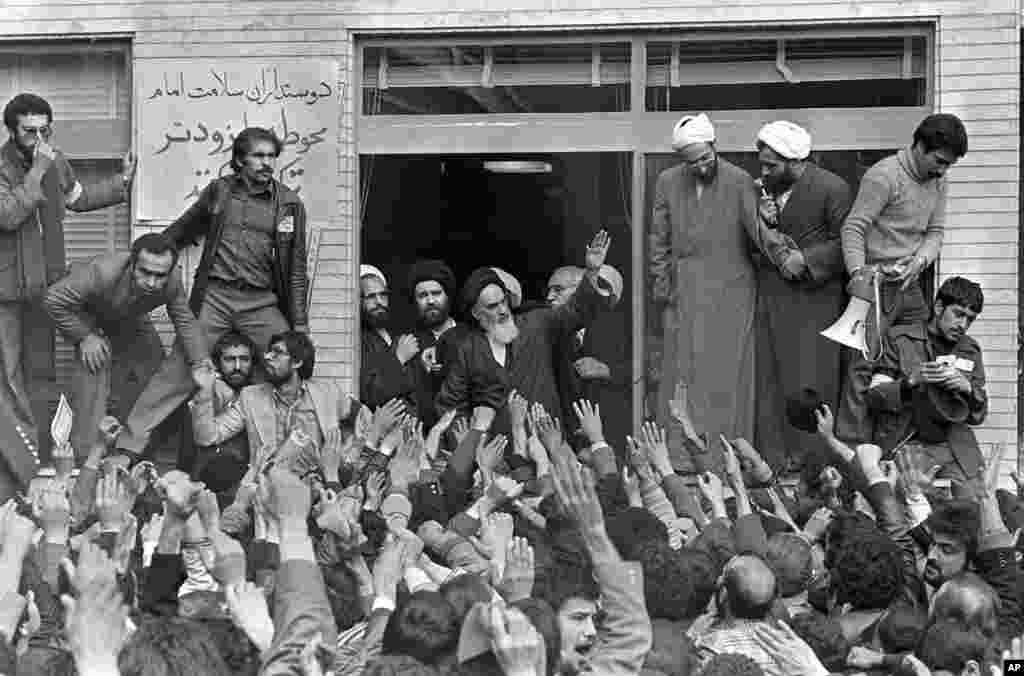
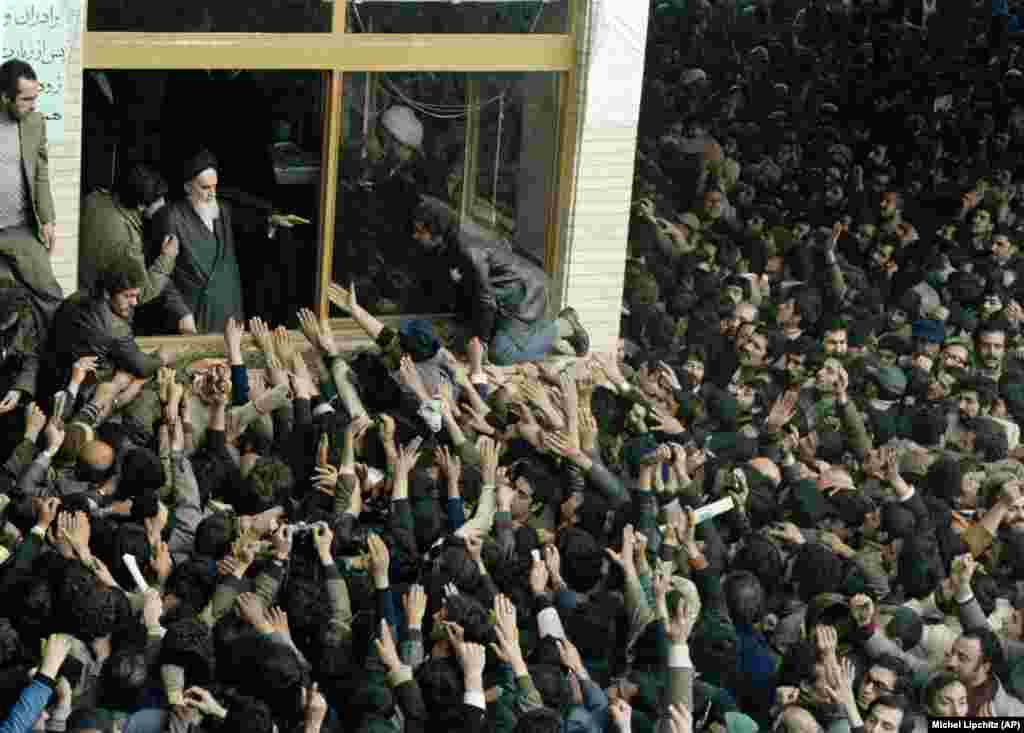
11/14Khomeini waves to followers as he appears on the balcony of his headquarters in Tehran on February 2, 1979.
The return of Ayatollah Ruhollah Khomeini to Iran on February 1, 1979, marked a turning point in Iranian history. Millions of followers turned out in Tehran to greet Khomeini as he arrived from Paris, where he had spent 14 years in exile as an outlawed cleric. Iran's ruler at the time, Shah Mohammad Reza Pahlavi, had fled the country two weeks before Khomeini came back. In March, Khomeini led the drafting of a constitution for the renamed Islamic Republic of Iran. He was officially installed as supreme leader after a referendum in November 1979.
Show moreShow less
12/14Khomeini addresses crowds with his son Ahmad on February 4, 1979.
The return of Ayatollah Ruhollah Khomeini to Iran on February 1, 1979, marked a turning point in Iranian history. Millions of followers turned out in Tehran to greet Khomeini as he arrived from Paris, where he had spent 14 years in exile as an outlawed cleric. Iran's ruler at the time, Shah Mohammad Reza Pahlavi, had fled the country two weeks before Khomeini came back. In March, Khomeini led the drafting of a constitution for the renamed Islamic Republic of Iran. He was officially installed as supreme leader after a referendum in November 1979.
Show moreShow less
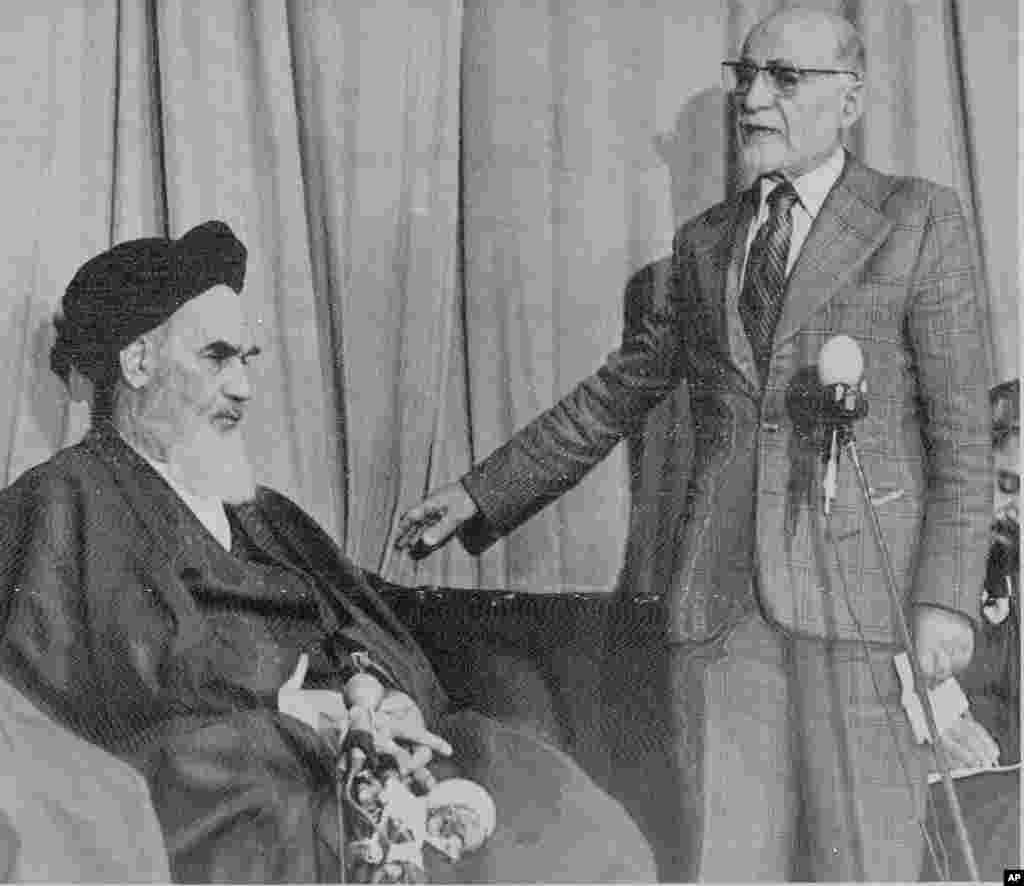
13/14Mehdi Bazargan, newly named Prime Minister of a provisional government in Iran, right, speaks with Khomeini on February 5, 1979.
The return of Ayatollah Ruhollah Khomeini to Iran on February 1, 1979, marked a turning point in Iranian history. Millions of followers turned out in Tehran to greet Khomeini as he arrived from Paris, where he had spent 14 years in exile as an outlawed cleric. Iran's ruler at the time, Shah Mohammad Reza Pahlavi, had fled the country two weeks before Khomeini came back. In March, Khomeini led the drafting of a constitution for the renamed Islamic Republic of Iran. He was officially installed as supreme leader after a referendum in November 1979.
Show moreShow less
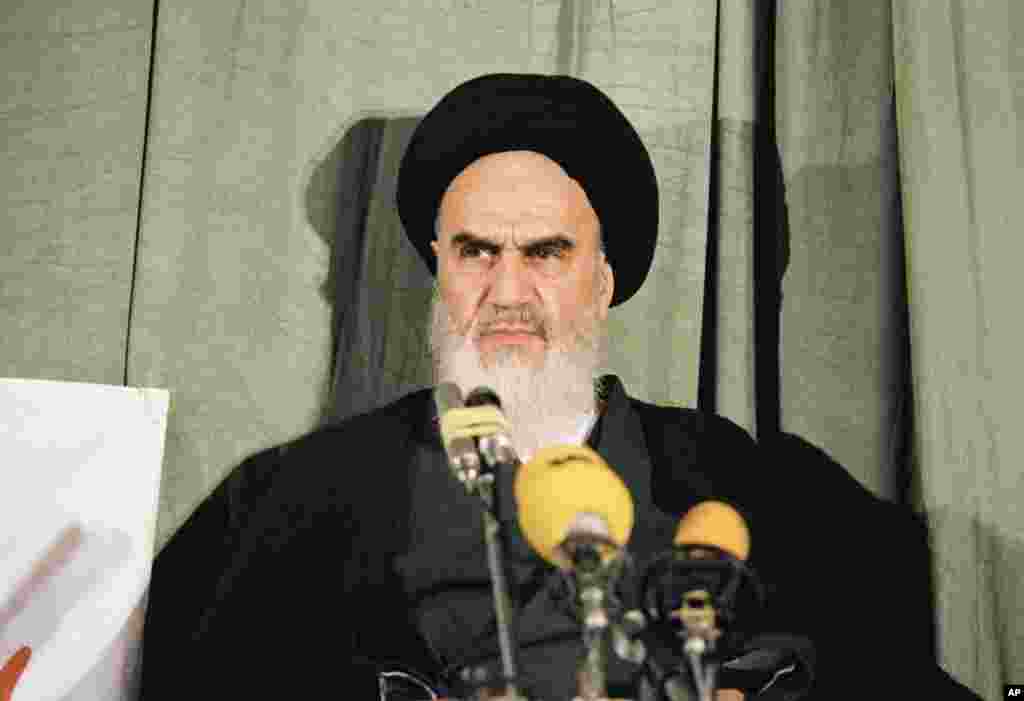
14/14Khomeini holds a news conference in Tehran on February 5, 1979.
The return of Ayatollah Ruhollah Khomeini to Iran on February 1, 1979, marked a turning point in Iranian history. Millions of followers turned out in Tehran to greet Khomeini as he arrived from Paris, where he had spent 14 years in exile as an outlawed cleric. Iran's ruler at the time, Shah Mohammad Reza Pahlavi, had fled the country two weeks before Khomeini came back. In March, Khomeini led the drafting of a constitution for the renamed Islamic Republic of Iran. He was officially installed as supreme leader after a referendum in November 1979.
Show moreShow less
Previous slide
Next slide
Thousands gathered at Khomeini’s mausoleum in Tehran on February 1 as an army band played revolutionary anthems.
Ayatollah Ahmad Jannati, head of Iran’s influential Assembly of Experts, criticized those seeking better ties with the United States.
"Curses on the wrong school of thought that thinks we can't run the country unless America helps us," Jannati was quoted as saying by the AFP news agency.
"America's power is on the decline. We should not be afraid of America," Jannati added.