Accessibility links

Breaking News

Remote-Control Killing: Iran Says Top Nuclear Scientist Assassinated By Machine Gun Guided Via Satellite

The aftermath of the attack that killed Iranian nuclear scientist Mohsen Fakhrizadeh near Tehran on November 27.

A machine gun equipped with a "satellite-controlled smart system" was used to kill Iran's top nuclear scientist, a senior official with the country's Islamic Revolutionary Guards Corps (IRGC) has said.

Officials have blamed Israel for the brazen, daytime attack on November 27 in Absard, some 60 kilometers from the capital, Tehran, though it didn't offer any evidence for the claim.

Israel, which has been blamed for the assassination of at least four other Iranian nuclear scientists, has not commented on the attack.

The Black List: Assassinated Iranian Scientists

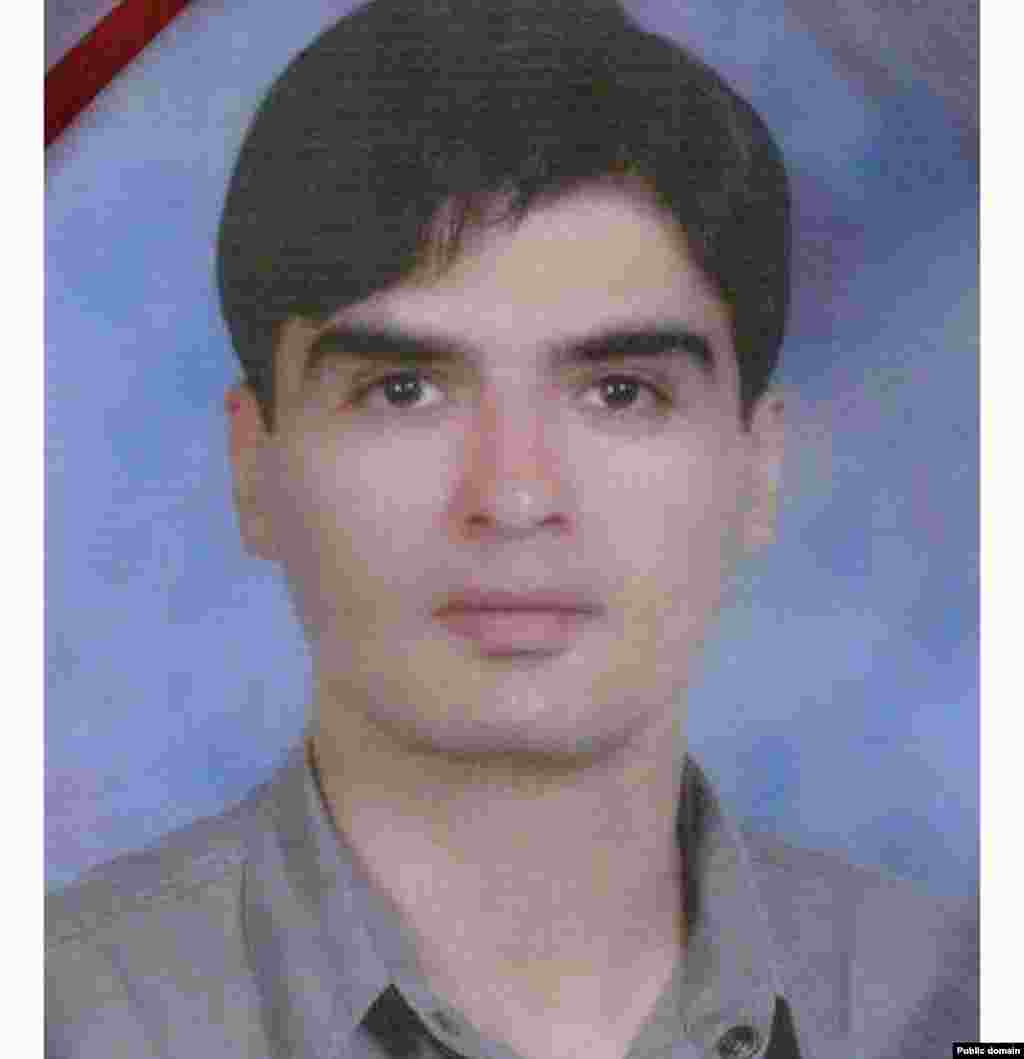
Mohsen Fakhrizadeh (1961-2020)&nbsp;<br />
<br />
Fakhrizadeh was a member of Iran&#39;s hard-line Islamic Revolutionary Guards Corps. The physicist<br />
was described as the &quot;brains&quot; behind Iran&#39;s nuclear program.&nbsp;<br />
<br />
&nbsp;
1/9 Mohsen Fakhrizadeh (1961-2020) 

Fakhrizadeh was a member of Iran's hard-line Islamic Revolutionary Guards Corps. The physicist
was described as the "brains" behind Iran's nuclear program. 

 
The November 27 killing of Iranian nuclear scientist Mohsen Fakhrizadeh is the latest in a string of killings of men allegedly linked to Iran’s nuclear program. Fakhrizadeh is at least the fifth Iranian scientist to have been assassinated or die in mysterious circumstances since 2007.
Fakhrizadeh&#39;s bullet-riddled car after the lethal attack near Tehran on November 27. Initial reports suggested several gunmen had attacked the physicist&#39;s car after detonating a bomb nearby.<br />
<br />
But Iran has since claimed that remote-controlled &quot;electronic equipment&quot; was used in the attack, and that no assassins were present at the scene. Images released by Iranian state media show a puddle of blood on the road next to the car seen in this photo, and <strong><a href="https://www.nytimes.com/2020/11/27/world/middleeast/iran-nuclear-scientist-killed.html" target="_blank">what appears to be the remains of a large explosion</a></strong> littering the road where the physicist was killed.&nbsp;
2/9 Fakhrizadeh's bullet-riddled car after the lethal attack near Tehran on November 27. Initial reports suggested several gunmen had attacked the physicist's car after detonating a bomb nearby.

But Iran has since claimed that remote-controlled "electronic equipment" was used in the attack, and that no assassins were present at the scene. Images released by Iranian state media show a puddle of blood on the road next to the car seen in this photo, and what appears to be the remains of a large explosion littering the road where the physicist was killed. 
The November 27 killing of Iranian nuclear scientist Mohsen Fakhrizadeh is the latest in a string of killings of men allegedly linked to Iran’s nuclear program. Fakhrizadeh is at least the fifth Iranian scientist to have been assassinated or die in mysterious circumstances since 2007.
Mostafa Ahmadi Roshan (1979-2012)<br />
&nbsp;<br />
Roshan was an academic who also worked at Iran&rsquo;s Natanz nuclear-enrichment facility.&nbsp;
3/9 Mostafa Ahmadi Roshan (1979-2012)
 
Roshan was an academic who also worked at Iran’s Natanz nuclear-enrichment facility. 
The November 27 killing of Iranian nuclear scientist Mohsen Fakhrizadeh is the latest in a string of killings of men allegedly linked to Iran’s nuclear program. Fakhrizadeh is at least the fifth Iranian scientist to have been assassinated or die in mysterious circumstances since 2007.
The Peugot 405 that Roshan was driving when he was killed in January 2012, on display in Tehran. According to witnesses, one of two riders on a motorcycle stuck a magnetic bomb to the door of Roshan&rsquo;s car and then disappeared into traffic before the explosive detonated. The blast also killed Roshan&rsquo;s driver.<br />
&nbsp;
4/9 The Peugot 405 that Roshan was driving when he was killed in January 2012, on display in Tehran. According to witnesses, one of two riders on a motorcycle stuck a magnetic bomb to the door of Roshan’s car and then disappeared into traffic before the explosive detonated. The blast also killed Roshan’s driver.
 
The November 27 killing of Iranian nuclear scientist Mohsen Fakhrizadeh is the latest in a string of killings of men allegedly linked to Iran’s nuclear program. Fakhrizadeh is at least the fifth Iranian scientist to have been assassinated or die in mysterious circumstances since 2007.
Majid Shahriari (1966-2010)<br />
&nbsp;<br />
Shahriari was a nuclear scientist who cooperated with the Atomic Energy Organization of Iran.<br />
&nbsp;<br />
&nbsp;
5/9 Majid Shahriari (1966-2010)
 
Shahriari was a nuclear scientist who cooperated with the Atomic Energy Organization of Iran.
 
 
The November 27 killing of Iranian nuclear scientist Mohsen Fakhrizadeh is the latest in a string of killings of men allegedly linked to Iran’s nuclear program. Fakhrizadeh is at least the fifth Iranian scientist to have been assassinated or die in mysterious circumstances since 2007.
Shahriari&rsquo;s vehicle after he was killed in a blast in Tehran in November 2010. The scientist was also killed by a bomb attached to his door by motorcyclists.<br />
&nbsp;
6/9 Shahriari’s vehicle after he was killed in a blast in Tehran in November 2010. The scientist was also killed by a bomb attached to his door by motorcyclists.
 
The November 27 killing of Iranian nuclear scientist Mohsen Fakhrizadeh is the latest in a string of killings of men allegedly linked to Iran’s nuclear program. Fakhrizadeh is at least the fifth Iranian scientist to have been assassinated or die in mysterious circumstances since 2007.
Massud Ali-Mohammadi (1959-2010)<br />
&nbsp;<br />
Ali-Mohammadi was a professor of physics at the University of Tehran and, according to his wife, was <a href="https://www.csmonitor.com/World/Middle-East/2014/0717/Covert-war-against-Iran-s-nuclear-scientists-a-widow-remembers">secretly involved</a> in Iran&rsquo;s nuclear program.<br />
&nbsp;
7/9 Massud Ali-Mohammadi (1959-2010)
 
Ali-Mohammadi was a professor of physics at the University of Tehran and, according to his wife, was secretly involved in Iran’s nuclear program.
 
The November 27 killing of Iranian nuclear scientist Mohsen Fakhrizadeh is the latest in a string of killings of men allegedly linked to Iran’s nuclear program. Fakhrizadeh is at least the fifth Iranian scientist to have been assassinated or die in mysterious circumstances since 2007.
A shrapnel-peppered gate at the scene of Ali-Mohammadi&rsquo;s assassination in a Tehran suburb. The physicist was killed when a parked motorcycle fitted with a fragmentation explosive detonated near his car as he left for work in January 2010.
8/9 A shrapnel-peppered gate at the scene of Ali-Mohammadi’s assassination in a Tehran suburb. The physicist was killed when a parked motorcycle fitted with a fragmentation explosive detonated near his car as he left for work in January 2010.
The November 27 killing of Iranian nuclear scientist Mohsen Fakhrizadeh is the latest in a string of killings of men allegedly linked to Iran’s nuclear program. Fakhrizadeh is at least the fifth Iranian scientist to have been assassinated or die in mysterious circumstances since 2007.
Ardeshir Hosseinpur (1962-2007)<br />
&nbsp;<br />
Hosseinpur was a physics professor and electromagnetism expert. He died in Isfahan in January 2007 under mysterious circumstances. Some reports said he was &ldquo;gassed,&rdquo; while others claimed he was killed by radiation poisoning. Although many people suspected Israeli involvement in his death, his sister<strong> <a href="https://www.haaretz.com/sister-of-murdered-physicist-iran-did-it-not-israel-1.5310342">later claimed</a></strong> he was killed by Iran&#39;s Islamic Revolutionary Guards Corps after refusing to help Iran develop nuclear weapons.<br />
&nbsp;
9/9 Ardeshir Hosseinpur (1962-2007)
 
Hosseinpur was a physics professor and electromagnetism expert. He died in Isfahan in January 2007 under mysterious circumstances. Some reports said he was “gassed,” while others claimed he was killed by radiation poisoning. Although many people suspected Israeli involvement in his death, his sister later claimed he was killed by Iran's Islamic Revolutionary Guards Corps after refusing to help Iran develop nuclear weapons.
 
The November 27 killing of Iranian nuclear scientist Mohsen Fakhrizadeh is the latest in a string of killings of men allegedly linked to Iran’s nuclear program. Fakhrizadeh is at least the fifth Iranian scientist to have been assassinated or die in mysterious circumstances since 2007.
Previous slide
Next slide

Speaking in Tehran on December 6, IRGC Deputy Commander Ali Fadavi said the smart system had "zoomed in" on Fakhrizadeh's face using "artificial intelligence" while adding that Fakhrizadeh's wife -- who was only "25 centimeters away" -- was unharmed.

Fadavi confirmed earlier reports that there were no assassins on the ground to carry out the killing.

He said the special weapon fired a total of 13 times, hitting Fakhrizadeh four or five times, including a shot to his spinal cord that caused severe bleeding and led to his death as he was being transported via helicopter to a Tehran hospital.

IRGC Deputy Commander Ali Fadavi (file photo)

Four bullets also hit the chief of Fakhrizadeh's security detail, who had attempted to protect him by "throwing himself" on the nuclear scientist, Fadavi said. That confirmed media reports that one of Fakhrizadeh's bodyguards had been injured in the attack.

He also said that 11 bodyguards were accompanying Fakhrizadeh and that the explosion of a truck during the attack targeted the security team.

Fadavi's account is the latest version of the assassination that has resulted in serious criticism of Iran's security apparatus.
Initial reports immediately after the killing suggested that the scientist was targeted in a suicide attack, which included several gunmen. But media later only reported that the assault included gunfire and a truck explosion.

A filmmaker close to the hard-line faction of Iran's establishment, which also includes the IRGC and other groups, said hours after the attack that 12 gunmen, including two snipers and a powerful car bomb, were involved in the ambush of Fakhrizadeh's four-vehicle convoy.

Later, the IRGC-affiliated Fars news agency reported that there were no hitmen on the ground and that the attack was carried out by a remote-controlled machine gun mounted on a pickup truck that later exploded.

Supreme National Security Council Secretary Ali Shamkhani had also said there were no attackers on the ground while blaming Israel and suggesting the exiled Iranian opposition group Mujahedin-e Khalq Organzation had played a role.

In an interview with state-controlled television, one of Fakhrizadeh's sons, Hamed Fakhrizadeh, said his father had been warned by his security team on the day he was assassinated not to travel.

But the top scientist, who kept a low-profile, had said that, due to a class he was teaching as well as an "important meeting," he needed to return to Tehran.

'Full-Blown War Zone'

Hamed Fakhrizadeh described the scene of the assassination, which he came to shortly after the attack, as a "full-blown war zone."

His brother, Mehdi Fakhirzadeh, said in the same interview that his father was shot at a close range of four or five meters and that their mother, who he said had sat on the ground next to Fakhrizadeh, was unhurt.

"She said 'I don't understand how the bullets didn't hit me. I went there so that the bullets would not hit [Fakhrizadeh],'" he quoted his mother as having said.

The comments could either confirm Fadavi's account regarding a "satellite-controlled" weapon equipped with facial-recognition technology or suggest that snipers shot and killed the nuclear scientist.

Fakhrizadeh's assassination and the various accounts of how it was carried out have raised many questions, including the possible presence of "infiltrators" within Iran's security apparatus who would have precise information about the movement of the country's leading nuclear scientist, who was mentioned by name in a 2018 presentation by Israeli Prime Minister Benjamin Netanyahu.

If the official account regarding the remote-controlled killing is true, it is clear that the attack was well-planned and that someone had installed the alleged "remote-controlled" gun and a bomb on the truck before driving it to the site of the assassination. Some reports said the owner of the Nissan pickup truck had left Iran shortly before the attack.

One major question is how the special equipment needed for the sophisticated attack was smuggled into Iran.
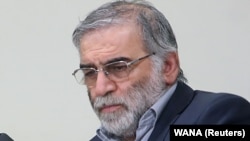
Mohsen Fakhrizadeh
Mohsen Fakhrizadeh

It is also not clear why Fakhrizadeh -- who knew that he was a wanted man due to his role in the country's nuclear program and who, according to officials, had survived previous failed assassination attempts -- had decided to get out of his vehicle during the attack. It's especially strange because several media accounts say his vehicle was bullet-proof.

Fakhrizadeh's sons confirmed earlier reports that their father left his vehicle because he thought it had broken down after hearing the bullets hitting the car.

But it is unclear why he didn't ask someone on his security team to find out what was happening instead of putting himself at risk by leaving the vehicle.

Officials have vowed to avenge Fakhrizadevh's killing, which came nearly a year after the U.S. assassination of General Qasem Soleimani, who led the IRGC Quds Force in charge of the group's regional activities. Soleimani was killed in a drone attack near Baghdad in January in an attack that the U.S. claimed responsibility for.

  • 16x9 Image

    Golnaz Esfandiari

    Golnaz Esfandiari is managing editor of RFE/RL's Radio Farda, which breaks through government censorship to deliver accurate news and provide a platform for informed discussion and debate to audiences in Iran. She has reported from Afghanistan and Haiti and is one of the authors of The Farda Briefing newsletter. Her work has been cited by The New Yorker, The New York Times, The Washington Post, and other major publications. Born and raised in Tehran, she is fluent in Persian, French, English, and Czech.

This item is part of
XS
SM
MD
LG