


Gutted Mosques, Eerie Calm In Tehran After Unrest
- By RFE/RL
Photos released on January 19 and 20 show the aftermath in Tehran of massive protests that swept Iran over recent weeks before being crushed by the country's security apparatus.
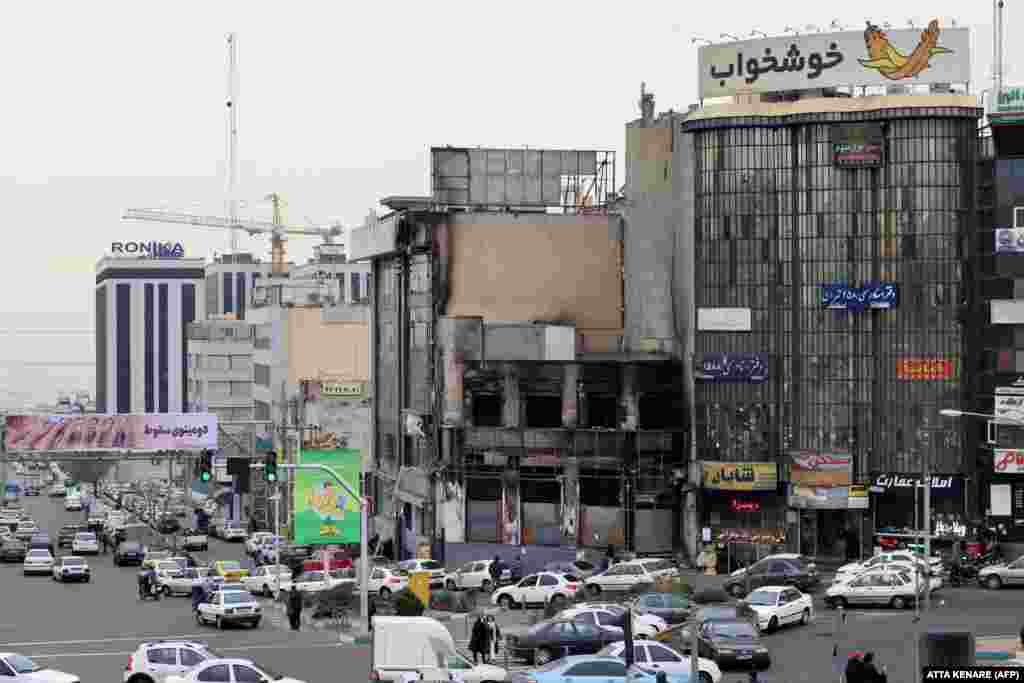
1
A building in Tehran that was torched during the biggest protests seen in Iran since the Islamic Revolution of 1979.
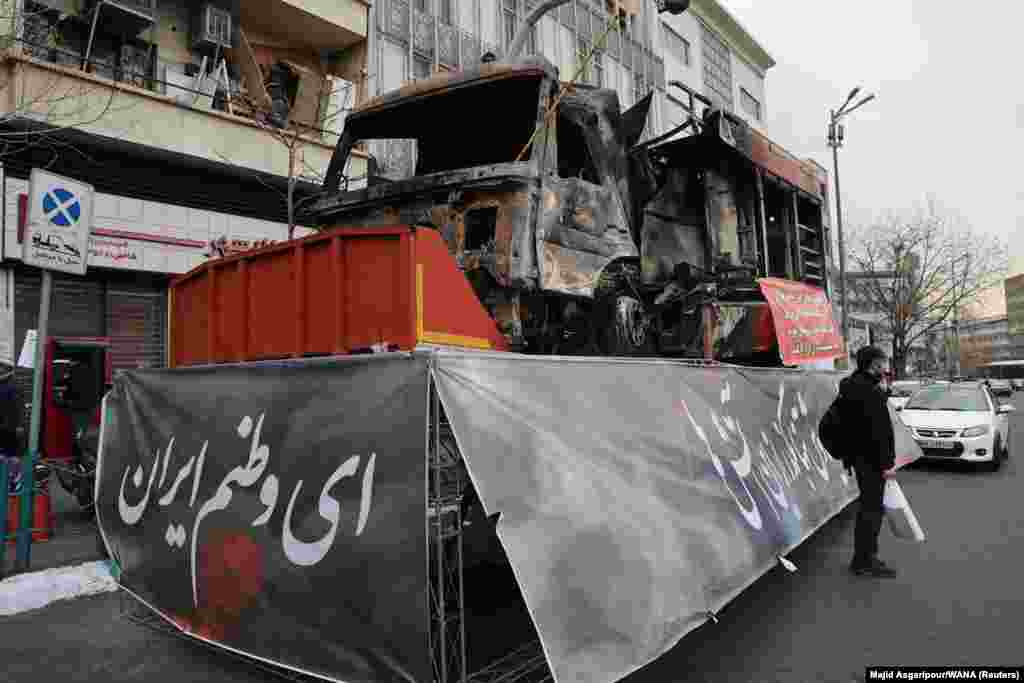
2
A fire truck that was burned during the unrest on display in Tehran. A Persian banner around the truck says: "Iran, o my country."
Mass unrest began in Tehran on December 28 amid a collapse in the value of Iran's currency, coupled with surging inflation.
Mass unrest began in Tehran on December 28 amid a collapse in the value of Iran's currency, coupled with surging inflation.
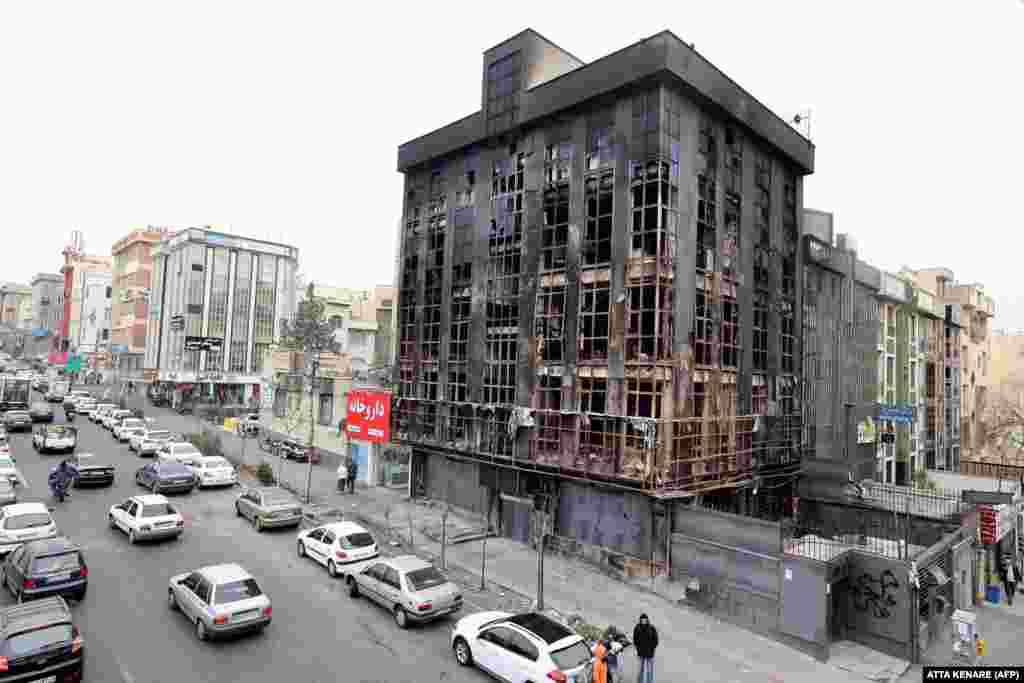
3
A burned-out building in central Tehran.
US-based rights group HRANA says more than 4,500 people were killed throughout Iran amid a crackdown on the protests, with tens of thousands arrested.
US-based rights group HRANA says more than 4,500 people were killed throughout Iran amid a crackdown on the protests, with tens of thousands arrested.
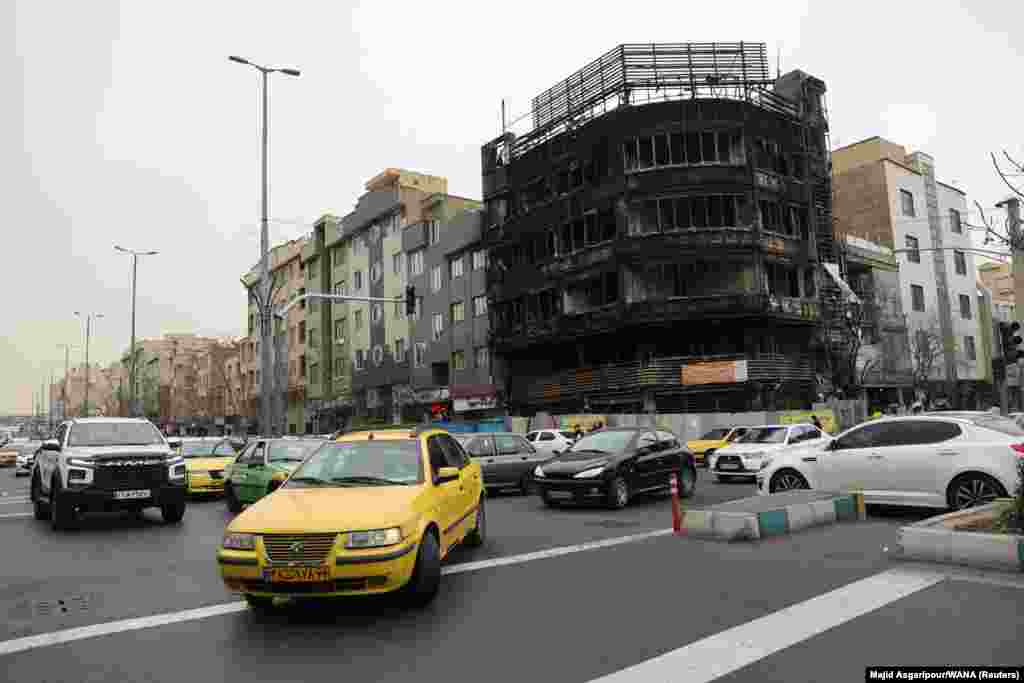
4
A torched building in Tehran that was linked to Ayandeh Bank, a company that collapsed in October amid corruption allegations.
Some observers say the bank's demise contributed to the economic storm that precipitated the mass protests.
Some observers say the bank's demise contributed to the economic storm that precipitated the mass protests.
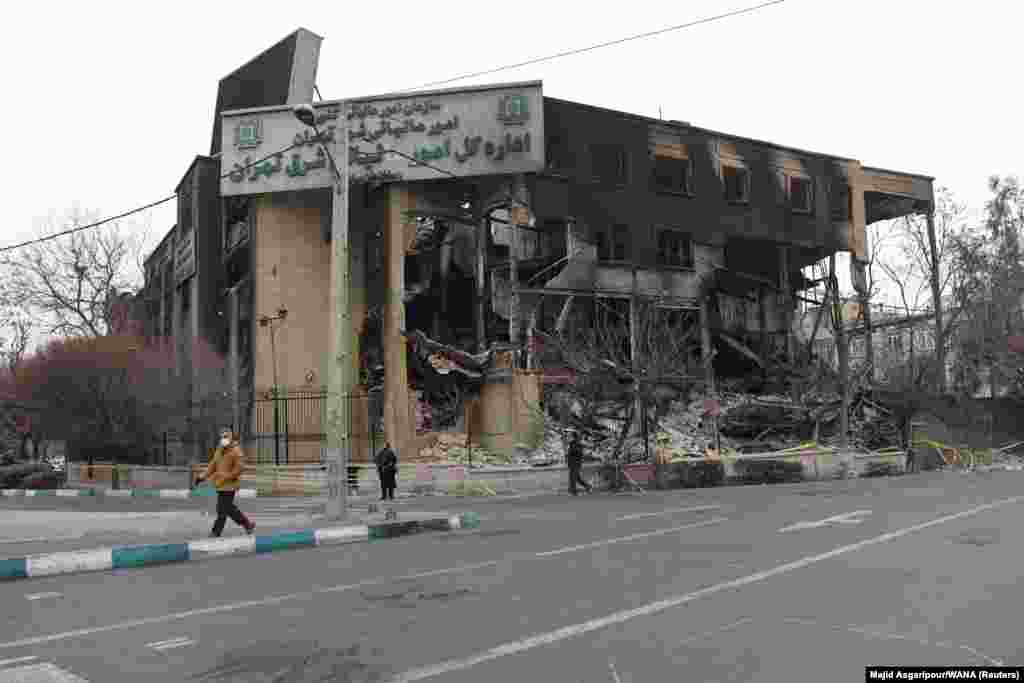
5
A state tax building in Tehran that was destroyed by fire during the unrest.
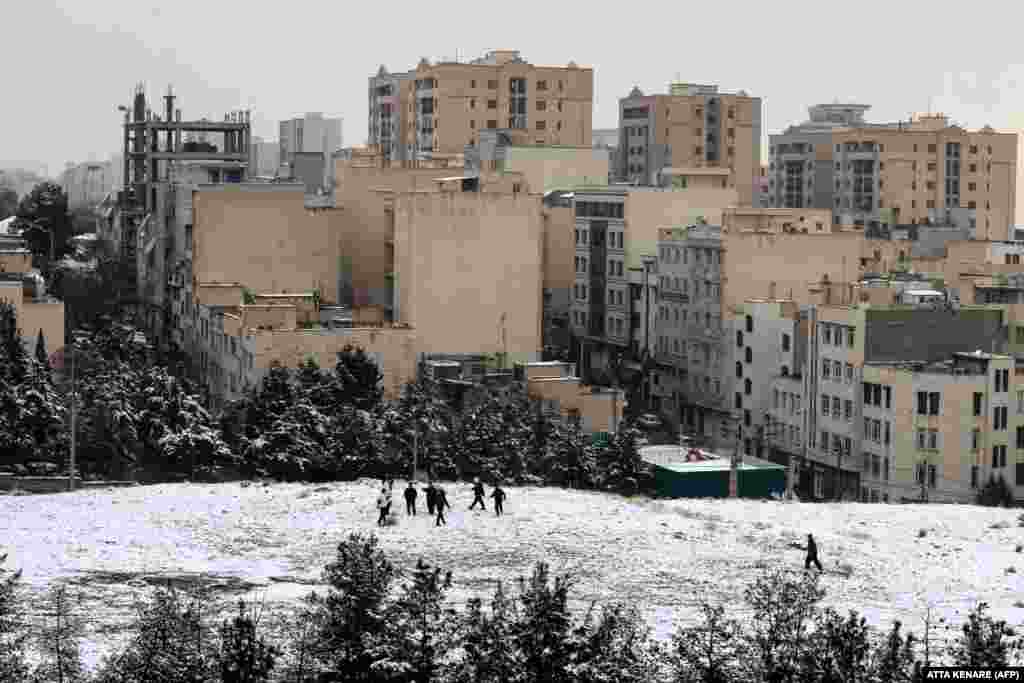
6
Boys play in the snow in a suburb of Tehran on January 20.
Images such as this, released by photographers accredited to work in Iran, emphasize a return to normal life after the violence of recent days, but sources told RFE/RL's Radio Farda on January 17 that Tehran is effectively under martial law, with people being stopped at random and having their phones inspected for links to the protests.
Images such as this, released by photographers accredited to work in Iran, emphasize a return to normal life after the violence of recent days, but sources told RFE/RL's Radio Farda on January 17 that Tehran is effectively under martial law, with people being stopped at random and having their phones inspected for links to the protests.
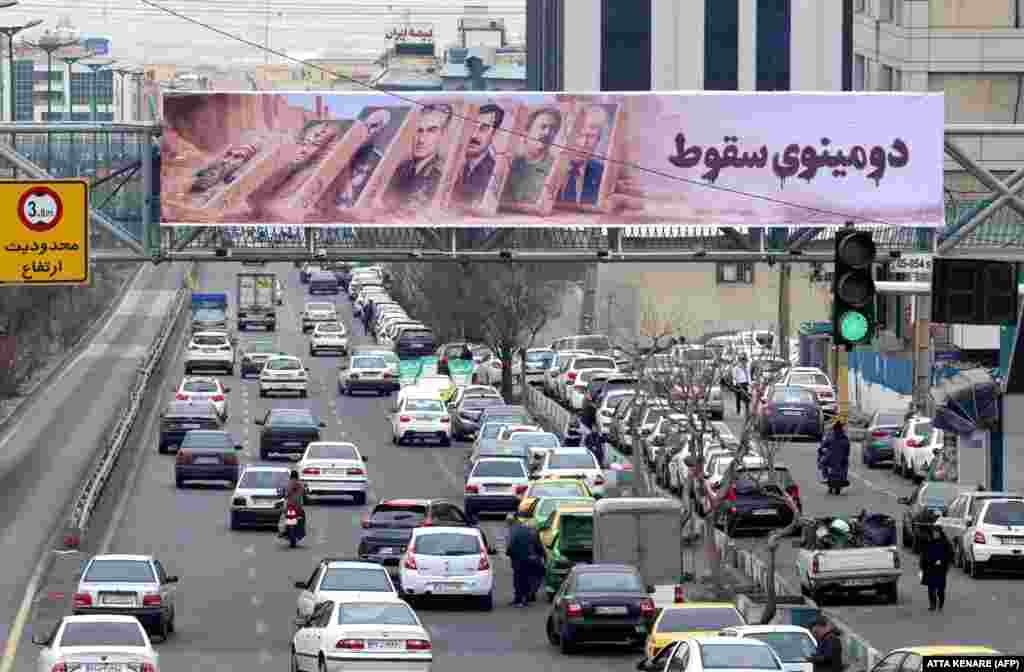
7
A propaganda banner showing historical leaders and US President Donald Trump. The Persian text says "dominoes fall."
8
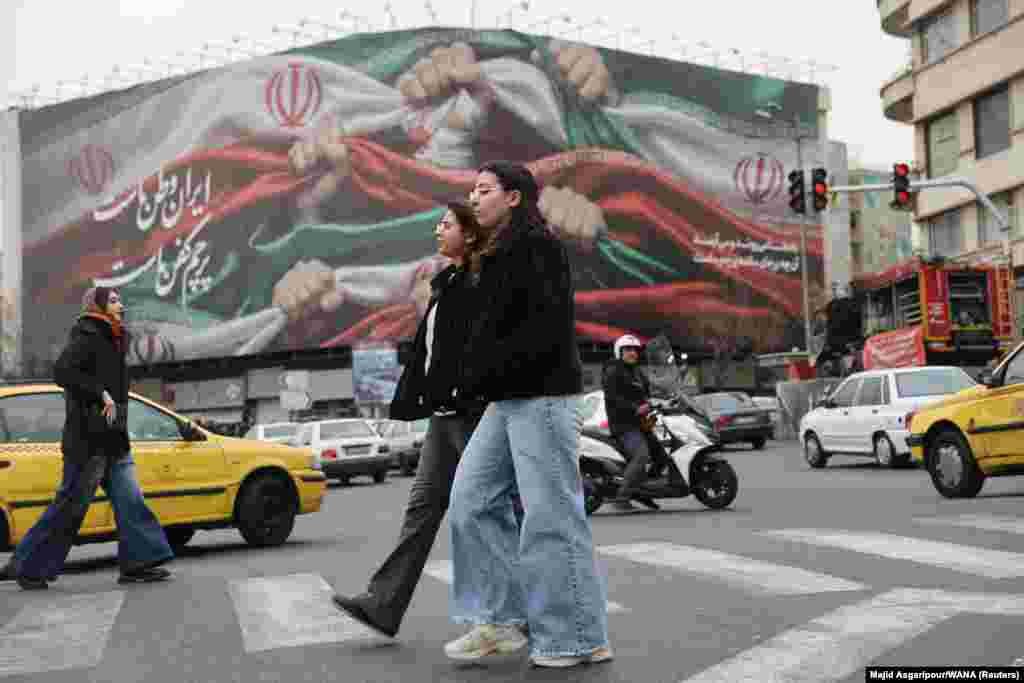
Women walk in Tehran's central Revolution Square. The banner in the background reads: "Iran is our country, its flag our burial shroud."
9
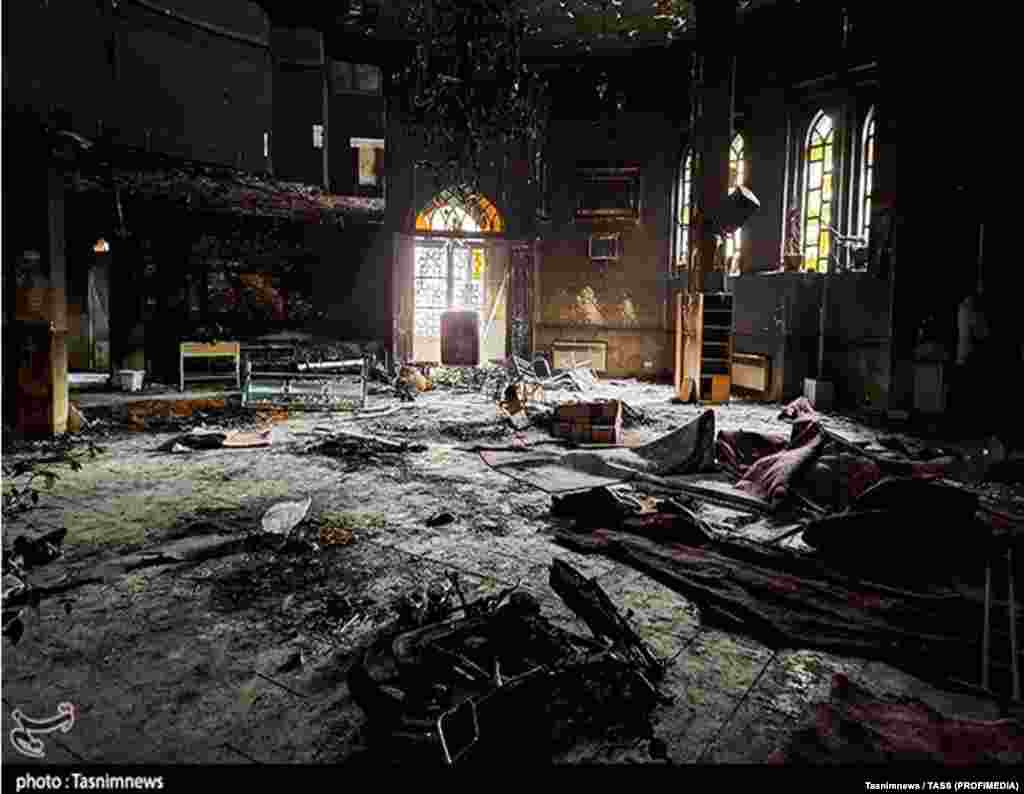
The interior of the Abuzar Mosque in Tehran after it was targeted during the mass uprising.
The mosque was the site of an attempted assassination of Ayatollah Ali Khamenei in 1981. Khamenei was a presidential candidate at the time and now rules the country as Iran's supreme leader.
The mosque was the site of an attempted assassination of Ayatollah Ali Khamenei in 1981. Khamenei was a presidential candidate at the time and now rules the country as Iran's supreme leader.
10
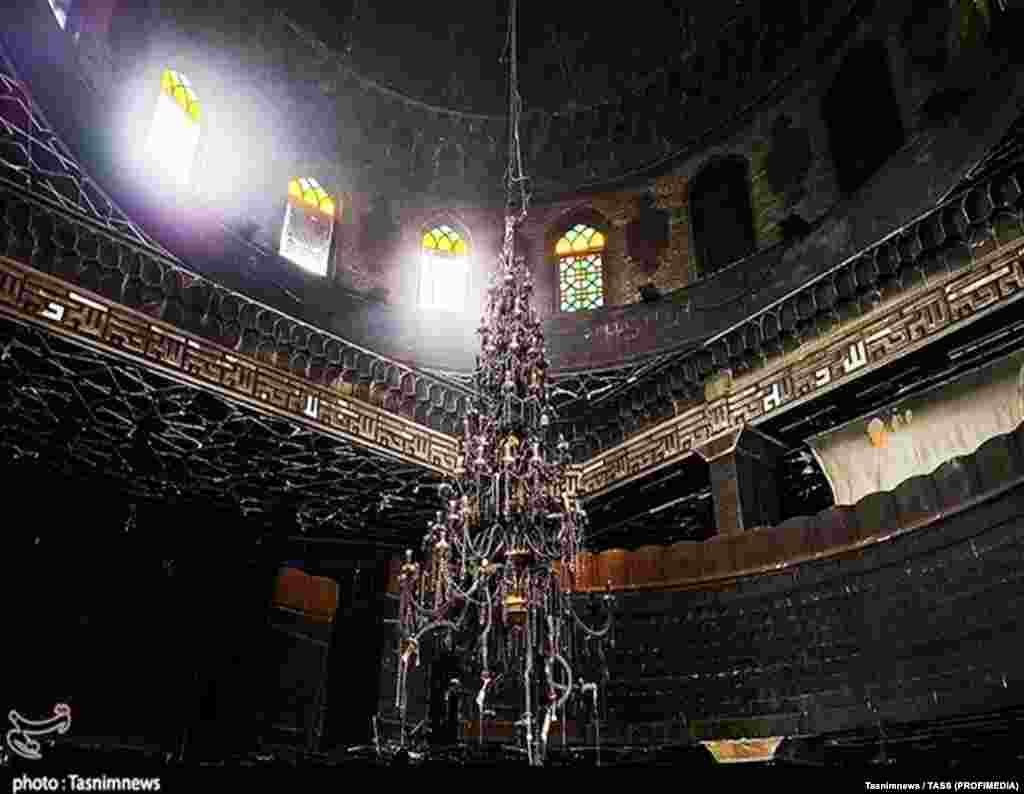
The interior of the gutted Abuzar Mosque.
Analysts say the targeting of Mosques by protestors is in part due to many such religious buildings being used as recruitment and training centers for the Basij, a pro-regime paramilitary force.
Analysts say the targeting of Mosques by protestors is in part due to many such religious buildings being used as recruitment and training centers for the Basij, a pro-regime paramilitary force.
11
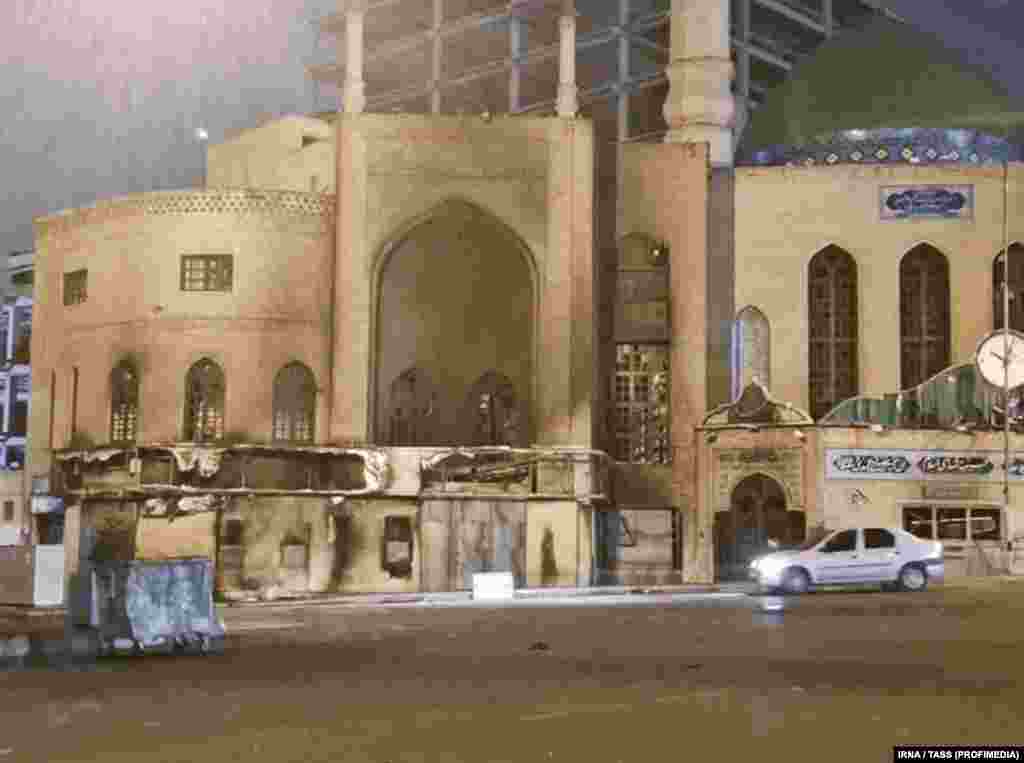
The fire-damaged Al-Rasul mosque in Tehran that was damaged by fire during the unrest.
Some say another reason for targeting mosques is the Islamist ideology at the heart of Iran's current government. "Everything the regime does -- every excuse or explanation -- is wrapped in the cloak of religion," one commentator wrote.
Some say another reason for targeting mosques is the Islamist ideology at the heart of Iran's current government. "Everything the regime does -- every excuse or explanation -- is wrapped in the cloak of religion," one commentator wrote.


