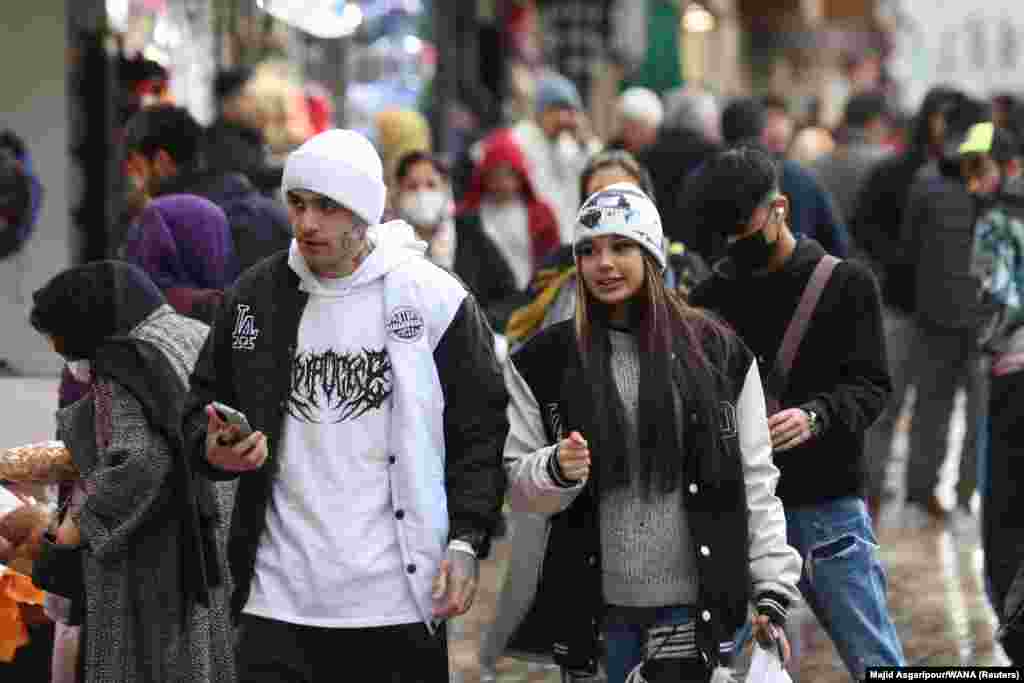
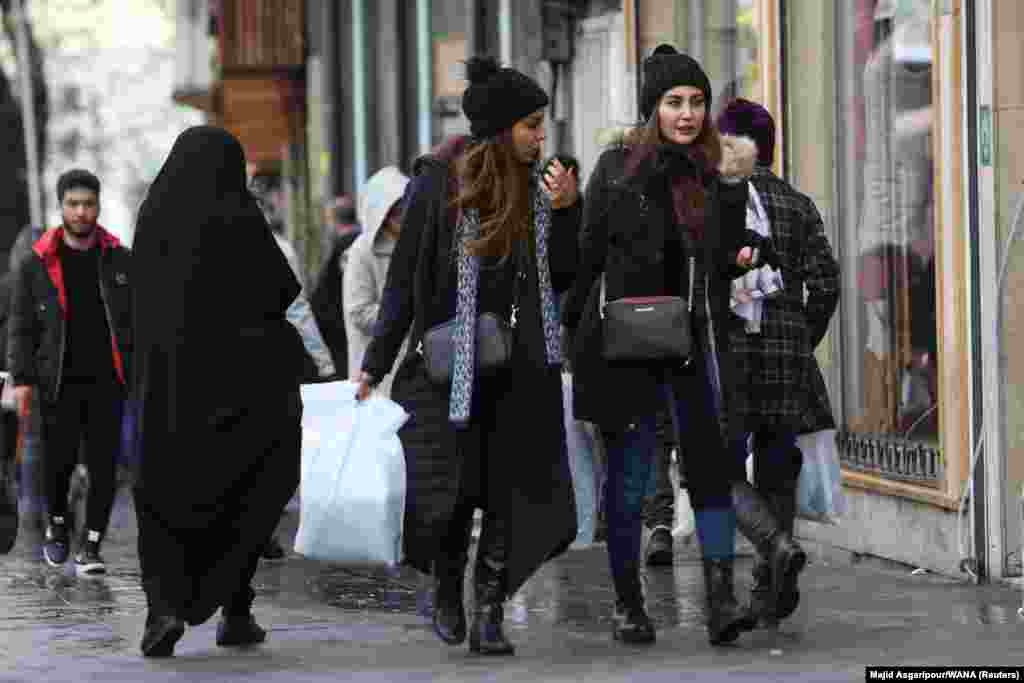
Protests in the city of Dashti in Hormozgan Province on December 26.
Iranian protesters took to the streets in various Iranian cities on December 26, continuing their anti-government protests triggered by the death in September of 22-year-old Mahsa Amini in police custody.
Videos published on social media purportedly showed that in Dashti, a city in the southern Iranian province of Hormozgan, people took to the streets after marking 40 days since the death of 35-year-old protester Hamed Mollaei, chanting anti-government slogans such as, "We don't want a child-murdering government."
Mollaei, the father of two young daughters, was shot dead on November 17 in Dashti by security forces.
He was one of an estimated 500 people, including at least 62 children, killed by Iranian security forces since start of nationwide protests following Amini's death after she was detained by the country's morality police for allegedly violating Iran's strict dress code for women.
In Iran, More And More Photos Show Women Ditching The Hijab
1/10This December 24 photo, of a young couple playing with snow on a hilltop above Tehran, is one of several recent images showing Iranian women in public without the hijab, the Islamic head covering that has been mandatory for women in Iran since 1983.
Amid ongoing unrest, some Iranian women are now going about their lives without Islamic mandatory head coverings.
Show moreShow less
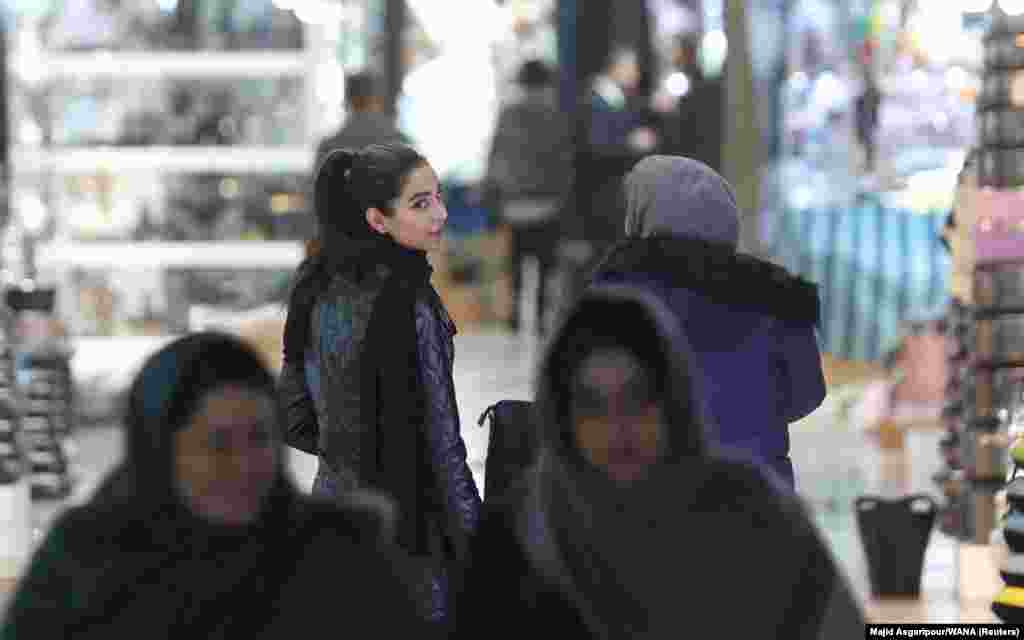
2/10A woman in a market in Tehran on December 5.
Iran has been rocked by months of protests that erupted in September following the death of Kurdish-Iranian woman Mahsa Amini, who was detained by Tehran's morality police. Amini was flagged for tight trousers and for wearing her hijab "improperly."
Amid ongoing unrest, some Iranian women are now going about their lives without Islamic mandatory head coverings.
Show moreShow less
3/10Two women, one of whom has removed her head scarf, walk in Tehran on December 6.
In 1983, Iran's Islamist government decreed that "women who appear in public without religious hijab will be sentenced to a whipping of up to 74 lashes," though short terms of imprisonment were a more common punishment.
Amid ongoing unrest, some Iranian women are now going about their lives without Islamic mandatory head coverings.
Show moreShow less
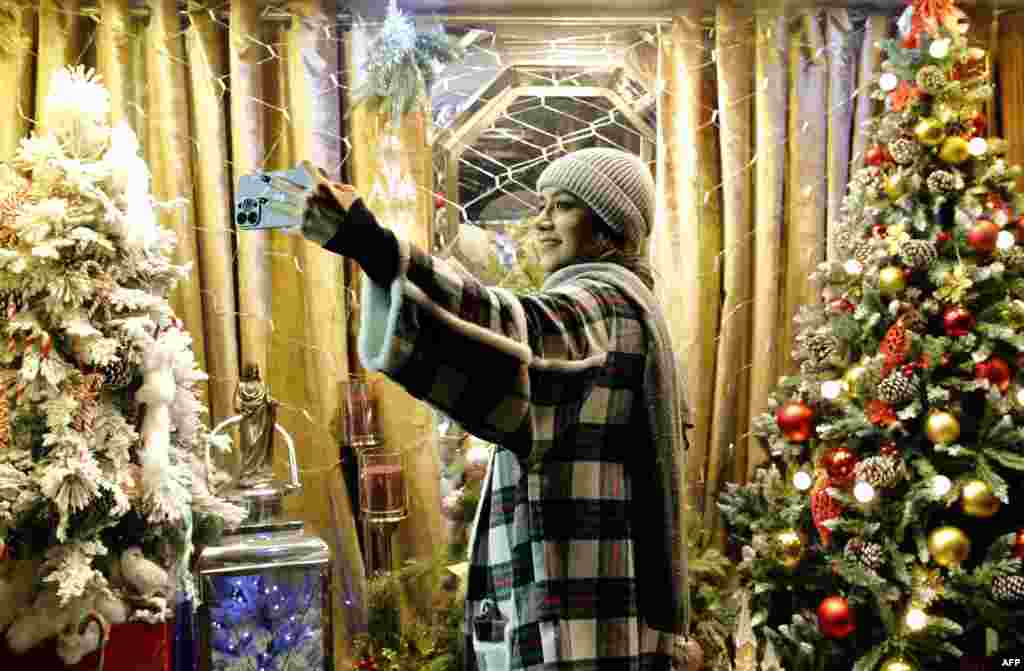
4/10A young Iranian woman takes a selfie in front of Christmas trees in Tehran on December 25.
In recent years, women deemed by the country's morality police to be flouting head-covering laws were made to attend a lecture on "Islamic values." A family member was then permitted to collect them for release.
Amid ongoing unrest, some Iranian women are now going about their lives without Islamic mandatory head coverings.
Show moreShow less
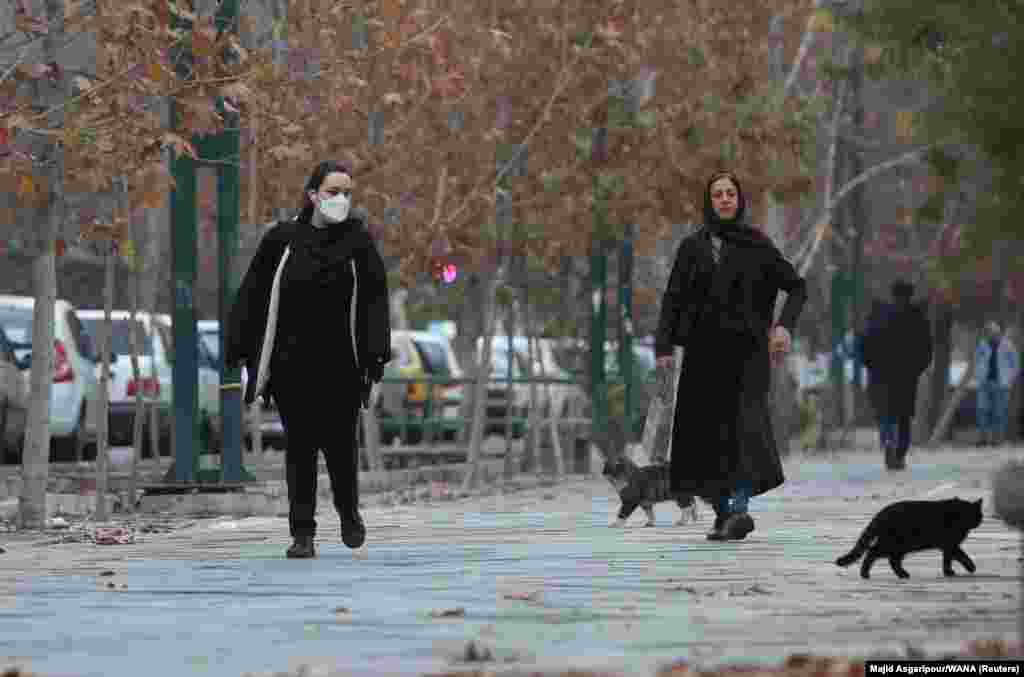
5/10A woman walks through Tehran on December 4.
Amid massive unrest following Amini's death, Iran apparently cut back patrols of the morality police in early December. A small but growing number of women have since taken to the streets in defiance of the Islamic government's law on head scarves by wearing only hats -- or no head covering at all.
Amid ongoing unrest, some Iranian women are now going about their lives without Islamic mandatory head coverings.
Show moreShow less
6/10A couple in Tehran on December 6.
A video published in early December shows two women walking down one of Tehran's central streets with their hair uncovered, a scene that was widely shared at the time but which now appears to be relatively common.
Amid ongoing unrest, some Iranian women are now going about their lives without Islamic mandatory head coverings.
Show moreShow less
7/10Women chatting in a park after a snowfall in Tehran on December 24.
A Voice of America reportcites a Washington-based rights group as claiming patrols by the morality police disappeared from Tehran's wealthier neighborhoods in recent weeks.
Amid ongoing unrest, some Iranian women are now going about their lives without Islamic mandatory head coverings.
Show moreShow less
9/10A woman wearing a woollen hat watches two dogs playing in a park in Tehran on December 24.
A recent report from IRNA, an official Iranian news agency describes five businesses in Iran's northwestern Qazvin province being temporarily shut down in punishment for serving women who were not wearing hijabs.
Amid ongoing unrest, some Iranian women are now going about their lives without Islamic mandatory head coverings.
Show moreShow less
Previous slide
Next slide
In the northwestern Iranian city of Mahabad, people on the evening of December 26 blocked some of the city's streets by lighting fires and shouting anti-regime slogans.
In Bomehan, near Tehran, people in the streets put up a banner reading, "Dad, have you finally found out that they killed me?" The message was referring to the killing of 10-year-old Kian Pirfalak in Izeh last month.
It took authorities 40 days to inform Kian's father, Maysam Pirfalak, who had also been gravely wounded when security forces opened fire at their car, about his son's death.
There were protests in Tehran and in the northeastern city of Mashhad, with people chanting slogans against the government mainly from windows and rooftops.
Officials, who have blamed the West for the protests, have vowed to crack down even harder on protesters, with the judiciary leading the way as the unrest entered a fourth month.
The protests pose the biggest threat to the Islamic government since the 1979 Islamic revolution.
Written by Ardeshir Tayebi based on an original story in Persian by RFE/RL's Radio Farda
RFE/RL's Radio Farda breaks through government censorship to deliver accurate news and provide a platform for informed discussion and debate to audiences in Iran.