

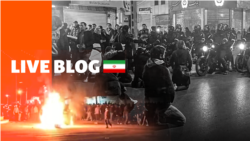
Our Senior International Correspondent Ray Furlong looks at what the US options are on Iran, from limited strikes to a Maduro-like operation.
Iranian Diplomats Banned From European Parliament
Roberta Metsola, the president of the European Parliament, announced on X that all Iranian diplomats and other representatives of the Iranian government are now banned from entering the offices and premises of the parliament.
“It cannot be business as usual," Metsola wrote. "As the brave people of Iran continue to stand up for their rights and their liberty, today I have taken the decision to ban all diplomatic staff and any other representatives of the Islamic Republic of Iran from all European Parliament premises.”
On January 11, Metsola called on Iranian protesters to continue their protests despite the brutal reaction of the country's security forces.
Metsola also urged EU member countries to increase their pressure on Tehran, while at the same time calling on the leaders of the Iranian regime to "change course and end the killing and repression of innocent people."
Authorities Announce Shutdown Of Student Dormitories
The University of Tehran has issued a notice announcing the closure of all undergraduate student dormitories for at least 10 days.
According to the Tasnim news agency, which is close to the Islamic Revolutionary Guards Corps, the closure will begin at 10 a.m. on January 22 and will continue until February 2.
According to the Tasnim report, students have been asked to vacate their dormitories as soon as possible.
Student dormitories have been one of the protesters' main hubs over the past two weeks. This latest move has reportedly been carried out in coordination with Iran's Science Ministry and the security agencies.
Chants Against The Supreme Leader At Tehran Protester Funerals
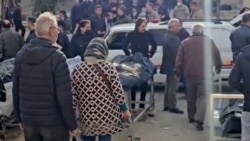
Footage is coming out of Iran showing funerals in Tehran for those killed during the recent protests. Families of the victims can be seen chanting slogans against Iran's supreme leader, and vowing to avenge their loved ones' deaths.

Parliament Speaker Says Iran Would Target US Facilities, If Attacked
With Iran saying it's prepared for both talks and war with the United States after US President Donald Trump said he is considering "very strong options" against Tehran, other key players in the Iranian regime are weighing in.

Mohammad Baqer Qalibaf, the speaker of the Majles, Iran's unicameral parliament, said that if the US threats against the Islamic Republic are implemented, Iran will attack US "facilities" in the region.
Qalibaf also called the US president "delusional" and a "tyrant ruler" -- a term Iranian protesters use for Islamic Republic officials.
As the crackdown on protests in Iran intensifies, Trump has repeatedly warned Iran and said that Washington is considering various options, including military ones, against Tehran.
Belarus's Tsikhanouskaya Commends Iran Protesters
Belarusian opposition leader Svyatlana Tsikhanouskaya added her support to the protesters in Iran "risking their lives" by seeking change in the Islamic republic.
"My heart is with the people of Iran 🇮🇷 who are risking their lives on the streets for freedom. When a regime silences communication, it reveals its weakness and fear of the people," Tsikhanouskaya wrote on X on January 12.
"Belarusians know this reality all too well. Freedom cannot be shut down, and it will prevail."
China Opposes 'Interference' In Iranian Affairs As Germany, Finland Support Protesters
A Chinese Foreign Ministry spokesperson said in response to a media question about US President Donald Trump’s threat to intervene militarily in favor of Iranian protesters that Beijing opposes "the use of force or the threat of use of force" in international relations.
"We have always opposed interference in other countries' internal affairs and consistently advocated that the sovereignty and security of all nations should be fully protected by international law," spokeswoman Mao Ning said at a regular news briefing.
This stance comes at a time when a number of European leaders have voiced support for Iranian protesters. In a message, Finnish President Alexander Stubb called for an end to attacks on protesters and the release of detainees. German Chancellor Friedrich Mertz also described the violence used against protesters in Iran as "disproportionate" and "brutal" and considered it a "sign of weakness."
Pahlavi Calls On Iran's Armed Forces, Police To Join Protests
In a message released late on January 11, former Iranian crown prince and opposition figure Reza Pahlavi said, "We are not alone" in reference to the ongoing nationwide protests in Iran, adding that "international aid will also arrive soon."
He went on to address employees of government agencies and the armed forces and law enforcement, saying they "have the opportunity to join the people and be the helpers of the nation" or face "eternal shame" by "colluding with the murderers of the nation."
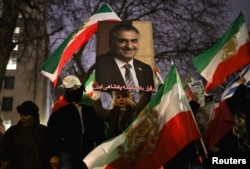
Pahlavi also announced that inside Iran, in addition to "occupying and protecting the central streets of cities," all institutions and apparatuses that bear responsibility for "the regime's false propaganda and cutting off communications" are considered :legitimate targets."
In another part of his message, he emphasized that all embassies and consulates of the Islamic republic outside Iran "belong to the Iranian nation" and that it was time to "decorate them with the national flag of Iran instead of the flag of the Islamic republic."
The message also stated that Supreme Leader Ayatollah Ali Khamenei and the government under his leadership have suffered "heavy blows" from the mass protests and should not be "given a second chance to breathe."
He added that the escalating violence against protesters was not a sign of authority but rather a result of "a lack of repressive force" and the government's fear of "a faster collapse and downfall."
NetBlocks: Iran's Nationwide Internet Blackout In Fourth Day
The NetBlocks organization announced in an update early on January 12 that Iran's nationwide Internet blackout had entered its fourth day.
Referring to its technical data, NetBlocks said the blackout continues and that years of research on digital censorship in Iran show that citizens use alternative solutions to access communications in such circumstances.
According to the report, these solutions include the use of shortwave and amateur radios, connections to cell phone towers in border areas, Starlink terminals, and direct satellite-to-cell phone communication technology.
The widespread Internet blackout began on January 8, coinciding with the intensification of protests in numerous Iranian cities. Human rights groups and Internet freedom activists say the aim is to limit information dissemination and make it difficult to document the suppression of protests.
Despite the blackout, scattered videos and reports have been published through alternative means of communication indicating that protests are continuing in various cities in Iran.
UN Chief 'Shocked' By 'Excessive Use of Force' Against Iranian Protesters
UN Secretary-General Antonio Guterres said on January 11 that he is "shocked" by reports of "violence and excessive use of force by Iranian authorities against protesters" that rights groups say have killed hundreds and injured many more in recent days.
In a statement, Guterres’ spokesman said he supports citizens' peaceful and fearless expression of their discontent and calls on Iranian authorities to exercise maximum restraint and refrain from the "unnecessary or disproportionate use of force."
He also called for ensuring access to information in Iran, including the restoration of communications, as an Internet blackout continued nationwide.