



Massive Fire Breaks Out At US Diplomatic Compound Near Baghdad Airport
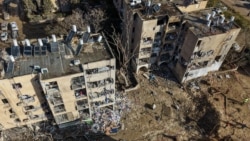
Eyewitness images shared on March 21 showed a massive fire at a US diplomatic facility near Baghdad airport in Iraq.
The images show a huge fire followed by dark columns of smoke rising into the sky.
Iraqi security sources said the fire was reported after renewed drone attacks on the US diplomatic compound near Baghdad airport.
At least three attacks were also reportedly on this diplomatic facility, with a fire breaking out after the third attack.
The pro-Iranian militia group Ashab al-Kahf has claimed responsibility for the attacks on the US diplomatic compound in a statement.
Reporting by Reuters and AFP


Iran Says Natanz Uranian Enrichment Facility Attacked
Iran's Atomic Energy Organization said on March 21 that the uranium enrichment facility in Natanz, known as the Martyr Ahmadi-Roshan Enrichment Complex, had been attacked again by the United States and Israel, with no leakage of radioactive materials reported.
The organization condemned the attack as "in violation of international laws and obligations, including the NPT and other regulations related to nuclear safety and security."
"Technical and expert investigations have been conducted regarding the possibility of the spread of radioactive contamination," and "no leakage of radioactive materials has been reported in this complex and no danger threatens the residents of the areas surrounding this site," it said in a statement.
This is at least the second time that the Natanz facility has been targeted during the ongoing US-Israeli war with Iran that began on February 28.
Natanz was struck by US B-2 bombers on July 1, 2025 during Israel's 12-day war with Iran. At the time, US President Donald Trump said the facility was "completely and absolutely" destroyed.
Putin Insists Russia Remains 'Loyal Friend And Reliable Partner' To Iran
The Kremlin announced on March 21 that Russian President Vladimir Putin congratulated Iranian leaders on the occasion of Nowruz and declared that Moscow remains a "loyal friend and reliable partner" for Tehran.
Putin's message comes at a time when the extent of Moscow's actual support for Iran is disputed. Some Iranian sources have said that Iran has not received significant assistance from Russia in its biggest crisis since the revolution.
Putin sent congratulatory Nowruz messages to Mojtaba Khamenei, the newly appointed supreme leader of the Islamic republic, and Iranian President Masud Pezeshkian.
The Kremlin statement said: "Vladimir Putin wished the Iranian people to overcome these difficult tests with dignity and emphasized that in this difficult time, Moscow remains a loyal friend and reliable partner for Tehran."
Russia has said that US and Israeli attacks on Iran have brought the entire Middle East to the "brink of collapse" and created a major global energy crisis. Moscow has also described the killing of Ali Khamenei on the first day of the US-Israeli war with Iran as a "brutal murder."
Politico reported that Moscow has offered Washington that it would stop sharing intelligence with Iran in exchange for the US stopping sharing information with Ukraine, but the United States had rejected the offer.
The Kremlin has called the report "fake."
The "strategic partnership" agreement between Tehran and Moscow does not include a mutual defense clause, and Russia has repeatedly stated it does not want Iran to acquire nuclear weapons, a move that Moscow says could spark a nuclear arms race across the Middle East.
Mojtaba Khamenei Absent From Tehran's Eid al-Fitr Prayers
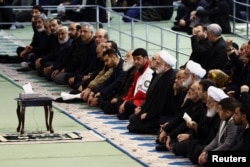
Prayers for the holiday of Eid al-Fitr in Tehran were held in the absence of Supreme Leader Ayatollah Mojtaba Khamenei and were instead led by the temporary Friday Prayers imam of the capital.
On the morning of March 21, Eid al-Fitr prayers were held in various cities of Iran, including Tehran, Qom, and Mashhad.
The capital's Eid al-Fitr prayers were held at Tehran's Grand Mosque, led by Mohammad Javad Haj Ali Akbari, Tehran's temporary Friday Prayer imam.
Given the uncertain status of Khamenei, who was recently announced as the third supreme leader of the Islamic republic and succeeds his father, Ayatollah Ali Kahmanei, this year's Eid al-Fitr prayer has garnered a lot of attention.
Later on March 21, a funeral prayer and burial ceremony for Ali Mohammad Naeini, the former spokesman for the Revolutionary Guards who was killed in a targeted Israeli attack, were also held.
A public funeral and burial has not yet been held for the elder Khamenei, despite three weeks passing since his death in a US-Israeli air strike on February 28.
FBI Warns Of Hackers Linked to Iran On Telegram
The FBI's Cyber Division has warned about Iran's use of the Telegram network to aim malware at dissidents and opposition groups worldwide.
"Iranian cyber actors are using Telegram as command-and-control (C2) infrastructure to push malware targeting Iranian dissidents and opposition groups around the world – resulting in data leaks and reputational harm," the FBI wrote on X on March 20.
The FBI provided a multi-page document explaining the technical details of how hackers affiliated with the Islamic republic operate on the Telegram network.
Japan Nears Deal With Iran To Allow Strait Of Hormuz Transit
Japan's Kyodo news, citing Iranian Foreign Minister Abbas Araqchi, reported that Tehran is ready to allow Japanese-related vessels to pass through the Strait of Hormuz, the crucial global shipping artery that has been mostly shut down by Iran.
Araqchi told the Japanese news agency in a phone interview on March 20 that Tehran has started talks with Tokyo about possibly opening the strait. Japan depends on the Middle East for nearly all of its oil supplies and gets some 90 percent of its oil shipments through the strait.
Aragchi said Tehran has not closed the strategic waterway but has placed restrictions on vessels belonging to countries involved in attacks against Iran.
Western nations have held discussions about the possibility of escorting ships through the strait amid the US-Israeli war with Iran, but disputes remain among the allies about the potential action.
Iran Targets US-UK Base At Diego Garcia, 5,300 KM From Tehran: WSJ
Iranian forces targeted the strategically important US-UK military base on the tiny island of Diego Garcia in the Indian Ocean but did not hit the site in the most ambitious strike geographically by the Islamic republic, according to The Wall Street Journal.
The Journal, citing multiple US officials, reported early on March 21 that Iran fired two intermediate-range ballistic missiles at the base, some 5,300 kilometers from Tehran, although it wasn't known from where in Iran the missiles were launched.
Neither missile hit the base -- one failed in flight while the other was hit by a US warship utilizing a SM-3 interceptor, officials said.
If confirmed, it would indicate that Iranian missiles have a longer range than earlier believed or reported by the regime in Tehran.
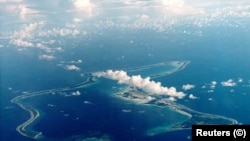
The remote island is located in the British Indian Ocean Territory and is a strategic base from which the United States housing bombers and nuclear submarines, among other assets.
Britain on March 20 gave US forces the green light to use its bases to strike Iranian missile sites that are launching attacks on ships in the Strait of Hormuz, a crucial corridor for oil shipments from the Persian Gulf to global markets that Iran has essentially blocked amid the US-Israeli strikes, causing prices to rise.
British Prime Minister Keir Starmer initially rejected a US request to use UK bases for strikes on Iran, saying he needed to be sure that any military action was legal. After Iran targeted British allies across the Middle East, Starmer said the US could use an air force base in England and Diego Garcia.
US forces based in UK sovereign territory require British consent for certain missions as part of bilateral agreements.
US and British officials did not immediately comment on the WSJ report.
US Issues Temporary Authorization For Purchase Of 'Stranded' Iranian Oil
The US Treasury on March 20 said it was issuing temporary authorization for the delivery and sale of Iranian crude oil and petroleum products already at sea.
The move marks the second action easing sanctions on oil against two of the most heavily sanctioned countries in the world -- Iran and Russia, which received a similar waiver on March 12.
Oil prices have surged on world markets amid the US-Israeli war with Iran and Tehran's retaliatory strikes against the energy infrastructure of US Gulf Arab allies.
In the latest statement, US Treasury Secretary Scott Bessent said the United States was "issuing a narrowly tailored, short-term authorization permitting the sale of Iranian oil currently stranded at sea."

"Sanctioned Iranian oil is being hoarded by China on the cheap. By temporarily unlocking this existing supply for the world, the United States will quickly bring approximately 140 million barrels of oil to global markets, expanding the amount of worldwide energy, and helping to relieve the temporary pressures on supply caused by Iran," he added.
Bessent said the temporary authorization "is strictly limited to oil that is already in transit and does not allow new purchases or production."
He also said Tehran Iran will have "difficulty accessing any revenue generated and the United States will continue to maintain maximum pressure on Iran and its ability to access the international financial system."
Earlier on March 20, Iran rejected the suggestion that the move would put 140 million barrels into the system, saying it had no surplus crude oil to offer to international markets.
"Currently, Iran basically has no surplus crude oil left on the water or for supply in other international markets, and the US treasury secretary's statement is solely aimed at giving hope to buyers," Iranian oil ministry spokesman Saman Ghoddoosi wrote on X.
The move comes after the Treasury on March 12, said the United States was allowing a temporary purchase of Russian oil already at sea in an effort to stabilize markets, raising the ire of many US Democrats, the European Union, and Ukrainian President Volodymyr Zelenskyy, whose country is a battle for its life against an all-out Russian invasion.
Iran Says It Has No Surplus Oil At Sea For World Markets
Iran says it has no surplus crude oil at sea to offer to international markets following remarks by the US Treasury chief indicated that Washington could lift sanctions on Iranian oil at sea to help ease the global crisis. “Currently, Iran basically has no surplus crude oil left on the water or for supply in other international markets, and the US Treasury secretary’s statement is solely aimed at giving hope to buyers,” Iranian oil ministry spokesman Saman Ghodousi wrote on X. US Treasury Secretary Scott Bessent on May 19 said Washington might lift sanctions on Iranian oil already in transit to slow rising gas prices during the war in Iran. Bessent told Fox Business that about 140 million barrels of oil would be released. "That's about 10 days to two weeks of supply that the Iranians had been pushing out that would have all gone to China," Bessent said. "In essence, we will be using the Iranian barrels against the Iranians to keep the price down for the next 10 or 14 days as we continue this campaign."
Trump: 'I Don’t Want To Do A Cease-Fire'

US President Donald Trump said he sees no reason to seek a cease-fire in the war with Iran and again urged other countries -- including China -- to help open the Strait of Hormuz.
“Look, we can have dialogue, but I don’t want to do a cease-fire,” Trump told reporters on March 20. “You know, you don’t do a cease-fire when you’re literally obliterating the other side.”
Iran has effectively blocked the Strait of Hormuz, a crucial corridor for hydrocarbon shipments from Persian Gulf countries to global markets, causing oil prices to rise and hitting consumers paying more for gasoline and other products worldwide.
“All they’re doing is clogging up the strait, but from a military standpoint, they’re finished,” Trump said of Iran. Asked whether Israel will be ready to end the war when the US is ready, he said, “I think so.”
Trump said that opening the Strait of Hormuz would be “a simple military maneuver” and “relatively safe, but you need a lot of help in the sense that you need ships, you need volume.
“NATO could help us, but they so far haven’t had the courage to do so, and others could help us,” he said, adding that “it would be nice if the countries that use it...would get involved” and singling out China as one of them.