



NATO's Rutte Says More Than 20 Countries Plan To Be Involved In Strait Of Hormuz Reopening
NATO Secretary-General Mark Rutte said that more than 20 countries were planning to be involved in the reopening of the key Strait of Hormuz after US President Donald Trump pushed the alliance to increase efforts on the matter.
"I know the president was angry because he feels that European and other allies have been too slow," Rutte told Fox News on March 22. He added that NATO was now looking to work on the issue together with Japan, South Korea, Australia, New Zealand, the United Arab Emirates, and Bahrain.
"So we are now planning the military people and others amongst this group of 22 nations and with the US," Rutte said.
His comments came amid a heated exchange between US and Iranian officials concerning the Strait of Hormuz. Trump gave Tehran 48 hours to "fully open" the Strait of Hormuz, or the United States would "obliterate" Iran's power plants. The Iranian military command threatened to retaliate.
Backing up Trump's ultimatum, US Treasury Secretary Scott Bessent told NBC it was "the only language the Iranians understand," adding that "sometimes you have to escalate to de-escalate."
Separately, he also addressed Trump's comments about Kharg Island, a major hub for Iran's oil production. Speaking to Fox News, Bessent said that US forces have destroyed Iranian military assets on the island, adding: "We will see what happens with -- whether that eventually becomes a US asset."
Netanyahu Says Israel Will Pursue IRGC Commanders 'Personally'
Israeli Prime Minister Benjamin Netanyahu vowed on March 22 to pursue top commanders of Iran's Islamic Revolutionary Guard Corps (IRGC) "personally."
"We're going after the regime. We're going after the IRGC, this criminal gang," Netanyahu said while visiting the southern Israeli town of Arad, a day after an Iranian missile strike on the area.

"We're going after them personally, their leaders, their installations, their economic assets. We're going after them personally," he added.
The Israeli Army said that Iran has fired more than 400 ballistic missiles at Israel since the start of the war three weeks ago and that about 92 percent of them have been intercepted.
Iran Threatens To Completely Close Strait Of Hormuz After Trump's Ultimatum
Iran's Islamic Revolutionary Guard Corps (IRGC) threatens to completely close the Strait of Hormuz after an ultimatum issued by US President Donald Trump on March 22, Iranian state broadcaster IRIB said.
The IRGC said it would consider the move if the United States attacks its energy infrastructure. It added that, in this case, the key Strait of Hormuz -- which accounts for about one-fifth of the world's oil transport -- would only be reopened once any destroyed facilities had been rebuilt.
Earlier in the day, Trump gave Tehran 48 hours to "fully open" the Strait of Hormuz, or the United States would "obliterate" Iran's power plants, marking a major escalation of tensions in a conflict.
In an almost immediate response, Iran's military command was quoted by state media as saying that if Iran's fuel and energy infrastructure is attacked, all US energy infrastructure in the region will be targeted.
Israeli Says Iran Has Fired Over 400 Missiles At Israel Since Start War
The Israeli Army announced on March 22 that Iran has fired more than 400 ballistic missiles at Israel since the start of the war, about 92 percent of which have been intercepted.
Israeli military spokesman Nadav Shoshani said the rocket attacks on Arad and Dimona in southern Israel on March 21 were "catastrophic." It had previously been reported that 175 people were treated for injuries following the attacks.
According to Arad Hospital, 31 people, including 18 children, were hospitalized in the city, at least nine of whom are in critical condition. Dozens of others were also lightly injured.
In Dimona, five people were hospitalized, including a 12-year-old boy who is reported to be in critical condition, according to the city hospital.
Israeli emergency services also announced that at least 15 people were injured in new Iranian attacks on March 22 after a cluster munition hit Tel Aviv.
An Israeli military spokesman added on March 22 that the missiles used in the recent attacks were similar to the ballistic missiles that have been used repeatedly since the start of the war.
According to the Israeli military, four direct hits have been reported on cities in the country in the past three weeks: Tel Aviv, Beit Shemesh, Arad, and Dimona.
In addition, there have been cases of rocket debris or cluster munitions hitting Israel. According to the spokesman, all casualties from Iranian rocket attacks in Israel so far have been civilians.
He said the number of rockets fired at Israel daily currently ranges from the high single digits to around 20, and Iran has repeatedly used cluster munitions against population centers, including in the recent attack on Tel Aviv.
Iran Official Responds To Trump's Deadline With Counter-Threat
The speaker of Iran's parliament warned that any attack on Iranian infrastructure would be met with an "irreversible" response. Mohammad Baqer Qalibaf's statement on March 22 came hours after US President Trump had issued a deadline for Tehran to open the Strait of Hormuz within "48 hours" or the United States will "obliterate" Iran's power plants.
"Immediately after the targeting of power plants and infrastructure in our country, vital infrastructure and energy and oil infrastructure throughout the region will be considered legitimate targets and will be irreversibly destroyed," Qalibaf wrote on X.
He added that, under such circumstances, "the price of oil will be higher for a long time."
Earlier, the spokesman for Iran's military command also announced in a statement that if Trump follows through on his threat, then "all energy, information technology, and desalination infrastructure belonging to the US and the regime in the region will be targeted."
Drone Footage Captures Damage After Iranian Strike Near Israeli Nuclear Site
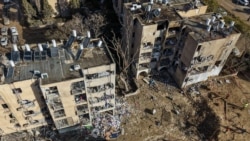
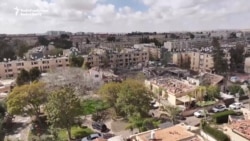
Footage from drones show the damage sustained in the Israeli town of Dimona after it was hit by an Iranian missile late on March 21.
Dimona is home to a nuclear facility, although Israel has never publicly acknowledged having a nuclear weapon and the Dimona complex is officially described as a research facility. The site, just outside the main town, is widely believed to possess Israel’s nuclear arsenal, the only such holding in the Middle East.
Tehran said the strike was in retaliation for strikes on its Natanz uranium enrichment facility earlier in the day.
US Facilities At Baghdad Airport Attacked Overnight
The AFP news agency, citing an Iraqi security official, reported eight overnight rocket and drone attacks on the US diplomatic and logistics center at Baghdad International Airport.
According to the report, the attacks continued through the morning of March 22, with some rockets landing near the US base. Meanwhile, another security source reported that employees had left the US facility at the airport on March 21.
Security sources said at least six attacks had been confirmed and the police had discovered a rocket launcher in an area near the airport. The facility, located in the Baghdad International Airport complex, has been targeted several times since the start of the US-Israeli war with Iran on February 28.
Meanwhile, armed groups close to the Iranian government have claimed responsibility for attacks on US interests in Iraq and elsewhere in the region. A coalition calling itself the Islamic Resistance in Iraq said it had carried out 21 rocket and drone attacks against "occupier bases" in the past 24 hours.
These groups had previously called for the withdrawal of US forces from Iraq.
However, the US Embassy in Baghdad has not been targeted for the fourth consecutive night. This comes after the Kataib Hezbollah group announced on March 19 that it would temporarily halt its attacks for five days.
Qatari Military Helicopter Crash Kills At Least 6
Qatar's Interior Ministry announced that six people have died after a military helicopter crashed in the country's territorial waters, and a search operation to find the last person is under way.
In the early hours of March 22, Qatari authorities announced that the helicopter had crashed "due to a technical malfunction." Confirming the incident, the Defense Ministry said the helicopter had crashed during a "routine mission."
AFP reported that three of the victims were Turkish citizens.
Turkey's Defense Ministry released a statement on X on March 22 about the incident, saying: "A helicopter belonging to the Qatari Armed Forces, which was conducting training activities within the framework of the Qatar-Turkey Joint Command Force, crashed into the sea on the evening of March 21, reportedly due to a technical malfunction.
The ministry added that "military cooperation and coordination activities" between Turkey and Qatar "continue interrupted."
Over the past few weeks of the US-Israeli war with Iran, energy infrastructure in Qatar, like other countries on the Persian Gulf, has been the target of air strikes. On March 17, the country expelled the military and security attaches of the Iranian Embassy in Qatar.
This is the first reported human loss in Qatar during the war.
World's Largest Airlines' Value Drops By More Than $50 Billion
The value of the world's 20 largest airlines has fallen by a total of about $53 billion since the start of the US-Israeli war with Iran in late February, the Financial Times reported.
The aviation industry is experiencing its worst crisis since the coronavirus pandemic, the report said, as the war has disrupted major airports across the Persian Gulf and grounded many flights.
Airline executives have also warned of the possibility of fuel shortages, a concern that has been growing as the war continues into its fourth week.
The price of jet fuel, which accounts for about a third of airlines' costs, has almost doubled since the start of the war, The Financial Times said, which could lead to an increase in the price of airline tickets.
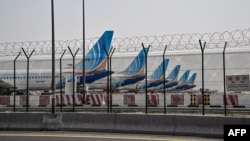
Explosion Near Ship In UAE Waters, Missile Attacks On Riyadh
A British maritime watchdog announced that an unidentified projectile had exploded near a cargo ship in the waters of the United Arab Emirates on March 22.
The incident occurred about 15 nautical miles north of Sharjah and no crew members were injured, according to the British Maritime Trade Operations Authority.
At the same time, the Saudi Ministry of Defense announced that three ballistic missiles were fired toward the Riyadh region, one of which was intercepted and two others fell in uninhabited areas. Five drones were also intercepted early on March 22.
In another development, Qatari authorities announced that a military helicopter of the country crashed in regional waters due to a technical malfunction. The search operation to find the crew and passengers of the helicopter is ongoing, and details about the number of people on board have not yet been released.