



Iran’s Araqchi Says Tehran Is Reviewing US Proposals But Is Not In Talks
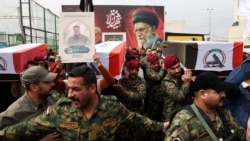
Iranian Foreign Minister Abbas Araqchi said that no talks are being held with the United States but added that senior authorities are reviewing US proposals, seemingly indicating that Tehran has not rejected a US peace plan outright at this point.
In an interview shown on Iranian state television on March 25, Araqchi said that an exchange of messages though intermediators “does not mean negotiations with the US” and that Iran has no intention of holding such talks.
Araqchi’s remarks were broadcast hours after Tehran delivered a chilly response via state television to a reported US 15-point plan to end the US-Israeli war with Iran, saying that the US conditions are excessive and that Tehran will end the war only if its conditions are met.
The interview was broadcast shortly after White House spokeswoman Karoline Leavitt said that US President Donald Trump is prepared to hit Iran harder and “unleash hell” if Iranian authorities “fail to understand that they have been defeated militarily.”
Despite Iran’s denials, Leavitt said that talks with Iran “continue” and that they are “productive.” Trump said on March 24 that that the United States was “talking to the right people in Iran,” but did not identify its interlocutors.
Iran has released its own list of conditions for an end to the war, some of which contradict US positions. Key sticking points appear to include control over the Strait of Hormuz, Iran’s nuclear and missile programs, and the US military presence in the Gulf region.
White House Ready To 'Unleash Hell' If Iran Does Not Accept Defeat
The White House urged Iran to recognize that it has been “defeated” by the United States and Israel, warning that President Donald Trump is ready to "unleash hell" on Iran if it does not accept that.
"If Iran fails to accept the reality of the current moment, if they fail to understand that they have been defeated militarily...President Trump will ensure they are hit harder than they have ever been hit before," White House press secretary Karoline Leavitt told a briefing on March 25.
Trump “does not bluff and he is prepared to unleash hell. Iran should not miscalculate again," she said.
Leavitt spoke after Iran appeared to have dismissed a 15-point US plan to end the war, which began with US and Israeli air strikes on February 28.
A response delivered via Iranian state television said that US conditions are excessive and that Tehran will end the war when it chooses and if its conditions are met.
While senior Iranian officials have denied Tehran is in talks with the United States, Leavitt said: "Talks continue. They are productive, as the president said on Monday (March 23), and they continue to be."
Iranian Military Source Says Tehran Could Open New Front In Crucial Bab Al-Mandab Strait
The Tasnim news agency, which is close to the Islamic Revolutionary Guards Corps, has quoted an unnamed Iranian military source as saying that if the United States launched a ground attack on Iranian islands, "another front" will open in the Bab Al-Mandab Strait.
The Bab Al-Mandab Strait is a narrow passage for ships entering or exiting the Red Sea, whose Yemeni coastline is largely controlled by the Houthi rebels, an armed group backed by Iran and a US-designated terrorist organization.
There has been speculation that US troops could seize Kharg Island, which serves as Iran's main oil export outlet. US troops destroyed military infrastructure on the island in March 13 air strikes.
Houthi rebels had been targeting commercial ships in the strait and the Red Sea after the start of the Gaza War in October 2023.
These attacks stopped a few months after the inauguration of Donald Trump as president in January 2025, following heavy US and Israeli air strikes on Houthi positions, and then negotiations mediated by Oman.
Iranian officials have repeatedly denied that the Houthis follow Tehran's orders regarding attacks on shipping.
"The Bab Al-Mandab Strait is considered one of the world's strategic straits, and Iran has both the will and the ability to produce a completely credible threat against it," the military source cited by Tasnim said.
Following the US and Israeli attacks that began on February 28, Iran has effectively halted passage through the Strait of Hormuz by carrying out attacks on ships and tankers.
Iran Dismisses US Peace Proposal
Iran has responded sharply to a US peace proposal saying its conditions are excessive and that Tehran will end the current war when it chooses and if its conditions are met.
Press TV, a state broadcaster, made the announcement on March 25 after reports Washington had passed on its proposal through Pakistani intermediaries.
The proposal formalized several key demands voiced by US officials in recent days, including a ban on Iranian enrichment of uranium and nuclear weapons, a limited ballistic missile program, and an open Strait of Hormuz in exchange for the lifting of US sanctions.
In its response, Iran insisted on its right to freely develop its ballistic missile program and sovereignty over the Strait of Hormuz, which has become a focal point of the war since it began on February 28.
Tehran's response also demanded the United States close its military bases in the Gulf region, provide financial compensation for damages resulting from the war, and a guarantee for Iran’s future security.
The response came less than a day after US President Donald Trump said Washington was "talking to the right people in Iran" about a deal to end the war and that "very good and productive" talks had taken place with a “top” Iranian figure.
Iran’s parliament speaker and others denied negotiations with the United States had been held, but US media reports suggested that there had been at least initial contact between the sides through intermediaries.
Israeli Military Says Targeted Iranian Submarine Research Center
The Israel Defense Forces (IDF) has announced an attack on a underwater research center in Isfahan, describing it as "the only Iranian site responsible for the design and development of submarines and systems for the Iranian navy."
Iranian officials have not yet reacted to Israel's claim, although there were reports of a wave of air strikes on Isfahan on March 24 and March 25.
In its statement, the IDF said that its forces, guided by naval intelligence, targeted the Iranian government's "underwater research center" in Isfahan.
The Israeli military also claimed that various types of "unmanned floating devices" were being produced at the research center and that the strike will "significantly limit" Iran's ability to build new submarines or upgrade its fleet.
Media Reports Say Pakistan Has Relayed US 15-Point Peace Plan To Iran
Media outlets, including Reuters and Al Jazeera, are citing unnamed sources as saying a 15-point peace proposal from the United States has been handed over to officials in Iran.
No details of the proposal were revealed, although there were reports that Turkey was also involved in the process -- and that Turkey or Pakistan are being considered as a venue for any peace talks.
The 15-point plan, first mentioned by US President Donald Trump earlier this week, reportedly includes a one-month cease-fire while the two sides negotiate terms to end the war.
Iran has so far rejected reports that say it has held talks with Washington and that it would not make a deal with the White House.
UAE Intercepts More Drones From Iran
The Defense Ministry of the United Arab Emirates (UAE) says its air defenses intercepted nine drones launched from Iran on March 25.
Since the broader conflict involving the United States, Israel, and Iran began, UAE air defenses have intercepted a total of 357 ballistic missiles, 15 cruise missiles, and 1,815 drones launched toward the country, the ministry said in a post on X.
Russian Nuclear Agency Pulling More Staff From Bushehr
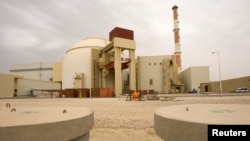
The head of Russia's state nuclear agency, Rosatom, says the situation at Iran's Bushehr nuclear power plant is still heading toward a "worst-case scenario" and its staffing levels are being reduced to a minimum.
According to Reuters, Aleksei Likhachev said that Rosatom was beginning a third phase of personnel evacuation, with one group departing by road on the morning of March 25 and two more groups set to leave shortly.
A day earlier, the International Atomic Energy Agency announced that it had been informed by Tehran that a projectile had hit the Bushehr nuclear power plant.
Russia built, fuels, operates, and is currently expanding the Bushehr plant through Rosatom. In 2025, around 20 percent of its staff were Russian.
Likhachev also said Bushehr had been hit, saying the attack caused "no casualties" and hit an area near one of the plant's operational units.
Iranian media reports claimed that the incident did not cause any financial, technical, or human losses, and that no damage was caused to the plant.
This was the second time in the past week that Bushehr was allegedly targeted.
Iran's Internet Blackout Now Over 600 Hours
NetBlocks, a web-outage monitor, says that the Internet blackout in Iran has passed the 600-hour mark and has entered its 26th day.
"The measure leaves civilians cut off from international networks, violating their right to access information in times of war," NetBlocks said in a post on X on March 25.
This is Iran's second major blackout in 2026 -- the first one began on January 8 as country-wide protests engulfed the country. Internet traffic is at around 1 percent of normal traffic and isolating the majority of Iran's some 90 million people.
Workarounds such as VPNs or satellite Internet are increasingly restricted and risky for Iranians to use.
UN Rights Chief Warns Of Regional And Global Fallout From Iran Conflict
Volker Turk, United Nations High Commissioner for Human Rights, has warned that the conflict involving the United States, Israel, and Iran is causing severe civilian suffering across the Middle East.
"Since the start of hostilities, Iran has launched large numbers of drones and missiles against military bases, residential areas and energy facilities across these Gulf States and Jordan. Strikes and interceptions have caused terrible harm to civilians, including dozens of deaths and injuries," Turk said in a statement to the Human Rights Council in Geneva on March 25.
"Many of the strikes in this conflict raise serious concerns under international law, which prohibits attacks targeting civilians and their infrastructure, and attacks on military targets where harm to civilians is disproportionate," the statement added.
Inside Iran, civilians are seeking shelter from air strikes across all 31 provinces of the country, Turk said, adding that according to Iranian government figures, some 1,400 civilians have been killed and more than 20,000 injured. Human rights groups have made similar estimates. "As Iranians shelter from these strikes, they also face another wave of cruel state repression, including arbitrary arrests, executions, intimidation and censorship," he noted.
Turk highlighted the disruption by Iran of shipping through the Strait of Hormuz, which is threatening global supplies of food, medicine, and energy, with dire implications for some of the world’s poorest people.
He urged all states to take immediate action to end hostilities, stating, "The only guaranteed way to prevent this is to end the conflict, and I urge all States, and particularly those with influence, to do everything in their power to achieve this."