



Macron: Military Operation To 'Liberate' Strait Of Hormuz Is 'Unrealistic'

French President Emmanuel Macron said on April 2 that launching a military operation to "liberate" the Strait of Hormuz is unrealistic and urged cooperation with Iran instead.
"There are those who advocate for the liberation of the Strait of Hormuz by force through a military operation, a position sometimes expressed by the United States," he said during a trip to South Korea, according to AFP.
He added: "I say 'sometimes,' because it has varied. It has never been the option we have chosen, and we consider it unrealistic."
Macron stressed that such an operation "would take an inordinate amount of time and would expose anyone crossing the strait to coastal threats from the [Iranian] Revolutionary Guards [Corps], who possess significant resources, as well as ballistic missiles, and a host of other risks."
Iranian Human Rights Lawyer Nasrin Sotoudeh Arrested Again, Daughter Says

Prominent Iranian human rights lawyer Nasrin Sotoudeh was arrested on April 1 at her residence in Tehran, her daughter, Mehraveh Khandan, announced on her Instagram account on April 2.
Khandan, who is living outside Iran, said that her mother was arrested while she was alone at home. It is not clear which Iranian security apparatus arrested Sotoudeh and on what charges. Amid the current conflict with Israel and the United States, signs that the clerical authorities are stepping up a crackdown on internal opposition in the country are growing.
According to Khandan, security forces also confiscated personal electronic devices, including Nasrin Sotoudeh's mobile phone and laptop.
Reza Khandan, Sotoudeh's husband, has been in prison since December 2024. Sotoudeh, a vocal advocate for numerous activists, has been arrested several times since 2010.
Her detention has included periods of solitary confinement, highlighting the challenges faced by human rights defenders in Iran.
IRGC Commander Involved In Suppressing Protesters Killed
Mohammad Ali Fathalizadeh, a brigadier general of Iran's Islamic Revolutionary Guards Corps (IRGC) and a commander of the IRGC's Fatehin Special Unit, has been killed, a news agency affiliated with the country's Defense Ministry announced.
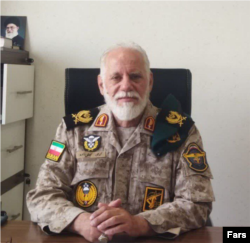
Without mentioning how or when Fathalizadeh was killed, the news agency said he was killed on April 2.
His name adds to the long list of officials and commanders who have been killed in targeted bombing by US and Israeli forces over the past five weeks. On February 28 alone -- the first day of the US and Israeli attacks -- more than 40 officials and commanders were killed alongside Supreme Leader Ayatollah Ali Khamenei, according to foreign media reports.
Fathalizadeh's has led the IRGC's Fatehin Special Unit for a year. Members of this unit receive special military training beyond the standard training of Basij paramilitary members, and they previously participated in the Syrian civil war and the suppression of protests in recent years.
In December 2022, in a meeting with a group of special forces from the Fatehin Special Unit who were involved in suppressing the protesters, then-President Ebrahim Raisi told them that they "shone well" in their dealings with the protesters.
Middle East Expert Sees Rising Discontent, Fear Of Harsher Repression In Iran
Ruslan Suleymanov, a Middle East expert at the NEST Center who recently visited Iran amid US and Israeli air strikes, told Current Time he had observed a wide range of attitudes among the Iranian people and that there are currently both supporters and opponents of the regime.
"The opponents are in the majority. But even the opponents of the regime don't fully understand where this war is heading," he told Current Time on April 2. "Although I have met some people who still support the air strikes -- specifically, strikes on military targets and the targeting of leaders -- overall, of course, there is discontent over the fact that strikes are also hitting schools and hospitals," Suleymanov said.
He warned that postwar repressions, such as the mass arrests and death sentences that followed last year's 12-day war, is likely to intensify.
"Security forces, police, and the Islamic Revolutionary Guards Corps (IRGC) -- they are literally everywhere," he said, describing the situation on the streets of Iran. He said that in the past month, several people had already been executed on suspicion of betraying their country and working for Israel, arguing that the war in Iran "has led to the replacement of a harsh regime with an even harsher one."
Suleymanov suggested that the Iranian regime anticipates a US ground operation, expecting it to turn into a kind of war that could become a people's war, which would play into the hands of the authorities in Tehran.
Fifth Protester From January Unrest In Iran Executed This Week
Amirhossein Hatami, an 18-year-old arrested while participating in January protests suppressed by a deadly government crackdown, has been executed, according to Mizan, the judiciary's news outlet.
Mizan said the execution took place on April 2 after his appeal was rejected and the Supreme Court upheld his sentence for entering a restricted military site in Tehran.

Hatami reportedly confessed during interrogation.
Hatami is the fifth protester to be executed in the past three days. He was among 11 men referred to by rights group Amnesty International as being at imminent risk of execution and who had been "subjected to torture and other ill-treatment in detention, before being convicted in grossly unfair trials that relied on forced confessions."
The executions show that despite US and Israeli strikes wiping out much of Iran's leadership and degrading its military-industrial capacities, there are no visible signs that the clerical authorities are losing control.
US Senators Reaffirm Support For NATO Amid Trump Withdrawal Threats
Two senior US senators, Democrat Chris Coons and Republican Mitch McConnell, the former Senate majority leader, have reaffirmed their support for NATO amid President Donald Trump's threats to withdraw from the military alliance for what he considers its lack of support for US objectives in Iran.
"NATO is the most successful military alliance in history. It has underpinned the security of the United States for more than 70 years," the two wrote in a joint statement released on April 1.
"Americans are safer when NATO is strong and united. It is in our interest for all allies to tend this unity with care," they added.
While Trump has threatened to unilaterally withdraw the United States from NATO, any formal move would require the approval of two-thirds of the Senate. He and other US officials have repeatedly questioned the value of the alliance if the United States cannot freely use bases in allied countries to defend its own interests.
Health Of Iranian Nobel Laureate Mohammadi Deteriorating in Prison, Husband Says
The health of Iranian Nobel Peace Prize winner Narges Mohammadi has significantly deteriorated in prison, according to her husband, Taghi Rahmani.
Rahmani spoke with RFE/RL's Radio Farda by telephone on April 1 from Paris, where he is based.
Rahmani said Mohammadi requires specialized medical care in a hospital outside of Zanjan Prison, where she is currently being held, but authorities have refused to release her. He said she suffers from pulmonary and cardiac issues and is experiencing severe headaches accompanied by nausea, double vision, and reduced vision in both eyes.
On March 31, the Free Narges Coalition expressed grave concern regarding the activist's well-being and the denial of independent medical care, based on recent reports received from Iran. The coalition said that Mohammadi’s legal team, accompanied by one family member, visited her in Zanjan on March 29.
This came after weeks of requests by her team, made even more difficult by the Iranian government virtually shutting down all forms of communication amid US and Israeli air strikes on the country.
According to the report, Mohammadi's overall health is extremely poor, and she appeared pale and weak with significant weight loss when brought to the visitation room by a prison nurse. Rahmani told Farda his wife has been in poor health since her arrest in Mashhad in December 2025, during which he said she was beaten by security forces.

He said bruises were visible on her body for a long time due to the violence she was subjected to during her arrest.
Separately, Amnesty International quoted an informed source as having said on March 24 that Mohammadi was found unconscious in Zanjan with cold limbs, numbness, and her eyes rolled back. The prison doctor said she likely had a heart attack, but officials still refused to transfer her to a hospital. The London-based rights group called for the immediate and unconditional release of Mohammadi in order for her to receive urgent medical care.
Prisoners In Iran At Risk From Air Strikes, Abuse, HRW Warns
In a new report, Human Rights Watch (HRW) and the Kurdistan Human Rights Network warn that thousands of detainees in Iran, including political prisoners and children, face serious risks from both military strikes and abuses by authorities, such as mass, arbitrary, and secret executions.
"Prisoners, including thousands of arbitrarily detained people in Iran, are facing dual threats, violence at the hands of authorities who have a track record of prison massacres and US and Israeli bombs," said HRW Senior Researcher Bahar Saba.
Despite calls for releasing prisoners, the Iranian authorities continue mass arrests and executions of real or perceived dissidents, the rights groups said.
The report says many detainees are held in secret, unofficial detention facilities and are subjected to enforced disappearances, torture, and unfair trials.
"Unable to seek safety, detainees, many of whom never should have been detained in the first place, are facing human rights violations, serious injury, and death," Saba said.
US-Israeli air strikes near prisons in Iran, including Evin Prison -- a notorious detention facility in Tehran where dissidents and political prisoners are held -- have put detainees at serious risk of injury and death, the rights group said.
The report also notes that the situation in prisons across the country has been deteriorating. Prisoners are facing shortages of food and clean water, and have limited access to basic necessities, medication, medical care, and visiting rights, the document said.
US Government Urges Americans In Iraq To Leave, Citing Threats
The US government has issued a warning to its citizens in Iraq, saying that "Iraqi terrorist militia groups aligned with Iran may intend to conduct attacks in central Baghdad in the next 24-48 hours."
"Iran and Iran-aligned terrorist militias have conducted widespread attacks against US citizens and targets associated with the United States throughout Iraq, including in the Iraqi Kurdistan Region," said the security alert, posted on X on April 2. "They may intend to target US citizens, businesses, universities, diplomatic facilities, energy infrastructure, hotels, airports, and other locations perceived to be associated with the United States, as well as Iraqi institutions and civilian targets."
The alert urged US citizens to leave the country, saying overland routes to Jordan, Kuwait, Saudi Arabia, and Turkey remain open, and that travelers should "expect long delays."
Air Strikes Reported Across Iran
Explosions, casualties, and the activation of air defenses were reported in various parts of Iran late on April 1 and early on April 2 following US and Israeli air strikes.
In Tehran, local media said air defenses were activated against "hostile targets." There were reports of explosions and power outages in parts of the capital.
The Iranian Red Crescent Society announced that in the past 24 hours locations in and around Tehran were targeted by strikes.
The cities of Isfahan, Shahreza, Kashan, Aran and Bidgol, and Najafabad were also reportedly targeted.
The Israeli military announced on the evening of April 1 that its air force had carried out more than 400 attacks on Iranian military infrastructure over the past two days, using about 650 munitions.
According to the military, dozens of targets in Tehran were struck during these attacks, including about 15 weapons production sites as well as parts of the Iranian Defense Ministry.