



Qatar Arrests 10 Suspects Accused of Spying for Iran’s Revolutionary Guards
Qatari authorities have arrested two alleged cells linked to Iran’s Islamic Revolutionary Guards Corps (IRGC), detaining 10 suspects accused of espionage and sabotage activities targeting critical infrastructure, the Qatar News Agency reported.
Officials said seven suspects had been tasked with gathering intelligence on sensitive and military sites across the country, while three others were assigned sabotage missions and had reportedly received drone training.
Investigators said maps containing coordinates of key facilities, as well as communication devices and technological equipment, were seized from the suspects.
Authorities claimed that the detainees admitted during questioning to links with the IRGC and to being assigned espionage and subversive operations.
The Iranian government has not yet responded to the report.
Media Watchdog Warns About Safety Of Imprisoned Journalists
The Committee to Protect Journalists (CPJ) has expressed grave concern for the safety of journalists imprisoned in Iran amid escalating regional tensions, urging Iranian authorities to release them immediately and unconditionally.
The CPJ says at least 15 journalists remain behind bars, including Iranian-American Reza Valizadeh, Japanese journalist Shinnosuke Kawashima and Mohammad Zare-Foumani, who are held in Tehran’s Evin prison.
The prison is located in an area residents have been told to evacuate by the Israeli military, raising fears for detainees’ safety.
The CPJ also warned that a near-total Internet blackout and severe communication disruptions have cut prisoners off from families and the outside world.
Human rights groups and relatives have reported worsening conditions at Evin, including food shortages and the reported withdrawal of prison authorities, heightening concerns for detainees’ wellbeing.
Rights Group Reports 104 Attacks Across Iran in 24 Hours
At least 104 attacks across 19 Iranian provinces were recorded over 24 hours, resulting in 31 casualties, according to new data published by the Human Rights Activists News Agency (HRANA) on March 3.
The monitoring group said 15 civilians and 12 military personnel were killed during the latest reporting period, while casualty classifications for several others remain under review.
Since the conflict began on February 28, HRANA has documented 1,097 civilian deaths and 5,402 injuries, including children. The group also reported strikes damaging military bases, medical facilities and residential areas across the country.
HRANA, the news agency of the US-based human rights organization Human Rights Activists in Iran, monitors rights abuses and conflict impacts through a network of local sources and open-source verification.
Canadian PM Calls For Rapid De-Escalation
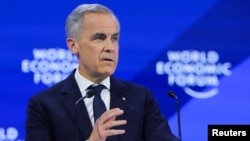
Canadian Prime Minister Mark Carney has called for a rapid de-escalation in the Middle East amid intensifying fighting between Iran and US–Israeli forces.
Speaking to reporters in Sydney on March 4 during an official visit to Australia, Carney urged all parties involved in the conflict to respect international rules governing warfare.
He said the strikes against Iran appear to be "inconsistent with international law,” but added that it is ultimately up to the United States and Israel to demonstrate the legality of their actions.
Carney also said Canada had not been informed in advance of the attacks and was not asked to take part.
"We would not have been in a position...to take a judgment that met our standards if we had been asked to participate," he said.
While urging restraint, Carney reiterated Canada’s support for preventing Iran from obtaining nuclear weapons.
Reports: Iranian Kurdish Militias Discuss Attacks On Iran With US Officials
Iranian Kurdish armed groups based in Iraq’s Kurdistan Region have held discussions with US officials in recent days about the possibility of attacking Iranian security forces in western Iran, according to reports by Reuters and CNN citing informed sources.
A coalition of Kurdish groups along the Iran–Iraq border is reportedly training for potential operations aimed at weakening Iran’s military while US and Israeli forces strike Iranian targets.
Two sources said the objective would be to create conditions for a broader uprising against the government.
The groups have reportedly sought US military backing and discussed possible weapons supplies through the CIA.
However, no final decision on an operation has been made. Some assessments suggest Iranian Kurdish factions may currently lack the resources and unity needed to overthrow the government.
Strikes On Iran Push Up Prices in Neighboring Afghanistan
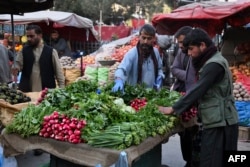
The US-Israeli strikes on Iran have led to price hikes in neighboring Taliban-run Afghanistan, residents and traders say.
In the western Afghan province of Herat, which borders Iran, shoppers report sharp increases in the cost of food staples and fuel. Herat resident Ms. Ahmadi, who asked that her full name not be used for security reasons, told RFE/RL’s Radio Azadi that the economic repercussions of the strikes were quickly evident.
“This situation in Iran has had a very bad impact on Afghanistan as well," she said. "The price of liquid gas, tomatoes, and other household necessities has gone up a lot.”
Similar concerns are reflected in the capital, Kabul.
Ahmad Faizi, a bookseller, said rising prices have made daily purchases difficult for his family.
“A jar of jam used to be 80 afghanis ($1.30); now it is 150. Gas was 60 afghanis per kilo, and now it is 75,” he said. “I’m worried people may be left hungry.”
Afghanistan’s markets rely heavily on imports from Iran, Pakistan, and Central Asia. Taliban authorities have said trade with Iran exceeded $1.6 billion so far this year.
Shopkeeper Khyal Mohammad said that sugar, tea, cooking oil, and eggs have all seen price increases in recent days.
Iranian media reports that Tehran has temporarily banned the export of food and agricultural products.
Azarakhsh Hafezi of the Afghanistan Chamber of Commerce and Investment warned that prolonged disruptions could lead not only to inflation but also to potential shortages.
“The issue is not only rising prices, but my concern is that famine may occur,” he said.
Air Raid Sirens Sound in Israel
Missile attack warning sirens have sounded across several parts of Israel.
Footage circulating from the skies over Jerusalem shows missiles being intercepted.
Israel’s emergency services say there have been no reports of missile impacts or possible casualties thus far.
New Wave Of Israeli Attacks Targets Sites In Tehran
The Israeli army said on March 4 that it had launched a new wave of attacks on Tehran.
At the same time, several news channels inside Iran reported a series of explosions in parts of the capital, including eastern and northeastern Tehran.
Iran’s state media have not reported on the attacks.
Meanwhile, Internet disruptions have limited the availability of real-time information about the locations that may have been targeted.