



Trump Announces Fresh US Strikes On Iran As Cease-Fire Hangs In Balance
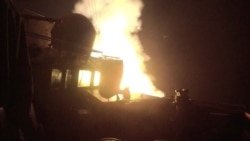
The United States will conduct fresh military strikes on Iran, President Donald Trump announced, as Washington and Tehran continued to exchange attacks for a second consecutive night, deepening one of the most serious escalations in hostilities since a fragile cease-fire took hold in April.
"The United States will be hitting Iran...VERY HARD TONIGHT," Trump wrote in a Truth Social post on June 11, also threatening to seize Iran's oil infrastructure facilities, including Kharg Island, the country's main oil export hub.
Trump's latest comments come as the future of negotiations between Washington and Tehran hangs in the balance after Iran claimed it had fully closed the Strait of Hormuz following overnight US strikes on targets in the country.
To read the full report, click here.
VIDEO: Middle East Tensions Escalate As US, Iran Exchange Strikes For Second Day
The United States and Iran have traded strikes for a second consecutive day as tensions escalate in the Middle East. US Central Command released video late on June 10 of new strikes targeting Iranian military sites. Iran responded by attacking US allies in the Persian Gulf region. Several homes were damaged in Bahrain after debris fell from intercepted Iranian drones. Despite the escalation, both sides said talks to reach a peace deal are still continuing. (Video by RFE/RL's Radio Farda and Will Tizard)


Iranian Cargo Vessel Sunk In The Gulf Of Oman, Say Reports
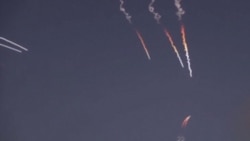
An Iranian cargo vessel sank in the Gulf of Oman after being attacked by the United States on the morning of June 11, Iranian media reported, citing the governor of Sirik County, a coastal district in Iran's southern Hormozgan Province near the Strait of Hormuz.
According to the Sirik governor, the cargo ship departed the Omani city of Khasab at 5 a.m. bound for Sirik County when it was struck by a projectile five miles from Khasab port.
The local official said all five crew members were rescued with the help of passing vessels and were transferred to Oman.
In video footage that has been circulating from the cargo ship, people can be seen disembarking, while one person says the vessel was struck by a drone.
With reporting by RFE/RL's Radio Farda
3 Indian Sailors Dead After US Strike On Tanker Off Oman
Three Indian sailors have been confirmed dead after a US military strike on the Palau-flagged tanker MT Settebello off the coast of Oman, prompting India to lodge a formal protest with Washington and raising fresh concerns over the safety of commercial shipping in the Persian Gulf.
India's shipping minister, Sarbananda Sonowal, said three missing crew members were found dead after a search operation.
"Sadly, three Indian seafarers initially reported missing are now confirmed dead after bodies have been located and identified," he wrote on X.
Sonowal described the incident as a "profound loss" and said the Indian government was arranging the repatriation of both the survivors and the victims' remains.
US Central Command (CENTCOM), which oversees American military activities in the Middle East, said it carried out a precision strike on the tanker after the crew "repeatedly failed to comply with directions from American forces."
Washington has accused the vessel of attempting to transport Iranian oil in violation of a US blockade imposed after the conflict with Iran intensified.
India's Foreign Ministry condemned the attack and summoned a senior US diplomat in New Delhi to register a "strong protest," according to Indian officials and media reports.
Separately, India's embassy in Oman reported a maritime emergency involving another tanker, the Guinea-Bissau-flagged MT Jalveer, off the Omani coast.
United Kingdom Maritime Trade Operations (UKMTO), which monitors shipping security in the region, said the vessel "experienced a fire in the engine room."
CENTCOM later said US forces had disabled the Jalveer after it allegedly violated a US naval blockade by attempting to transport Iranian oil from Iran through the Gulf of Oman.
According to the US military, an aircraft fired two Hellfire missiles into the vessel's engine room "after the crew repeatedly failed to comply with directions from U.S. forces." It included what appeared to be video footage of the strike in an X post on the subject.
The US military said the Jalveer was the third commercial vessel disabled by American forces this week.
CENTCOM said it has disabled nine vessels and redirected 135 others since the US blockade on Iranian reports began on April 13.
With reporting by Reuters, AFP, and dpa
Reports Of Explosions Heard Across Various Parts Of Iran
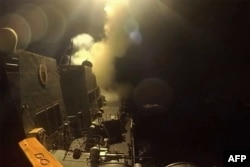
Explosions were heard in numerous locations across Iran in the early hours of June 11, according to scattered reports in the Iranian media, although no official information has yet been released
Explosions were reported in Sirik, Bandar Abbas, Qeshm, and Kharg Island.
Blasts were also heard in several cities near Tehran, including Abyek, Qarchak, Minab, Nazarabad, and Karaj.
Reports of explosions also emerged from other parts of Iran.
Explosions were reportedly heard in Shiraz, the capital of Fars Province.
Initial reports indicated an explosion near the town of Eshtehard, west of Tehran.
However, Iran's state broadcaster later quoted the local governor as saying the sounds may have originated from incidents outside the province.
The public relations office of the Islamic Revolutionary Guards Corps (IRGC) said early on June 11 that an industrial complex and the grounds of a military barracks near Karaj and Nazarabad, west of Tehran in Alborz Province, as well as a local IRGC base in Pishva County southeast of the capital, had been targeted.
In a statement announcing the conclusion of its strikes early on June 11, US Central Command said its forces had launched attacks "on Iranian military surveillance capabilities, communication systems, and air defense sites across Iran"
With reporting by RFE/RL's Radio Farda
US Embassy In Jordan Issues Urgent Warning; Kuwait Reopens Airspace
The US Embassy in Jordan has issued an urgent warning after reports of missiles, drones, or rockets in Jordanian airspace.
"Seek overhead cover and shelter in place immediately. Remain indoors and pay attention to local announcements and alerts" the embassy said in a post on X on June 11, adding that it will continue to review the situation and provide additional information as needed.
Meanwhile, Kuwait's civil aviation authority said on June 11 that it had reopened the country's airspace and that commercial traffic had "returned to normal" after a volley of Iranian attacks caused a brief shutdown.
With reporting by AFP
CENTCOM Says US Completes Air Strikes On Iran As Tehran Targets US Bases In Bahrain And Kuwait
The United States concluded a new round of strikes against Iranian military targets on June 10, prompting Tehran to launch retaliatory attacks against US military facilities in Bahrain and Kuwait, while Persian Gulf states activated air defenses and urged residents to seek shelter.
The US Central Command (CENTCOM) said its forces had completed "additional self-defense" strikes targeting Iranian military surveillance capabilities, communications systems, and air defense sites across Iran.
The operation involved US Marine Corps, Air Force, and Navy assets firing precision-guided munitions at targets Washington said posed threats to US forces and international commercial shipping in regional waters.
"The strikes are in response to Iran's unwarranted and continued aggression," CENTCOM said in a statement early on June 11, adding that US forces remained "vigilant, lethal, and ready.”
Shortly afterward, Iran's Islamic Revolutionary Guards Corps (IRGC) said it had targeted US military facilities in Bahrain and Kuwait in retaliation for the American attacks.
In a statement, the IRGC said it struck 18 targets linked to the US military in two waves of operations against Kuwait's Ali Al Salem and Ahmed Al Jaber air bases. Iranian forces also targeted Bahrain's Sheikh Isa Air Base, it said.
There was no immediate confirmation from US officials regarding the extent of any damage, and the impact of the attacks remained unclear.
Bahrain's Interior Ministry said air raid sirens were activated across the Gulf kingdom for a second time and urged citizens and residents to remain calm and move to the nearest safe location.
Kuwait said its air defense systems were responding to fresh attacks after Iran earlier announced it was targeting US military bases in both countries.
The latest exchange marked a sharp escalation in the confrontation between Washington and Tehran, raising concerns about broader instability across the Gulf region and threats to energy infrastructure and commercial shipping routes.
UN Secretary-General Antonio Guterres called for an immediate halt to hostilities, warning that the Middle East was being drawn "deeper into crisis" and that the consequences extended far beyond the region.
"This week has brought wider attacks and further deterioration where the ceasefire is more like a lesser-fire," Guterres said, urging all parties to pursue a diplomatic settlement.
"No more attacks. No more excuses," he added.
Iranian Media Report Explosions Around Bandar Abbas Airport
The Iranian state news agency IRNA is reporting several explosions around the Bandar Abbas airport and air base after the US said it had resumed air strikes on targets in Iran. IRNA also confirmed that “enemy shells hit a target in Sirik,” a port city in the south that is home to a naval base. Some local news agencies reported that US vessels in the Strait of Hormuz were attacked by Iranian missiles. Those reports could not be verified.
US Says Launches Second Night Of Air Strikes On Iran
US armed forces began a second night of air strikes on Iran, as signaled by President Donald Trump earlier on June 10.
"US Central Command forces began launching additional self-defense strikes today at 5:15 p.m. ET (21:15 GMT) against multiple targets in Iran at the Commander in Chief’s direction. The strikes are in response to Iran’s unwarranted and continued aggression," CENTCOM said in a statement.
Several Iranian news outlets, including state broadcaster IRIB, reported loud explosions in cities around the country.
US House Passes Bill To Cut Off Western Technology Flowing Into Iranian Drones
WASHINGTON -- The US House of Representatives overwhelmingly approved legislation aimed at preventing American and allied technology from ending up in Iranian-made drones used in conflicts from Ukraine to the Middle East.
The measure, known as the Block the Use of Transatlantic Technology in Iranian Made Drones Act (H.R. 2505), passed the House late on June 9 under a suspension of the rules, a procedure typically reserved for broadly supported legislation.
The bill requires the Departments of Commerce, State, and Defense to develop new strategies to identify and disrupt supply chains enabling Iran to acquire critical technologies used in its drone program.
Supporters told RFE/RL the legislation addresses a persistent problem: Western-made electronic components continue to be found in Iranian drones despite existing sanctions and export controls.
"Iranian drones are being used to terrorize civilians and attack Americans and US allies around the world," said Representative Brian Mast, chairman of the House Foreign Affairs Committee.
To read the full report, click here.