

Mary Kissel: Iran's Nuclear Program Must Remain The Focus
WASHINGTON -- Despite a US-Iran memorandum that opened a 60-day diplomatic window, missile exchanges and maritime threats suggest the negotiations are faltering under growing military pressure.

RFE/RL spoke with Hudson Institute Senior Fellow Mary Kissel about whether diplomacy can still deliver lasting security, and why she believes Iran's nuclear ambitions remains the central issue.
The negotiations are already being tested, Kissel says. "I think that's fairly clear, and it's consistent with what we've observed from the regime not just over the past few months of this current conflict, but over the past 40-plus years. It's entirely consistent, and in that way they're a lot like Communist China -- they will test you until you decide to push back and force them to stop."
To read the full interview, click here.
Bessent Says Only China Buying Iranian Oil Since Sanctions Lifted
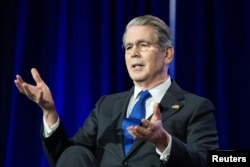
US Treasury Secretary Scott Bessent announced on June 30 that despite the lifting of sanctions on Iranian oil by the United States, no country except China has purchased Iranian oil.
"We were ordered to lift the sanctions on Iranian oil. What's really interesting is that outside China, which was buying Iranian oil during the sanctions, nobody has bought Iranian oil," Bessent told Fox News.
"The Iranians thus far have not been able to sell their oil because people are worried: 'Will sanctions snap back? Could the Treasury come after us?' So they're still selling to China at a discount," he continued.
Bessent said this is a reason why Iran should welcome negotiations with the United States.
The US Treasury Department issued a license to sell Iranian oil following the signing of the Iran-US memorandum of understanding on June 17.
This general license for the production and sale of crude oil and petroleum products by the Iranian government is valid for a period of 60 days.
Iran Official Says No Talks With US Till Fighting Ends In Lebanon
Foreign Ministry spokesman Esmail Baqaei said on June 30 that the Iranians would not be prepared to meet for negotiations on ending the war, nearing its fifth month, until certain criteria are met.
He said such talks are subject to the "implementation of the clauses of the memorandum of understanding" (MOU) by the United States, specifically regarding the conflict in Lebanon.
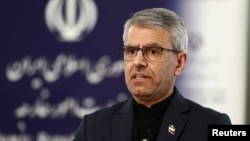
"We must evaluate the current process in the coming days and decide based on that how and when to begin negotiations for a final agreement," Baqaei said at a press conference.
He referred to the first paragraph of the MOU signed between Iran and the United States on June 17 and announced that the "main criterion" for Tehran is that Washington "force" Israel to stop its attacks on Lebanon.
To read the full report, click here.
French Lawmakers Sponsor Death-Row Prisoners As Iran Ramps Up Executions
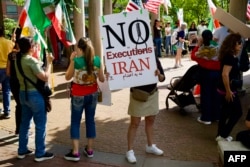
A group of 75 French lawmakers have taken the unusual step of formally sponsoring individual death-row political prisoners in Iran as the country's authorities continue to ramp up executions.
The move, taken on June 29 as part of a new National Assembly campaign organized by the Iran Freedom Congress (IFC), marked the IFC's first international human rights campaign since the group's founding earlier this year.
Under the sponsorship mechanism, each participating MP publicly attaches their name to an individual prisoner sentenced to death or facing imminent execution to give each case a parliamentary backer and a diplomatic pressure point.
Negin Shiraghaei, a member of the IFC’s Central Council, said the campaign took shape almost immediately after the congress's founding, calling the rise in executions an urgent priority "from literally the first day," despite the body being less than two months old.
Read more here
Qatar Says No High-Level US-Iran Talks Scheduled In Doha
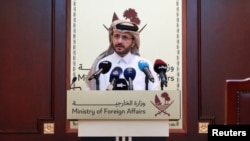
Qatar's Foreign Ministry said no high-level meeting between US and Iranian officials is scheduled in Doha in the coming days, despite the upcoming visit of US envoys Steve Witkoff and Jared Kushner.
"To the best of my knowledge, there are no direct meetings scheduled between the two parties in the coming days," Qatari Foreign Ministry spokesman Majed Al Ansari told reporters on June 30.
He said the American delegation would meet with Qatari mediators, adding: "To my knowledge there is no high-level meeting between the two sides."
The comments came after the White House announced that Witkoff and Kushner would travel to Qatar for high-level meetings and after US President Donald Trump said Iran had "requested a meeting" that would take place in Doha on June 30.
Iran has also said no talks are scheduled with the United States in the coming days.
Foreign Ministry spokesman Esmail Baqaei said an Iranian technical team would visit Qatar's capital, Doha, this week, but that it had no relation to US officials visiting the Arab country.
"We will not have any negotiations at any level with the American side in the coming days, and the fact that American representatives are traveling to Qatar has nothing to do with the Iranian delegation's trip," Baqaei said in a statement.
The conflicting statements come after the United States and Iran traded tit-for-tat strikes over the weekend, further straining the fragile cease-fire and casting doubt on efforts to resume negotiations.
Read more here
US Homeland Security Secretary Says He Did 'Happy Dance' After Iran Exit
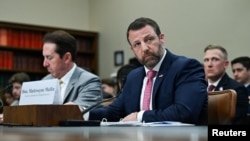
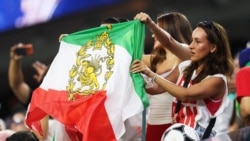
US Homeland Security Secretary Markwayne Mullin said he did a "happy dance" after Iran was eliminated from the 2026 FIFA World Cup, according to Sports Business Journal, saying he was "so glad they're gone" following the team's group-stage exit.
Sports Business Journal reported that Mullin made the remarks during a World Cup security briefing in Washington, saying he was "very happy they're going back because there wasn't a single team that we dealt with more than them." He later added: "I was so happy when we were able to pull their visas and said they could leave the US soil."
Iran narrowly missed out on the knockout stage after drawing all three Group G matches and finishing as the ninth-best third-placed team.
Mullin said "almost half" of Iran's delegation had ties to the Islamic Revolutionary Guards Corps (IRGC), an elite branch of Iran's military designated a terrorist organization by the United States. The Iranian Football Federation denied the allegation, saying it was "completely unsupported by any evidence."
The United States had imposed strict travel restrictions on the Iranian squad during the tournament. a move Iran coach Amir Ghalenoei criticized, saying his team had been treated "very unfairly."

Pezeshkian Says Iran-US Deal Agreed In 'Full Coordination' With Khamenei
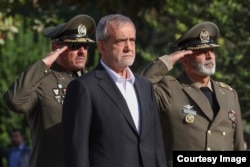
Iranian President Masud Pezeshkian has accused domestic opponents of the Iran-US framework agreement of "aligning with the operations of hostile media" and said that "all stages of the negotiations" were carried out in "full and continuous coordination" with the Islamic republic's supreme leader.
Speaking on June 30, during a meeting with members of the Society of Seminary Teachers of Qom, a conservative clerical body, Pezeshkian also said that "despite existing security restrictions and considerations, the final text of the agreement was evaluated by the relevant authorities after expert and security reviews, and also received the strong support of members of the Supreme National Security Council."
This comes as opposition to the memorandum of understanding between the US and Iran has grown in recent days among some pro-establishment political factions.
They say the government, the head of the negotiating delegation, Mohammad Baqer Qalibaf, and even some senior commanders of the Islamic Revolutionary Guards Corps approved and advanced the memorandum against Supreme Leader Mojtaba Khamenei's position.
Pezeshkian described these opponents as "groups aligned with the psychological operations of hostile media" and said "they are trying, by attacking the negotiating team and questioning national decisions, to create the conditions for weakening this achievement."
In the latest example of opposition, nearly three-quarters of members of the Assembly of Experts, the clerical body responsible for appointing and overseeing Iran's supreme leader, signed a statement calling the reopening of the Strait of Hormuz "contrary to officials' commitments and a strategic mistake" -- a statement that immediately drew a negative response from the assembly's secretariat.
Eight of the 12 people present at Pezeshkian's meeting with the Society of Seminary Teachers of Qom are members of the Assembly of Experts.
With reporting by RFE/RL's Radio Farda
Two Revolutionary Guards Killed In Armed Attack In Western Iran
Iran's Islamic Revolutionary Guards Corps (IRGC) said that two of its members were killed and two wounded after being attacked by armed individuals on the evening of June 29.
Citing the IRGC's public relations office in Kermanshah Province, the state run Mehr news agency reported that the attack took place outside the homes of two IRGC members in Paveh County. The report described the attackers as "armed terrorists."
Official sources identified the two IRGC members who were killed as Borhan Krisani and Khaled Khaledi.
At the same time, the human rights organization Hengaw reported that a newly formed group called Khori Hiva ("Sun of Hope") claimed responsibility for the attack.
Hengaw also identified the two deceased as Khaled Khaledi and Borhan Krisani, and reported that two other IRGC members were seriously wounded.
Kermanshah Province, in western Iran near the Iraqi border, is home to a large ethnic Kurdish population and has long been a flashpoint for tensions between Iranian security forces and Kurdish opposition groups.
With reporting by RFE/RL's Radio Farda
Iran’s Annual Inflation Rate Rises To 58 Percent
The annual rate of inflation in Iran rose to around 58 percent year-on-year in June, according to the country’s Central Bank.
In a report issued on June 29, the Central Bank also said the consumer price index for goods and services recorded a monthly increase of over 7 percent.
The price of food, beverages, and tobacco in the country of around 90 million jumped about 130 percent in May, according to the Statistics Center of Iran.
The International Monetary Fund (IMF) projects Iran's overall inflation will hit nearly 69 percent in 2026. That would be the highest since the Islamic Revolution in 1979.
For years, Iran’s economy has been crushed by crippling US sanctions and government mismanagement.
The United States and Israel’s war against Iran deepened the economic crisis in the country. The war destroyed or damaged Iran’s key infrastructure and industries, disrupting domestic production and hiking prices for basic food items.
A US naval blockade on Iranian ports and vessels disrupted Iran's oil exports, the lifeline of its economy. Meanwhile, Iran’s decision to shut down the Internet for months hurt many businesses and professionals.
As part of the interim deal signed by Tehran and Washington on June 17, the United States ended its naval blockade and issued a 60-day waiver allowing Iran to sell its oil on the international market.
Traffic In Strait Of Hormuz Drops Sharply
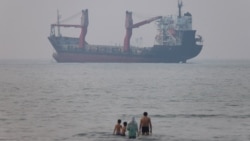
Maritime traffic in the Strait of Hormuz, a key artery for global oil and gas supplies, slowed sharply after attacks on ships over the weekend, including an attack on a Qatari tanker that prompted a US military response.
According to data from the maritime tracking firm Kpler, 29 commodity vessels crossed the waterway on June 27 and 12 transited on June 28.
That marked a significant drop from last week, when Iran and the United States signed a memorandum of understanding that reopened the critical waterway for international shipping.
On June 24, there were 70 crossings, the highest number since the United States and Israel launched a war against Iran on February 28.
In response to the war, Tehran effectively closed the Strait of Hormuz, a move that sent international oil and gas prices soaring and upended the global economy.