





WASHINGTON -- Despite a US-Iran memorandum that opened a 60-day diplomatic window, missile exchanges and maritime threats suggest the negotiations are faltering under growing military pressure.
RFE/RL spoke with Hudson Institute Senior Fellow Mary Kissel about whether diplomacy can still deliver lasting security, and why she believes Iran's nuclear ambitions remains the central issue.
RFE/RL: We're seeing missile exchanges, maritime incidents, and renewed threats in the Strait of Hormuz. Does this suggest the negotiations are already being tested?
Mary Kissel: Yes, it does. I think that's fairly clear, and it's consistent with what we've observed from the regime not just over the past few months of this current conflict, but over the past 40-plus years. It's entirely consistent, and in that way they're a lot like Communist China -- they will test you until you decide to push back and force them to stop.
RFE/RL: Are both sides still committed to preserving diplomacy, or have recent military developments fundamentally complicated that effort?
Kissel: You always have to ask: What's the point of a diplomatic process? Is it simply to show that you're talking, or is it really to achieve your strategic goals?
The United States' strategic goal is very clear. This regime has killed thousands of Americans, not to mention tens of thousands of its own people, and it wants nuclear weapons. We've already seen what it's capable of without them -- striking civilian facilities in the Gulf, threatening [the] Diego Garcia [military base], and developing ballistic missiles capable of reaching even the United Kingdom.
So either we've found diplomatic interlocutors in Tehran who actually have the authority to follow through on what they commit to, or, if we haven't, then we're going to have to rethink the approach to the cease-fire.
Tehran is not trustworthy. This regime has broken not one but several cease-fire promises, and frankly, I don't think President [Donald] Trump will tolerate that for much longer. He's someone who does what he says, and if he says the Strait [of Hormuz] needs to be opened and Iran has committed to that, I think he'll do what it takes to make sure it happens...
'Iran's Leverage Won't Last Forever'
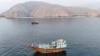
RFE/RL: Commercial shipping has started returning to the strait, but traffic remains well below normal. Ships are avoiding traditional lanes because of mine concerns, while Iran is warning vessels against using alternative routes. Is Tehran trying to turn military pressure into long-term political leverage over one of the world's most important waterways?
Kissel: I think so. But just looking at the markets this morning, it's not working. Oil prices were falling back toward $70 a barrel. We don't have a supply problem. Energy-importing nations have found other sources.
Over the medium to longer term, no one in their right mind is going to rely on transit through the strait in the future. You're going to see pipelines built across Saudi Arabia and through other routes. That won't happen immediately, but I think that's what the market is telling you -- that Iran ultimately won't maintain a stranglehold.
We also have the powerhouse of American energy production, which European countries and the UK could also replicate if they liberalized their energy markets...
RFE/RL: Iran's objective appears to extend beyond disrupting shipping. Is it also trying to redefine who controls navigation through Hormuz? And does that become part of broader peace negotiations rather than simply a maritime security issue?
Kissel: It's certainly an issue Iran -- or whoever is really running Iran -- has put on the table. But what the free nations of the West can't afford is allowing that to become the sole focus of negotiations.
One of the regime's tactics is to distract attention: "Don't worry about the nuclear program right now -- let's solve this crisis we've created first." That's a real danger.
I think Secretary of State and [acting] national-security adviser Marco Rubio understands that very well, and I don't believe he'll be fooled by it.
But this isn't just an Iran issue. It's a Russia-China-Iran axis working against the United States, Israel, and Gulf partners like the UAE, Bahrain, and Kuwait. This is really a contest between two different visions of how the world should work. That's a more realistic way to understand what's happening.
RFE/RL: Secretary Rubio has just concluded his Gulf trip, emphasizing that regional partners will have a seat at the table and that Washington will not accept Iranian restrictions in the strait. Is the United States drawing firmer red lines than in previous diplomatic efforts?
Kissel: I don't know. I think the previous red lines were already pretty clear: open the strait. Iran has not complied.
One thing we don't have is granular visibility into who's really making decisions in Tehran. Is it only the IRGC [Islamic Revolutionary Guards Corps]? Are there other figures communicating through back channels with Rubio and others in Washington? We simply don't know. That uncertainty may also explain why Washington believes it now has additional negotiating leverage. We'll see what happens.
RFE/RL: Despite Washington's assurances, Gulf countries once again face Iranian threats and renewed targeting. Does that undermine confidence that diplomacy alone can provide the security guarantees America's partners are looking for?
Kissel: We know diplomacy alone only provides guarantees when one side has achieved a definitive victory. If Iran is still attacking oil tankers, and China is providing intelligence to Iranian forces targeting Americans in the Gulf, then that's not victory.
The Gulf has much more at stake now than energy transit. Doha, Dubai, Riyadh, and other regional financial centers are deeply integrated into the global economy. Their sovereign wealth funds are investing heavily in Western markets. Those gains are also at risk if this isn't resolved.
While Gulf states don't necessarily have the military capabilities to solve this problem themselves, they can certainly help diplomatically by encouraging European partners to contribute military assets to help secure maritime transit.
I suspect that's part of Secretary Rubio's message: If you value your prosperity and your partnership with the West, help us help you.
RFE/RL: Are we now seeing two parallel tracks -- diplomats pursuing de-escalation while Iran continues applying military pressure -- or are those tracks actually reinforcing one another from Tehran's perspective?
Kissel: I can't speak for Tehran, nor would I want to. But it's not just Iran that's willing to use military pressure. President Trump has also been very clear that he's prepared to do so.
We saw strikes over the weekend against drone and military facilities after Iran attempted to attack a tanker off Oman.
President Trump is unique in that he's the only US president, Republican or Democrat, willing to use significant military force against this regime. Frankly, it's about time.
I'm old enough to remember the Reagan years, the murder of Americans in Lebanon, the terrorism we've witnessed ever since, and the hundreds of American soldiers Iran helped kill during the Iraq wars.
This is a terrorist regime, and it's creating instability across the entire region. A peaceful, stable Iran would unlock extraordinary opportunities for the Middle East. It would be a gift to the world.
RFE/RL: Beyond the formal negotiations, what should observers be watching most closely over the coming days?
Kissel: There are several things. First, is the United States truly serious about permanently dismantling Iran's nuclear program, and how will that be verified.
Second, how much tolerance will Washington have for continued Iranian attacks in the strait?
Third, what are oil prices and insurance markets telling us about Iran's actual leverage over global energy markets?
And fourth, are we going to start talking again about the Iranian people?
They're the regime's biggest victims. They've courageously taken to the streets demanding freedom, yet we haven't talked about them enough. We should be encouraging them to reclaim their country.
Ultimately, they stand to benefit the most from a freer and more open Iran, and I hope to see that someday.
RFE/RL: Finally, if these negotiations are meant to produce a durable regional framework rather than simply another temporary pause, what would real success actually look like?
Kissel: There are many possible outcomes. The best -- and perhaps least likely -- would be a free and democratic Iran, where the people overthrow this terrible regime and build a free country.
Another possibility is fragmentation along ethnic lines, with separate Kurdish, Persian, Baluchi, and Azeri regions.
A third possibility would be the emergence of a military leader who controls the security forces but is willing to cooperate with the United States and Israel to dismantle the nuclear program -- something resembling Venezuela: not a free country, but not one threatening its neighbors.
There are many possible paths, and we don't know which one will emerge.
But one thing we do know is that a radical Islamist regime committed to eliminating Israel, driving freedom-loving nations out of the region, and killing tens of thousands of its own people cannot be allowed to possess nuclear weapons.

