





Trump To Review Latest Iran Proposal But 'Can’t Imagine’ He'll Accept It
US President Donald Trump said he will soon evaluate a new peace proposal offered by Tehran but added that he “can’t imagine” it will be acceptable and suggested the possibility of renewed air strikes against Iran.
"I will soon be reviewing the plan that Iran has just sent to us, but can’t imagine that it would be acceptable in that they have not yet paid a big enough price for what they have done to Humanity, and the World, over the last 47 years," he posted on Truth Social on May 2.
He earlier told reporters he had been told the basic concept of Tehran's offer but was waiting to be briefed by his aides on the details, alluding to the possibility of restarting strikes if Iran "misbehaves."
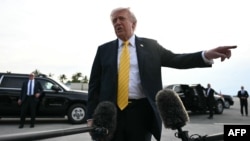
"They [US aides] told me about the concept of the deal. They're going to give me the exact wording now," he said as he boarded a flight to Miami from West Palm Beach, Florida, where he spends most weekends.
Asked if he might restart strikes on Iran, Trump said: "I don't want to say that. I mean, I can’t tell that to a reporter. If they misbehave, if they do something bad, right now we’ll see. But it’s a possibility that could happen."
Hours earlier, a senior Iranian official detailed a peace proposal submitted by Tehran, saying it consisted of 14 points, including many already rejected by Trump.
Tehran’s proposal included oft-reported conditions that would call for the reopening of the Strait of Hormuz and end the US blockade of Iranian ports while leaving talks on Iran's nuclear program for later.
Other Iranian conditions include the removal of US forces from areas surrounding Iran, the release of frozen Iranian assets, payment of compensation for war damages, the eventual lifting of sanctions against Tehran, and the end of all fighting, including in Lebanon.

Trump, who on May 1 said he was “not satisfied” with Tehran’s latest proposal, has repeatedly insisted that Iran can never have a nuclear weapon and must give up its supply of already enriched uranium.
He has also said the blockade of Iranian ports will not end until after a peace deal is finalized.
While Trump has often stated that Iran is desperately seeking a peace deal, he has also said he could resume the air campaign against Iranian sites – including civilian infrastructure facilities – if no agreement is reached.
Trump, in a speech on May 1, said the US would not end its confrontation with Iran early only to have "the problem arise in three more years."
"At this moment I'm not satisfied with what they're offering," Trump told reporters, adding that the Iranian leadership was “messed up” and beset with "tremendous” internal discord.
Iran’s blocking of the Strait of Hormuz – a key waterway through which some 20 percent of the world’s oil and natural gas supplies were transported before the war -- has driven up energy prices globally, creating the risk of recession in many countries, creating political pressures on Trump.
In April, the US imposed its own blockade of ships from Iranian ports while agreeing to a cease-fire with Iran that took effect on April 8.
With reporting by RFE/RL's Radio Farda, AFP, and Reuters
Israeli Military Hits Dozens Of Hezbollah Targets
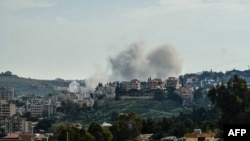
The Israeli military said on May 2 it had struck dozens of Hezbollah targets in southern Lebanon amid a fragile cease-fire.
"In the strikes, approximately 70 military structures and approximately 50 Hezbollah infrastructure sites were dismantled across several areas," the military said in a statement published on Telegram.
Hezbollah, a militant group and political party that controls much of southern Lebanon -- considered a terrorist organization by the United States -- said it has launched attacks targeting Israeli troops in response.
The attacks have become a regular occurrence, as both Israel and Lebanon frequently accuse each other of cease-fire violations. Israel has been launching strikes targeting Hezbollah militants in Lebanon since March 2, two days after the start of the US-Israeli war with Iran, when Hezbollah forces opened fire in support of Tehran.
Meanwhile, Lebanese army chief Rodolphe Haykal met with visiting US General Joseph Clearfield, who is the head of the committee responsible for monitoring the 2024 cease-fire intended to bring an end to the most recent conflict between Israel and Hezbollah.
According to a Lebanese army statement published on May 2, Haykal and Clearfield discussed "the security situation in Lebanon, regional developments, and ways to maximize the effectiveness of the [committee] and enhance its operations."
NATO 'Working With US' On German Troop Cut
NATO has responded to the US announcement that it will withdraw 5,000 troops from Germany.
In a post on X, NATO spokesperson Allison Hart said that the military alliance was "working with the US to understand the details of their decision on force posture in Germany."
Earlier, the Pentagon announced that it would withdraw approximately 5,000 US troops from Germany over the next 6–12 months.
"This adjustment underscores the need for Europe to continue to invest more in defense," Hart said, "and take on a greater share of the responsibility for our shared security - where we’re already seeing progress since Allies agreed to invest 5% of GDP at the NATO Summit in The Hague last year."
Trump later on May 2 told reporters that the US would be withdrawing from Germany even more than the 5,000 troops announced by the US military
"We're going to cut way down, and we're cutting a lot further than 5,000," he told reporters during a weekend trip to Florida.
Trump has long criticized NATO allies for not spending enough on defense. His pressure on NATO members states to shoulder a greater share of the burden was crucial in securing a landmark agreement at the 2025 NATO summit in The Hague, where allies committed to raising defense and security-related spending to 5 percent of gross domestic product (GDP).
In 2025, all NATO members met or exceeded the previous target of 2 percent spending. NATO countries have until 2035 to reach the 5 percent target.
Senior Iranian Military Figure Says Resumption Of War With US 'Likely’
A senior Islamic Revolutionary Guards Corps commander has said a renewed military confrontation between Iran and the United States is "likely" -- just two days after Iran delivered a draft proposal for a peace deal to mediator Pakistan.
Mohammad Jafar Asadi, a deputy commander of the Khatam al-Anbiya Central Headquarters -- the military’s central command -- made the remarks on May 2, saying the evidence shows that "America does not honor any agreement or commitment."
He dismissed US statements and actions since the April 8 cease-fire as largely performative -- designed, in his telling, primarily to stop oil prices from falling and to help Washington "escape the trap it created for itself."
His forces, he added, are in a state of "full readiness" for any contingency.
The comments came against a fraught diplomatic backdrop. Iran submitted its draft to Islamabad on April 29, state media reported, without detailing its contents.
The war -- launched by the United States and Israel on February 28 -- has been on hold since April 8, though one round of peace talks in Pakistan has already collapsed without result.
In Washington, President Donald Trump suggested the Iranian offer fell short.
"At this moment I'm not satisfied with what they're offering," he told reporters, attributing the impasse to "tremendous discord" within Iran's leadership.
He framed the choice starkly: "Do we want to go and just blast the hell out of them and finish them forever -- or do we want to try and make a deal?" He said he would “prefer not” to take the first option, "on a human basis."
US Announces Withdrawal Of 5,000 Troops From Germany
The Pentagon has announced plans to withdraw approximately 5,000 US troops from Germany over the next 6–12 months, amid tensions between President Donald Trump and German Chancellor Friedrich Merz over the ongoing war with Iran.
Trump has been at loggerheads with Merz in recent days after the German chancellor said that the Iranians were humiliating the United States in talks to end the war.
In response, in a post on his TruthSocial platform, Trump said on April 30 that Merz should "spend more time on ending the war with Russia/Ukraine" and "less time on interfering with those that are getting rid of the Iran Nuclear threat."
The United States maintains a substantial military presence in Germany, with more than 36,000 active-duty troops stationed at bases across the country as of December 2025.
In a statement, Pentagon spokesman Sean Parnell confirmed that the directive was issued by Defense Secretary Pete Hegseth.
"This decision follows a thorough review of the Department's force posture in Europe and is in recognition of theater requirements and conditions on the ground," Parnell said.
"We expect the withdrawal to be completed over the next six to twelve months."
Iran Executes Two Men Accused Of Spying For Israel
Two men convicted of spying for Israel were executed early on May 2, the judiciary-run Mizan news agency reported, as rights organizations warn of a sharp escalation in the use of capital punishment.
Mizan said Yaqub Karimpur and Nasser Bakrzadeh had been put to death for "intelligence cooperation and espionage in favor of the Zionist regime and the Mossad intelligence service."
According to Mizan, Karimpur had "continued effective cooperation with the Mossad service during the imposed war," passing sensitive national intelligence to a Mossad officer.
The phrase "imposed war" is the official Iranian term for wartime conflict; given that Karimpur was arrested on espionage charges in November 2024, the reference appears to be to last June’s 12-day war with Israel rather than the recent conflict with the United States and Israel that’s paused due to a cease-fire.
Bakrzadeh, a 26-year-old Kurdish man, had been held for three years before his execution. In the days before his death, a video circulated of his parents appealing to religious authorities and human rights bodies to intervene. His father insisted his son was innocent and said the death sentence had only been confirmed "because of the recent war." He also said the sentence had been overturned twice at the Supreme Court level, only for the original sentencing chamber to reimpose it.
Human Rights Watch had referenced Bakrzadeh in a statement in October 2024, noting he was among five Kurdish citizens facing espionage charges related to alleged cooperation with Israel.
The two executions are part of what rights groups describe as a broader escalation. Iran has consistently ranked among the world's top executors. Rights organizations have long accused the Islamic republic of using the death penalty to sow fear in society.
We are now closing the live blog for the day. We'll be back at 7:30 a.m. Central European time to cover the latest events across the Middle East.
Trump: 'We're Like Pirates' In Naval Blockade Of Iran
US President Donald Trump on May 1 said the US Navy was acting "like pirates" in its mission to blockade Iranian ports during the US-Israel war with Iran.
"We took over the ship, we took over the cargo, we took over the oil. It's a very profitable business," Trump said, referring to the seizure of an Iranian ship in the waters off of Iran during the blockade.
"We're like pirates. We're sort of like pirates, but we are not playing games," he added.
Tehran has insisted that it will not agree to peace talks unless the US blockade of its ports is lifted, while Washington says the blockade will stay in place until a peace deal is agreed, leading to a stalemate in in-person talks.
However, messages have been sent between Washington and Tehran through Pakistan, which is acting as a mediator in the peace process.
US State Department OKs $8.6 Billion In Military Sales To Israel, Gulf Allies
The US State Department on May 1 said it has approved sales of military equipment worth more than $8.6 billion to Middle Eastern allies, including Israel, that have been targeted by Iran in retaliation for the US-Israeli air strikes launched on February 28.
US Gulf allies Qatar, Kuwait, and the United Arab Emirates also were on the list of approved recipients of US military sales, the State Department said.
The State Department said it was approving sales to Qatar of Patriot air and missile defense replenishment services worth $4.01 billion and of Advanced Precision Kill Weapon Systems (APKWS) costing $992.4 million.
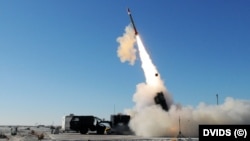
Also included was the approval of the sale to Kuwait of an integrated battle command system costing $2.5 billion and to Israel of Advanced Precision Kill Weapon Systems valued at $992.4 million.
The State Department approved a sale to the UAE of APKWS for $147.6 million.
Trump Vows No 'Early' Iran Exit After Saying ‘Not Satisfied’ With 'Messed Up' Tehran’s Proposal
US President Donald Trump on May 1 said the US would not quit its confrontation with Iran "early" only to face renewed difficulties in the future, hours after he said he was “not satisfied” with the latest peace proposal offered by Tehran through Pakistani mediators.
“We’re not going to leave early and have the problem arise in three more years,” Trump told a gathering at a retirement community in Florida, adding that Tehran was “not coming through with the kind of deal we have to have.”
Earlier, Trump insisted that Tehran was seeking a peace deal but that it was not good enough for him.
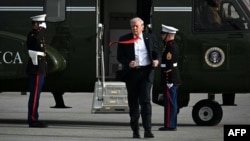
"They want to make a deal, but I'm not satisfied with it," Trump told journalists outside the White House.
The president said Tehran seeks a peace deal "because they don't have a military left," following a joint US-Israeli military campaign against Iran that began on February 28 and has been halted since a cease-fire between the United States and Iran came into effect on April 8.
"They have a tremendous problem getting along with each other in Iran. The leadership is very disjointed...They all want to make a deal, but they all are messed up," Trump said.
"Do we want to go and just blast the hell out of them and finish them forever -- or do we want to try and make a deal?" he said, adding that he would prefer to avoid the first option "on a human basis."
While the Iranian Foreign Ministry appears to continue diplomatic efforts to negotiate with Washington on key issues of the conflict, hard-line clerics and lawmakers have publicly opposed any major concessions.
War Powers Act
Separately, amid political pressure to seek approval from lawmakers to continue the war, Trump insisted the cease-fire announced last month means that hostilities have officially been “terminated,” eliminating the need for further congressional authorization.
Trump made the claim in a letter to lawmakers on May 1 -- which was the deadline to come to Congress about the war -- saying there have been no exchanges of fire with Iran forces since the April 7 cease-fire.
"The hostilities that began on February 28, 2026, have terminated," Trump said.
"We had a cease-fire, so that gives you additional time," Trump added.
At issue is the 1973 War Powers Resolution. Under the terms, a US president can wage military action for only 60 days before ending it and then asking Congress for the authority to continue.
Democratic lawmakers disputed Trump's claim that the cease-fire resets the 60-day deadline.
“Despite the administration’s spurious claims, the cease-fire does not pause or terminate the War Powers clock," a statement by top Democratic members of the House of Representatives said.
"Hostilities have not ceased; both sides are enforcing naval blockades through military force. From Day One, this has been an unauthorized war of choice based on a demonstrably false premise of an imminent Iranian threat and as of today, 60 days in, there is still no congressional authorization for President Trump's war," the statement added.
The statement was signed by Gregory W. Meeks, ranking member of the Foreign Affairs Committee; Adam Smith, ranking member of the Armed Services Committee; and Jim Himes, ranking member of the Permanent Select Committee on Intelligence.
Meanwhile, news outlet Axios reported that the Pentagon has estimated that the US blockade of Iranian ports has cost Tehran $4.8 billion.