



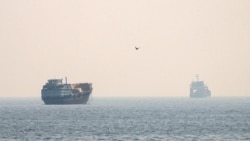

US-Backed UN Resolution On Strait Of Hormuz Faces Likely Vetoes From Russia, China
A US-backed resolution in the UN Security Council demanding Iran halt attacks and mining of the Strait of Hormuz faced likely vetoes by Russia and China, diplomats said.
The draft condemns Iran's alleged violations of the current cease-fire and its "actions and threats aimed at closing, obstructing, tolling" freedom of navigation through the crucial waterway.
It demands Tehran cease attacks, provide the locations of any mines, and that it not impede demining operations.
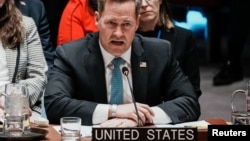
Washington's UN envoy, Mike Waltz -- standing alongside representatives of Persian Gulf allies that support the new -- told reporters on May 7 that any countries that "seek to throw it out are setting a very, very dangerous precedent."
"We have to ask ourselves, if a country chooses to oppose such a simple proposition, do they really want peace?"
The text was drafted by the US and Bahrain, with support from Saudi Arabia, the United Arab Emirates, Kuwait, and Qatar.
Iran’s UN ambassador, Amir Saeid Iravani, called the resolution “deeply flawed, one-sided, and politically motivated.”
Russia and China have not officially commented. But one diplomat told Reuters that Moscow called for the draft to be withdrawn or completely rewritten.
The diplomat said China called the text biased and criticized its use of Chapter VII of the UN Charter, which allows the Security Council to put in place measures ranging from sanctions to military action.
With reporting by Reuters
Trump Says Europe Agrees Iran's Government 'Can Never Have A Nuclear Weapon'
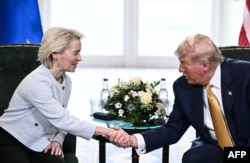
US President Donald Trump says he spoke with the European Commission's president about Iran and ongoing trade negotiations with the European Union.
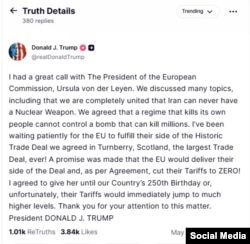
In a post on Truth Social on May 7, he wrote that he and Ursula von der Leyen had "discussed many topics, including that we are completely united that Iran can never have a Nuclear Weapon."
"We agreed that a regime that kills its own people cannot control a bomb that can kill millions," he added.
The remarks come as Iran continues to review a US proposal delivered through Pakistani mediators and has yet to finalize its response to Washington’s offer aimed at ending the war.
Hours earlier, Iranian Foreign Minister Abbas Araghchi said in a letter to the UN secretary-general and the president of the Security Council that the normal passage of maritime traffic through the Strait of Hormuz "would resume if the war permanently ends and sanctions and the blockade against Iran are lifted."
In the letter, he also criticized a draft resolution proposed by the United States and Bahrain at the UN Security Council that seeks to end tolls and the laying of mines in the Strait of Hormuz, which he described as "one-sided and provocative."
With reporting by RFE/RL's Radio Farda and Anadolu Ajansi
Qeshm Port Hit by Enemy Fire, Say Iranian Media
Parts of Iran's Bahman Port on Qeshm Island had been targeted by unknown attackers, the semiofficial Fars News Agency reported late on May 7.
The statement followed reports in media outlets and on social networks about several explosions being heard in southern Iran.
“During an exchange of fire between Iran’s armed forces and the enemy, commercial sections of Bahman Port were targeted,” said Fars, which is close to the Islamic Revolutionary Guards Corps (IRGC).
The Tasnim News Agency, which is also closed to the IRGC, reported that several explosions had been heard in the port city of Bandar Abbas and Qeshm Island.
Unnamed officials told Tasnim that the sounds may have been linked to operations by the IRGC Navy, warning vessels about making an unauthorized passage through the Strait of Hormuz. There was no confirmation of this.
Referring to explosions heard in Sirik near Bandar Abbas, the semiofficial Mehr News Agency said it appears "the sounds were related to clashes in the waters off Sirik County,"
Iran’s state broadcaster also reported explosions at the “Bahman passenger port on Qeshm Island.”
Citizen reports circulating on social media also said several explosions were heard “from the sea.”
According to those accounts, the blasts were heard in Qeshm, Bandar Abbas, and Sirik.
With reporting by RFE/RL's Radio Farda and Anadolu Ajansi
UAE Forms Committee To Document Iranian Attacks
The United Arab Emirates has formed a national committee to document what it described as "Iranian acts of aggression, international crimes, and the damages resulting from them."
According to a decree issued by Sheikh Mansour bin Zayed Al Nahyan, who holds multiple government posts, the committee will compile evidence related to attacks affecting the Gulf state nation.
According to the state news agency WAM, the body will create “a comprehensive national record based on reliable evidence” and coordinate with domestic and international experts.
WAM said the move would ensure "the documentation of violations in a manner that supports the achievement of justice and the protection of rights."
The United Arab Emirates has been the target of more than 2,800 drone and missile attacks by Iran during the recent Middle East war, which has severely strained relations between the Persian Gulf state and Iran.
With reporting by RFE/RL's Radio Farda
Tehran Reviews Latest US Proposal Amid Trump Optimism -- And Threats
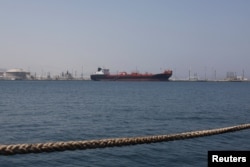
Iran said it was reviewing the latest US proposal that sources say would end the fighting but leave several key issues open, as US President Donald Trump claimed a deal was “very possible” but also warned of renewed fighting if Tehran rejected the deal.
Iran’s state-run ISNA news agency cited a Foreign Ministry spokesman as saying Tehran had received the US proposal and was studying the details, even as he suggested there were provisions that were unacceptable to leaders of the Islamic republic.
The US proposal to end the war is still "under review," Esmaeil Baqaei was quoted as saying, adding that Tehran will convey its response to mediator Pakistan after "finalizing its opinion."
Still, Trump said Pakistani-mediated talks were progressing well.
"They want to make a deal. We've had very good talks over the last 24 hours, and it's very possible that we'll make a deal," Trump told reporters in the Oval Office on May 6.
Later, in a video message to a Republican party rally in Georgia, Trump asserted that the war will "be over quickly."
Read more here
US Sanctions 'Iran-Aligned Actors' In Iraq
The United States has imposed sanctions on what it calls "Iran-aligned actors" in Iraq, including the country's deputy oil minister and several Iran-linked militias, accusing them of helping Tehran evade oil sanctions and finance regional militant groups.
The Treasury Department said Deputy Oil Minister Ali Maarij al-Bahadly "abused his government position to divert Iraqi oil in support of the Iranian regime and its terrorist proxies," including by helping mix Iranian crude with Iraqi oil and falsify export documents.
The sanctions also target members of Kata’ib Sayyid Al-Shuhada and Asa’ib Ahl Al-Haq, militia groups Washington says have exploited Iraq’s economy to support “terrorist activities.”
The move comes as US President Donald Trump's administration intensifies pressure on Baghdad to curb Iranian influence and dismantle ties with Iran-backed armed groups following months of attacks on US facilities in Iraq.
With reporting by Alex Raufoglu and Reuters
Doctors Fear Jailed Nobel Laureate Has Serious Heart Condition

The Narges Mohammadi Foundation says that doctors treating the imprisoned human rights activist and Nobel Prize winner believe she may be suffering from Prinzmetal angina, which it described as "a dangerous condition caused by coronary artery spasms."
The foundation said a statement on May 7 that Mohammadi remains in "unstable condition" on the seventh day of her hospitalization in the cardiac intensive care unit of a hospital in Zanjan, and concerns about her heart condition have intensified.
It added that Prinzmetal angina can lead to complications such as severe heart attacks, dangerous arrhythmias, sharp fluctuations in blood pressure, and reduced oxygen supply to the heart muscle.
According to the foundation, Mohammadi has been waking up almost daily since April 25 with "severe chest pain, heart palpitations, and intense pressure." Doctors have reportedly deemed an urgent specialized angiography necessary.
The foundation also said that Mohammadi’s family and doctors are demanding her immediate transfer to Tehran for treatment, but the Tehran prosecutor’s office continues to oppose the request.
In a post on X on May 7, US Assistant Secretary of State Rilery Barnes called on Iran to immediately release Mohammadi and "give her the care she needs."
Mohammadi, one of Iran’s most prominent human rights activists, won the 2023 Nobel Peace Prize for her campaign against the oppression of women in Iran and her advocacy for human rights and freedom. She has spent years in and out of prison on charges related to her activism, which supporters say are politically motivated.
Iran's Internet Shutdown Driving Job Losses, Says Monitor
The NetBlocks connectivity monitor says Iran's digital blackout "continues to drive job losses" as the country's Internet shutdown enters its 69th day.
Iranian President Says He Recently Met Supreme Leader
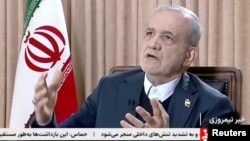
Iranian President Masud Pezeshkian has said that he recently met and had a detailed conversation with Supreme Leader Mojtaba Khamenei.
Speaking at Iran's Health Ministry on May 7, Pezeshkian said he met Khamenei for 2 1/2 hours but gave no further details about the meeting, only that the supreme leader was a "model for the country's management and administrative system" due to his "sincerity and humility."
After the assassination of former Supreme Leader Ali Khamenei on the first day of the war with the US and Israel on February 28, Iran's Assembly of Experts named his son Mojtaba as the new leader.
However, there have been no public appearances, images, or audio from the supreme leader since then. Some written statements, purportedly from Khamenei, have been published in the Iranian media.
The New York Times reported last week that Khamenei was wounded the day his father was killed and was still receiving treatment for injuries to his leg, lips, and face.
The New York Times also reported, citing Iranian officials, that the reason Khamenei had not yet recorded and released any video or audio messages was that he does not want to appear vulnerable or weak in his first public speech.
'It's Not Entirely Clear Who Is In Charge'
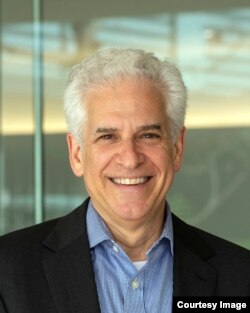
Our senior correspondent in Washington, Alex Raufoglu, spoke with Barry Pavel, a former senior director for defense policy and strategy at the National Security Council, who served as a special assistant to the president under George W. Bush, about the strategic meaning behind recent developments in the war with Iran and the chances of a peace deal.
Read more.