




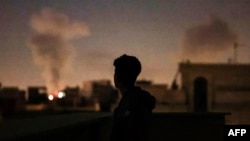
For Mamatmusa Ukubaev, the first explosions on February 28 were unnervingly close.
"There are military bases and facilities 1 or 2 kilometers away from us. They are being hit, too. The buildings usually have at least two floors for parking. They can be used as bomb shelters, and the authorities have made them open to the public," Ukubaev said, describing life in Tehran after the US–Israeli strikes began.
He noticed a strange mix of fear and curiosity among residents.
"People in Iran live on the streets. If bombs fall, they go up to the roof and watch. You don't see people running to shelters. I didn't leave the house for the first two days. But we ordered food from restaurants. There are fewer couriers, fewer taxi drivers, but they are still working."

Despite the danger, Ukubaev and his family have decided to stay, for now. He knows that if the situation worsens, there is a plan in place.
"The embassy weighed three or four options: Turkmenistan, Azerbaijan, Turkey, Armenia. They decided the most convenient was via Baku. That's our plan. If it becomes serious, we need to drive to the border. They tell us which crossings are open. From there, we go to Baku and then fly to Kyrgyzstan."
While Ukubaev waits, another Kyrgyz citizen has already been evacuated.
Elmira Nurgaziyeva, who has lived in Iran for several years and works for an international organization, described her journey out of the country.
"Early yesterday, we left Tehran by buses. There were about 100 Russian citizens; I was the only Kyrgyz. The rest were from Russia and Belarus," she said. "The Russians escorted us to the Azerbaijani border town of Astara."

"I had official permission from Kyrgyzstan's embassy in Baku. I was allowed to cross the Azerbaijani border, so I had no problems. The Azerbaijani government transported us from Astara to Baku for free. I arrived in Baku on March 3," she said, reflecting on the long overland evacuation that brought her to safety.
According to Kyrgyz Ambassador Akylbek Kylichev, there are currently about 100 Kyrgyz citizens in Iran.
"Most of them are our women who married Iranian citizens many years ago. They now have families here and are settled. Some of them left after last year's war [in June 2025]. When the situation became dangerous, the embassy contacted all registered citizens and urged them to leave if possible. In the past few days, two citizens reached out to us. We evacuated them to Azerbaijan [on March 4]," the ambassador told RFE/RL's Kyrgyz Service.

As the conflict has escalated, Central Asian governments have been urging their citizens to leave Iran. Between February 28 and March 5, a total of 1,317 people from 45 countries were evacuated through the Azerbaijani border. Among them were 109 citizens of Tajikistan, three Uzbeks, three Kazakhs, and two Kyrgyz.
The Tajik ambassador to Iran, Nizamuddin Zohidi, told RFE/RL's Tajik Service that Turkmenistan had opened the Sarakhs crossing to help foreign citizens, including Tajiks, leave Iran. He added that embassy staff were working around the clock, with a hotline for citizens, and that Iranian authorities were assisting by transporting evacuees toward the border.
According to officials, the embassies of Turkmenistan, Uzbekistan, Kazakhstan, and Kyrgyzstan have been coordinating evacuations, with diplomats stationed at key border crossings in Azerbaijan and Turkmenistan to assist their citizens. These routes are essential because air travel has been completely halted.

