


Reports: More Former Separatist Leaders Of Nagorno-Karabakh Arrested
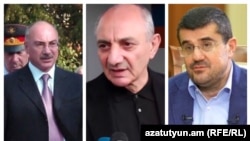
Former Nagorno-Karabakh leaders Arkadi Gukasian (left), Bako Sahakian (center), and Arayik Harutiunian (file photo)
Authorities in Azerbaijan reportedly have arrested more former separatist leaders of Nagorno-Karabakh after Baku reclaimed control of the ethnic Armenian-populated breakaway region in a lightning military operation last month.
Arayik Harutiunian, who led the region before stepping down as president at the beginning of September, was arrested and was being transported to the Azerbaijani capital, sources confirmed to RFE/RL on October 3.
Arkadi Gukasian, who served as the separatist president from 1997 to 2007, and Bako Sahakian, who held the job from 2007 to 2020, were also arrested along with the speaker of the separatist legislature, Davit Ishkhanian.
Gukasian, Sahakian, and Ishkhanian have already been transported to Baku, sources told RFE/RL. The arrests have not been officially confirmed.
The arrests follow the detention of other officials by Azerbaijan's State Security Service (DTX). The DTX said on September 29 that it detained Davit Manukian, a former deputy commander of the breakaway region's de facto armed forces, on "terrorism" charges. Two days earlier, Azerbaijan arrested the former de facto prime minister of Nagorno-Karabakh, billionaire Ruben Vardanian.

Sources close to ethnic Armenian de facto authorities in the region confirmed to RFE/RL on September 29 that Azerbaijani officials also detained Levon Mnatsakanian, a former commander of Nagorno-Karabakh's separatist armed forces, at a border checkpoint with Armenia.
Other leaders of Nagorno-Karabakh have arrived safely in Armenia, according to State Minister Artur Harutiunian. He told RFE/RL on October 3 that he arrived in Armenia through the Azerbaijani checkpoint accompanied by the director of the National Security Service (NSS), Ararat Melkumian, Internal Affairs Minister Karen Sarkisian, and the head of the presidential administration Karen Shahramanian.
Artur Harutiunian did not comment on the detention of the former presidents and the speaker of parliament, saying only that when they were escorted out, they were still in Stepanakert.
Other details could not be verified because communications with Nagorno-Karabakh have been disrupted.
Although Baku pledged to respect the rights of ethnic Armenians after the military campaign, most of the population have fled the region fearing reprisals after three decades of separatist rule.

The UN mission has sent a mission to Nagorno-Karabakh to assess humanitarian needs in the region, but an Armenian official complained on October 3 that it “has done everything possible to legitimize ethnic cleansing, illegal arrests, destruction of civil infrastructure and other crimes carried out by Azerbaijan."
Edmon Marukian, Armenian ambassador-at-large, said the people in the mission “discredit the UN as an institution."
Marukian made the comments on X, formerly Twitter, but they were later deleted.
Armenia has also filed a lawsuit with the UN International Court of Justice (ICJ) to prevent the targeting of ethnic Armenians.
The lawsuit says Yerevan expects that Baku will "refrain from taking punitive measures against current or former political representatives or military personnel of Nagorno-Karabakh."
After The Exodus: Azerbaijan Seizes A Lifeless Nagorno-Karabakh
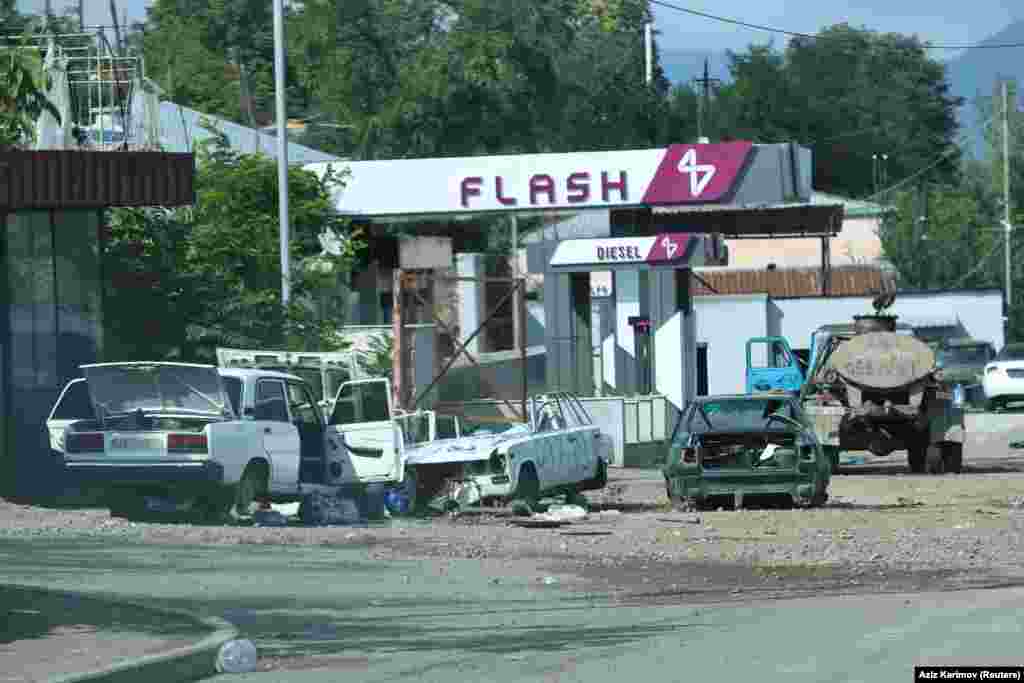
1/8Abandoned vehicles line the roads on October 2 in Stepanakert, known as Xankendi by Azerbaijan, following the mass exodus of ethnic Armenians from the Nagorno-Karabakh region.
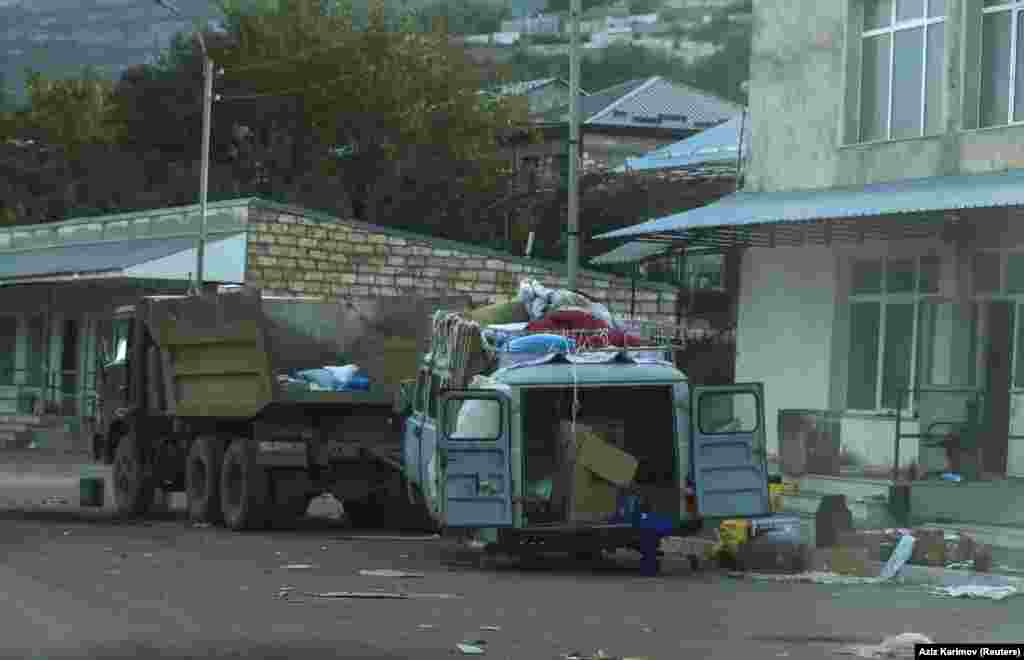
As Azerbaijan moves in to reaffirm control of Nagorno-Karabakh, it's gaining a region devoid of life, where communities now resemble ghost towns.
On October 2, one of the last buses carrying Armenians from Nagorno-Karabakh left the province, capping the arduous weeklong departure of over 100,000 people following Azerbaijan's lightning takeover of the region. Its streets are now devoid of life, strewn with the debris of its former residents.
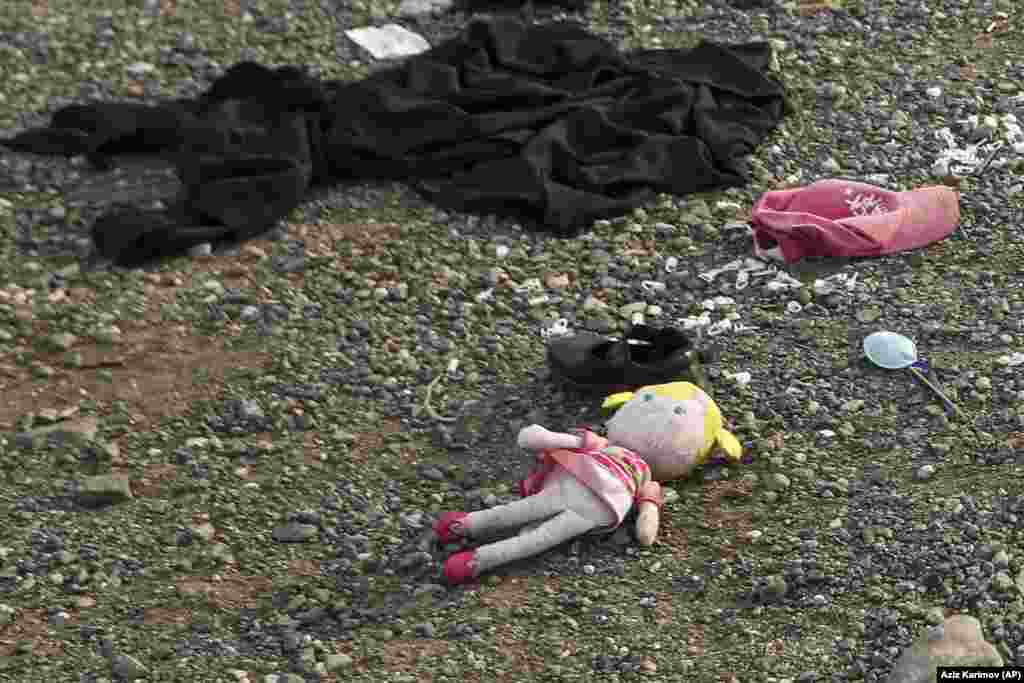
2/8A doll and children's personal belongings lie on the ground in the regional capital, Xankendi/Stepanakert.
On October 2, one of the last buses carrying ethnic Armenians from Nagorno-Karabakh left the province, capping an arduous week where 100,000 people fled following Azerbaijan's takeover of the region.
On October 2, one of the last buses carrying Armenians from Nagorno-Karabakh left the province, capping the arduous weeklong departure of over 100,000 people following Azerbaijan's lightning takeover of the region. Its streets are now devoid of life, strewn with the debris of its former residents.
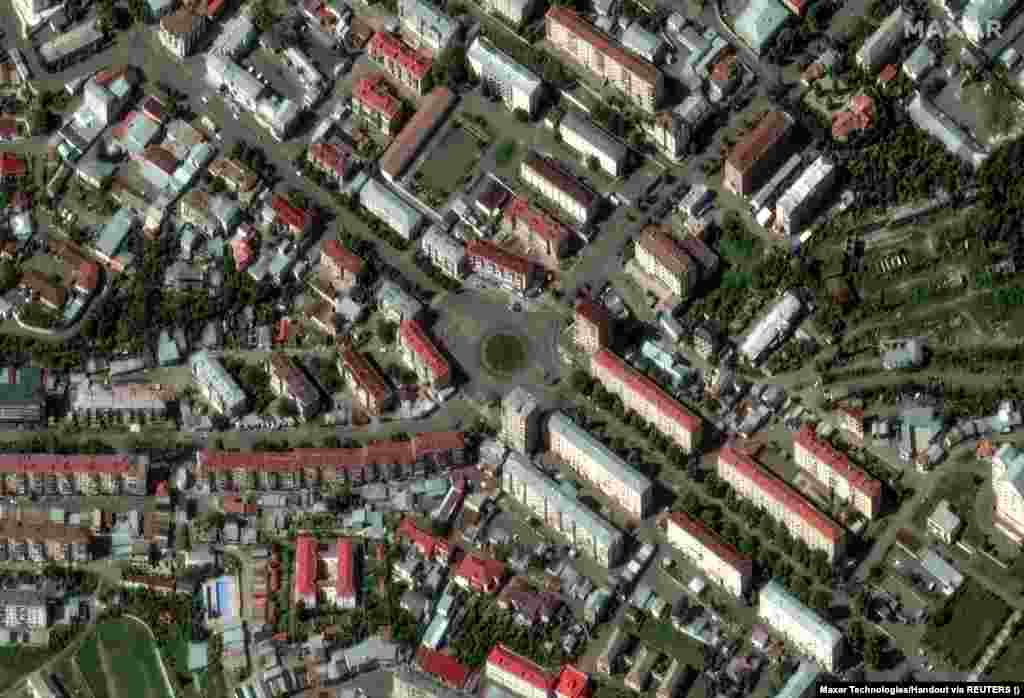
3/8A satellite image shows the empty streets of Xankendi on September 29.
The Armenian government said on October 2 that 100,514 of the region's estimated 120,000 residents had crossed into Armenia.
On October 2, one of the last buses carrying Armenians from Nagorno-Karabakh left the province, capping the arduous weeklong departure of over 100,000 people following Azerbaijan's lightning takeover of the region. Its streets are now devoid of life, strewn with the debris of its former residents.
4/8An abandoned vehicle is parked in front of a closed shop in Xankendi on October 2.
The exodus of the region's people followed a 24-hour campaign that began on September 19, when Azerbaijani forces routed the region's undermanned and outgunned Armenian forces, forcing them to capitulate.
On October 2, one of the last buses carrying Armenians from Nagorno-Karabakh left the province, capping the arduous weeklong departure of over 100,000 people following Azerbaijan's lightning takeover of the region. Its streets are now devoid of life, strewn with the debris of its former residents.
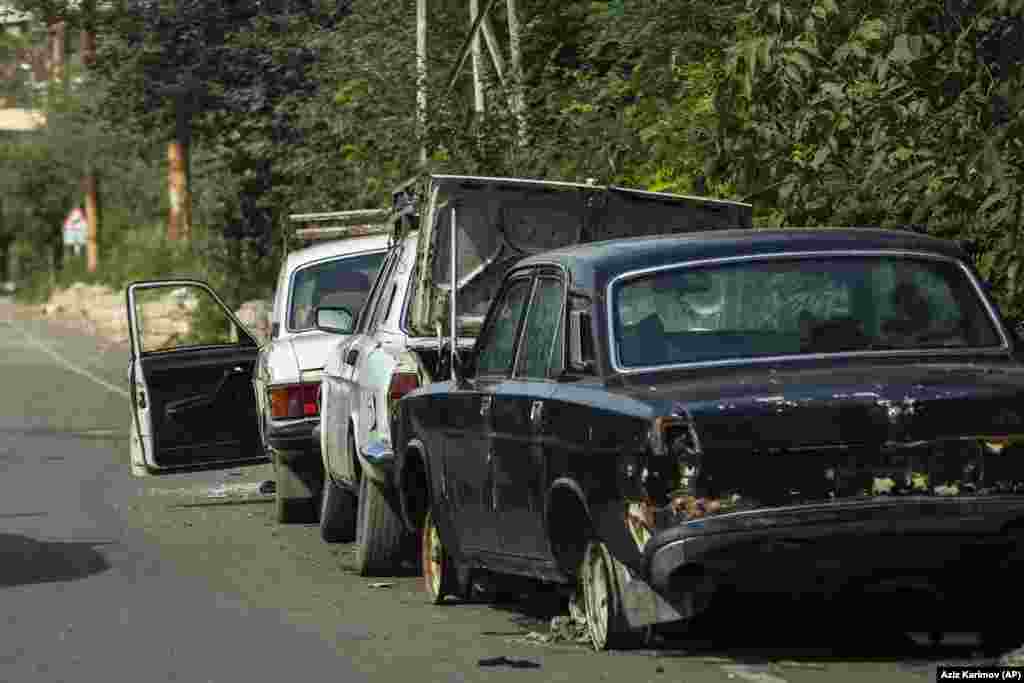
5/8Abandoned cars line a deserted street in Xankendi.
After six years of separatist fighting ended in 1994 following the collapse of the Soviet Union, Nagorno-Karabakh came under the control of ethnic Armenian forces, backed by Armenia, turning about 1 million of its Azerbaijani residents into refugees.
On October 2, one of the last buses carrying Armenians from Nagorno-Karabakh left the province, capping the arduous weeklong departure of over 100,000 people following Azerbaijan's lightning takeover of the region. Its streets are now devoid of life, strewn with the debris of its former residents.
6/8Azerbaijan reclaimed portions of the breakaway region after a six-week conflict in 2020, along with surrounding territory that ethnic Armenian forces had captured earlier.
On October 2, one of the last buses carrying Armenians from Nagorno-Karabakh left the province, capping the arduous weeklong departure of over 100,000 people following Azerbaijan's lightning takeover of the region. Its streets are now devoid of life, strewn with the debris of its former residents.
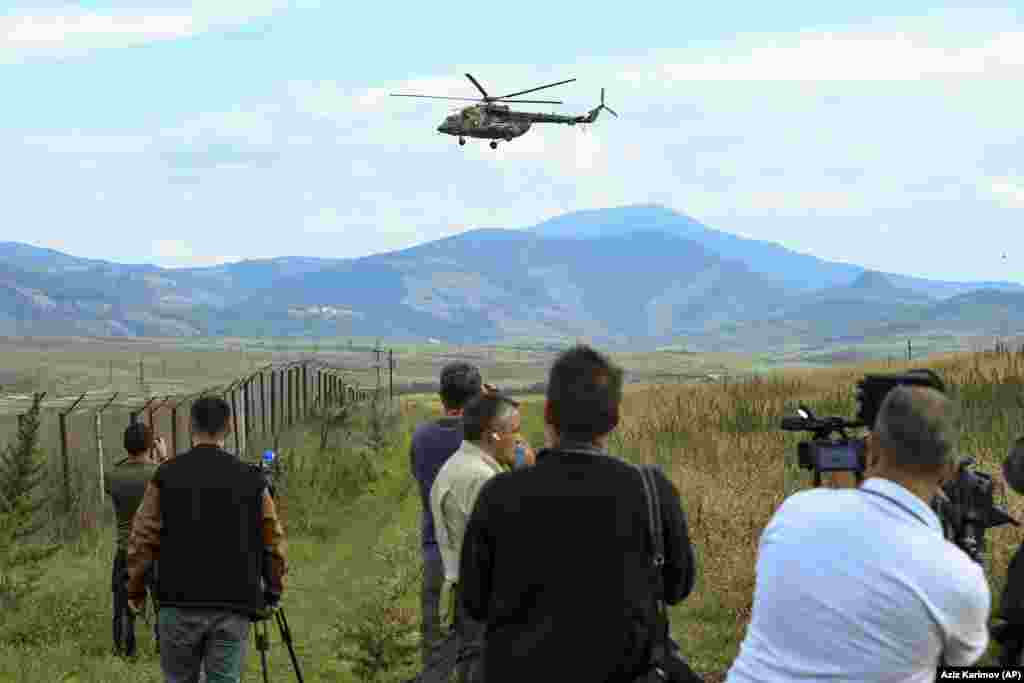
7/8An international group of journalists film a Russian peacekeepers' military helicopter as it flies over a field just outside Xankendi on October 2.
Armenian authorities have accused the Russian peacekeepers who were deployed to Nagorno-Karabakh after the 2020 war of standing by and failing to stop the Azerbaijani onslaught. Moscow has rejected the accusations, arguing that its troops did not have a mandate to intervene.
On October 2, one of the last buses carrying Armenians from Nagorno-Karabakh left the province, capping the arduous weeklong departure of over 100,000 people following Azerbaijan's lightning takeover of the region. Its streets are now devoid of life, strewn with the debris of its former residents.
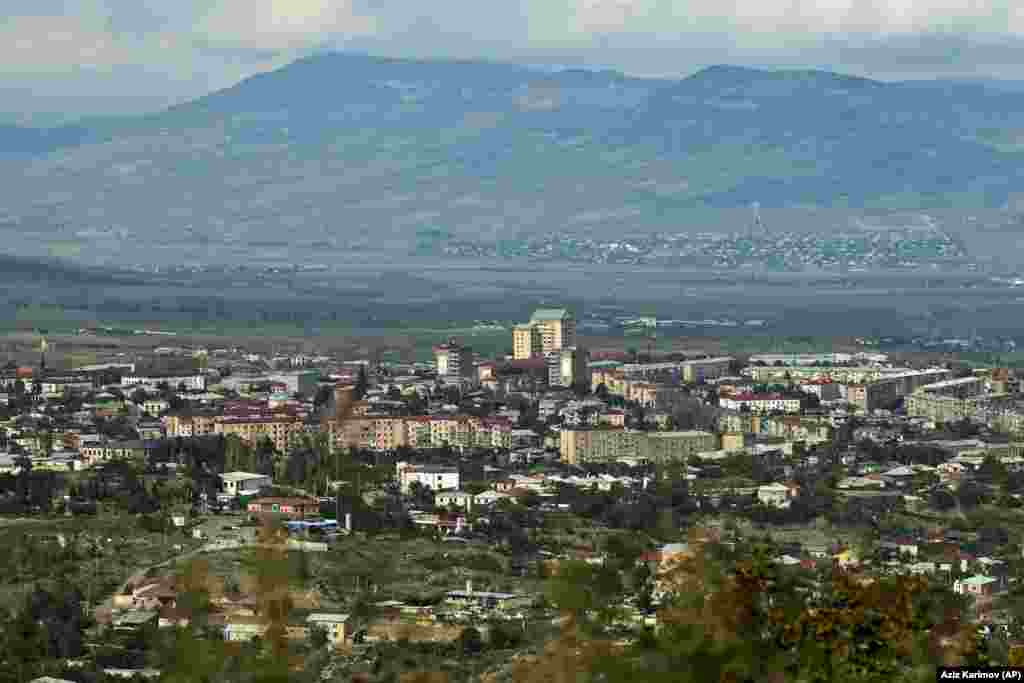
8/8Xankendi
Azerbaijan's presidential office said Baku had presented a plan for the "reintegration" of ethnic Armenians in the region, noting that "the equality of rights and freedoms, including security, is guaranteed to everyone regardless of their ethnic, religious or linguistic affiliation."
On October 2, one of the last buses carrying Armenians from Nagorno-Karabakh left the province, capping the arduous weeklong departure of over 100,000 people following Azerbaijan's lightning takeover of the region. Its streets are now devoid of life, strewn with the debris of its former residents.
Previous slide
Next slide
Nagorno-Karabakh, which along with seven adjacent districts had been under ethnic Armenian control for nearly three decades prior to the war in 2020, is internationally recognized as part of Azerbaijan.
The 2020 war ended with a Russian-brokered cease-fire, under which Moscow deployed about 2,000 troops to the region to serve as peacekeepers.
Azerbaijan’s presidential office said the country has presented a plan for the “reintegration” of ethnic Armenians in the region, noting that “the equality of rights and freedoms, including security, is guaranteed to everyone regardless of their ethnic, religious or linguistic affiliation.”

RFE/RL’s Armenian Service, operating out of a bureau in Yerevan, is a leading source of trusted reporting and technical innovation, reaching outsized audiences when developments demand authoritative, up-to-the-minute news most.
Despite near-total government control over the media, RFE/RL's Azerbaijani Service has built a high-impact social-media presence in Azerbaijan and a reputation as a leading source of independent news.