


Accessibility links

Breaking News

Armenian Refugee From Nagorno-Karabakh Says Her Village Was Given Two Days To Leave

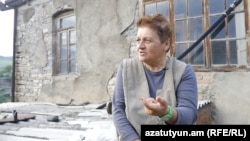
Nelly Babayan, 65, has fled her birthplace Baku, Luhansk in Ukraine, and now Nagorno-Karabakh, where she dreamed of living after spending summers there as a child.

VOSKEVAN, Armenia -- Nelly Babayan says leaving Artsakh, the Armenian name for the breakaway region of Nagorno-Karabakh now under full Azerbaijani control, is the most painful emigration of her life.

Which is saying something.

Babayan, 65, had already fled deadly crises in the former Soviet Union including leaving her birthplace, Baku, after bloody anti-Armenian violence in 1988 and then escaping Luhansk after Russia's full-scale invasion of Ukraine 3 1/2 decades later to end up in Nagorno-Karabakh in 2022.

Now, barely a year on, Babayan, an ethnic Armenian woman with closely cropped hair and a confident demeanor, is giving an account from northeastern Armenia of the two frenetic weeks since Azerbaijani troops took control of her village of Nngi, in easternmost Nagorno-Karabakh. A cease-fire agreement ended Azerbaijan's September 19-20 flash military operation that gave Baku complete control over the region.

In those two weeks, she tells RFE/RL's Armenian Service, she was encouraged by Russian peacekeepers to stay calm and "live completely carefree," before being ordered by the capitulating ethnic Armenian leadership to "step aside" and eventually told to pack up and leave.

"We were calm for a while, [knowing] that there were up to 25 Russian peacekeepers there, [that] there wouldn't be any fighting," she says. "But I saw that everything is a lie. Everything is a lie."
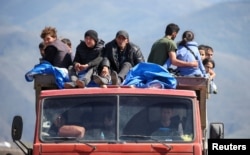
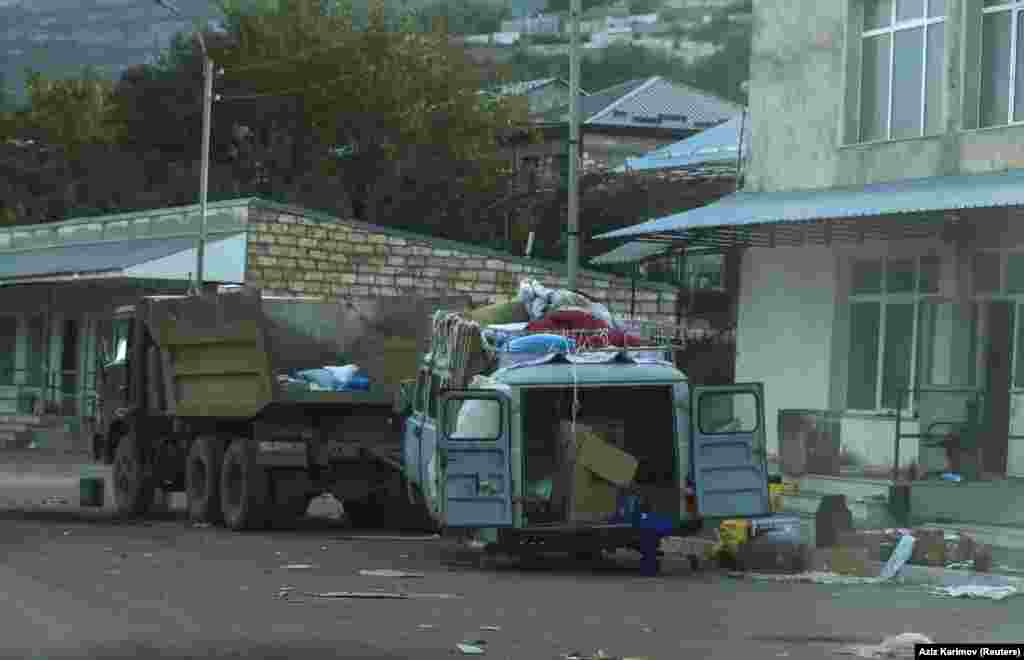
Refugees from Nagorno-Karabakh ride in a truck upon their arrival at the border village of Kornidzor, Armenia, on September 27.

Babayan is one of at least 100,000 residents to have crossed the border into Armenia since the Azerbaijani offensive. The exodus has virtually emptied the territory of ethnic Armenians, who were already on edge following the six-week war in 2020 that led to a Russian-brokered cease-fire and parts of Nagorno-Karabakh and seven adjacent districts being returned to Azerbaijani control.

Yerevan for decades has provided a lifeline to the ethnic Armenians controlling Nagorno-Karabakh but is now outgunned by its much larger regional archfoe Azerbaijan.

Armenian Prime Minister Nikol Pashinian has denounced the supposed inaction of the estimated 2,000 Russian peacekeepers on the ground as Azerbaijani troops and artillery routed ethnic Armenian forces.

Moscow responded by calling Pashinian's criticism "unacceptable outbursts addressed against Russia" and a "big mistake."

After The Exodus: Azerbaijan Seizes A Lifeless Nagorno-Karabakh
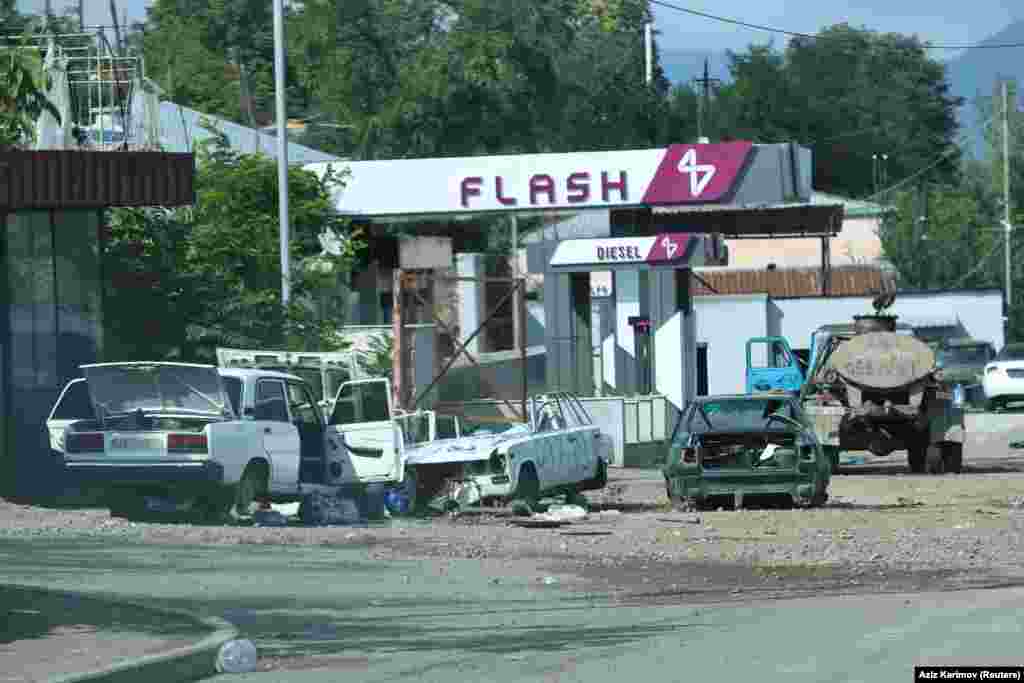
Abandoned vehicles line the roads on October 2 in Stepanakert, known as Xankendi by Azerbaijan, following the mass exodus of ethnic Armenians from the Nagorno-Karabakh region.<br />
<br />
As Azerbaijan moves in to reaffirm control of Nagorno-Karabakh, it&#39;s gaining a region devoid of life, where communities now resemble ghost towns.
1/8 Abandoned vehicles line the roads on October 2 in Stepanakert, known as Xankendi by Azerbaijan, following the mass exodus of ethnic Armenians from the Nagorno-Karabakh region.

As Azerbaijan moves in to reaffirm control of Nagorno-Karabakh, it's gaining a region devoid of life, where communities now resemble ghost towns.
On October 2, one of the last buses carrying Armenians from Nagorno-Karabakh left the province, capping the arduous weeklong departure of over 100,000 people following Azerbaijan's lightning takeover of the region. Its streets are now devoid of life, strewn with the debris of its former residents.
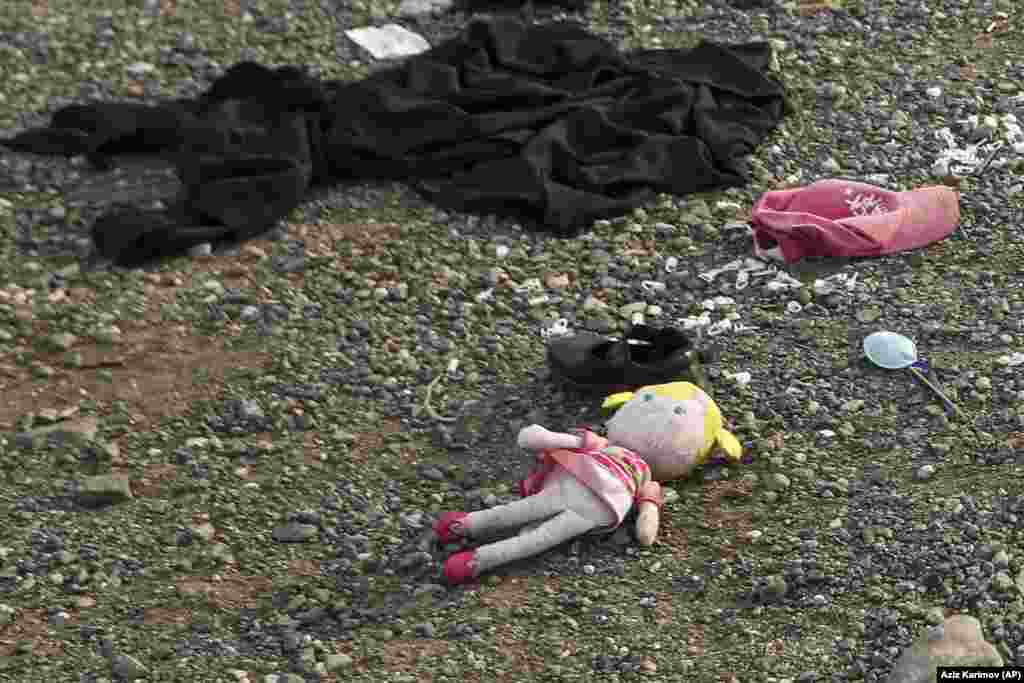
A doll and children&#39;s personal belongings lie on the ground in the regional capital, Xankendi/Stepanakert.&nbsp;<br />
<br />
On October 2, one of the last buses carrying ethnic Armenians from Nagorno-Karabakh left the province, capping an arduous week where 100,000 people fled following Azerbaijan&#39;s takeover of the region.<br />
<br />
&nbsp;
2/8 A doll and children's personal belongings lie on the ground in the regional capital, Xankendi/Stepanakert. 

On October 2, one of the last buses carrying ethnic Armenians from Nagorno-Karabakh left the province, capping an arduous week where 100,000 people fled following Azerbaijan's takeover of the region.

 
On October 2, one of the last buses carrying Armenians from Nagorno-Karabakh left the province, capping the arduous weeklong departure of over 100,000 people following Azerbaijan's lightning takeover of the region. Its streets are now devoid of life, strewn with the debris of its former residents.
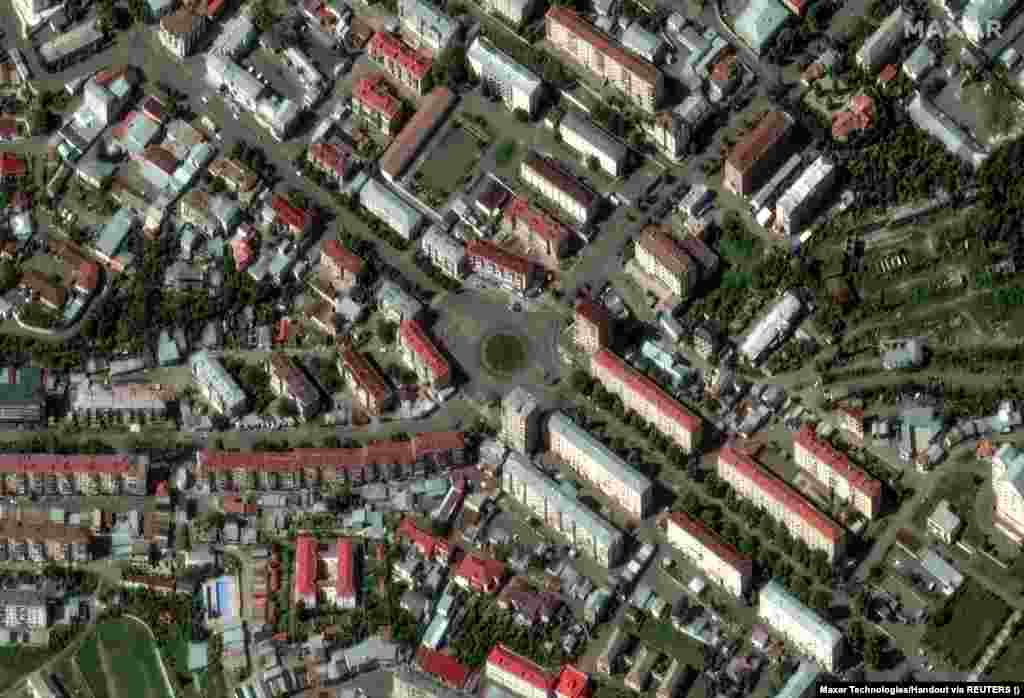
A satellite image shows the empty streets of Xankendi on September 29.<br />
<br />
The Armenian government said on October 2 that 100,514 of the region&#39;s estimated 120,000 residents had crossed into Armenia.
3/8 A satellite image shows the empty streets of Xankendi on September 29.

The Armenian government said on October 2 that 100,514 of the region's estimated 120,000 residents had crossed into Armenia.
On October 2, one of the last buses carrying Armenians from Nagorno-Karabakh left the province, capping the arduous weeklong departure of over 100,000 people following Azerbaijan's lightning takeover of the region. Its streets are now devoid of life, strewn with the debris of its former residents.
An abandoned vehicle is parked in front of a closed shop in Xankendi on October 2.<br />
<br />
The exodus of the region&#39;s people followed a&nbsp;24-hour campaign that began on September 19, when Azerbaijani forces routed the region&#39;s undermanned and outgunned Armenian forces, forcing them to capitulate.&nbsp;
4/8 An abandoned vehicle is parked in front of a closed shop in Xankendi on October 2.

The exodus of the region's people followed a 24-hour campaign that began on September 19, when Azerbaijani forces routed the region's undermanned and outgunned Armenian forces, forcing them to capitulate. 
On October 2, one of the last buses carrying Armenians from Nagorno-Karabakh left the province, capping the arduous weeklong departure of over 100,000 people following Azerbaijan's lightning takeover of the region. Its streets are now devoid of life, strewn with the debris of its former residents.
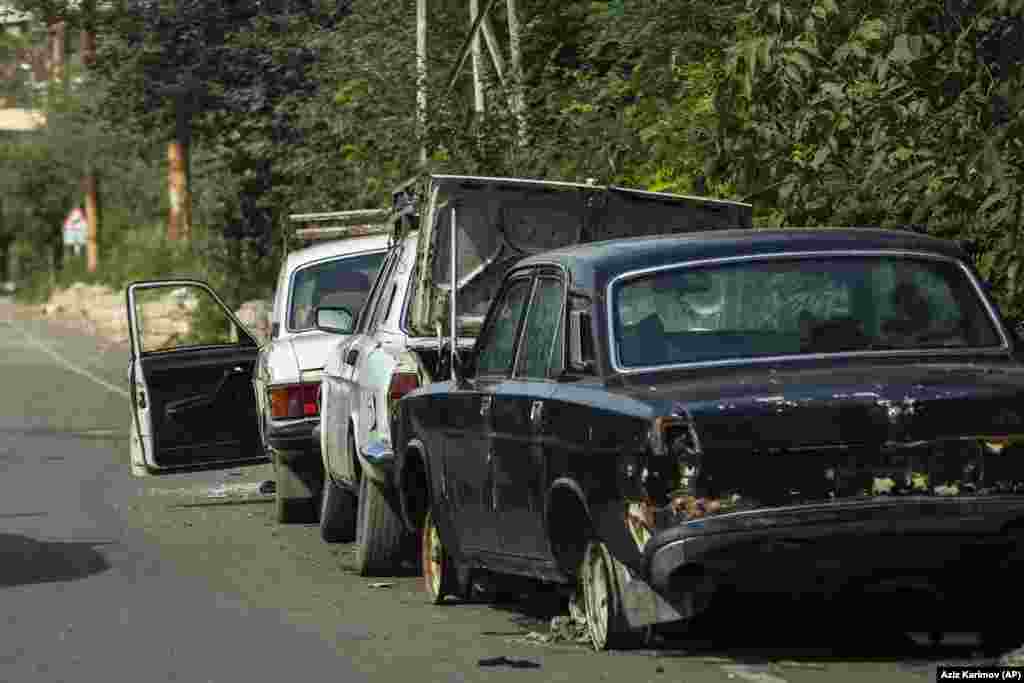
Abandoned cars line a deserted street in Xankendi.<br />
<br />
After six years of separatist fighting ended in 1994 following the collapse of the Soviet Union, Nagorno-Karabakh came under the control of ethnic Armenian forces, backed by Armenia, turning about 1 million of its Azerbaijani residents into refugees.
5/8 Abandoned cars line a deserted street in Xankendi.

After six years of separatist fighting ended in 1994 following the collapse of the Soviet Union, Nagorno-Karabakh came under the control of ethnic Armenian forces, backed by Armenia, turning about 1 million of its Azerbaijani residents into refugees.
On October 2, one of the last buses carrying Armenians from Nagorno-Karabakh left the province, capping the arduous weeklong departure of over 100,000 people following Azerbaijan's lightning takeover of the region. Its streets are now devoid of life, strewn with the debris of its former residents.
Azerbaijan reclaimed portions of the breakaway region after a six-week conflict in 2020, along with surrounding territory that ethnic Armenian forces had captured earlier.
6/8 Azerbaijan reclaimed portions of the breakaway region after a six-week conflict in 2020, along with surrounding territory that ethnic Armenian forces had captured earlier.
On October 2, one of the last buses carrying Armenians from Nagorno-Karabakh left the province, capping the arduous weeklong departure of over 100,000 people following Azerbaijan's lightning takeover of the region. Its streets are now devoid of life, strewn with the debris of its former residents.
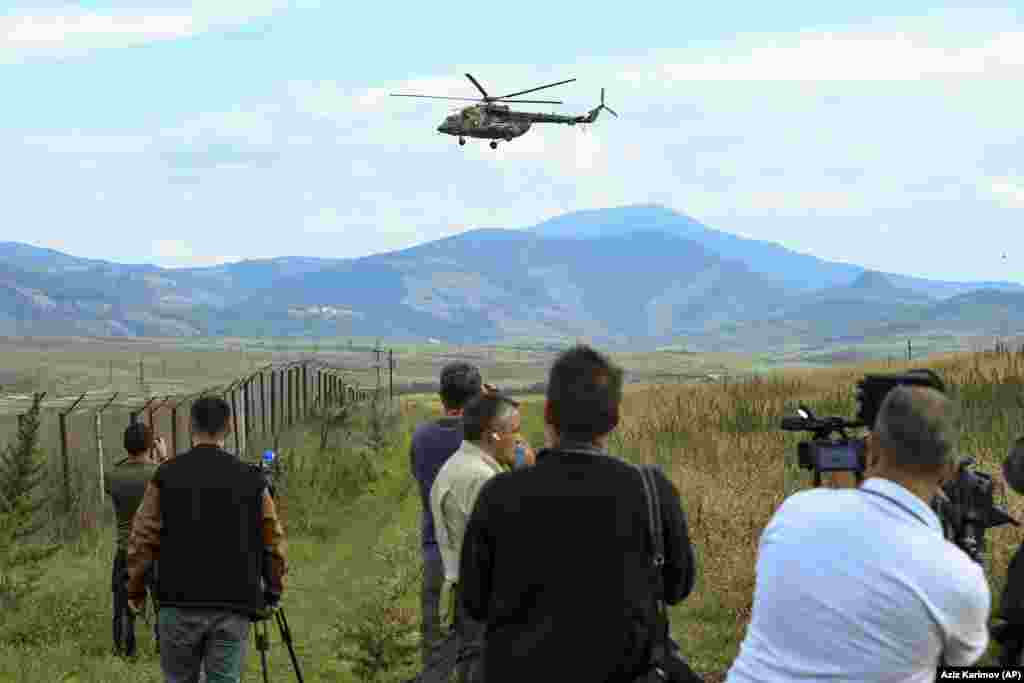
An international group of journalists film a Russian peacekeepers&#39; military helicopter as it flies over a field just outside Xankendi on October 2.<br />
<br />
Armenian authorities have accused the Russian peacekeepers who were deployed to Nagorno-Karabakh after the 2020 war of standing by and failing to stop the Azerbaijani onslaught. Moscow has rejected the accusations, arguing that its troops did not have a mandate to intervene.
7/8 An international group of journalists film a Russian peacekeepers' military helicopter as it flies over a field just outside Xankendi on October 2.

Armenian authorities have accused the Russian peacekeepers who were deployed to Nagorno-Karabakh after the 2020 war of standing by and failing to stop the Azerbaijani onslaught. Moscow has rejected the accusations, arguing that its troops did not have a mandate to intervene.
On October 2, one of the last buses carrying Armenians from Nagorno-Karabakh left the province, capping the arduous weeklong departure of over 100,000 people following Azerbaijan's lightning takeover of the region. Its streets are now devoid of life, strewn with the debris of its former residents.
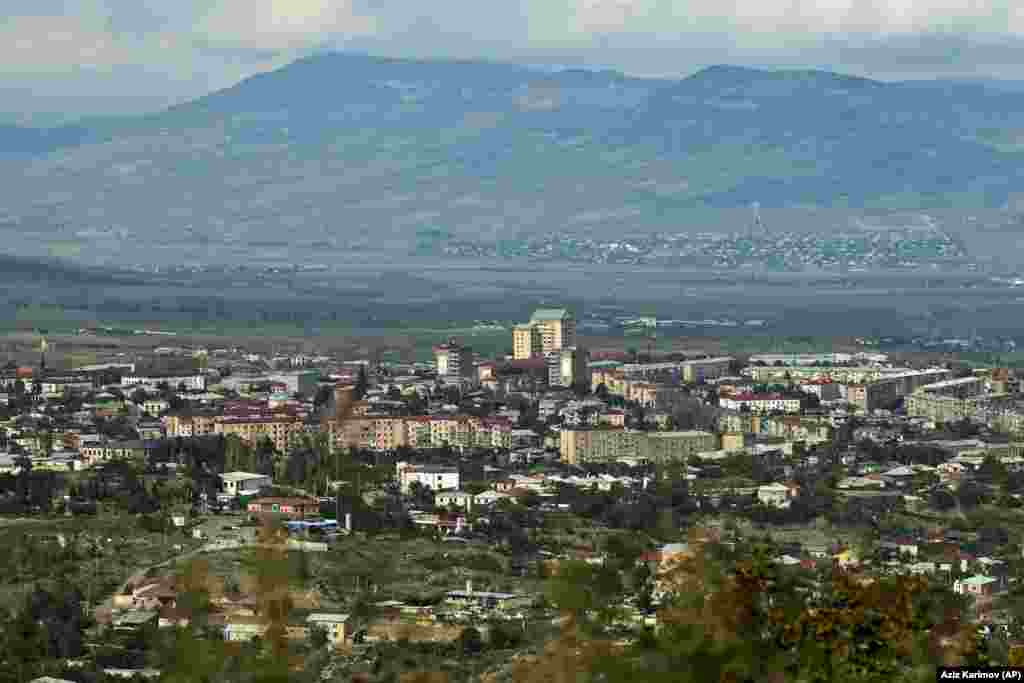
Xankendi<br />
<br />
Azerbaijan&#39;s presidential office said Baku had presented a plan for <strong><a href="https://www.rferl.org/a/azerbaijan-seeks-reintegration-karabakh-armenians/32605005.html" target="_blank">the &quot;reintegration&quot; of ethnic Armenians</a></strong> in the region, noting that &quot;the equality of rights and freedoms, including security, is guaranteed to everyone regardless of their ethnic, religious or linguistic affiliation.&quot;
8/8 Xankendi

Azerbaijan's presidential office said Baku had presented a plan for the "reintegration" of ethnic Armenians in the region, noting that "the equality of rights and freedoms, including security, is guaranteed to everyone regardless of their ethnic, religious or linguistic affiliation."
On October 2, one of the last buses carrying Armenians from Nagorno-Karabakh left the province, capping the arduous weeklong departure of over 100,000 people following Azerbaijan's lightning takeover of the region. Its streets are now devoid of life, strewn with the debris of its former residents.
Previous slide
Next slide

Babayan described the chaotic days that followed Azerbaijan's 24-hour offensive when she was still in Nngi, a village of around 300 people. By then, the separatist government in Stepanakert, the region's de facto capital, had agreed to dissolve and hand over its weapons, although it was still unclear to whom.

Separatist leader Samvel Shahramanian arrived in Nngi late on September 20. "They had come to disarm. They collected the weapons of [ethnic Armenian] soldiers," says Babayan, who was watching the events unfold. Then, she says, they put ethnic Armenian soldiers into military trucks.

She recalls the fear she and other bystanders felt that the men would be killed and says the locals were demanding to know where they were being taken.

"Everyone was going home," she recalls their escorts saying.

The newly instated commander of the Russian peacekeepers in Nagorno-Karabakh, Kiril Kulakov, was there, too, she says. "As Kulakov was getting out of his car, I approached and asked him about what had happened and why they had allowed it to happen," she says.

Babayan says his response was that it "wasn't their concern," adding that the Russian commander said, "We have nothing to do with it."

She says Kulakov embraced her and told her not to worry. "Everything is going to be alright," she quotes him as saying. "Don't fear, no one will touch you, no one will hurt you."

Amid her insistence on learning what was happening, Babayan says, she was addressed by Shahramanian, who was flanked by bodyguards. "Step aside, Granny, you talk too much," she quotes the separatist leader as saying. "It's none of your business."

WATCH: Azerbaijan continues to arrest and charge Nagorno-Karabakh's ethnic Armenian leadership following Baku's takeover of the region. Baku has said it plans to give amnesty to Armenian fighters but is looking to arrest people it claims committed "war crimes."

Azerbaijan Arrests Nagorno-Karabakh Leadership As Armenia Struggles With Refugee Crisis
please wait

No media source currently available

0:00 0:04:06 0:00

The next day, on September 21, she says that she and the other villagers were told they had two days to leave. She acknowledges it's unclear where the order originated but says news of the deadline spread quickly from house to house. The local administration distributed enough gasoline to families with vehicles to reach the regional capital, Stepanakert, and said there they would be given more fuel to get them to Armenia.

Four days after this latest cease-fire, Azerbaijan opened the only road leading from Karabakh to Armenia.

Babayan, who is single with no immediate family, says she had nearly finished her supplies of wheat, flour, and canned fruit and vegetables -- all of which were in short supply since Azerbaijan began imposing a de facto blockade of the territory in December 2022.

Baku-born Babayan had long dreamed of settling in Nagorno-Karabakh, a place where she'd spent summers as a child. During the four months that she spent in Armenia last year, preparing documents to resettle in Nagorno-Karabakh, she says people called her "crazy" for planning to return to a war-torn territory.

"My heart would break if I didn't go," she says she told them.
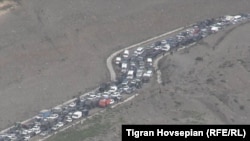
Tens of thousands of ethnic Armenians fled Nagorno-Karabakh on September 25, causing a massive traffic buildup in the Lachin Corridor.

She says she felt confident she would be safe in the shadow of Russian peacekeepers. "We were assured a bit that the Russian presence in Karabakh would be until 2025, and that there would not be any fighting until then," she says. "But it turned out to all be lies."

To get out, Babayan hitched a ride on a minibus and agreed with three families to meet up in Voskevan, just a kilometer or so from the Azerbaijani border. They eventually made the trip to northeastern Armenia in three days.

During her journey, Babayan recalls looking back to see an endless convoy of vehicles crammed with passengers, some of the trucks loaded to the sky with families' belongings.

"We had fled from Baku, then I fled from Ukraine and went to Karabakh, but I had to flee Karabakh, too," Babayan says. "Where should I go? May God help establish peace."

Written by Andy Heil based on reporting by RFE/RL Armenian Service correspondent Karine Simonian
  • 16x9 Image

    Karine Simonian

    Karine Simonian is a correspondent for RFE/RL's Armenian Service.

This item is part of
XS
SM
MD
LG