


Accessibility links

Breaking News

Iran Cleric Calls Rushdie Fatwa 'Golden Page' For Khomeini

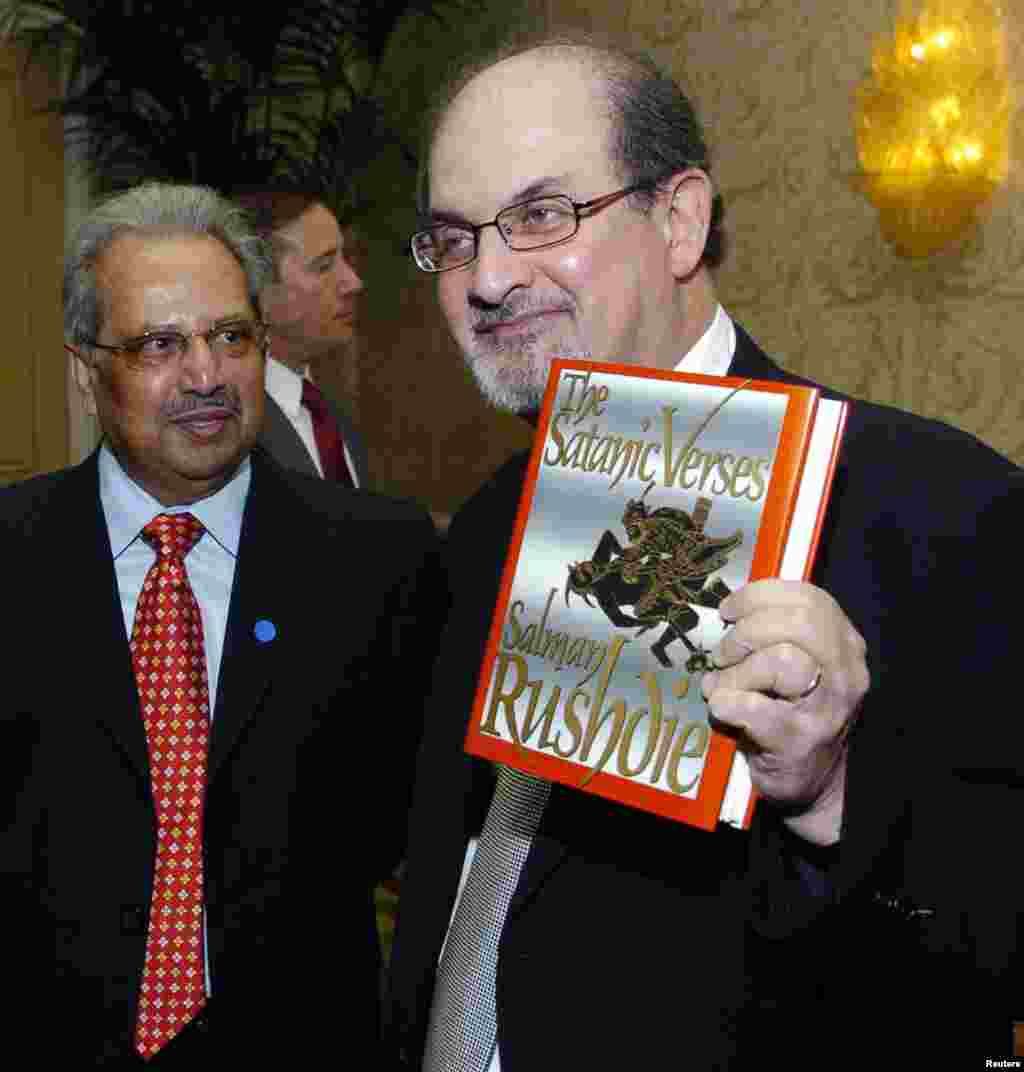
Salman Rushdie (right) poses with his 1988 book "The Satanic Verses" alongside fellow honoree Tashbih Sayyed before the American Jewish Conference's 30th annual dinner in Beverly Hills, California, in September 2006.
1/10 Salman Rushdie (right) poses with his 1988 book "The Satanic Verses" alongside fellow honoree Tashbih Sayyed before the American Jewish Conference's 30th annual dinner in Beverly Hills, California, in September 2006.
On February 14, 1989, Iranian Supreme Leader Ayatollah Ruhollah Khomeini ruled that British writer Salman Rushdie's book "The Satanic Verses" was "blasphemous against Islam" and an Iranian religious foundation offered a bounty for the author's assassination.
Women holding banners that read "Holly Koran" and "We will kill Salman Rushdie" during a demonstration in Tehran on February 17, 1989.
2/10 Women holding banners that read "Holly Koran" and "We will kill Salman Rushdie" during a demonstration in Tehran on February 17, 1989.
On February 14, 1989, Iranian Supreme Leader Ayatollah Ruhollah Khomeini ruled that British writer Salman Rushdie's book "The Satanic Verses" was "blasphemous against Islam" and an Iranian religious foundation offered a bounty for the author's assassination.
Iranian Prime Minister Mir Hossein Musavi answers questions during a press conference at Ankara airport, on February 17, 1989. He said that Iran saw Rushdie's "The Satanic Verses" as a kind of conspiracy against Islamic principles.
3/10 Iranian Prime Minister Mir Hossein Musavi answers questions during a press conference at Ankara airport, on February 17, 1989. He said that Iran saw Rushdie's "The Satanic Verses" as a kind of conspiracy against Islamic principles.
On February 14, 1989, Iranian Supreme Leader Ayatollah Ruhollah Khomeini ruled that British writer Salman Rushdie's book "The Satanic Verses" was "blasphemous against Islam" and an Iranian religious foundation offered a bounty for the author's assassination.
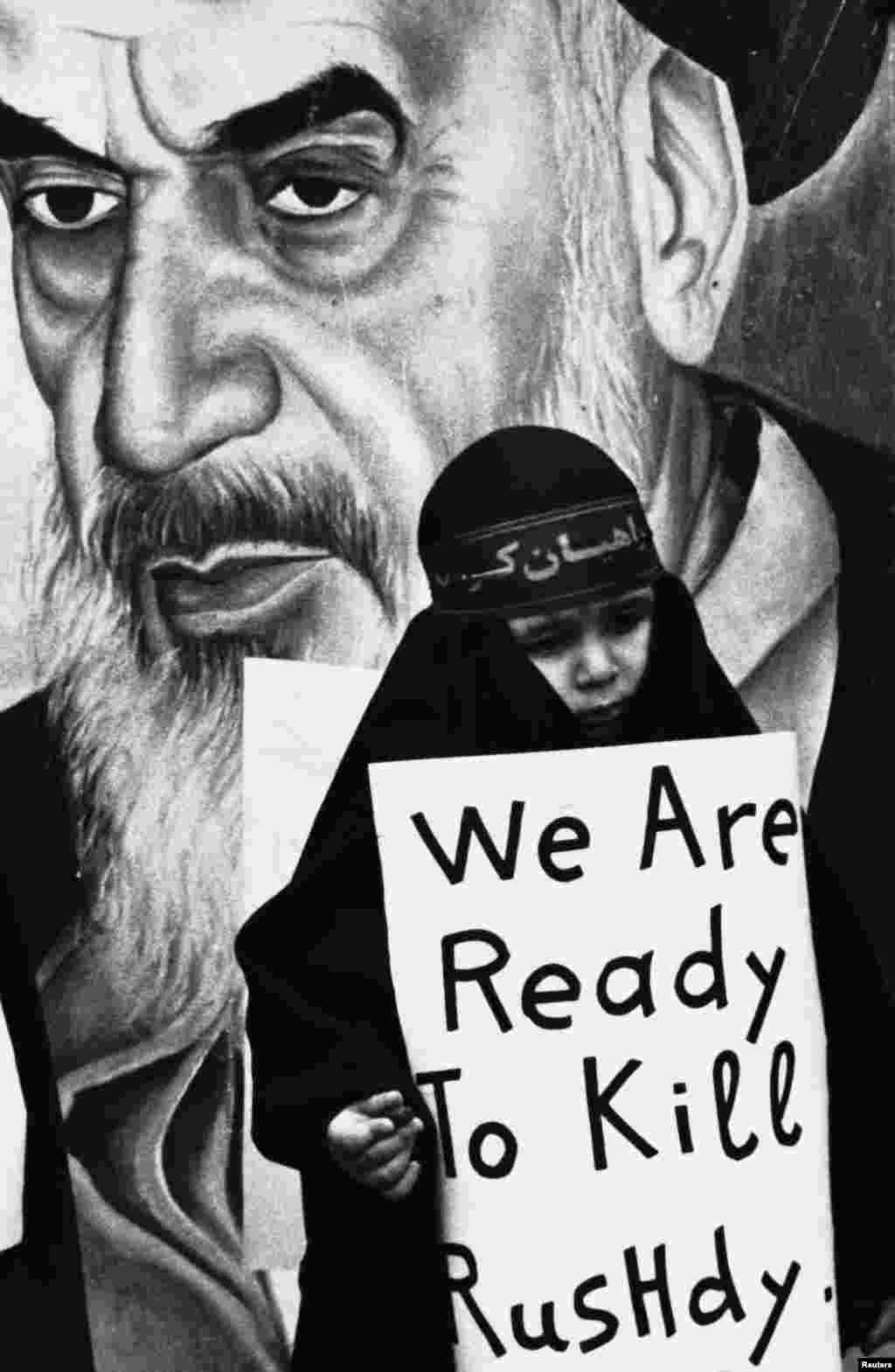
A black-clad girl carries a sign vowing to kill author Salman Rusdie during a pro-Iranian rally in Beirut's southern suburb in February 1989.
4/10 A black-clad girl carries a sign vowing to kill author Salman Rusdie during a pro-Iranian rally in Beirut's southern suburb in February 1989.
On February 14, 1989, Iranian Supreme Leader Ayatollah Ruhollah Khomeini ruled that British writer Salman Rushdie's book "The Satanic Verses" was "blasphemous against Islam" and an Iranian religious foundation offered a bounty for the author's assassination.
Salman Rushdie (center), surrounded by police and bodyguards, leaves London's Stationers Hall by a rear exit in February 1992.
5/10 Salman Rushdie (center), surrounded by police and bodyguards, leaves London's Stationers Hall by a rear exit in February 1992.
On February 14, 1989, Iranian Supreme Leader Ayatollah Ruhollah Khomeini ruled that British writer Salman Rushdie's book "The Satanic Verses" was "blasphemous against Islam" and an Iranian religious foundation offered a bounty for the author's assassination.
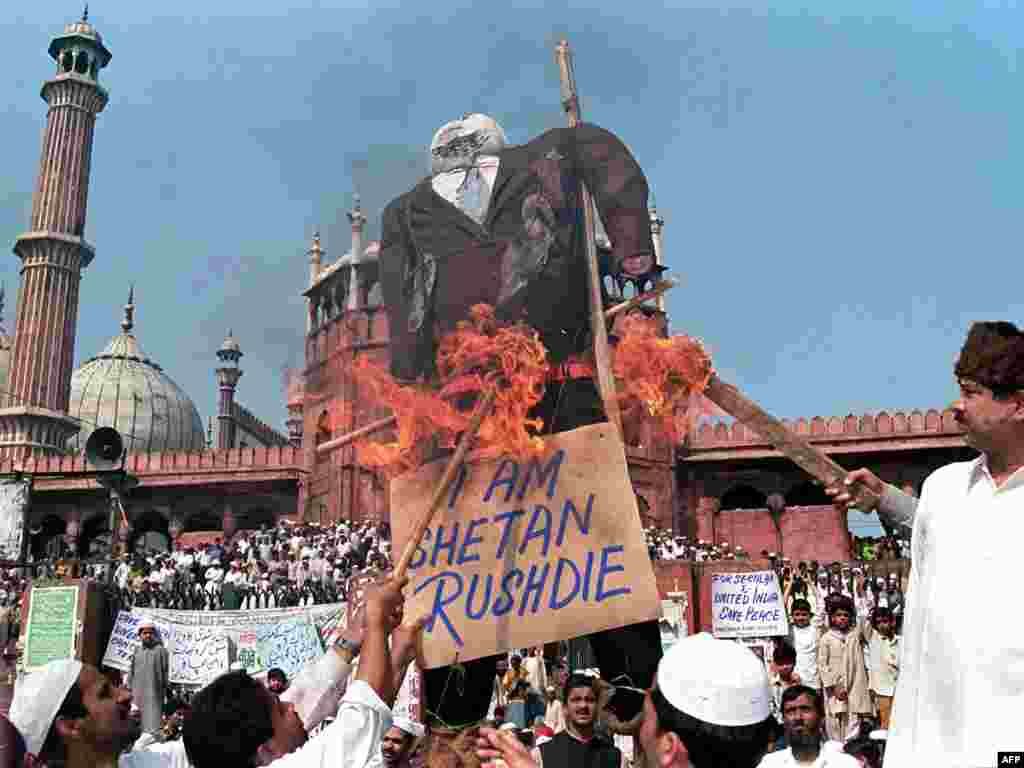
Muslims burn an effigy of Indian-born British author Salman Rushdie as they shout antigovernment slogans during a demonstration near India's largest mosque in New Delhi in February 1999.
6/10 Muslims burn an effigy of Indian-born British author Salman Rushdie as they shout antigovernment slogans during a demonstration near India's largest mosque in New Delhi in February 1999.
On February 14, 1989, Iranian Supreme Leader Ayatollah Ruhollah Khomeini ruled that British writer Salman Rushdie's book "The Satanic Verses" was "blasphemous against Islam" and an Iranian religious foundation offered a bounty for the author's assassination.
Salman Rushdie gives a press conference before taking part in the Gutun Zuria literature meeting celebrated in the northern Spanish Basque city of Bilbao in April 2011.
7/10 Salman Rushdie gives a press conference before taking part in the Gutun Zuria literature meeting celebrated in the northern Spanish Basque city of Bilbao in April 2011.
On February 14, 1989, Iranian Supreme Leader Ayatollah Ruhollah Khomeini ruled that British writer Salman Rushdie's book "The Satanic Verses" was "blasphemous against Islam" and an Iranian religious foundation offered a bounty for the author's assassination.
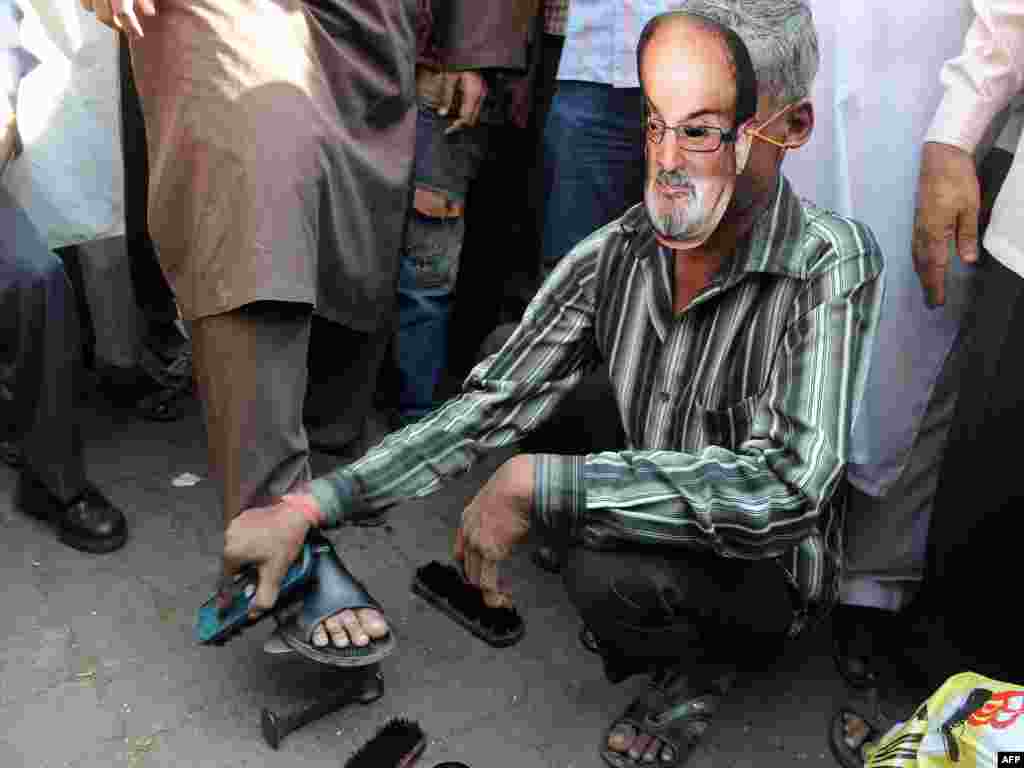
A cobbler wearing a Rushdie mask polishes shoes outside a mosque during a protest by an Islamic organization in Mumbai, India, in January 2012.
8/10 A cobbler wearing a Rushdie mask polishes shoes outside a mosque during a protest by an Islamic organization in Mumbai, India, in January 2012.
On February 14, 1989, Iranian Supreme Leader Ayatollah Ruhollah Khomeini ruled that British writer Salman Rushdie's book "The Satanic Verses" was "blasphemous against Islam" and an Iranian religious foundation offered a bounty for the author's assassination.
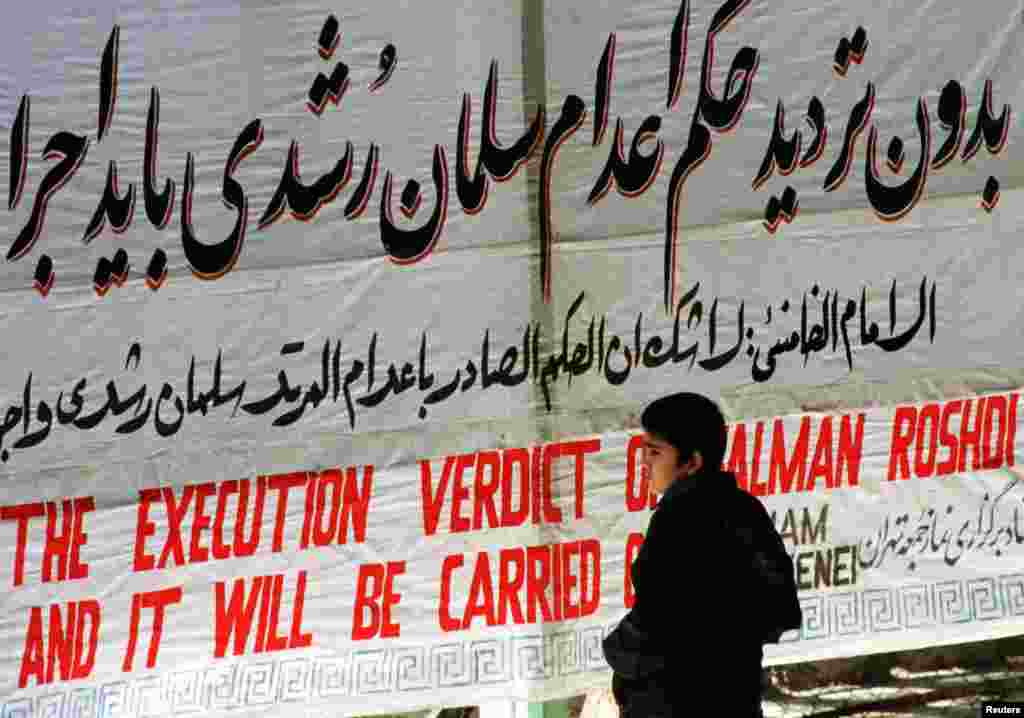
A boy stands in front of a banner reading "The execution verdict of Salman Rushdi will be carried out" at Tehran University in February 2012.
9/10 A boy stands in front of a banner reading "The execution verdict of Salman Rushdi will be carried out" at Tehran University in February 2012.
On February 14, 1989, Iranian Supreme Leader Ayatollah Ruhollah Khomeini ruled that British writer Salman Rushdie's book "The Satanic Verses" was "blasphemous against Islam" and an Iranian religious foundation offered a bounty for the author's assassination.
Salman Rushdie presents of his autobiography "Joseph Anton" during a promotional event in Berlin, in October 2012.
10/10 Salman Rushdie presents of his autobiography "Joseph Anton" during a promotional event in Berlin, in October 2012.
On February 14, 1989, Iranian Supreme Leader Ayatollah Ruhollah Khomeini ruled that British writer Salman Rushdie's book "The Satanic Verses" was "blasphemous against Islam" and an Iranian religious foundation offered a bounty for the author's assassination.
Previous slide
Next slide
Tehran's Friday Prayers leader, Hojatoleslam Kazem Sadighi, has said the fatwa issued by the founder of Iran's Islamic republic against British writer Salman Rushdie is a "golden page" in the life of Ayatollah Ruhollah Khomeini.

Sadighi made the comments on February 14, the 25th anniversary of Khomeini's fatwa ruling that Rushdie's book "The Satanic Verses" was "blasphemous against Islam" and an Iranian religious foundation offered a bounty for the author's assassination.

The Friday Prayers leader of Sabzevar, Ayatollah Gholam Hossein Ebrahimi, also said that the fatwa remains valid. "This man has committed a horrible crime; he is unforgivable," the cleric was quoted as saying by the hard-line Fars news agency.

The threat to Rushdie's life led to Britain and Iran breaking diplomatic relations in March 1989 and forced Rushdie to live under police protection for several years.

Tehran said it would neither enforce nor hinder the fatwa when it restored ties with London nine years later, maintaining that only Khomeini, who died in 1989, had the power to annul it.

In 2012, the 15 Khordad Foundation that had originally set a bounty on the head of the author in 1989 increased it by $500,000, making the reward $3.3 million.

The move appeared to be linked to protests over an amateurish U.S.-made anti-Islam movie that angered some in Muslim countries.

Rushdie made a first public appearance in 1993 despite the fatwa and has frequently appeared in public since then without incident.

Based on reporting by IRNA, Fars, AP, and RFE/RL
This item is part of
XS
SM
MD
LG