




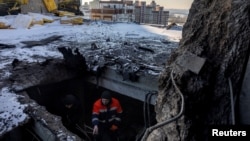
Authorities in Kyiv said essential services have been restored in most areas after electricity, water, and heating supplies were severed in the city of some 3 million people following another night of Russian drone strikes.
"As of the evening, about 60,000 consumers remain without electricity," Deputy Energy Minister Mykola Kolisnyk said on national TV late on January 10, adding that some 500,000 households, businesses, and other sites had been affected during the day.
Kolisnyk said periodic, scheduled energy shutdowns will occur in the capital and surrounding region on January 11, while he described the situation in other areas as "difficult."
"The situation continues to be the most difficult in the front line and border regions with Russia, in particular in the Donetsk region, where, due to constant enemy strikes on electricity transmission and distribution networks, emergency shutdowns are forced," he added.
The outages came after a request from the state-owned electricity transmission system operator Ukrenerho to reduce consumption and come on top of regular hours-long power cuts introduced during the war in order to conserve remaining electricity supplies.
The company said in a statement on social media that it was working to restore full services.
The news comes as temperatures are set to fall as low as minus-15 degrees Celsius over the weekend with Kyiv authorities saying they had set up around 1,200 warming centers.
The most recent cuts come after days of heavy Russian attacks on Ukraine.
On January 9 a massive missile and drone attack on Kyiv killed four and left 26 wounded. 20 residential buildings were also damaged, including one housing the Qatari Embassy, in one of the largest attacks on the capital in months.
Kyiv Mayor Vitali Klitschko later confirmed that this barrage had left half of all apartment blocks in Kyiv without heating and urged all citizens of the city to leave if they could due to all the outages.
Commenting on the recent Russian attacks on January 9, Ukrainian President Volodymyr Zelenskyy said that "Moscow is trying to use cold weather as a tool of terror."
Further strikes were reported late on January 10.
Authorities in the city of Slovyansk said a Russian guided aerial bomb struck a residential area, injuring at least seven people. The Slovyansk–Kramatorsk metropolitan area is the last significant territory remaining under Ukrainian control in the Donetsk region.

The UN Security Council will meet January 12 to discuss Ukraine. The move comes after Ukraine’s UN ambassador, Andriy Melnyk, said in a letter to the Security Council that "the Russian Federation has reached an appalling new level of war crimes and crimes against humanity by its terror against civilians."
Russia denies intentionally targeting civilians in Ukraine despite widespread evidence to the contrary since launching its full-scale invasion in February 2022.
Meanwhile, Ukraine's military on January 10 said it hit an oil depot in Russia's Volgograd region. Ukraine has targeted oil-related sites, sometimes deep inside Russia, saying it is looking to cut resources that fuel the Kremlin's war effort.