

Accessibility links

Breaking News

On Moscow’s Outskirts, A Town Braces For New COVID-19 Hospital

Updated
Drone Footage Shows Rushed Construction Of Russian Hospital For COVID-19 Cases
please wait

No media source currently available

0:00 0:00:55 0:00

WATCH: Drone Footage Shows Rushed Construction Of Russian Hospital For COVID-19 Cases

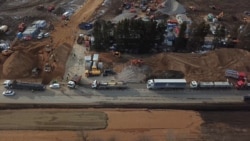
GOLOKHVASTOVO, Russia -- A fleet of excavators, graders, and dump trucks are busily leveling a large field outside this village on the southwestern outskirts of greater Moscow. If all goes according to the city’s plan, a brand-new 500-bed hospital for patients with COVID-19 -- the illness caused by the new coronavirus -- should open its doors in about a month.

The 43-hectare construction site hums around the clock, with trucks and other vehicles trundling up the Kaluga highway, via a special lane dedicated exclusively for the project.

Eventually the hospital will be supplemented by nearby dormitories to house its 1,000 staff.

Russia Rushes To Build Hospital For COVID-19 Treatment

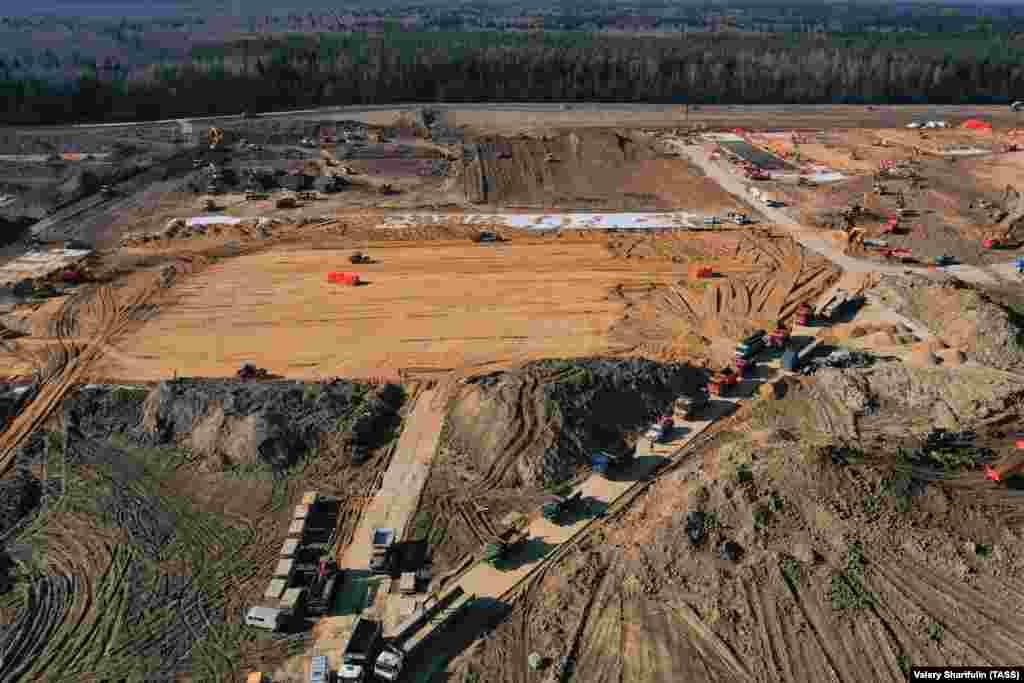
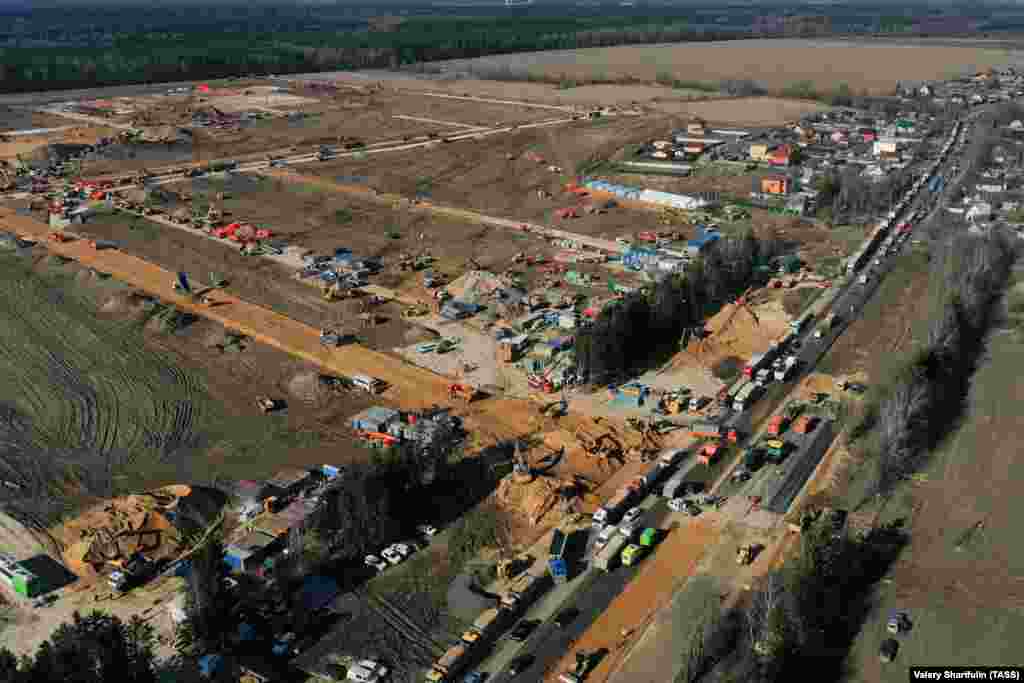
An aerial view of the construction site for a new infectious-diseases hospital for patients with a suspected novel coronavirus infection.
1/12 An aerial view of the construction site for a new infectious-diseases hospital for patients with a suspected novel coronavirus infection.
A new hospital is being quickly built outside of Moscow to treat COVID-19 patients. Scores of workers with heavy equipment are working quickly to assemble a prefabricated structure in Babenki, about 50 kilometers southwest of the Russian capital. City officials have said the 500-bed hospital would be ready in the "near future."
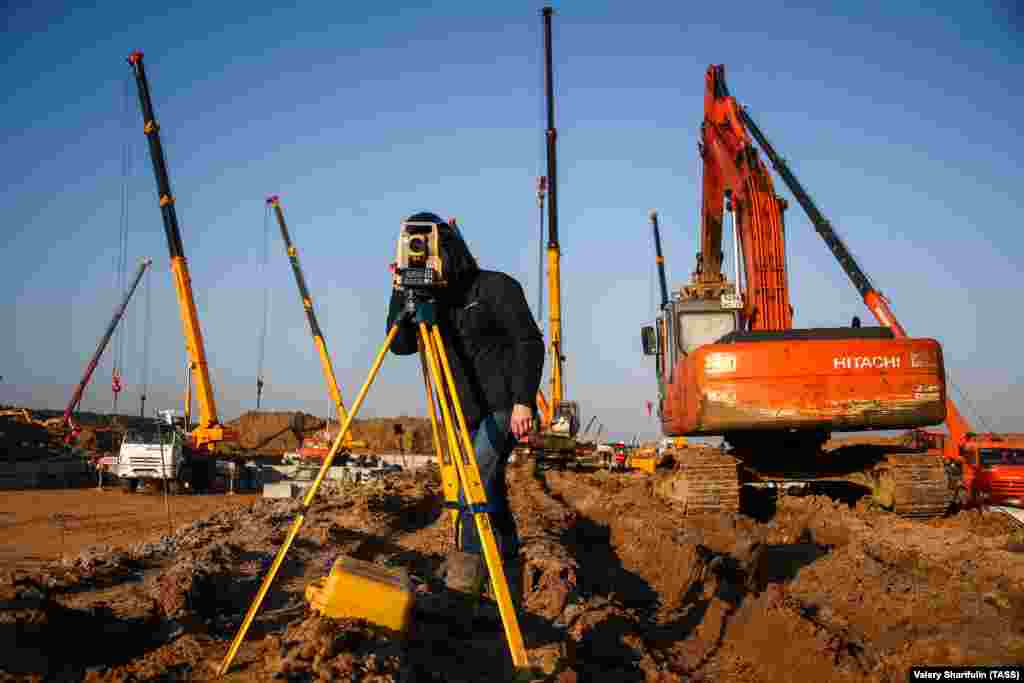
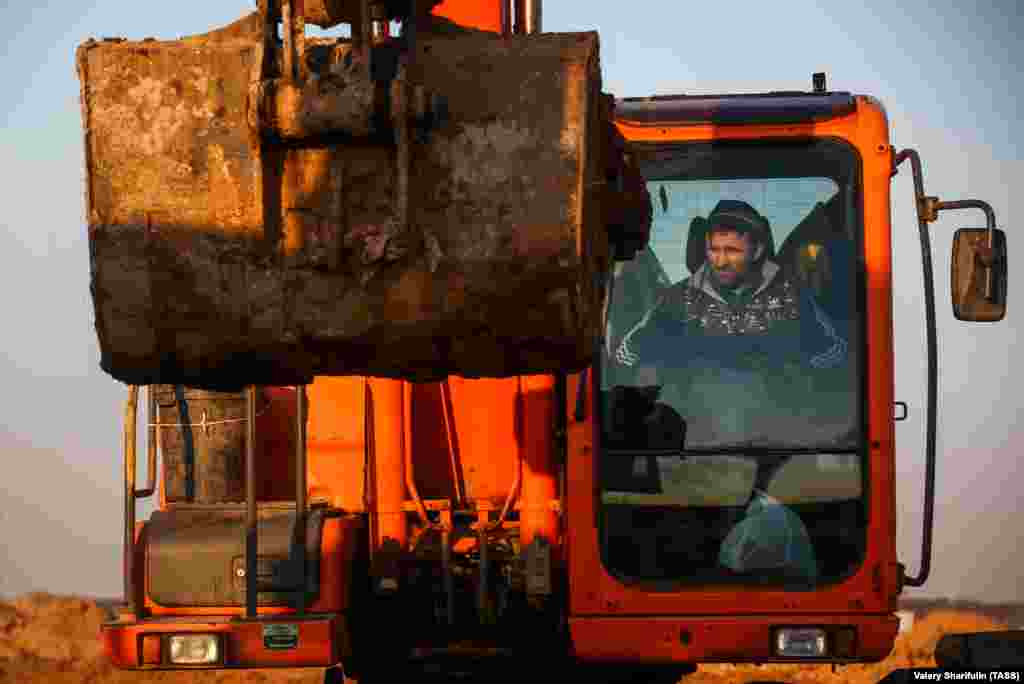
Excavators have been deployed at the construction site in Babenki, 50 kilometers southwest of Moscow.
2/12 Excavators have been deployed at the construction site in Babenki, 50 kilometers southwest of Moscow.
A new hospital is being quickly built outside of Moscow to treat COVID-19 patients. Scores of workers with heavy equipment are working quickly to assemble a prefabricated structure in Babenki, about 50 kilometers southwest of the Russian capital. City officials have said the 500-bed hospital would be ready in the "near future."
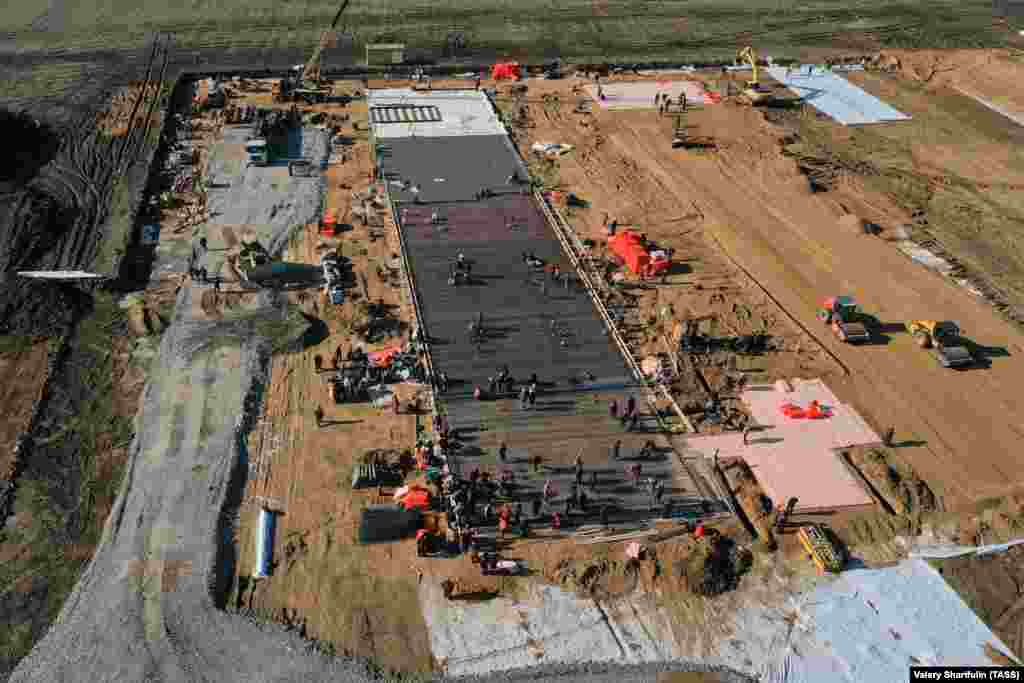
Another aerial view of the construction site.
3/12 Another aerial view of the construction site.
A new hospital is being quickly built outside of Moscow to treat COVID-19 patients. Scores of workers with heavy equipment are working quickly to assemble a prefabricated structure in Babenki, about 50 kilometers southwest of the Russian capital. City officials have said the 500-bed hospital would be ready in the "near future."
An existing Moscow hospital has already been turned into a treatment center and quarantine zone exclusively for coronavirus patients, but the city's mayor, Sergei Sobyanin, has said he wants more capacity, if needed. 
4/12 An existing Moscow hospital has already been turned into a treatment center and quarantine zone exclusively for coronavirus patients, but the city's mayor, Sergei Sobyanin, has said he wants more capacity, if needed. 
A new hospital is being quickly built outside of Moscow to treat COVID-19 patients. Scores of workers with heavy equipment are working quickly to assemble a prefabricated structure in Babenki, about 50 kilometers southwest of the Russian capital. City officials have said the 500-bed hospital would be ready in the "near future."
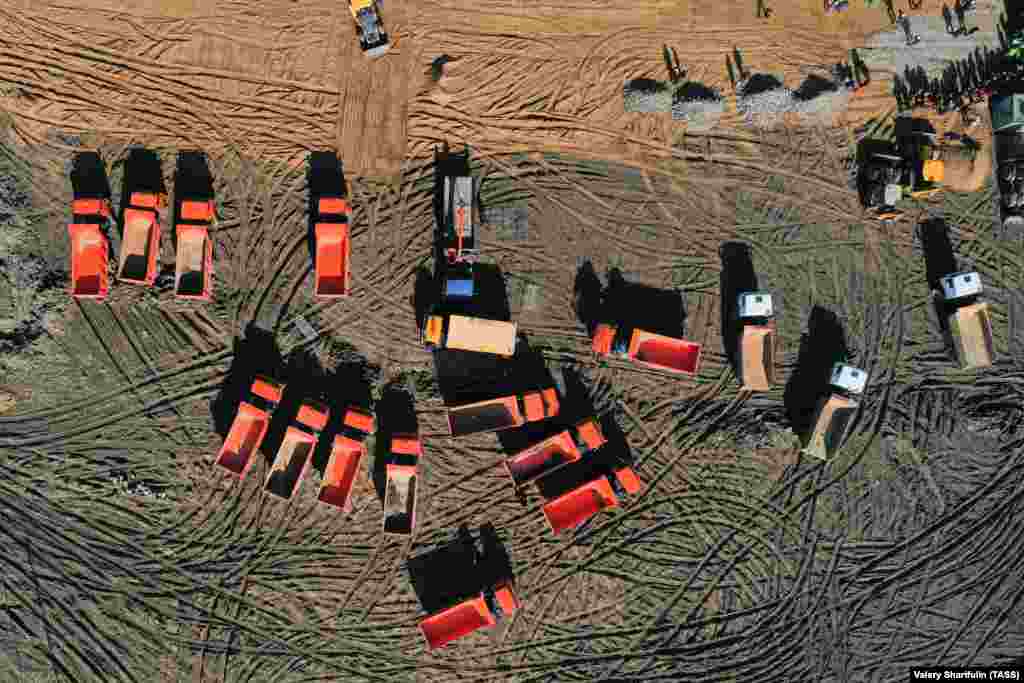
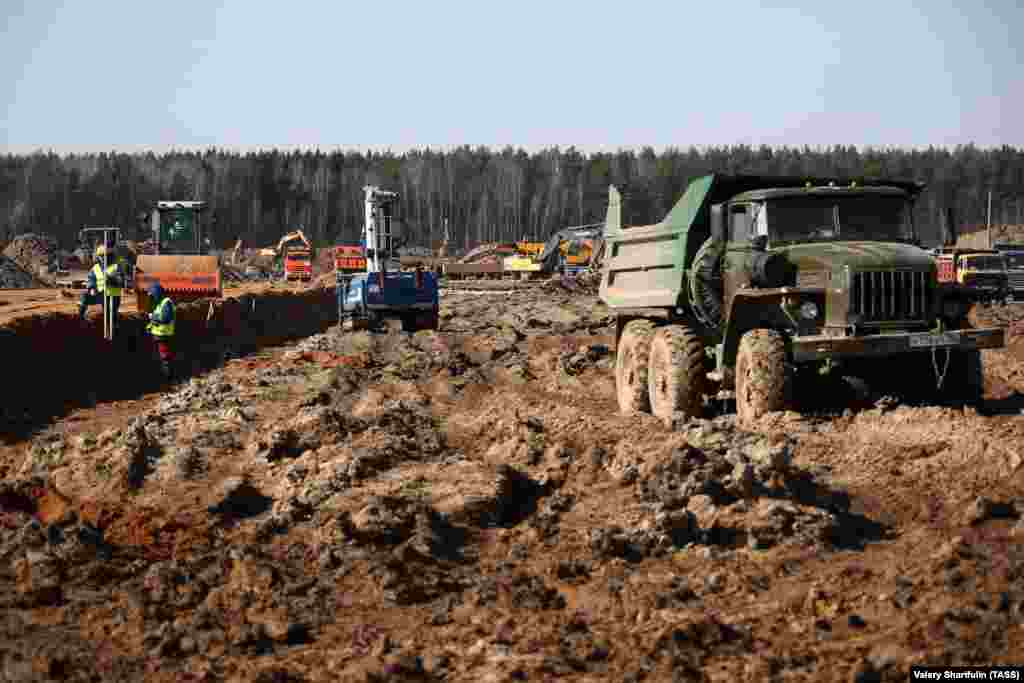
Trucks at the construction site
5/12 Trucks at the construction site
A new hospital is being quickly built outside of Moscow to treat COVID-19 patients. Scores of workers with heavy equipment are working quickly to assemble a prefabricated structure in Babenki, about 50 kilometers southwest of the Russian capital. City officials have said the 500-bed hospital would be ready in the "near future."
6/12
A new hospital is being quickly built outside of Moscow to treat COVID-19 patients. Scores of workers with heavy equipment are working quickly to assemble a prefabricated structure in Babenki, about 50 kilometers southwest of the Russian capital. City officials have said the 500-bed hospital would be ready in the "near future."
Sobyanin says the new hospital is being built in an area without large apartment blocks and would not pose a danger to the local population.
7/12 Sobyanin says the new hospital is being built in an area without large apartment blocks and would not pose a danger to the local population.
A new hospital is being quickly built outside of Moscow to treat COVID-19 patients. Scores of workers with heavy equipment are working quickly to assemble a prefabricated structure in Babenki, about 50 kilometers southwest of the Russian capital. City officials have said the 500-bed hospital would be ready in the "near future."
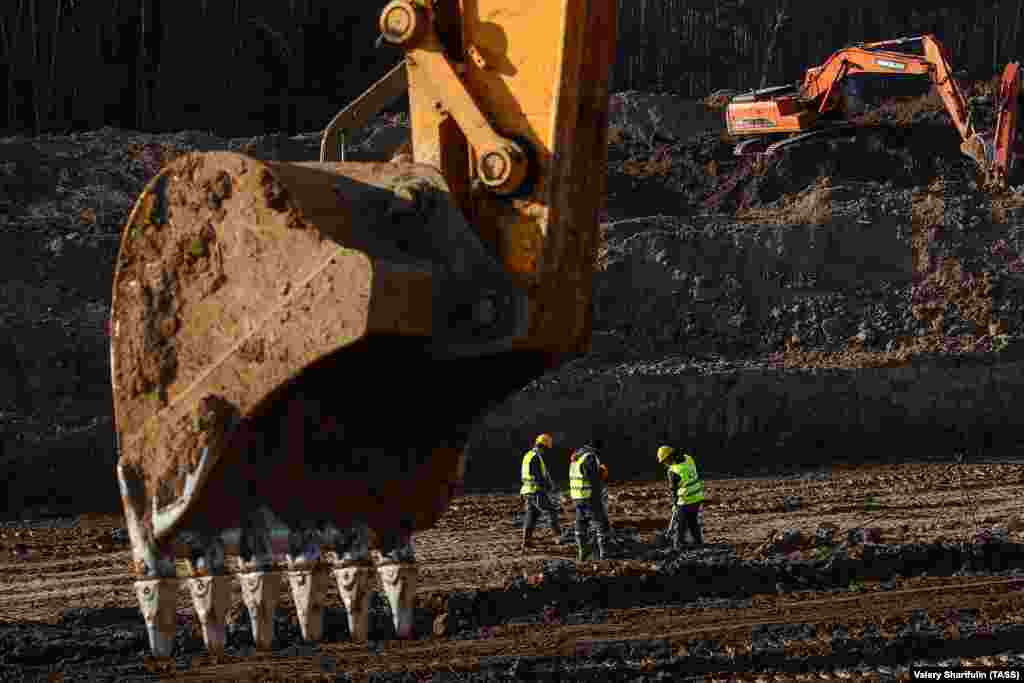
Construction workers at the site
8/12 Construction workers at the site
A new hospital is being quickly built outside of Moscow to treat COVID-19 patients. Scores of workers with heavy equipment are working quickly to assemble a prefabricated structure in Babenki, about 50 kilometers southwest of the Russian capital. City officials have said the 500-bed hospital would be ready in the "near future."
From March 18 until May 1, Russia has banned the entry of foreign nationals in response to the coronavirus outbreak.<br />
&nbsp;
9/12 From March 18 until May 1, Russia has banned the entry of foreign nationals in response to the coronavirus outbreak.
 
A new hospital is being quickly built outside of Moscow to treat COVID-19 patients. Scores of workers with heavy equipment are working quickly to assemble a prefabricated structure in Babenki, about 50 kilometers southwest of the Russian capital. City officials have said the 500-bed hospital would be ready in the "near future."
Some Russian doctors have questioned the low number of officially reported cases so far, given what they say is the patchy nature of testing.
10/12 Some Russian doctors have questioned the low number of officially reported cases so far, given what they say is the patchy nature of testing.
A new hospital is being quickly built outside of Moscow to treat COVID-19 patients. Scores of workers with heavy equipment are working quickly to assemble a prefabricated structure in Babenki, about 50 kilometers southwest of the Russian capital. City officials have said the 500-bed hospital would be ready in the "near future."
The government maintains that it has been totally transparent about its handling of the crisis, and that its statistics are accurate.
11/12 The government maintains that it has been totally transparent about its handling of the crisis, and that its statistics are accurate.
A new hospital is being quickly built outside of Moscow to treat COVID-19 patients. Scores of workers with heavy equipment are working quickly to assemble a prefabricated structure in Babenki, about 50 kilometers southwest of the Russian capital. City officials have said the 500-bed hospital would be ready in the "near future."
The head of Russia&#39;s Bashkortostan region, about 1,200 kilometers east of Moscow, has said his region would also build a new hospital within the next few months to treat coronavirus patients.
12/12 The head of Russia's Bashkortostan region, about 1,200 kilometers east of Moscow, has said his region would also build a new hospital within the next few months to treat coronavirus patients.
A new hospital is being quickly built outside of Moscow to treat COVID-19 patients. Scores of workers with heavy equipment are working quickly to assemble a prefabricated structure in Babenki, about 50 kilometers southwest of the Russian capital. City officials have said the 500-bed hospital would be ready in the "near future."
Previous slide
Next slide

It’s a transformative development for this sleepy settlement about 40 kilometers outside Moscow’s Ring Road, and the speed with which it is going up is a reflection of the increasingly urgent response regional and federal authorities have mounted to try to cope with the rise in coronavirus infections.

While the project promises an influx of people, with relatively good salaries shopping at local businesses, residents have decidedly mixed feelings.

“Not so long ago, we were a dying village with six houses,” one longtime resident who asked not to be identified told RFE/RL. “Now we have about 60 residents.”

Right now, locals must travel to nearby settlements for groceries, and it is about a 30-minute drive into the center of the capital.

“Of course, people are anxious about the hospital, but we have to do something with those who fall sick,” the man said. “It is too late to do anything about the construction now. They are going to bring a water line in for the hospital and a group of locals is working to get us all hooked up as well.”

'Nothing But Noise, Dirt, And Cars'

Local residents have created a chat group on the Telegram social-media app with about 150 participants that actively monitors and discusses the project. People worry about what the hospital will do with its medical waste and what the dangers of local coronavirus infections will be.

As of late on March 18, Russia had 147 officially confirmed cases of coronavirus infection, and many observers suspect the number has been significantly underreported in the country of more than 140 million people. On March 19, Russia reported its first COVID-19 fatality, a 79-year-old woman -- but authorities soon backtracked, saying that she died from a blood clot.

For now, in Golokhvastovo, locals are mostly concerned about the construction work itself.

Just outside the construction perimeter, ambulances, cisterns with drinking water, and a police van stand waiting.

“We bought a house here to live peacefully here and now look -- nothing but noise, dirt, and cars,” a local woman who declined to give her name told RFE/RL. “Over the weekend, the Kaluga highway was jammed and some sort of commission flew in by helicopter.”
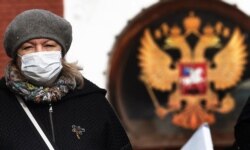
Most of the officially reported infections have so far been concentrated in Moscow.

Other locals have set up barricades in a bid to prevent trucks from driving on their gardens and yards. One man told RFE/RL that construction workers had broken the line providing natural gas to his house.

“Isn’t there a law on quiet hours?” he said. “But they work all night. There are no laws here.”

'The Necessary, Belated Minimum'

Fyodor Katasonov, a pediatrician and medical specialist at Moscow’s Global Medical Systems clinic, described the construction of the new hospital as “the necessary, belated minimum.”

He said he expected Russia’s health-care system to be sorely tested by the novel coronavirus.

Health services, he said, have been damaged in recent years by the government’s policy of “optimization.” The effort sought to improve health care and reduce costs by centralizing services and cutting back on local clinics, first-aid stations, and other facilities. But in fact it has led to the closure of many front-line health-care facilities, leaving people far from urban centers without basic medical care in some cases.

People who find themselves far from a clinic are less likely to seek care, he noted.

“Moscow’s health care is now extremely poorly prepared for the burden that is expected if the Italian scenario develops here,” he said, referring to the fact that a large and sudden wave of infections largely overwhelmed hospitals in Italy, forcing the rationing of health care.

“The lethality of the epidemic directly depends on the power of the health-care system and the quarantine measures that are adopted,” Katasonov added. “Since the whole country now is more or less still in denial about the epidemic, the quarantine measures have come late and been inadequate. That means we can expect a large burden on hospitals and particularly on emergency rooms.”

Katasonov criticized the location of the new hospital and suspected that it was selected out of financial considerations rather than health-care effectiveness

“It would have been completely safe to build such a facility even in a residential area,” he said. “The coronavirus does not spread effectively over distances.”

No cost figures have been released for the construction project.

Russian officials, from President Vladimir Putin on down, have sought to project calm as the country’s tally of infections has grown.

Most of the officially reported infections to date have been concentrated in Moscow, Russia’s largest city. City officials, meanwhile, have reportedly considered imposing a city quarantine -- basically locking down the city -- but no order has been given publicly yet.

On March 17, during a high-level meeting of government officials, Putin himself tried to project an air of calm.

“We were able to contain the mass penetration and spread” of coronavirus, Putin said. “The situation is generally under control despite high risk levels.”

The remote location of the Golokhvastovo hospital will make transporting patients there more difficult and could increase the number of fatalities, Katasonov said. In addition, it will be more difficult to bring in and accommodate additional medical staff if needed.

The Golokhvastovo hospital is a start, he concluded, “but a few more like it would come in handy.”

Written by RFE/RL senior correspondent Robert Coalson and based on reporting from Golokhvastovo by RFE/RL Russian Service correspondent Aleksandr Litoi
  • 16x9 Image

    Aleksandr Litoi

    Aleksandr Litoi is a correspondent for RFE/RL's Russian Service.

  • 16x9 Image

    Robert Coalson

    Robert Coalson worked as a correspondent for RFE/RL from 2002 to 2024.

This item is part of
XS
SM
MD
LG