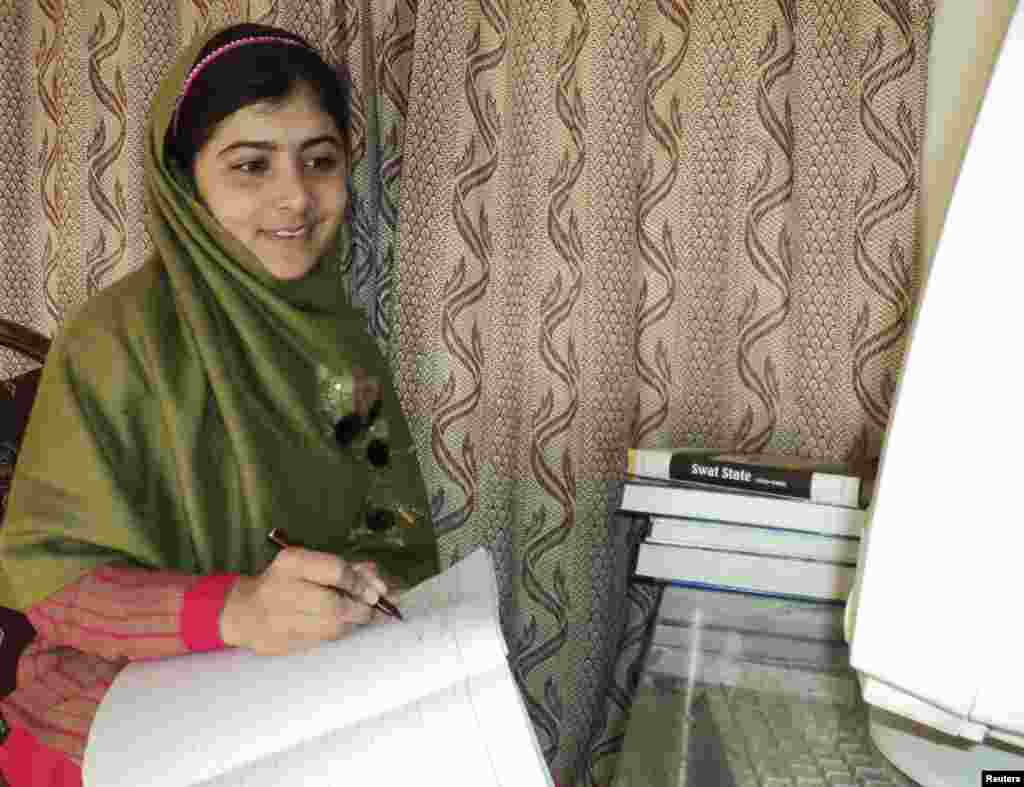
Malala Yousafzai reads a book at the Queen Elizabeth Hospital in Birmingham, where she received treatment after being shot by Taliban militants in her native Swat Valley in 2012.
Ten years ago this month, Pakistani schoolgirl Malala Yousafzai, then 15, was shot in the head on her school bus by the Tehrik-e Taliban Pakistan (TTP) militant group.
The attack on Yousafzai, who had become a target for her campaign for girls’ education, sent shock waves across the predominately Muslim country and provoked international outrage.
Two years later, a major Pakistani military offensive drove the TTP militants from their strongholds in northwestern Pakistan and across the border to Afghanistan, where the TTP leadership took refuge.
But a decade on from the TTP’s brutal attack on Yousafzai, who survived after months of treatment at home and abroad, history appears to be repeating itself.
Ten Years After Being Shot By Taliban, Malala Yousafzai Tours The World As UN Peace Envoy
1/25In 2012, Malala Yousafzai was a 14-year-old Pakistani schoolgirl from the Swat Valley in northwestern Pakistan who was campaigning for girls' education. She also spoke out against the Pakistani Taliban militants active in the area.
In 2012, Malala Yousafzai was a 14-year-old activist for girls' access to education in Pakistan's northwestern Swat Valley, then a stronghold of the Taliban. Then the militants tried to kill her. A decade later, she is a Nobel Peace Prize laureate and a UN messenger of peace.
Show moreShow less
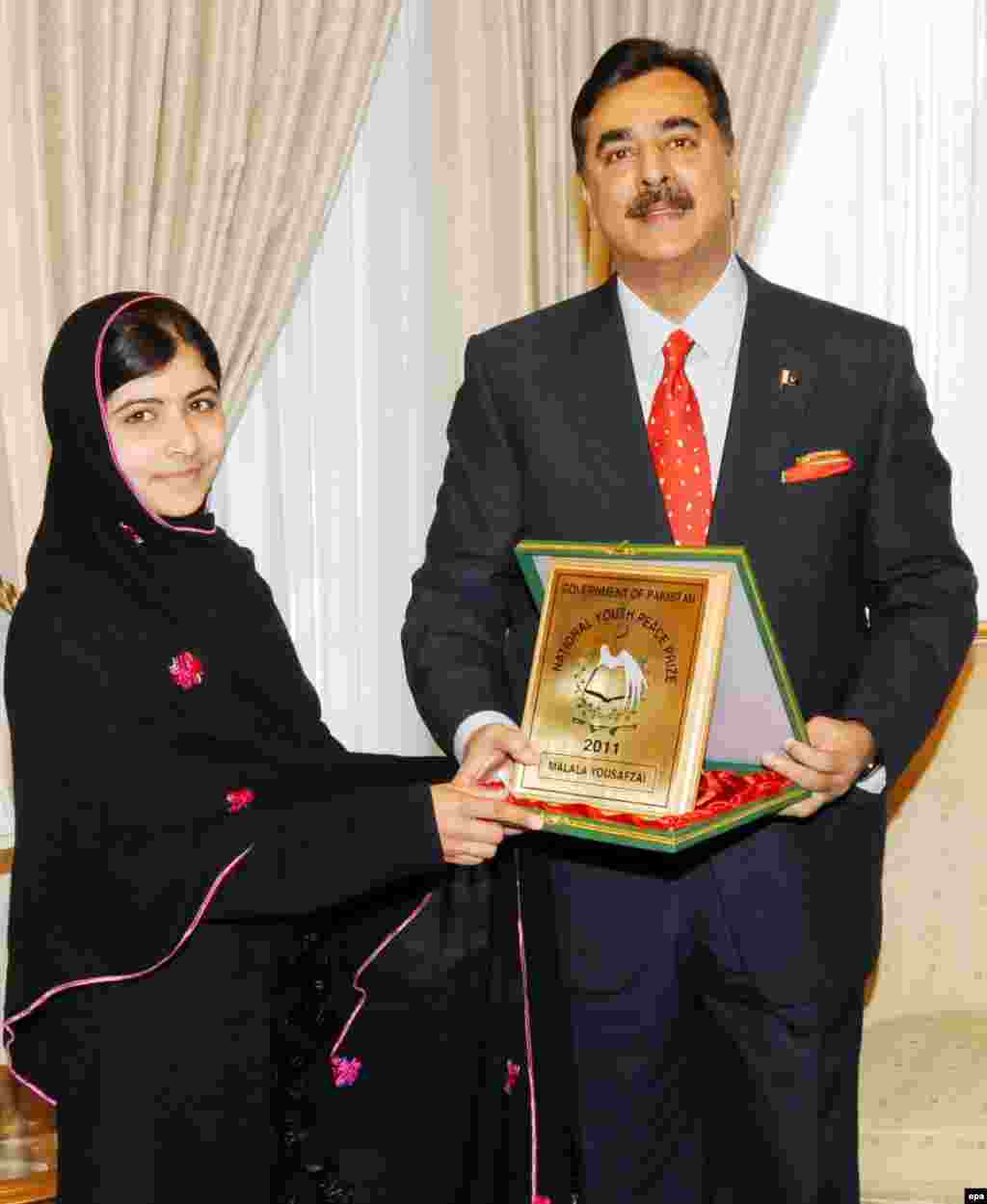
2/25In December 2011, she received the National Youth Peace Prize from Prime Minister Yusuf Raza Gilani in Islamabad.
In 2012, Malala Yousafzai was a 14-year-old activist for girls' access to education in Pakistan's northwestern Swat Valley, then a stronghold of the Taliban. Then the militants tried to kill her. A decade later, she is a Nobel Peace Prize laureate and a UN messenger of peace.
Show moreShow less
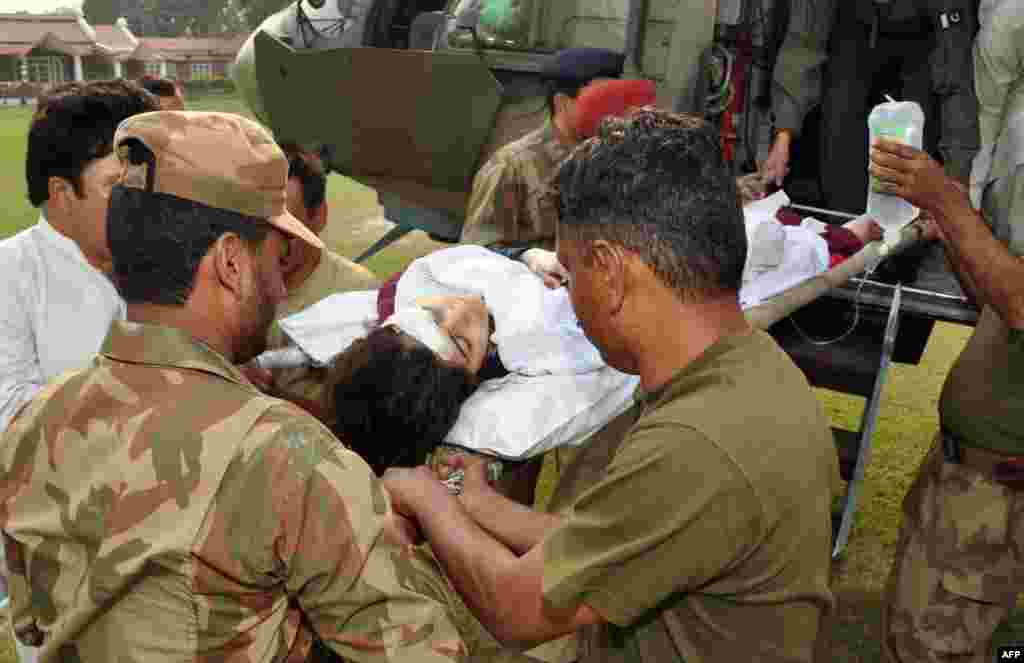
3/25On October 9, 2012, Taliban militants shot her as she boarded a school bus, injuring her and two classmates. In this photo, soldiers shift the injured Yousafzai from a helicopter at an army hospital in Rawalpindi following the attack.
In 2012, Malala Yousafzai was a 14-year-old activist for girls' access to education in Pakistan's northwestern Swat Valley, then a stronghold of the Taliban. Then the militants tried to kill her. A decade later, she is a Nobel Peace Prize laureate and a UN messenger of peace.
Show moreShow less
4/25Civil society activists and journalists carry candles and photographs of Yousafzai during a protest against the Taliban's attempt on her life in Islamabad on October 11, 2012.
In 2012, Malala Yousafzai was a 14-year-old activist for girls' access to education in Pakistan's northwestern Swat Valley, then a stronghold of the Taliban. Then the militants tried to kill her. A decade later, she is a Nobel Peace Prize laureate and a UN messenger of peace.
Show moreShow less
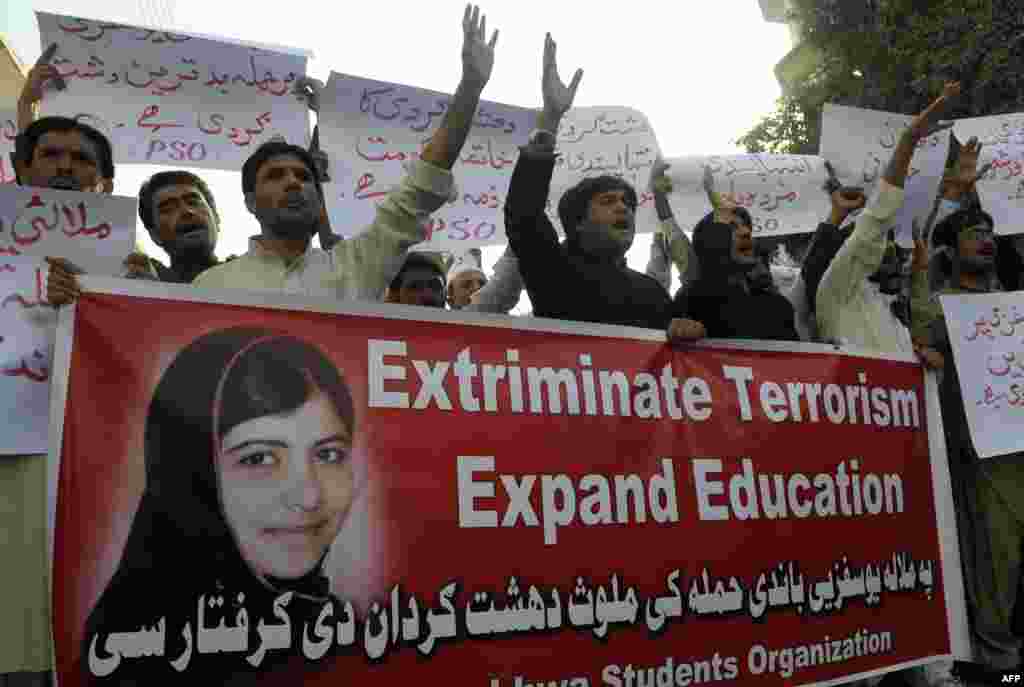
5/25Pakistani students shout slogans during a protest against the attack in Quetta on October 11, 2012.
In 2012, Malala Yousafzai was a 14-year-old activist for girls' access to education in Pakistan's northwestern Swat Valley, then a stronghold of the Taliban. Then the militants tried to kill her. A decade later, she is a Nobel Peace Prize laureate and a UN messenger of peace.
Show moreShow less
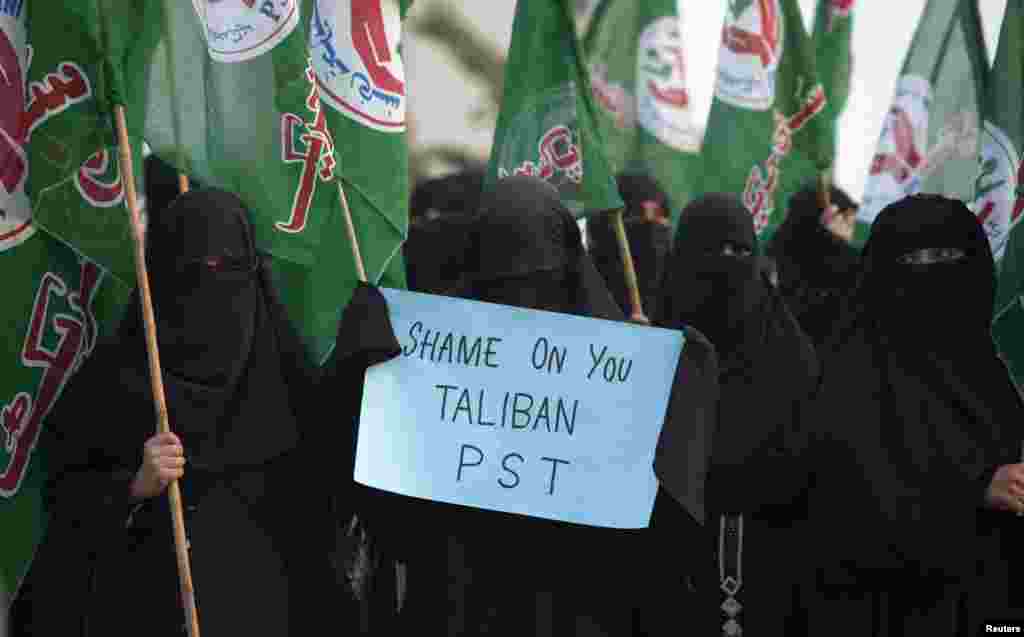
6/25Women supporters of the religious political party Sunni Tehreek demonstrate in support of Yousufzai in Islamabad on October 14, 2012.
In 2012, Malala Yousafzai was a 14-year-old activist for girls' access to education in Pakistan's northwestern Swat Valley, then a stronghold of the Taliban. Then the militants tried to kill her. A decade later, she is a Nobel Peace Prize laureate and a UN messenger of peace.
Show moreShow less
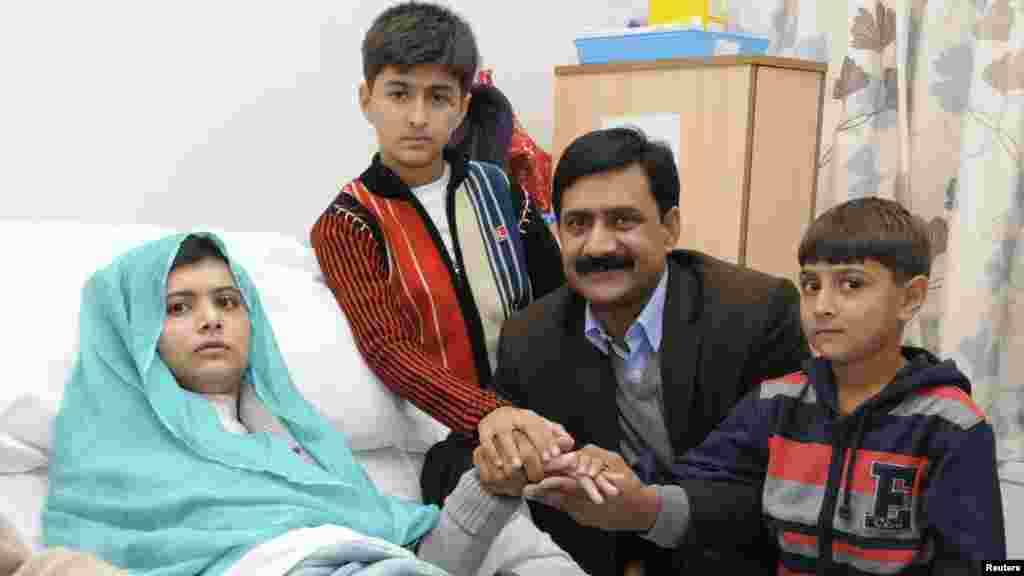
7/25Malala Yousafzai poses with her father, Ziauddin, and her two younger brothers, Khushal Khan and Atal Khan (right), as she recuperates at the the Queen Elizabeth Hospital in Birmingham, England, on October 26, 2012.
In 2012, Malala Yousafzai was a 14-year-old activist for girls' access to education in Pakistan's northwestern Swat Valley, then a stronghold of the Taliban. Then the militants tried to kill her. A decade later, she is a Nobel Peace Prize laureate and a UN messenger of peace.
Show moreShow less
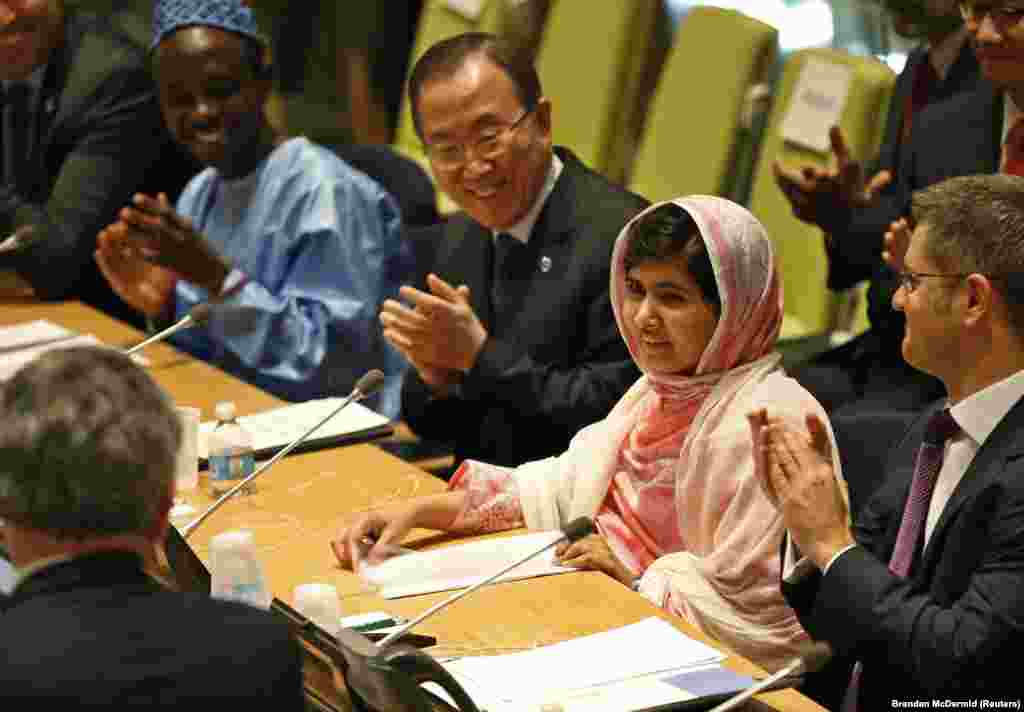
8/25Yousafzai is introduced before her first speech after the Taliban tried to kill her at United Nations Headquarters in New York on July 12, 2013.
In 2012, Malala Yousafzai was a 14-year-old activist for girls' access to education in Pakistan's northwestern Swat Valley, then a stronghold of the Taliban. Then the militants tried to kill her. A decade later, she is a Nobel Peace Prize laureate and a UN messenger of peace.
Show moreShow less
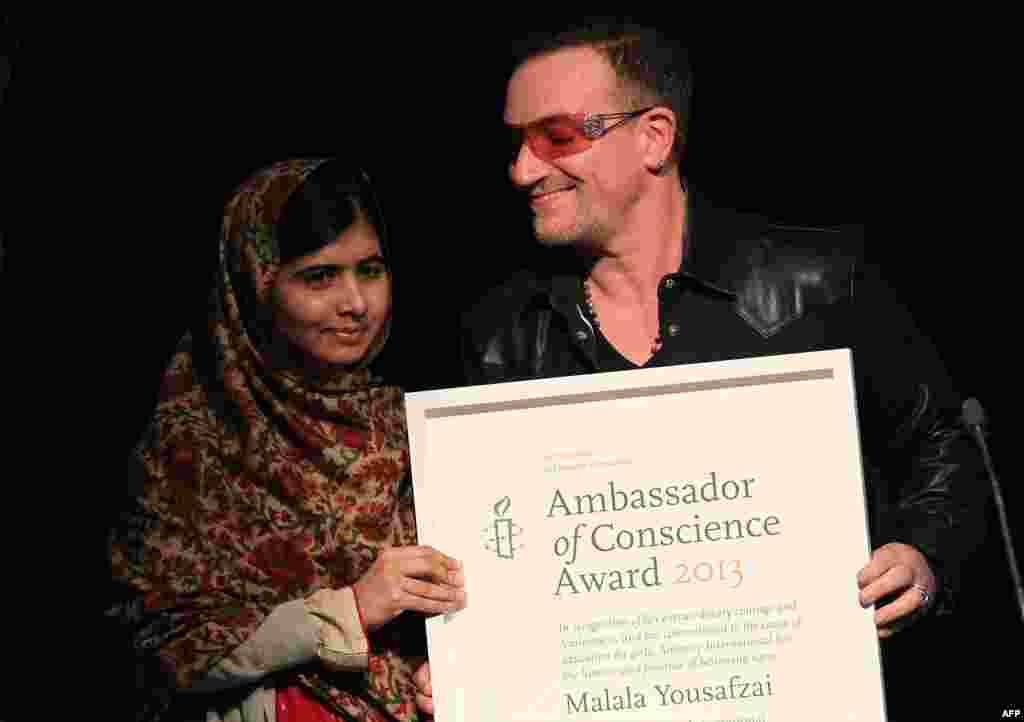
9/25Yousafzai receives the Amnesty International Ambassador of Conscience Award for 2013 from U2 singer Bono in Dublin on September 17, 2013.
In 2012, Malala Yousafzai was a 14-year-old activist for girls' access to education in Pakistan's northwestern Swat Valley, then a stronghold of the Taliban. Then the militants tried to kill her. A decade later, she is a Nobel Peace Prize laureate and a UN messenger of peace.
Show moreShow less
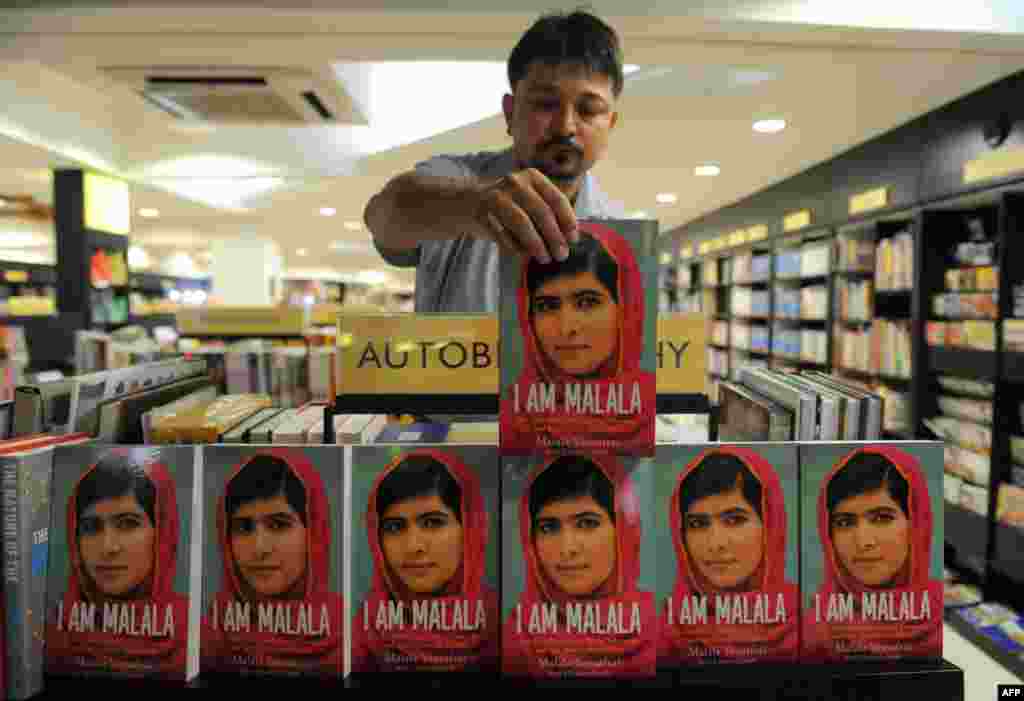
10/25A salesman arranges copies of I Am Malala, Yousafzai's memoir co-authored with British journalist Christina Lamb, at a bookstore in Ahmedabad, India, on October 9, 2013.
In 2012, Malala Yousafzai was a 14-year-old activist for girls' access to education in Pakistan's northwestern Swat Valley, then a stronghold of the Taliban. Then the militants tried to kill her. A decade later, she is a Nobel Peace Prize laureate and a UN messenger of peace.
Show moreShow less
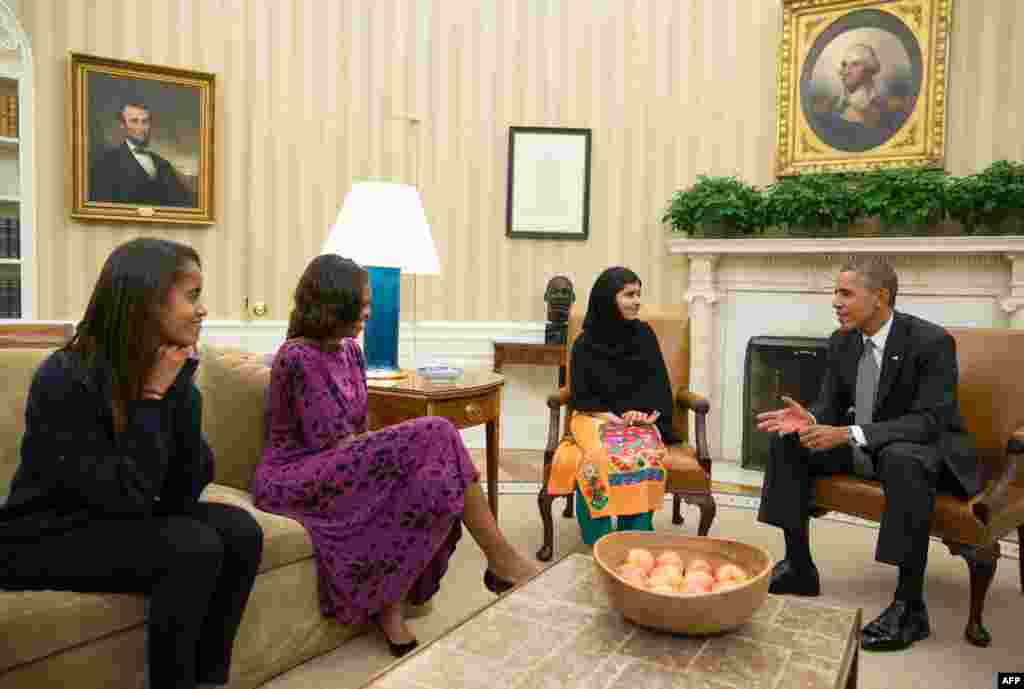
11/25U.S. President Barack Obama, Michelle Obama, and their daughter Malia (left) meet with Yousafzai in the Oval Office in Washington on October 11, 2013.
In 2012, Malala Yousafzai was a 14-year-old activist for girls' access to education in Pakistan's northwestern Swat Valley, then a stronghold of the Taliban. Then the militants tried to kill her. A decade later, she is a Nobel Peace Prize laureate and a UN messenger of peace.
Show moreShow less
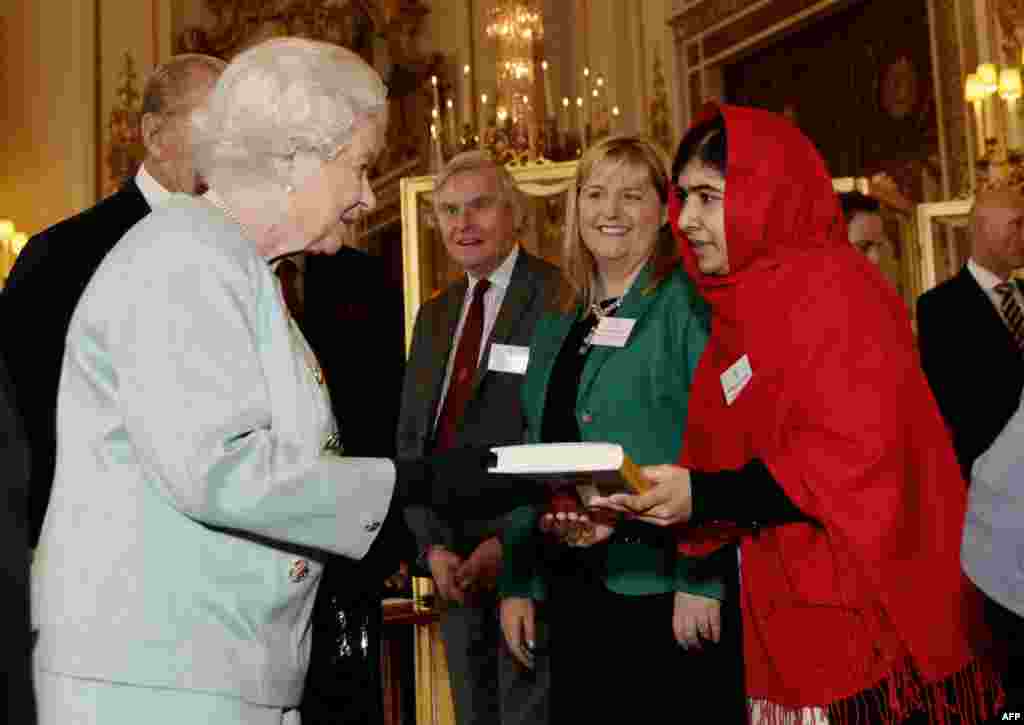
12/25Yousafzai gives a copy of her book to Queen Elizabeth II during a reception at Buckingham Palace in London on October 18, 2013.
In 2012, Malala Yousafzai was a 14-year-old activist for girls' access to education in Pakistan's northwestern Swat Valley, then a stronghold of the Taliban. Then the militants tried to kill her. A decade later, she is a Nobel Peace Prize laureate and a UN messenger of peace.
Show moreShow less
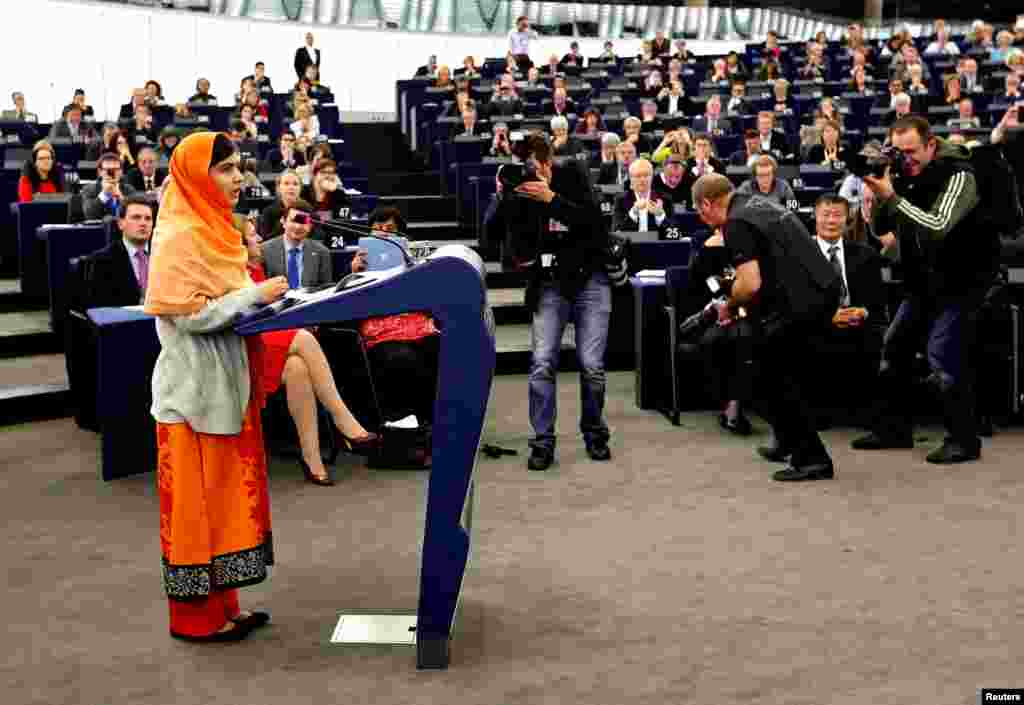
13/25Yousafzai addresses the European Parliament after she received the 2013 Sakharov Prize for Freedom of Thought at an award ceremony in Strasbourg, France, on November 20, 2013.
In 2012, Malala Yousafzai was a 14-year-old activist for girls' access to education in Pakistan's northwestern Swat Valley, then a stronghold of the Taliban. Then the militants tried to kill her. A decade later, she is a Nobel Peace Prize laureate and a UN messenger of peace.
Show moreShow less
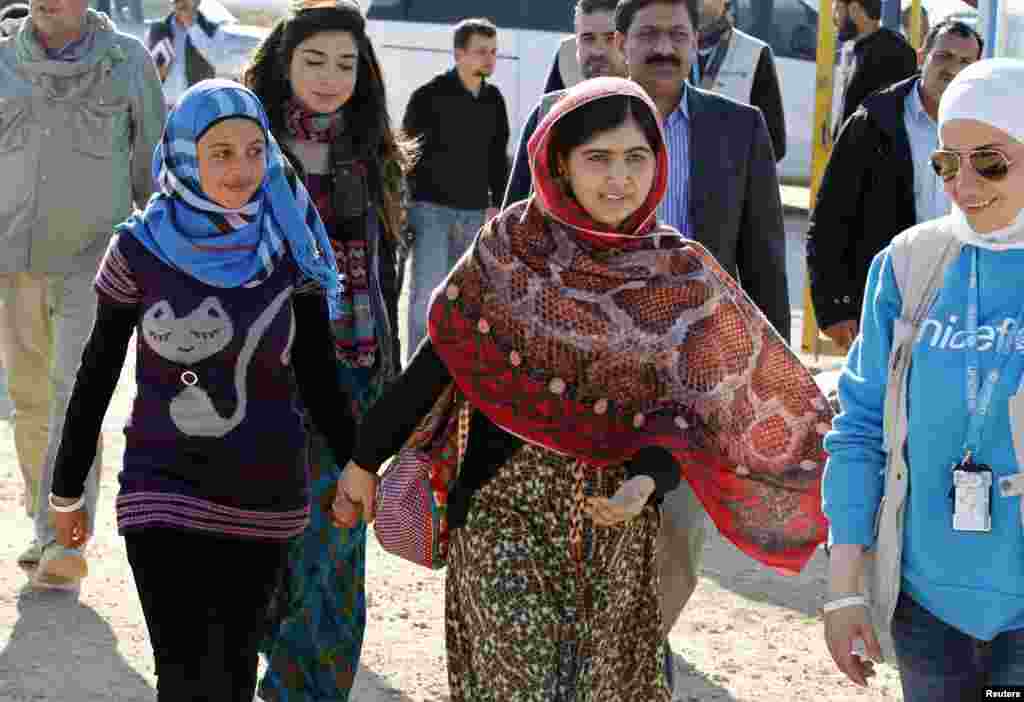
14/25Yousafzai and Syrian refugee Mazoon Rakan (left) tour a UNICEF center to visit an art gallery for children at the Zaatri refugee camp in the Jordanian city of Mafraq on February 18, 2014.
In 2012, Malala Yousafzai was a 14-year-old activist for girls' access to education in Pakistan's northwestern Swat Valley, then a stronghold of the Taliban. Then the militants tried to kill her. A decade later, she is a Nobel Peace Prize laureate and a UN messenger of peace.
Show moreShow less
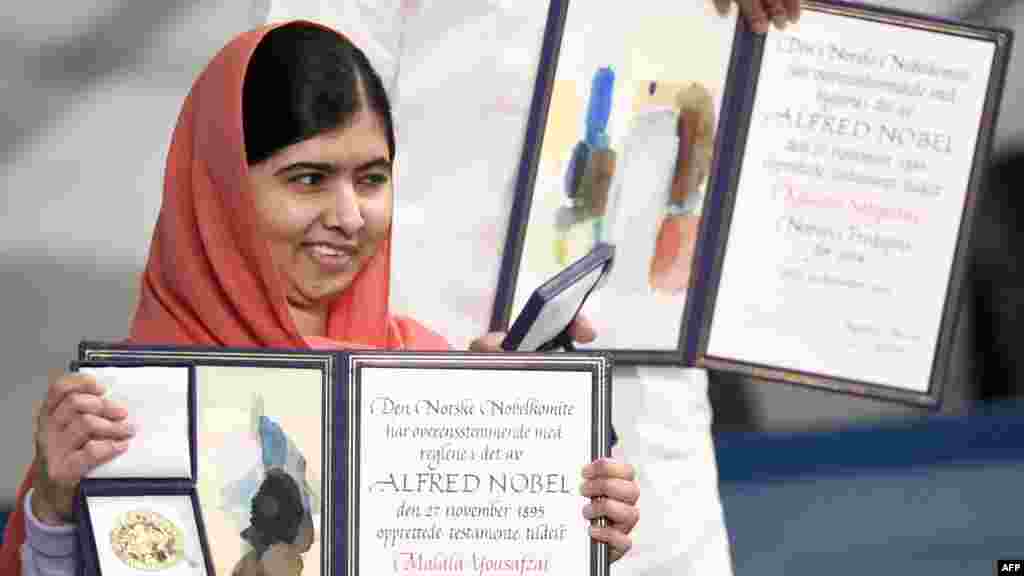
15/25Yousafzai holds her Nobel Peace Prize at the award ceremony in Oslo on December 10, 2014.
In 2012, Malala Yousafzai was a 14-year-old activist for girls' access to education in Pakistan's northwestern Swat Valley, then a stronghold of the Taliban. Then the militants tried to kill her. A decade later, she is a Nobel Peace Prize laureate and a UN messenger of peace.
Show moreShow less
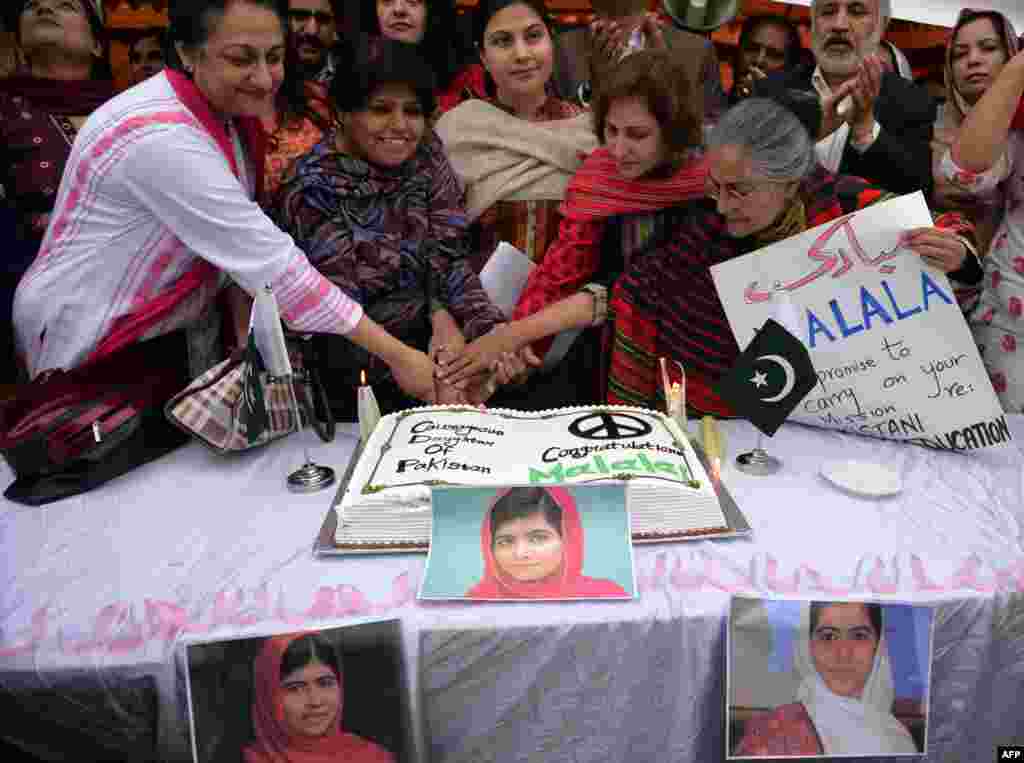
16/25Pakistani activists pose for a photograph as they cut a cake in celebration of Yousafzai winning the Nobel Prize in Islamabad on October 14, 2014.
In 2012, Malala Yousafzai was a 14-year-old activist for girls' access to education in Pakistan's northwestern Swat Valley, then a stronghold of the Taliban. Then the militants tried to kill her. A decade later, she is a Nobel Peace Prize laureate and a UN messenger of peace.
Show moreShow less
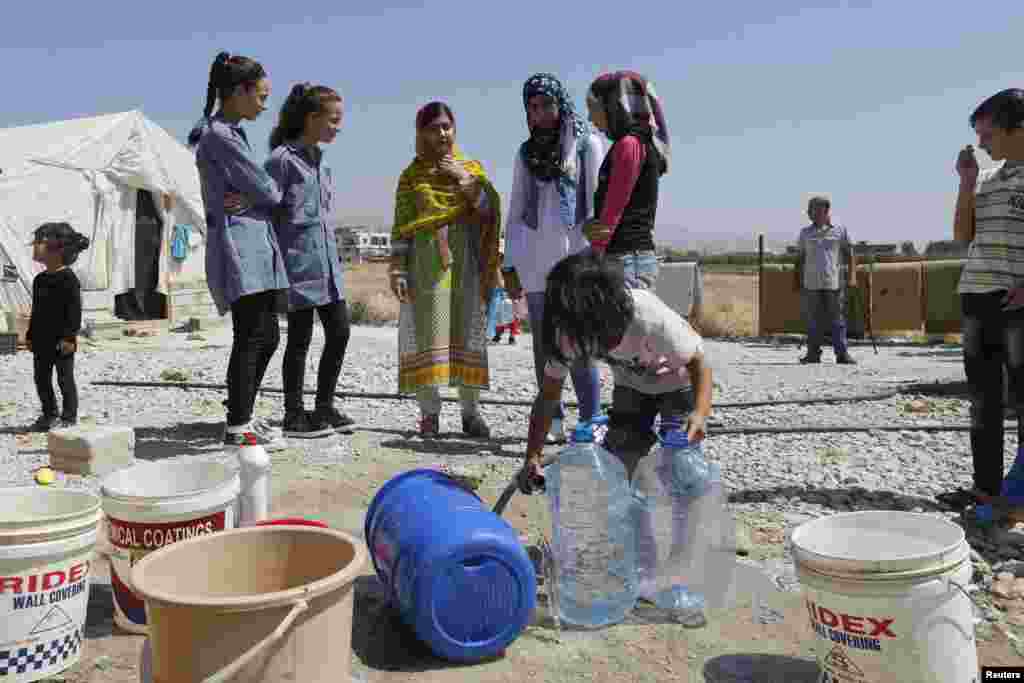
17/25Yousafzai talks with schoolgirls at the Abrar Syrian refugee informal settlement in Lebanon's Bekaa Valley on July 12, 2015.
In 2012, Malala Yousafzai was a 14-year-old activist for girls' access to education in Pakistan's northwestern Swat Valley, then a stronghold of the Taliban. Then the militants tried to kill her. A decade later, she is a Nobel Peace Prize laureate and a UN messenger of peace.
Show moreShow less
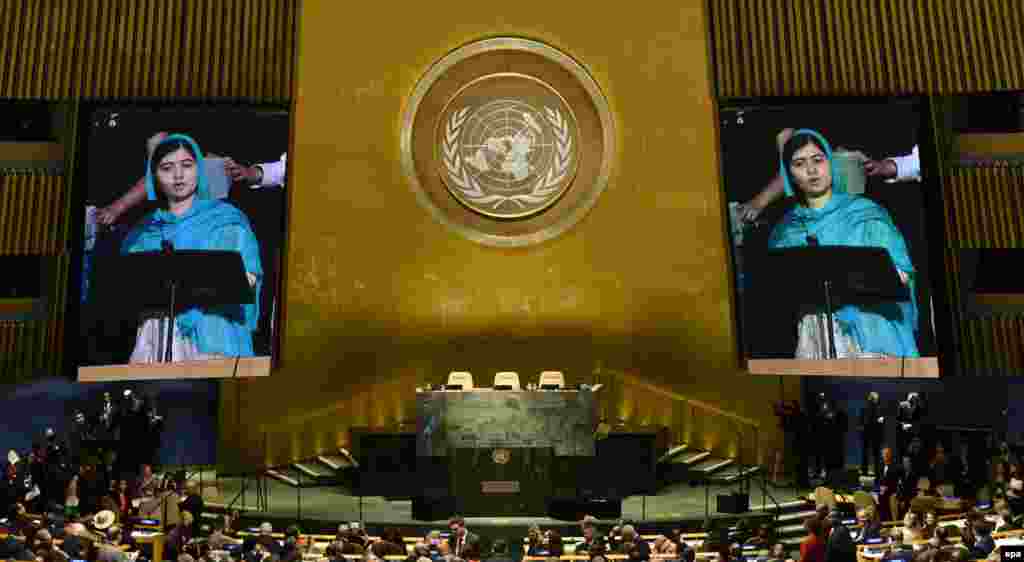
18/25Yousafzai speaks during a plenary meeting of the UN Sustainable Development Summit on the eve of the general debate of the UN General Assembly in New York on September 25, 2015.
In 2012, Malala Yousafzai was a 14-year-old activist for girls' access to education in Pakistan's northwestern Swat Valley, then a stronghold of the Taliban. Then the militants tried to kill her. A decade later, she is a Nobel Peace Prize laureate and a UN messenger of peace.
Show moreShow less
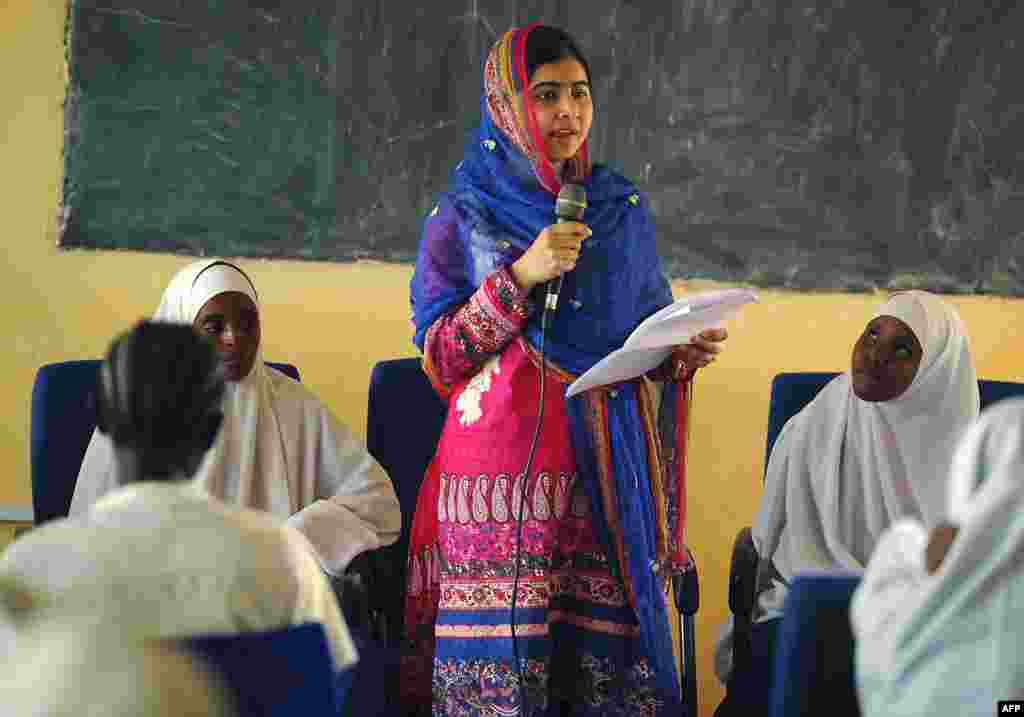
19/25Yousafzai addresses young refugees at Kenya's sprawling Dadaab refugee complex during a visit organized by the UN High Commissioner for Refugees in Garissa, Kenya, on July 12, 2016.
In 2012, Malala Yousafzai was a 14-year-old activist for girls' access to education in Pakistan's northwestern Swat Valley, then a stronghold of the Taliban. Then the militants tried to kill her. A decade later, she is a Nobel Peace Prize laureate and a UN messenger of peace.
Show moreShow less
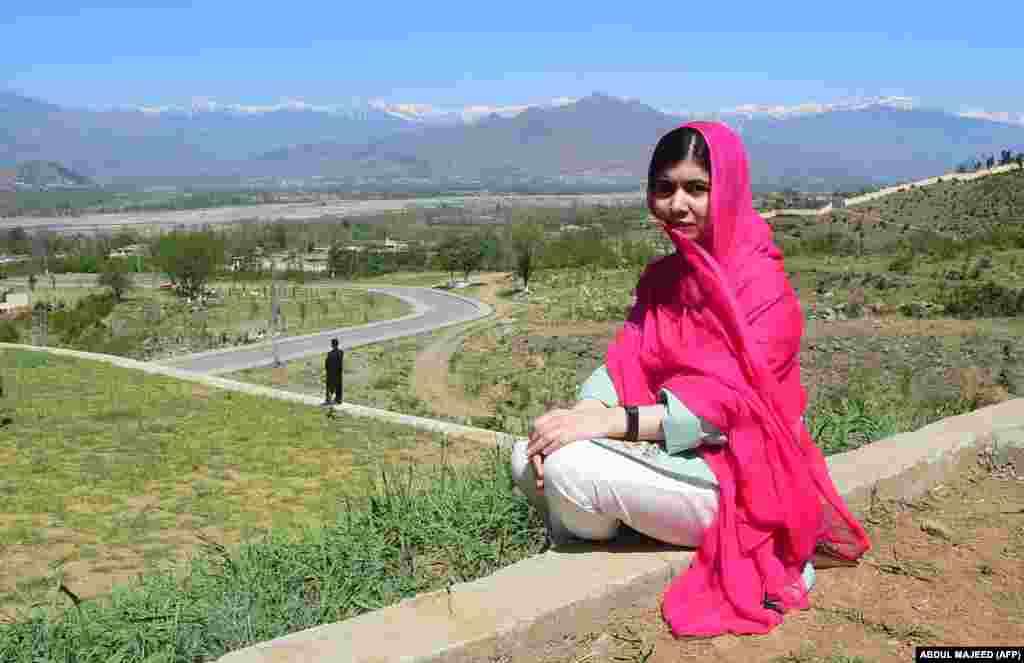
20/25Yousafzai poses for a photograph on March 31, 2018, during her first visit home to Mingora in Pakistan's Swat Valley since being shot by Taliban militants.
In 2012, Malala Yousafzai was a 14-year-old activist for girls' access to education in Pakistan's northwestern Swat Valley, then a stronghold of the Taliban. Then the militants tried to kill her. A decade later, she is a Nobel Peace Prize laureate and a UN messenger of peace.
Show moreShow less
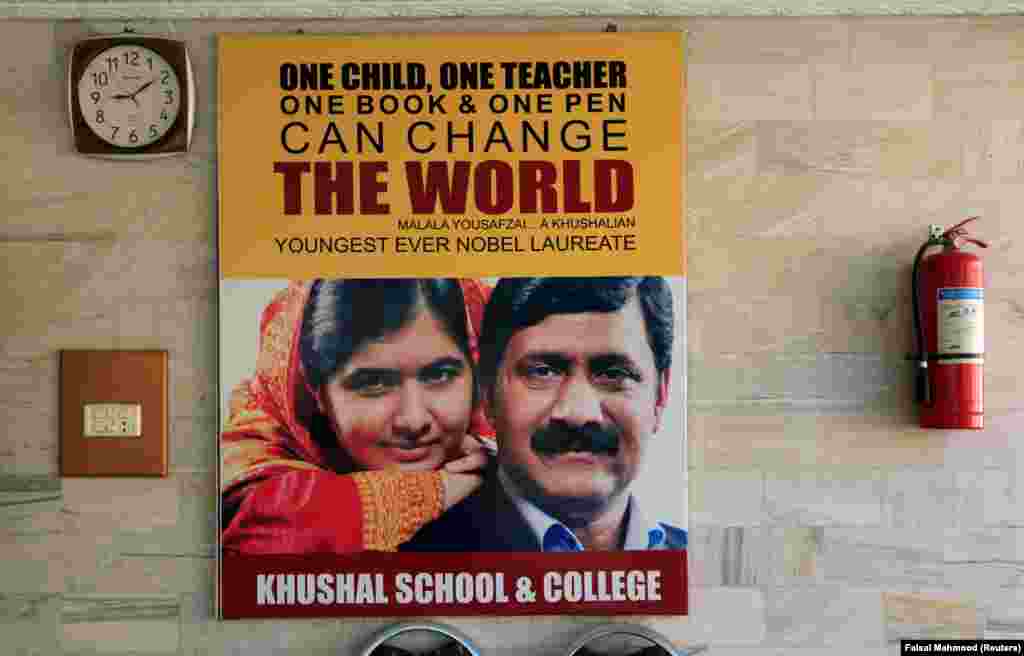
21/25A poster with the pictures of Yousafzai and her father, Ziauddin, hangs on the wall of a school in her home district in the Swat Valley on March 30, 2018.
In 2012, Malala Yousafzai was a 14-year-old activist for girls' access to education in Pakistan's northwestern Swat Valley, then a stronghold of the Taliban. Then the militants tried to kill her. A decade later, she is a Nobel Peace Prize laureate and a UN messenger of peace.
Show moreShow less
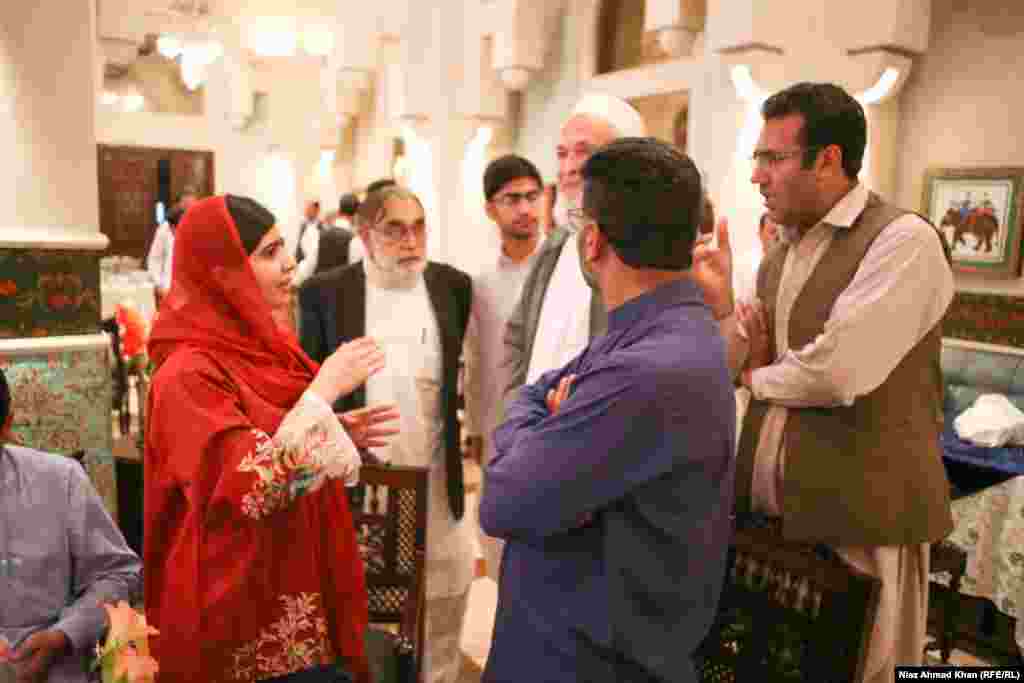
22/25Yousafzai meets elders from Swat and discusses education in Islamabad on March 31, 2018.
In 2012, Malala Yousafzai was a 14-year-old activist for girls' access to education in Pakistan's northwestern Swat Valley, then a stronghold of the Taliban. Then the militants tried to kill her. A decade later, she is a Nobel Peace Prize laureate and a UN messenger of peace.
Show moreShow less
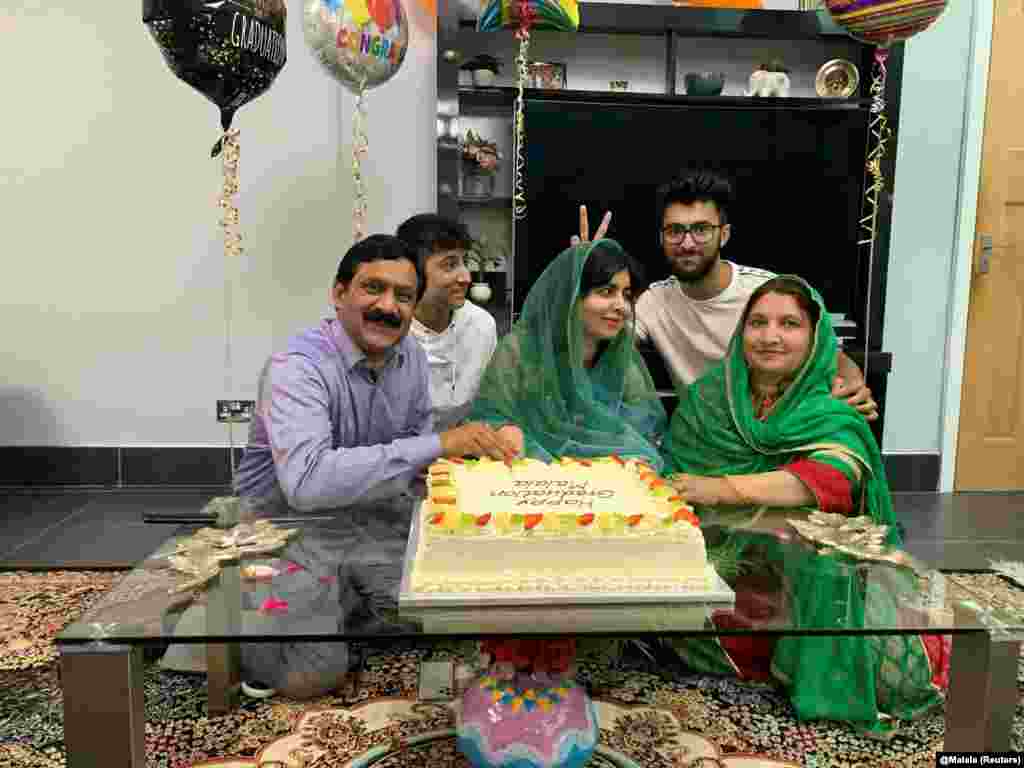
23/25Yousafzai celebrates graduating from Oxford University with her family at an undisclosed location on June 18, 2020.
In 2012, Malala Yousafzai was a 14-year-old activist for girls' access to education in Pakistan's northwestern Swat Valley, then a stronghold of the Taliban. Then the militants tried to kill her. A decade later, she is a Nobel Peace Prize laureate and a UN messenger of peace.
Show moreShow less
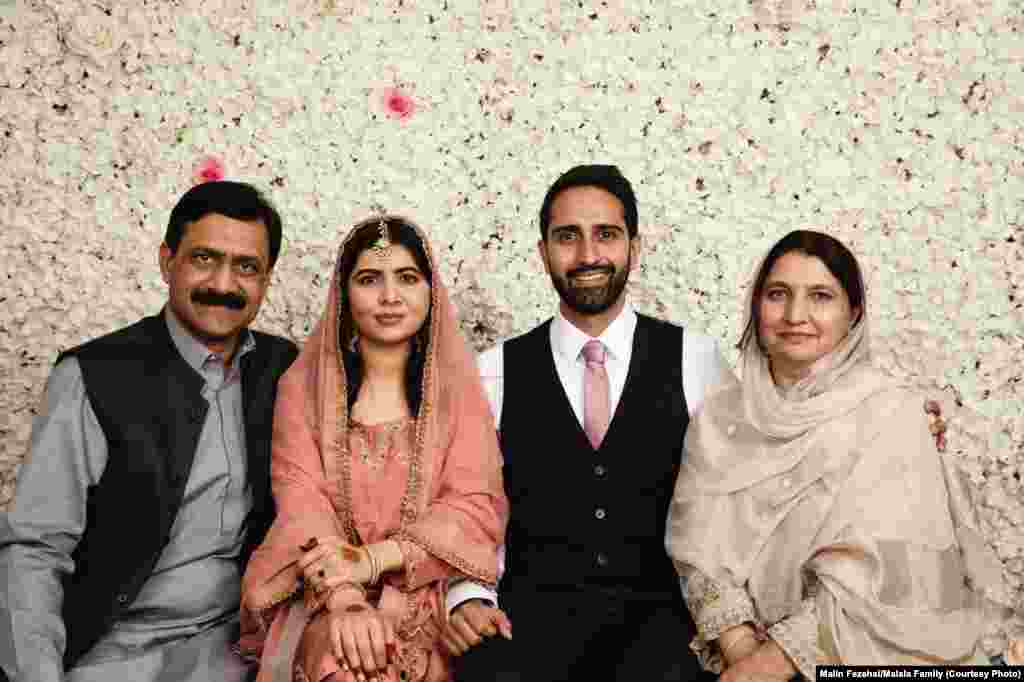
24/25Yousafzai poses with her father, Ziauddin, her husband, Asser Malik (second right), and her mother, Toorpekey, at their home in Birmingham, England, on November 9, 2021.
In 2012, Malala Yousafzai was a 14-year-old activist for girls' access to education in Pakistan's northwestern Swat Valley, then a stronghold of the Taliban. Then the militants tried to kill her. A decade later, she is a Nobel Peace Prize laureate and a UN messenger of peace.
Show moreShow less
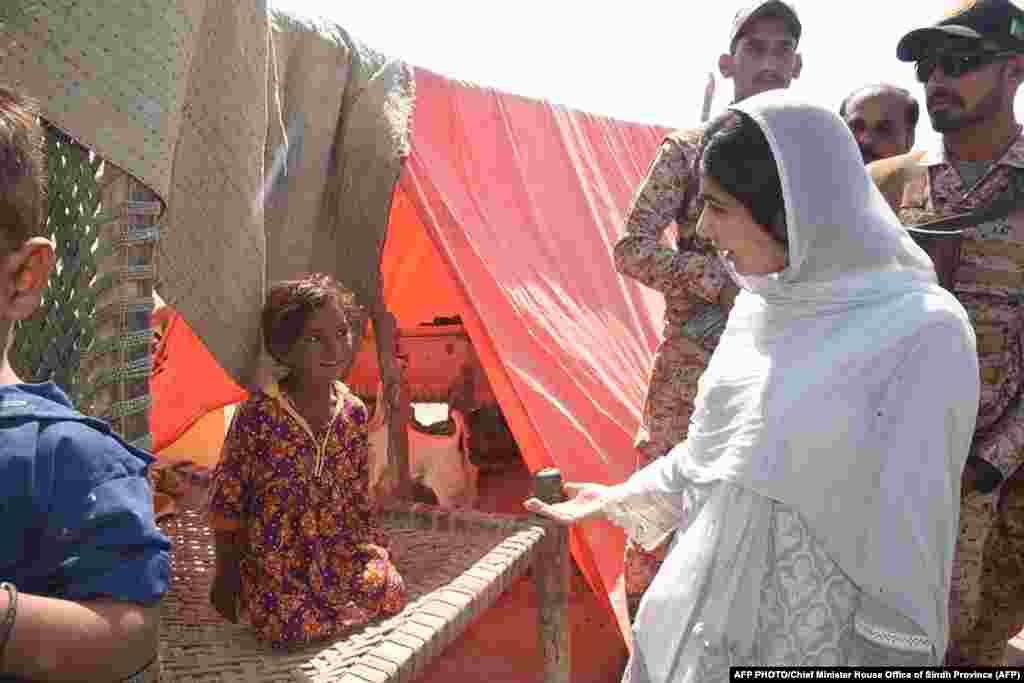
25/25Yousafzai meets with victims of Pakistan's devastating monsoon floods on October 12 in only her second visit since being shot by the Taliban a decade before.
In 2012, Malala Yousafzai was a 14-year-old activist for girls' access to education in Pakistan's northwestern Swat Valley, then a stronghold of the Taliban. Then the militants tried to kill her. A decade later, she is a Nobel Peace Prize laureate and a UN messenger of peace.
Show moreShow less
Previous slide
Next slide
In recent months, hundreds of fighters belonging to the TTP, also known as the Pakistani Taliban, have been returning to the northwestern province of Khyber Pakhtunkhwa, including in Yousafzai’s native Swat Valley. The militants have been accused of carrying out targeted killings and extorting locals.
In an attack strikingly similar to the one that wounded Yousafzai, gunmen opened fire on a school bus on October 10, killing the driver and injuring two students. No group claimed responsibility for the attack, although many locals suspected the TTP.
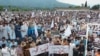
The attack triggered some of the largest protests in years in Swat. In Mingora, Swat’s biggest city, thousands of residents marched through the streets on October 11 to protest growing insecurity and demand that the authorities protect them from the militants.
Yousafzai, who won the 2014 Nobel Peace Prize, returned to Pakistan this week for only the second time since 2012 to meet families affected by the recent mass flooding in the country. But due to security issues, she is unable to visit Swat. Yousafzai and her family reside in Britain.
'We Don't Want The Return Of The Taliban'
The reappearance of the TTP in northwestern Pakistan has angered and terrified locals. The extremist group once controlled pockets of territory in the Pashtun tribal belt bordering Afghanistan.
During its brutal rule, the militants imposed their extremist version of Islam on the local population, severely curbing freedoms and rights, including those of women. Targeted killings, bomb attacks, extortion, and harassment dominated daily life in some parts of Khyber Pakhtunkhwa.
The Pakistani military campaigns that pushed out the TTP across the border to Afghanistan by 2014 took a heavy toll on locals, killing thousands of civilians, uprooting millions, and causing widescale destruction.
Ali Rahman and his family were forced to flee their home in Mingora, Yousafzai’s hometown, which came under the control of the TTP. The family left their shop, the source of their livelihood, and Rahman was forced to drop his studies. His family, like many others from the region, became internal refugees and lived in poverty for years.
In Swat, the TTP closed girls’ schools, severely restricted the movement of women, and forced men to grow beards and attend prayers.
“Now, we've restarted our business and my 10-member family is dependent on this shop,” said Rahman. “We don't want insecurity here because we fear being displaced again. That would destroy our business and life."
Those fears are widespread in the region.
"We don't want the return of the Taliban here again,” said Yasmeen Gul, a resident of the town of Matta in the Swat Valley. “I fear that I will lose my job and we will be displaced again.”
“It will also affect the education of my children, just like it affected every sphere of our lives before,” added the 28-year-old. “It is the government's responsibility to ensure peace in the area."
Ending The TTP’s Insurgency
The return of TTP fighters to the region comes amid stalled peace talks between the militant group and the Pakistan military that began late last year.
The secret negotiations have been brokered by the Afghan Taliban, which has close ideological and organizational ties with the TTP. The Afghan militant group, which seized power in Kabul in August 2021, is also a longtime ally of Islamabad.
A peace deal appeared to be in sight after the extremist group declared an indefinite cease-fire in June. But the mysterious killings of several TTP commanders, suspected TTP attacks in Pakistan, and Islamabad’s targeting of TTP sanctuaries in Afghanistan in recent months have cast doubts on the peace process.
During the summer, the Pakistani media revealed the terms of the proposed peace deal. Reports indicated that Islamabad had agreed to release hundreds of detained and convicted TTP members. Additionally, it agreed to withdraw a large portion of the tens of thousands of Pakistani troops stationed in northwestern Pakistan. Islamabad also agreed to implement Islamic Shari'a law in parts of Khyber Pakhtunkhwa.
Reports said the two sides had yet to agree on retracting democratic reforms in Khyber Pakhtunkhwa and whether thousands of TTP militants could return with their arms and keep their organization intact.
Despite no formal peace deal, hundreds of armed TTP fighters have returned to Pakistan. Experts have said that the militant group is gauging the public’s reaction to their possible return to the region.
The public has reacted with scores of protests and sit-ins in recent months. The demonstrators have also directed their anger at the authorities for turning a blind eye to the return of the militants. In August, the military's media wing said the TTP presence in Pakistan was "grossly exaggerated and misleading."
But locals disagree.
"The government has closed its eyes while the threat is standing right in front of them,” said Ali Sher, a lawyer residing in Swat.
Sher said locals, who had previously borne the brunt of the TTP's brutality, were determined to prevent history from repeating itself.
“If the government continues to remain indifferent, the people will block the Taliban from reentering our areas,” said the 55-year-old.
Daud Khattak is a senior international correspondent covering the Near East in RFE/RL’s Central Newsroom. He was previously the managing editor of RFE/RL's Radio Mashaal.