



Accessibility links

Breaking News

Khan Welcomes UN Security Council Discussions On Kashmir

Dogs snooze on a road usually bustling with traffic on August 11 in Srinigar, the main city. 
1/13 Dogs snooze on a road usually bustling with traffic on August 11 in Srinigar, the main city. 
The streets in Kashmir's largest city are eerily quiet amid a lockdown and rising tensions after India scrapped the disputed region's special status.
Indian police patrol a deserted street on August 6, shortly after India announced it would revoke the autonomy of Jammu and Kashmir -- the only Muslim-majority state in India. 
2/13 Indian police patrol a deserted street on August 6, shortly after India announced it would revoke the autonomy of Jammu and Kashmir -- the only Muslim-majority state in India. 
The streets in Kashmir's largest city are eerily quiet amid a lockdown and rising tensions after India scrapped the disputed region's special status.
Indian police stand guard as Muslim men exit a mosque after Friday Prayers. <a href="https://www.ft.com/content/ac1549f4-bcad-11e9-b350-db00d509634e" target="_blank">According</a> to the Financial Times, mosques are permitted to operate but most businesses and all schools are closed in Srinigar. Telecom services have also been heavily restricted.&nbsp;
3/13 Indian police stand guard as Muslim men exit a mosque after Friday Prayers. According to the Financial Times, mosques are permitted to operate but most businesses and all schools are closed in Srinigar. Telecom services have also been heavily restricted. 
The streets in Kashmir's largest city are eerily quiet amid a lockdown and rising tensions after India scrapped the disputed region's special status.
Indian police patrol a Srinigar street in the rain. Since the change in Kashmir&#39;s legal status, India has sent tens of thousands of troops to the region.&nbsp;
4/13 Indian police patrol a Srinigar street in the rain. Since the change in Kashmir's legal status, India has sent tens of thousands of troops to the region. 
The streets in Kashmir's largest city are eerily quiet amid a lockdown and rising tensions after India scrapped the disputed region's special status.
Kashmiri men throw stones at Indian police on August 10. The region, claimed by both Pakistan and India, has been the cause of almost every major conflict between the two countries.&nbsp;
5/13 Kashmiri men throw stones at Indian police on August 10. The region, claimed by both Pakistan and India, has been the cause of almost every major conflict between the two countries. 
The streets in Kashmir's largest city are eerily quiet amid a lockdown and rising tensions after India scrapped the disputed region's special status.
A Kashmiri walks past shuttered shops on August 11.&nbsp;
6/13 A Kashmiri walks past shuttered shops on August 11. 
The streets in Kashmir's largest city are eerily quiet amid a lockdown and rising tensions after India scrapped the disputed region's special status.
An emptry street amid the lockdown imposed by Indian police, which New Delhi has said is being enforced to prevent violence in the wake of the demotion of Kashmir&#39;s legal status.&nbsp;
7/13 An emptry street amid the lockdown imposed by Indian police, which New Delhi has said is being enforced to prevent violence in the wake of the demotion of Kashmir's legal status. 
The streets in Kashmir's largest city are eerily quiet amid a lockdown and rising tensions after India scrapped the disputed region's special status.
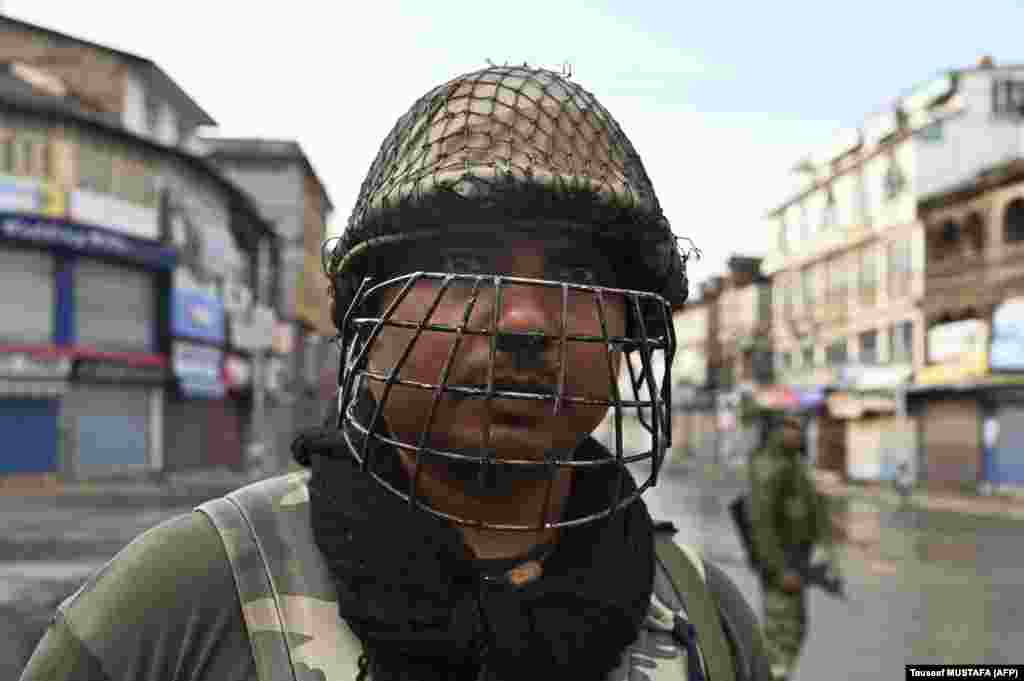
An Indian policeman on patrol in Srinigar on August 8. The change in the region&#39;s legal status means it will no longer be allowed to frame its own laws and nonresidents will be allowed to buy property in the territory.
8/13 An Indian policeman on patrol in Srinigar on August 8. The change in the region's legal status means it will no longer be allowed to frame its own laws and nonresidents will be allowed to buy property in the territory.
The streets in Kashmir's largest city are eerily quiet amid a lockdown and rising tensions after India scrapped the disputed region's special status.
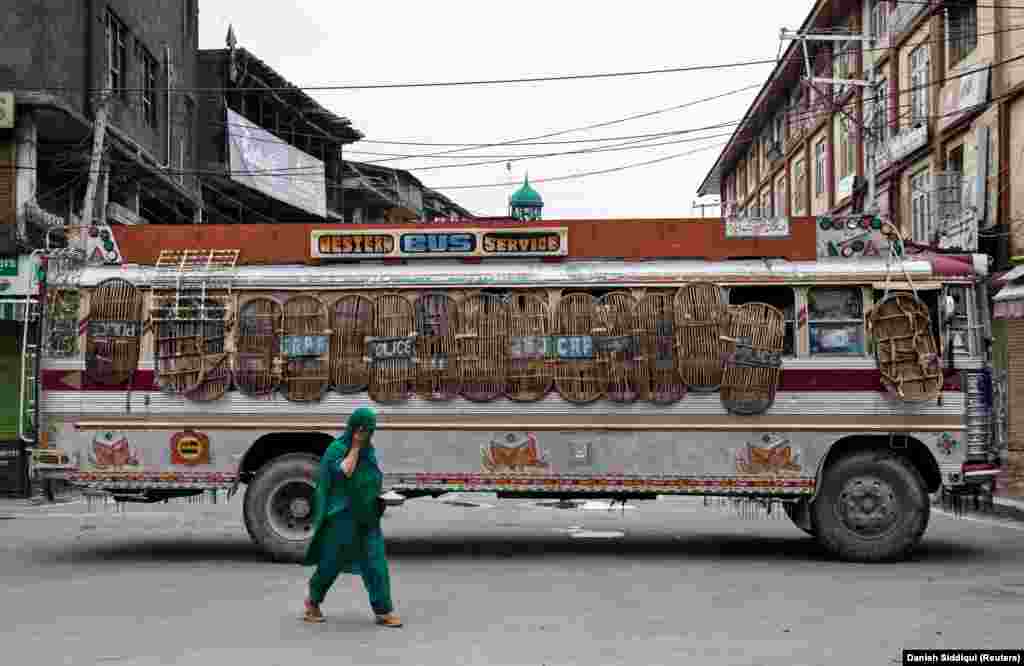
A police bus blocks a street in Kashmir. Leaders in Kashmir have warned of a violent response to the stripping of its autonomy in a region where militants have been fighting against Indian rule for nearly 30 years, a conflict that has killed more than 50,000 people.&nbsp;
9/13 A police bus blocks a street in Kashmir. Leaders in Kashmir have warned of a violent response to the stripping of its autonomy in a region where militants have been fighting against Indian rule for nearly 30 years, a conflict that has killed more than 50,000 people. 
The streets in Kashmir's largest city are eerily quiet amid a lockdown and rising tensions after India scrapped the disputed region's special status.
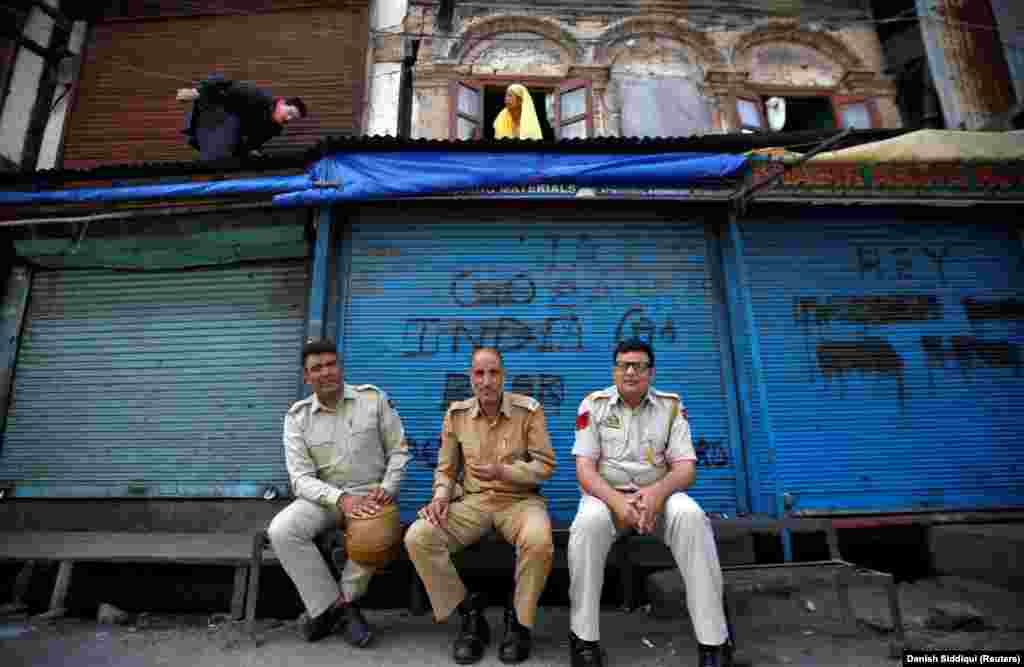
Indian police in front of shuttered shops in Srinigar on August 6. Pakistan has downgraded diplomatic links with India and suspended trade in protest of New Delhi&#39;s move.&nbsp;
10/13 Indian police in front of shuttered shops in Srinigar on August 6. Pakistan has downgraded diplomatic links with India and suspended trade in protest of New Delhi's move. 
The streets in Kashmir's largest city are eerily quiet amid a lockdown and rising tensions after India scrapped the disputed region's special status.
Pakistani Prime Minister Imran Khan compared India&#39;s ruling party to Nazism, tweeting: &ldquo;[An attempt] is [being made] to change the demography of Kashmir through ethnic cleansing. [The] question is: Will the world watch &amp; appease as they did Hitler at Munich?&rdquo;&nbsp;
11/13 Pakistani Prime Minister Imran Khan compared India's ruling party to Nazism, tweeting: “[An attempt] is [being made] to change the demography of Kashmir through ethnic cleansing. [The] question is: Will the world watch & appease as they did Hitler at Munich?” 
The streets in Kashmir's largest city are eerily quiet amid a lockdown and rising tensions after India scrapped the disputed region's special status.
<p>Ram Madhav, a senior&nbsp;leader in India&#39;s ruling Bharatiya Janata Party, responded: &ldquo;[The] threat to the democratic world is from Pakistani-sponsored Jehadi (sic)&nbsp;terror, not from India.&quot;</p>
12/13

Ram Madhav, a senior leader in India's ruling Bharatiya Janata Party, responded: “[The] threat to the democratic world is from Pakistani-sponsored Jehadi (sic) terror, not from India."

The streets in Kashmir's largest city are eerily quiet amid a lockdown and rising tensions after India scrapped the disputed region's special status.
A Kashmiri fills a bag with vegetables on his boat at Nageen Lake in Srinagar on August 10. India has not indicated how long the lockdown will continue.
13/13 A Kashmiri fills a bag with vegetables on his boat at Nageen Lake in Srinagar on August 10. India has not indicated how long the lockdown will continue.
The streets in Kashmir's largest city are eerily quiet amid a lockdown and rising tensions after India scrapped the disputed region's special status.
Previous slide
Next slide

Pakistan's Prime Minister Imran Khan on August 17 welcomed the UN Security Council's decision to discuss tensions in the disputed region of Kashmir.

The council took no action during the closed meeting on August 16, which was called by China and Pakistan.

The situation in the region deteriorated after New Delhi ruled earlier this month to end the decades-old autonomy in the Muslim-majority part of Kashmir it controls, triggering a communications blackout amid harsh restrictions.

"I welcome the UNSC meeting to discuss the serious situation in Occupied Jammu and Kashmir," Khan tweeted after the talks in New York.

"Addressing the suffering of the Kashmiri people & ensuring resolution of the dispute is the responsibility of this world body," he added on Twitter.

New Delhi's ambassador to the UN, Syed Akbaruddin, expressed annoyance over the council talks on August 16.

"We don't need international busybodies to try to tell us how to run our lives. We are a billion-plus people," he said after the talks.

India deployed 10,000 additional troops -- joining the half a million already in the Indian-controlled territory -- fearing a potentially violent response to its move to end Kashmir's autonomous status.

Pakistan’s Foreign Minister Shah Mehmood Qureshi said Pakistan was establishing Kashmir desks in foreign capitals to "lobby for Kashmiris and their right to self-determination."

The country's armed forces would be ready to give a "telling response" to any act of "misadventure" by India in the wake of the UN meeting, he told a press conference on August 17.

U.S. President Donald Trump, who spoke to Khan on August 16, "conveyed the importance of India and Pakistan reducing tensions" over the disputed territories, White House spokesman Hogan Gidley said.

Kashmir has been divided between India and Pakistan since they gained independence from Britain in 1947.

Two of the three wars between the two nuclear-armed neighbors were fought over the territory.

With reporting by AFP, AP, Reuters, and RFE/RL’s Radio Mashaal
  • 16x9 Image

    RFE/RL

    RFE/RL journalists report the news in 24 languages in 18 countries where a free press is banned by the government or not fully established. We provide what many people cannot get locally: uncensored news, responsible discussion, and open debate.

This item is part of
XS
SM
MD
LG