




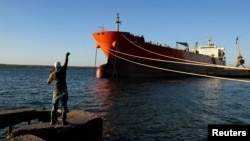
A Russian-flagged tanker carrying Russian crude oil arrived in Cuba after Washington waived sanctions on the ship, permitting it past a de-facto US oil embargo of the Caribbean island.
The decision by US President Donald Trump's administration to allow the Anatoly Kolodkin to dock in Cuba comes as it suffers through nearly unprecedented energy blackouts that have pushed the country toward collapse.
The decision also has raised eyebrows among critics who say the administration is rewarding Moscow, sending a wrong message at a time when Russia is reportedly providing sensitive intelligence to Iran as it retaliates for US and Israeli air strikes.
US-backed efforts to resolve the more than 4-year-old Ukraine war have also faltered, in part because of Moscow's hard-line stance regarding Ukrainian territory.

The delivery represents the first oil imports in more than two months by the Caribbean nation, which has instituted strict gasoline rationing amid massive power outages.
Earlier this month, the US Treasury Department issued a license specifically barring Cuba from receiving Russian oil, adding it to the list of restricted countries.
The Anatoly Kolodkin departed the Russian port of Primorsk after loading some 700,000 barrels of crude oil. Ship trackers noted the Cuba-bound ship had stopped in the mid-Atlantic Ocean earlier this month amid uncertainty over whether the United States would allow it to dock.
Responding to reporters' questions on March 29 about whether the ship would be allowed to dock, Trump said, "We don't mind somebody getting a boatload...because they have to survive."
"If someone wants to send oil to Cuba right now, I don't have a problem with that, whether it's Russia or not," he said.
Russia's Transport Ministry on March 30 said the ship had docked in Cuba.

The Trump administration has sought ways to blunt the impact of soaring global energy prices resulting from the monthlong war with Iran. The administration earlier eased some sanctions on Russia, which had been in place to punish the Kremlin for the Ukraine war.
Some US lawmakers and European leaders -- as well as Ukrainian President Volodymyr Zelenskyy-- have criticized the decision, saying it will help Moscow fund its invasion of Ukraine.
Ukraine, meanwhile, last week started a targeted drone campaign against some of Russia's most-important oil export terminals in the Baltic Sea.
'Cuba's Next'
The blockade on Cuban oil shipments comes as Washington ramps up pressure on the Havana government. At an economic forum in Miami on March 27, Trump referenced the operation to capture Venezuelan leader Nicolas Maduro, which resulted in a major change in Caracas's government.
"We have been very, very successful. You know, when I went into Venezuela...I built this great military, I said, you'll never have to use it, but sometimes you have to use it," Trump said. "And Cuba's next, by the way, but pretend I didn't say that please."
Trump has also suggested Washington would be doing "something with Cuba" very soon.
The island nation some 145 kilometers off the coast of Florida has been a thorn in the side of US administrations since the revolution led by Fidel Castro, who took power in 1959, eventually setting in place a communist-led government with close links to the Soviet Union.
Trump said he has asked US Secretary of State Marco Rubio to lead talks with Cuban officials and has spoken of a "friendly" takeover of the island.

