

Accessibility links

Breaking News

Russian Recruiters Target Central Asian Migrants At Mosques, Dorms To Join War In Ukraine

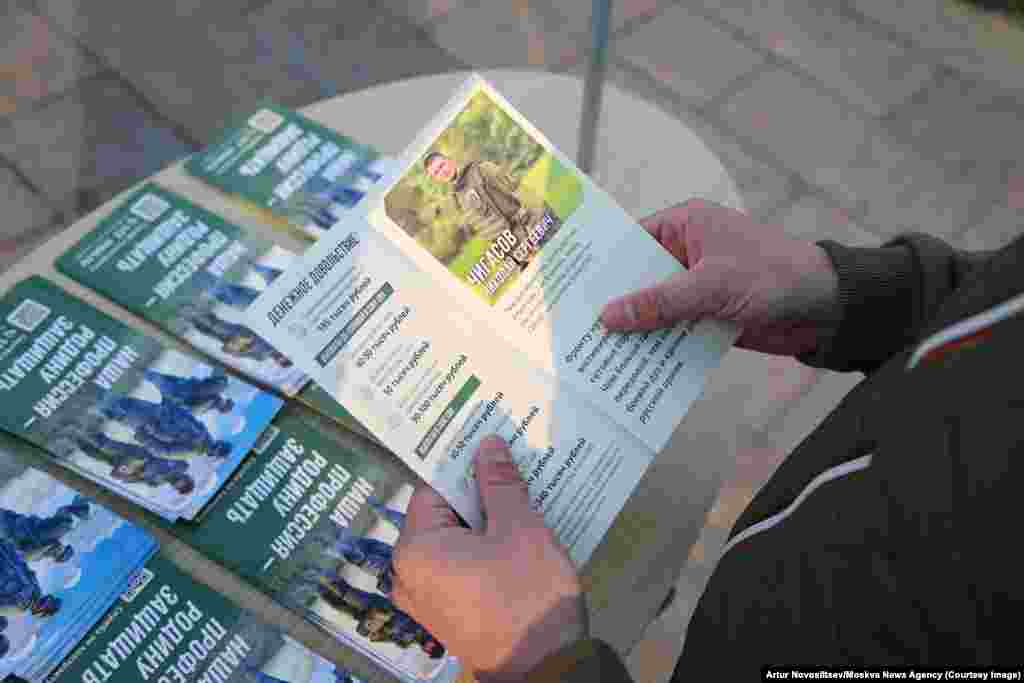
A man in Russia receives a leaflet urging people to join the military.

Tajik migrant Foziljon Umarov recently applied to renew his expiring Russian residency permit in Nizhny Novgorod Province, where he works as a bricklayer.

As Umarov handed in his documents at the migration department, a clerk asked him if he would consider joining the Russian military.

"She said if I became a contract soldier I'd no longer need a residency permit or a work permit and could get a Russian passport after six months of military service. I would also earn about $3,000 a month," Umarov claimed.

He said the employee who spoke to him at the migration center was an ethnic Tajik.

"She spoke Tajik with me. I don't know if they hired a Tajik employee specifically to speak to Tajik migrants, and Uzbek clerks for Uzbeks, etc.," Umarov said.

Many migrant workers from Central Asia say Russian recruiters have increasingly approached them at mosques, in dormitories, and at migration offices to try to lure them into joining the military as Moscow struggles to replace its depleted forces in Ukraine.

Moscow has not officially announced a new military mobilization after its "partial" call-up of some 300,000 reservists in September caused tens of thousands of Russian men to abruptly flee the country.

The government plans to recruit 400,000 new soldiers to fight in Ukraine, according to Russian regional government sources.

Russian officials have expanded their campaign to attract potential contractors -- both Russian citizens and foreign workers -- with a promise of money and other benefits.

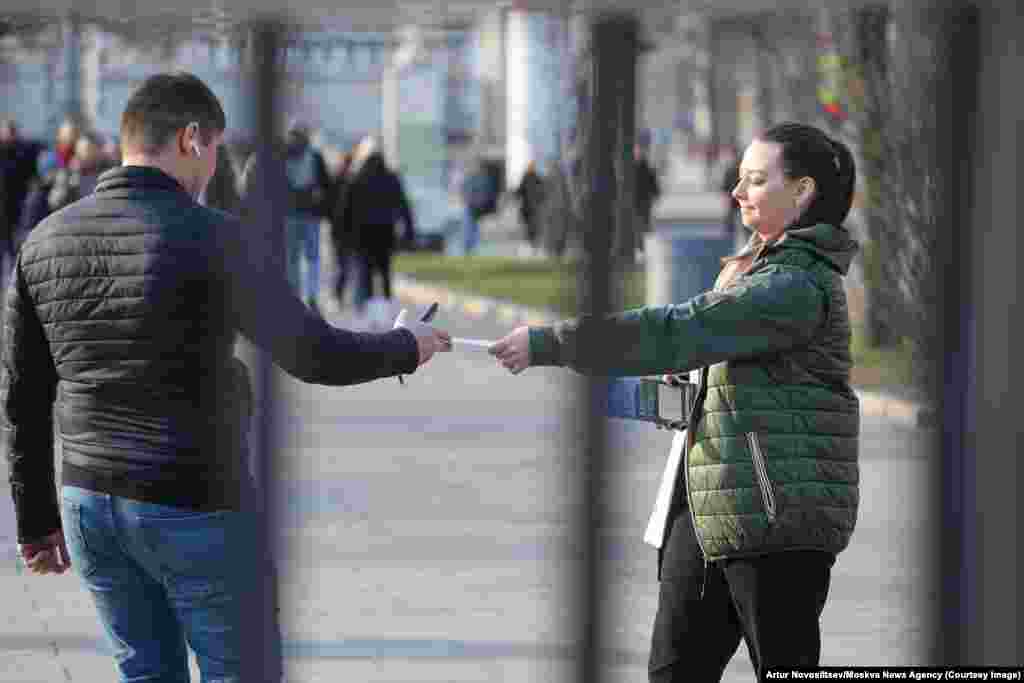
Recruiters on Russian city streets are handing out brochures to men claiming those who sign up for the military contract service will receive an initial one-time payment of $2,390, followed by salaries of up to $4,160 a month.

Photos and videos sent to RFE/RL show similar leaflets hanging on the walls, doors, and staircases in migrant workers' dormitories.

One video obtained by RFE/RL's Tajik Service purports to show a representative of a Russian military recruiting office giving a speech at a popular mosque in the city of Chelyabinsk.
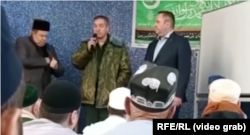
Video obtained by RFE/RL reportedly shows a Russian military recruiter talking to migrants at a mosque in Chelyabinsk.

"You don't have to wait five years to become Russian citizens -- instead you can sign a contract for military service for six months or up to one year in exchange for fast-track citizenship for yourself and your families," the uniformed man tells the congregation in the mosque.

Another video depicts a man in the Russian military outfit promoting contract military service to a group of men, some of whom can be heard speaking Uzbek. The video purportedly shows Central Asian migrants lining up for work permit in the western city of Penza.

Recruiters say those willing to become military contractors don't even have to take the mandatory medical checkup, says Jurabek Amonov, a migrant rights advocate in Russia.

"They only need to sign a paper saying 'I am healthy,'" Amonov told RFE/RL on April 10.

"I always tell the migrants that 99 percent of those who went to war in the hope of getting Russian passports were killed in Ukraine. It's also illegal for them to go to Ukraine," he said.

Not My War

Russia hosts millions of migrants from Central Asia and other former Soviet countries where unemployment has been a major problem the past three decades.

Most migrants have stayed away from the widely condemned war their host country has waged against Ukraine. But it is believed that many hundreds or thousands have accepted jobs in Ukraine's Russian-occupied territories -- mostly working for Russian construction companies.

Since the war began in February 2022, dozens of families in Central Asia have received the bodies of relatives killed in Ukraine. Some of them were naturalized Russian citizens, some were foreign contractors, and there were also convicts recruited from Russian prisons often under pressure.

Despite the falling value of the Russian ruble, a shrinking job market, and other consequences of the war, Russia remains a key destination for Central Asian workers.

One Tajik migrant contacted RFE/RL from a deportation detention center in the Far Eastern Russian city of Vladivostok earlier this month, saying a military recruitment officer had come to the facility to meet with the detainees.

$4,000 To Fight: What Russia's Military Recruitment Looks Like
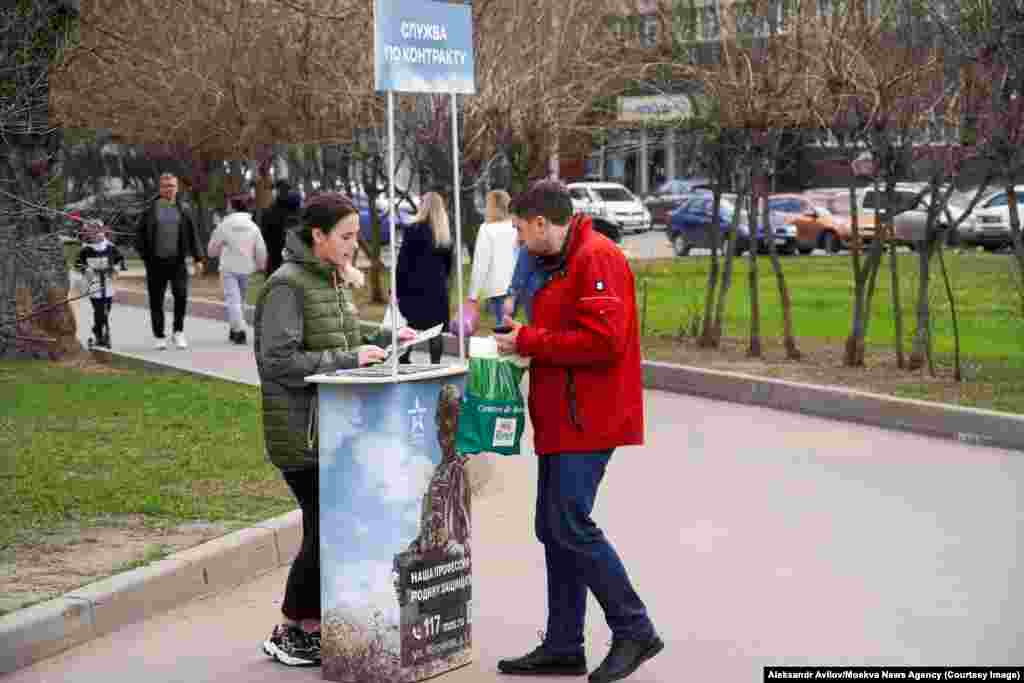
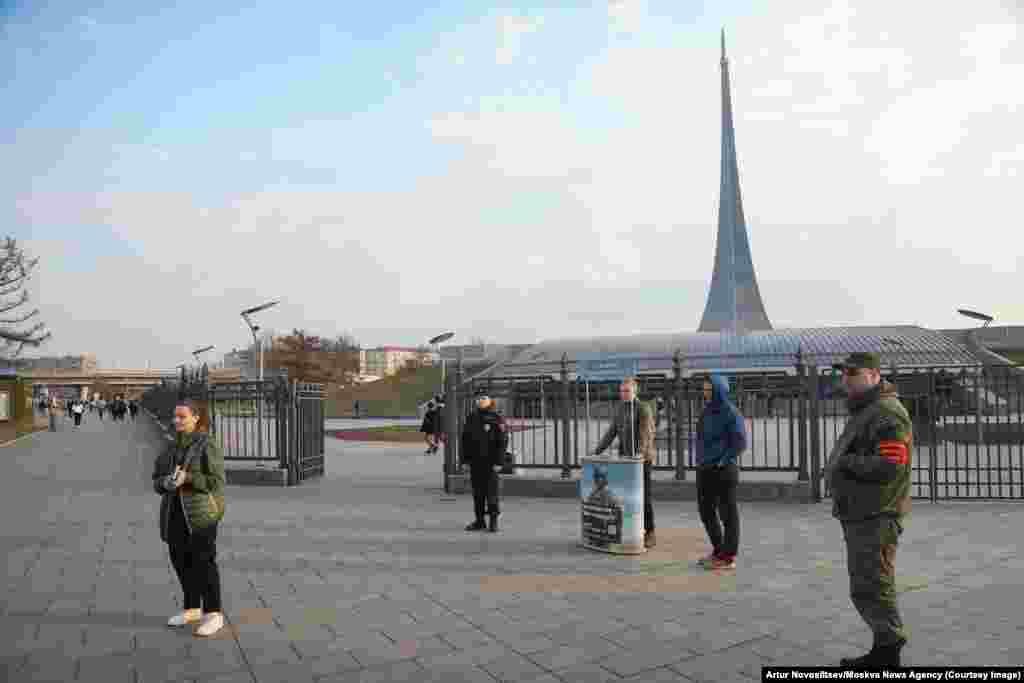
This April 13 photo shows a booth in Moscow offering contracts to those willing to take part in the invasion of Ukraine.
1/7 This April 13 photo shows a booth in Moscow offering contracts to those willing to take part in the invasion of Ukraine.
Recent photos from the streets of Russia show a push to lure men into fighting in Ukraine with lucrative contracts.
Brochures being handed out by the recruiters claim those who sign up will receive an initial lump-sum payment of 195,000 rubles ($2,390), followed by salaries of up to 340,000 rubles per month ($4,160) to take part in what the Kremlin calls its “special military operation” in Ukraine. 
2/7 Brochures being handed out by the recruiters claim those who sign up will receive an initial lump-sum payment of 195,000 rubles ($2,390), followed by salaries of up to 340,000 rubles per month ($4,160) to take part in what the Kremlin calls its “special military operation” in Ukraine. 
Recent photos from the streets of Russia show a push to lure men into fighting in Ukraine with lucrative contracts.
The booths, including this one outside Moscow’s Soviet-era Space Conquerer’s monument, are apparently part of an effort by the Kremlin to boost its foundering invasion of Ukraine without announcing another mass mobilization. 
3/7 The booths, including this one outside Moscow’s Soviet-era Space Conquerer’s monument, are apparently part of an effort by the Kremlin to boost its foundering invasion of Ukraine without announcing another mass mobilization. 
Recent photos from the streets of Russia show a push to lure men into fighting in Ukraine with lucrative contracts.
A September 2022 mobilization resulted in <strong><a href="https://www.bloomberg.com/news/articles/2022-10-04/more-russians-flee-than-join-putin-s-army-after-call-up-for-war?leadSource=uverify%20wall">hundreds of thousands</a></strong> of Russian men fleeing the country to avoid being drafted and sent to fight in Ukraine.<br />
<br />
Multiple reports of <a href="https://www.dailymail.co.uk/news/article-11286327/Russian-conscripts-revolt-border-saying-theyre-treated-cattle-given-zero-training.html#v-4561547402509961657">l<strong>ow morale and chaotic battlefield conditions</strong></a> emerged from those Russians who were sent to the front lines.<br />
<br />
&nbsp;
4/7 A September 2022 mobilization resulted in hundreds of thousands of Russian men fleeing the country to avoid being drafted and sent to fight in Ukraine.

Multiple reports of low morale and chaotic battlefield conditions emerged from those Russians who were sent to the front lines.

 
Recent photos from the streets of Russia show a push to lure men into fighting in Ukraine with lucrative contracts.
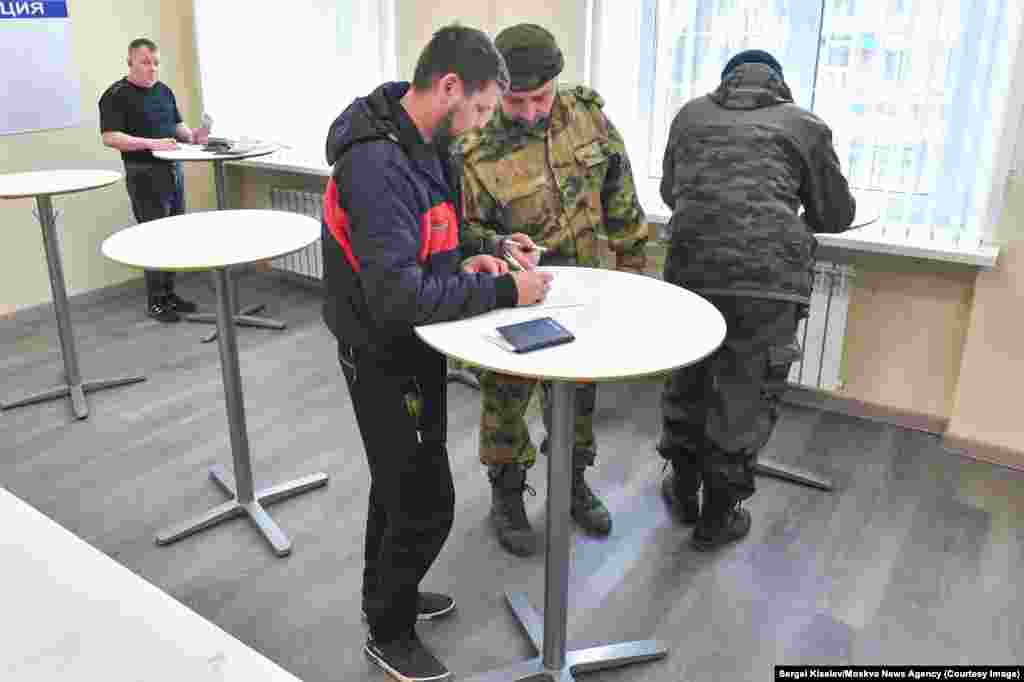
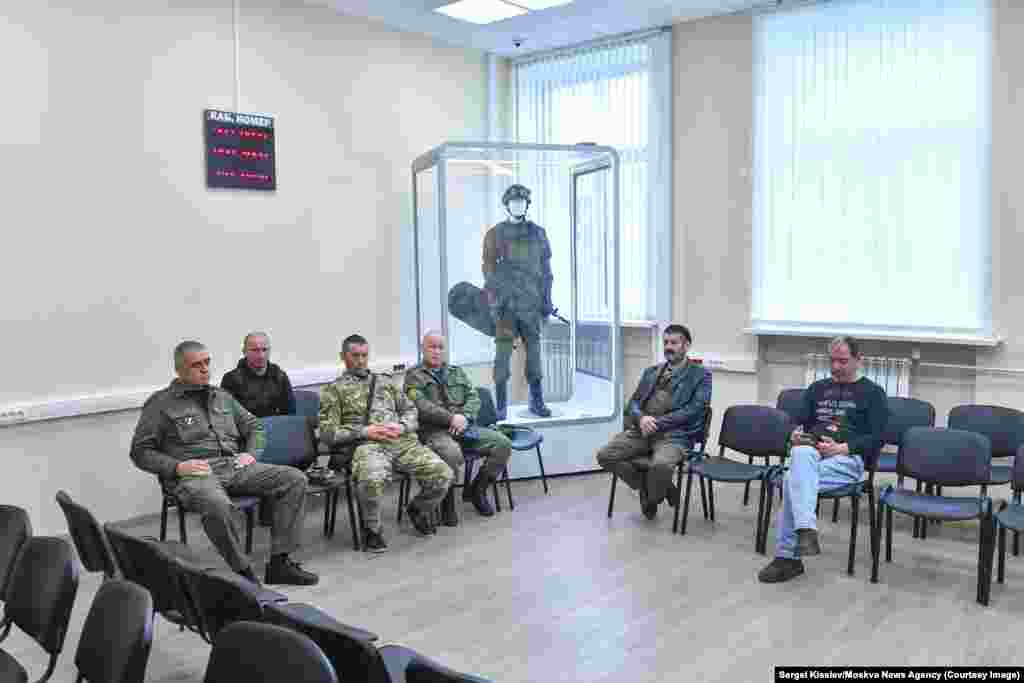
<div>These images from Moscow&nbsp;were taken by photographers from the Kremlin-linked Moskva News Agency and appear to show men signing up for military contracts.<br />
<br />
The caption on this April 3 photo describes the scene as the &ldquo;opening of a selection point for contract service.&rdquo;</div>

<div>
<div>&nbsp;</div>
</div>
5/7
These images from Moscow were taken by photographers from the Kremlin-linked Moskva News Agency and appear to show men signing up for military contracts.

The caption on this April 3 photo describes the scene as the “opening of a selection point for contract service.”
 
Recent photos from the streets of Russia show a push to lure men into fighting in Ukraine with lucrative contracts.
Men inside the Moscow military office.<br />
<br />
Russia&rsquo;s State Duma approved a law on April 10 giving digital conscription call-ups the same legal weight as papers being handed to draftees, making them effectively impossible to escape.
6/7 Men inside the Moscow military office.

Russia’s State Duma approved a law on April 10 giving digital conscription call-ups the same legal weight as papers being handed to draftees, making them effectively impossible to escape.
Recent photos from the streets of Russia show a push to lure men into fighting in Ukraine with lucrative contracts.
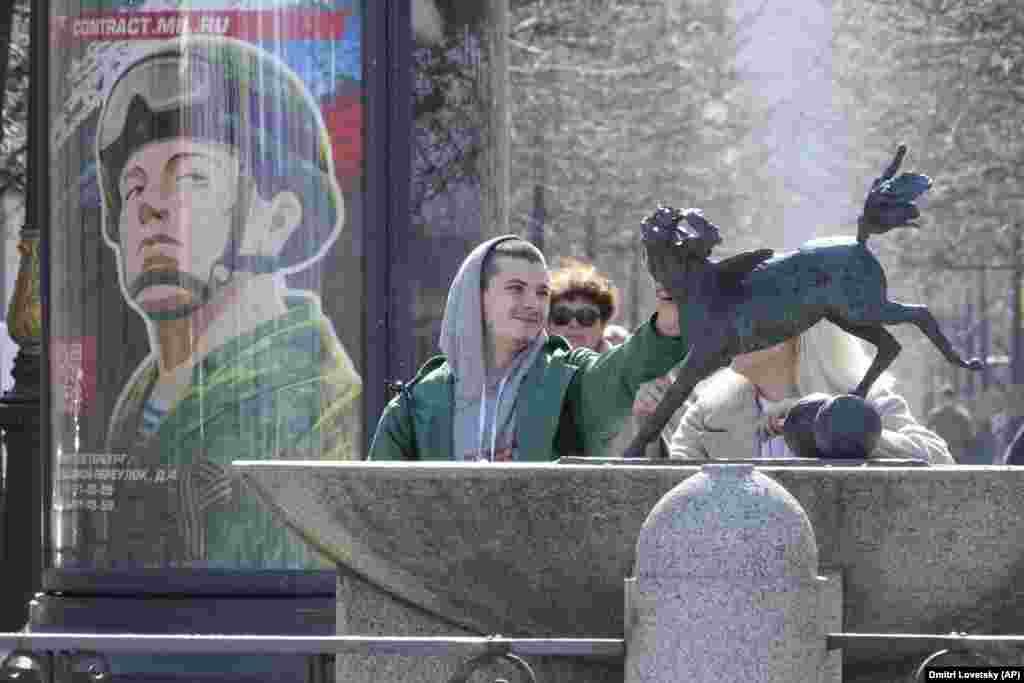
A poster advertising paid military service in St. Petersburg on April 12.&nbsp;<br />
<br />
Russian officials have claimed there will be no second mobilization wave. But the tweaked law on conscription has led many to assume another mass call-up may be imminent if the ongoing marketing push to attract paid fighters does not attract sufficient numbers.&nbsp;<br />
&nbsp;
7/7 A poster advertising paid military service in St. Petersburg on April 12. 

Russian officials have claimed there will be no second mobilization wave. But the tweaked law on conscription has led many to assume another mass call-up may be imminent if the ongoing marketing push to attract paid fighters does not attract sufficient numbers. 
 
Recent photos from the streets of Russia show a push to lure men into fighting in Ukraine with lucrative contracts.
Previous slide
Next slide


"The officer told us, 'You are being deported and can't return to Russia for at least five years, but if you agree to join the Russian military your records will be wiped clean, you'll get a good wage, and become Russian citizens after just six months,'" said the Tajik man on condition of anonymity.

Though he said he wasn't convinced, some others "seriously considered accepting the offer, because going back to Tajikistan with no money, no jobs, and no future is almost as bad."

In Nizhny Novgorod, migrant worker Umarov decided to reject the offer of a Russian passport and $3,000 a month to fight in Ukraine, although he makes only half of that amount during the height of the summer work season.

"I am not going to Ukraine at any cost," Umarov said. "It is not my war."

Written and reported by Farangis Najibullah with additional reporting by Zarangez Navruzshoh
  • 16x9 Image

    Farangis Najibullah

    Farangis Najibullah is a senior correspondent for RFE/RL who has reported on a wide range of topics from Central Asia, including the impact of Russia’s invasion of Ukraine on the region. She has extensively covered efforts by Central Asian states to repatriate and reintegrate their citizens who joined Islamic State in Syria and Iraq.

  • 16x9 Image

    Zarangez Navruzshoh

    Zarangez Navruzshoh is a correspondent for RFE/RL's Tajik Service.

This item is part of
XS
SM
MD
LG