


Accessibility links

Breaking News

Zelenskiy In Vilnius To Press For Aid As Russia Strikes Power Infrastructure

Updated
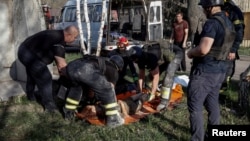
Rescuers prepare to carry the body of a person killed during Russian air strikes on the village of Lyptsi, in Ukraine's Kharkiv region, on April 10.

President Volodymyr Zelenskiy has again called on Ukraine's allies to give the embattled country more air-defense systems as Russia struck Ukrainian energy infrastructure targets, including a major power plant south of Kyiv, killing at least four people and leaving hundreds of thousands Ukrainians without electricity.

The coal-powered Trypilska thermal power plant, a major electricity supplier for the Kyiv, Cherkasy, and Zhytomyr regions located some 50 kilometers south of the capital, was completely destroyed in the Russian attack, Ukrainian energy company Centrenerho said on April 11.

Energy Minister Herman Halushchenko said that energy infrastructure was the main target of the Russian missile and drone strikes on the Kharkiv, Zaporizhzhya, Lviv, and Kyiv regions.

President Vladimir Putin said Russia had been obliged to launch strikes on Ukrainian energy sites in response to Kyiv's attacks on Russian targets.

"Unfortunately, we observed a series of strikes on our energy sites recently and were obliged to respond," Putin said after a meeting on April 11 with Belarus's authoritarian ruler, Alyaksandr Lukashenka.

Kharkiv, Ukraine's second-largest city, which is less that 30 kilometers from the Russian border, was again one of the main targets of Russian strikes in the early hours of April 11, with 10 air strikes that cut the energy supply to more than 200,000 consumers in the city.

Russian attacks on Kharkiv have intensified in recent weeks. Mayor Ihor Terekhov said recently that S-300 missiles need only 40 seconds to reach Kharkiv from the Russian region of Belgorod.

Russian ballistic missiles struck the southern city of Mykolayiv at noon on April 11, killing four people and wounding five, the Ukrainian military and the head of the regional military administration, Vitaliy Kim, said.

Zelenskiy, who arrived in Lithuania's capital, Vilnius, for a summit of the Three Seas Initiative, said he and Latvian President Edgars Rinkevics had signed a bilateral security agreement as he seeks to shore up aid and support in the face of unrelenting attacks from Russia.

"The main task for now is to make every effort to strengthen our air-defense system, to meet the urgent needs of the Ukrainian Defense Forces, and to consolidate international support so that we can overcome Russian terror," Zelenskiy wrote on X, formerly Twitter, upon arrival in Vilnius.

Zelenskiy earlier said Russia had attacked with scores of drones and missiles that overwhelmed Ukraine's dwindling air-defense systems and ammunition.

"More than 40 missiles and about 40 attack drones. Some of the rockets and Shahed [drones] were shot down. Unfortunately, only a part," Zelenskiy wrote on Telegram, calling the latest attack "vile."

Ukraine's air force separately said that during the April 11 attack its air defenses destroyed 39 drones, 16 cruise missiles, and two guided missiles.

Zelenskiy made another impassioned appeal to Ukraine's allies to act faster and provide Ukraine with the means to defend itself.

"Air defense and other defense support are needed, not turning a blind eye and long discussions," Zelenskiy wrote, adding that permitting Moscow to bomb Ukraine with impunity ammounted to giving Russia carte blanche to terrorize the world.

"If Russia is allowed to continue to do this, if Russian missiles and 'Shaheds' will strike not only at Ukraine but also at the determination of its partners, this will be a global license for terror," he wrote.

Inside Ukraine’s Fast-Tracked Sniper Training Course

This unearthly procession is a band of Ukrainian soldiers undergoing training at the Alfa Bravo sniper course at an unspecified location near the front lines in Ukraine.
1/10 This unearthly procession is a band of Ukrainian soldiers undergoing training at the Alfa Bravo sniper course at an unspecified location near the front lines in Ukraine.
At a secret location within earshot of the fighting in Ukraine, camouflaged snipers receive specialized training in a fraction of the time it would have taken soldiers in peacetime.
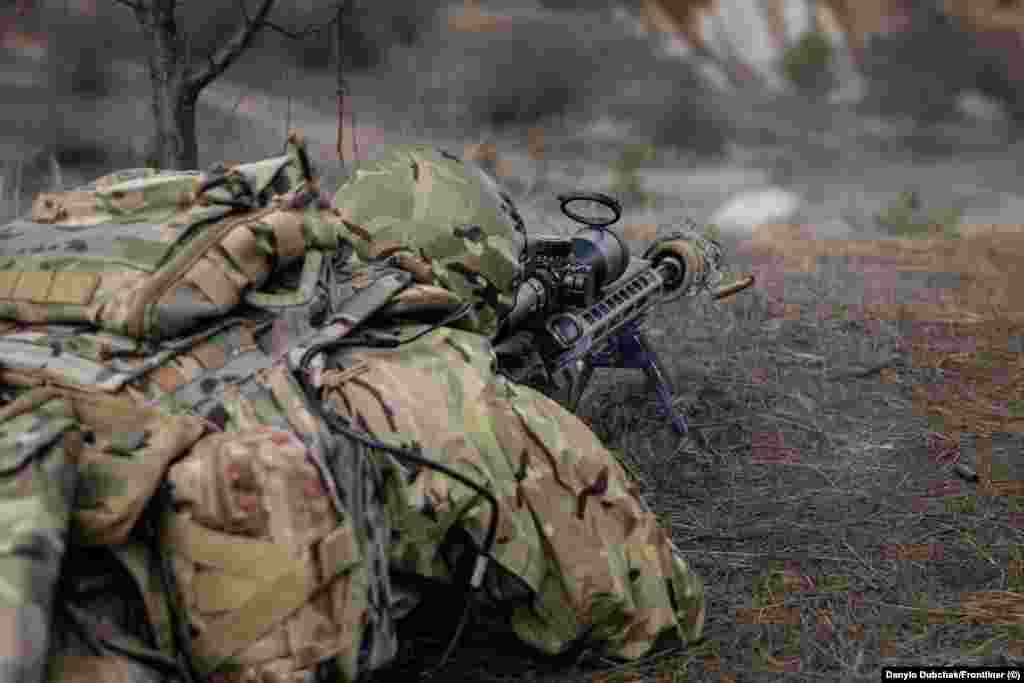
A soldier dressed in a camouflage cloak aims his rifle during the training.<br />
<br />
The snipers are draped in camouflage known in English as ghillie suits. In Ukrainian and Russian, the coverings are called &ldquo;kikimora,&rdquo; after <a href="https://en.wikipedia.org/wiki/Kikimora">a witchy spirit</a> of Slavic folklore.<br />
&nbsp;
2/10 A soldier dressed in a camouflage cloak aims his rifle during the training.

The snipers are draped in camouflage known in English as ghillie suits. In Ukrainian and Russian, the coverings are called “kikimora,” after a witchy spirit of Slavic folklore.
 
At a secret location within earshot of the fighting in Ukraine, camouflaged snipers receive specialized training in a fraction of the time it would have taken soldiers in peacetime.
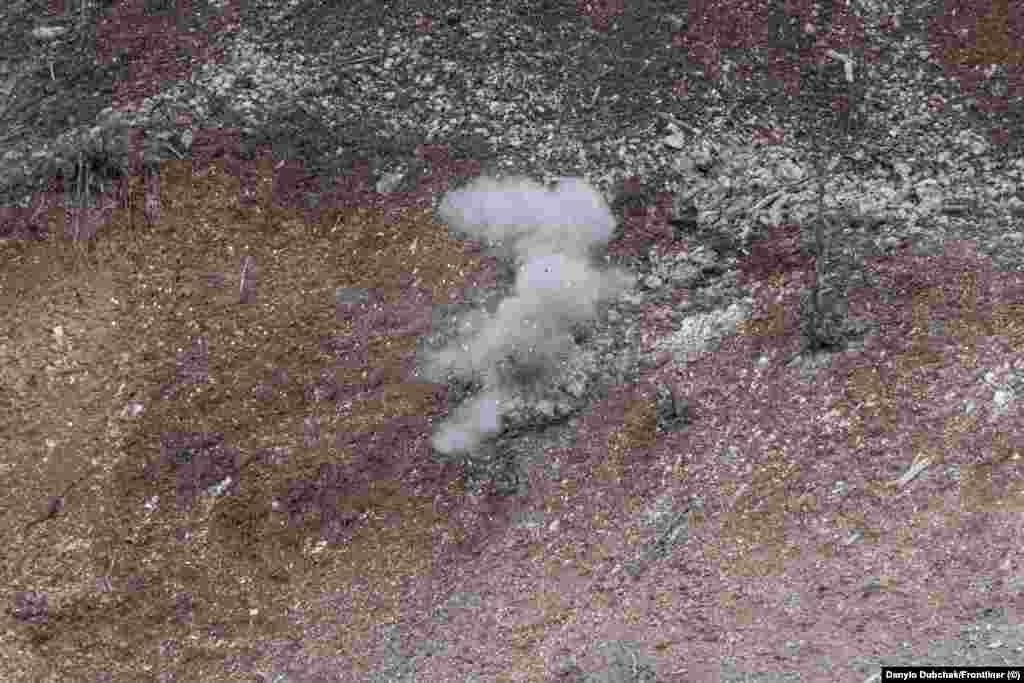
A cement target takes a direct hit during live-firing exercises.<br />
<br />
Viktor Elanskiy, an instructor at the Alpha Bravo course and a specialist in precision shooting, claims the importance of snipers is forgotten by militaries after major conflicts. &ldquo;Then, when war breaks out again, everyone starts shouting, &lsquo;Where are our snipers? We can&rsquo;t operate without them!&rsquo;&quot; he says.
3/10 A cement target takes a direct hit during live-firing exercises.

Viktor Elanskiy, an instructor at the Alpha Bravo course and a specialist in precision shooting, claims the importance of snipers is forgotten by militaries after major conflicts. “Then, when war breaks out again, everyone starts shouting, ‘Where are our snipers? We can’t operate without them!’" he says.
At a secret location within earshot of the fighting in Ukraine, camouflaged snipers receive specialized training in a fraction of the time it would have taken soldiers in peacetime.
The training, which would take more than a year in peacetime, is sped through in just 21 days due to the urgent need for snipers on Ukraine&rsquo;s front lines.
4/10 The training, which would take more than a year in peacetime, is sped through in just 21 days due to the urgent need for snipers on Ukraine’s front lines.
At a secret location within earshot of the fighting in Ukraine, camouflaged snipers receive specialized training in a fraction of the time it would have taken soldiers in peacetime.
A participant fires a round during training.&nbsp;<br />
<br />
Elanskiy says many former snipers in Ukraine have been retrained to operate weaponized FPV (first-person view) drones, but he insists concealed marksmen are still irreplaceable on the battlefield. &ldquo;Drones can&rsquo;t fly in heavy rain,&rdquo; the trainer says, while &ldquo;snipers can shoot in any weather.&rdquo;
5/10 A participant fires a round during training. 

Elanskiy says many former snipers in Ukraine have been retrained to operate weaponized FPV (first-person view) drones, but he insists concealed marksmen are still irreplaceable on the battlefield. “Drones can’t fly in heavy rain,” the trainer says, while “snipers can shoot in any weather.”
At a secret location within earshot of the fighting in Ukraine, camouflaged snipers receive specialized training in a fraction of the time it would have taken soldiers in peacetime.
Two Ukrainian soldiers are seen walking the course.&nbsp;<br />
<br />
As an example of the impact a single sniper&rsquo;s bullet can have on enemy forces, Elanskiy cites an incident during fighting around Kyupyansk in northeastern Ukraine.<br />
<br />
&ldquo;Our sniper hit a Russian soldier from 800 meters away,&rdquo; he said. &ldquo;Only one shot, but what happened? Along their entire front line, all the [Russians] put on their body armor and helmets. In just one day! This is the work of a sniper. He made them anxious. They realized that this is not a resort, that they have come to a foreign land where they are not welcome.&rdquo;
6/10 Two Ukrainian soldiers are seen walking the course. 

As an example of the impact a single sniper’s bullet can have on enemy forces, Elanskiy cites an incident during fighting around Kyupyansk in northeastern Ukraine.

“Our sniper hit a Russian soldier from 800 meters away,” he said. “Only one shot, but what happened? Along their entire front line, all the [Russians] put on their body armor and helmets. In just one day! This is the work of a sniper. He made them anxious. They realized that this is not a resort, that they have come to a foreign land where they are not welcome.”
At a secret location within earshot of the fighting in Ukraine, camouflaged snipers receive specialized training in a fraction of the time it would have taken soldiers in peacetime.
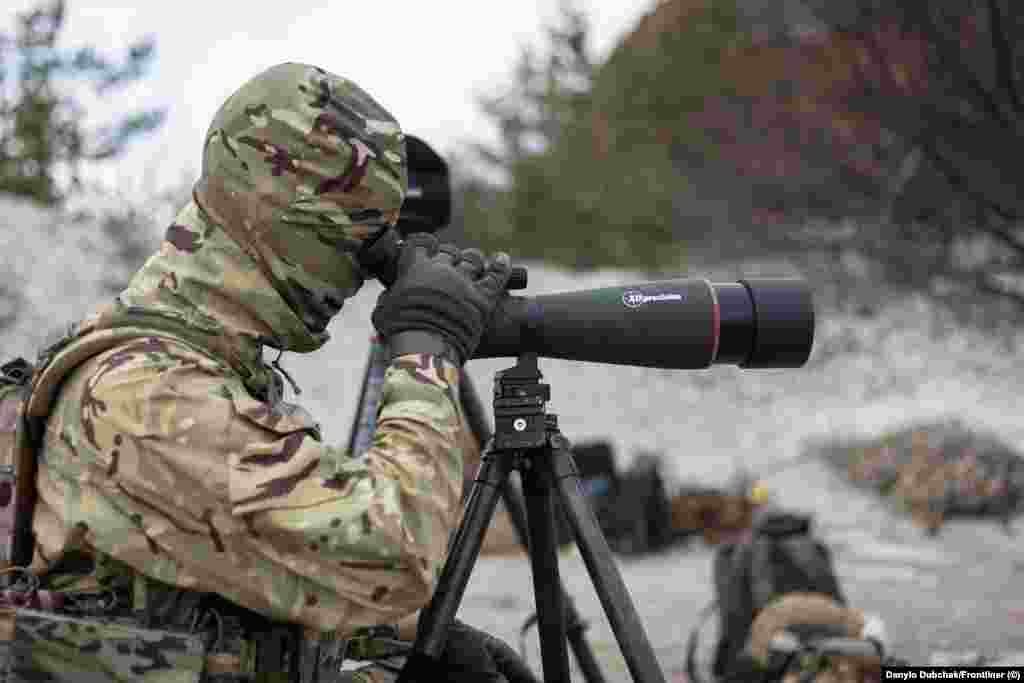
An instructor observes target practice.<br />
<br />
The Alpha Bravo training includes shooting in the darkness of night using thermal-imaging sights. With a limited budget to simulate warm enemy targets, the instructors light a small fire in a pit beneath the metal targets, which then glow vividly through the night-vision sights.<br />
<br />
&ldquo;The cost is 50 hryvnyas ($1.25) for a bag of barbeque charcoal,&rdquo; Elanskiy says. &ldquo;And with that, you can train an entire unit.&rdquo;
7/10 An instructor observes target practice.

The Alpha Bravo training includes shooting in the darkness of night using thermal-imaging sights. With a limited budget to simulate warm enemy targets, the instructors light a small fire in a pit beneath the metal targets, which then glow vividly through the night-vision sights.

“The cost is 50 hryvnyas ($1.25) for a bag of barbeque charcoal,” Elanskiy says. “And with that, you can train an entire unit.”
At a secret location within earshot of the fighting in Ukraine, camouflaged snipers receive specialized training in a fraction of the time it would have taken soldiers in peacetime.
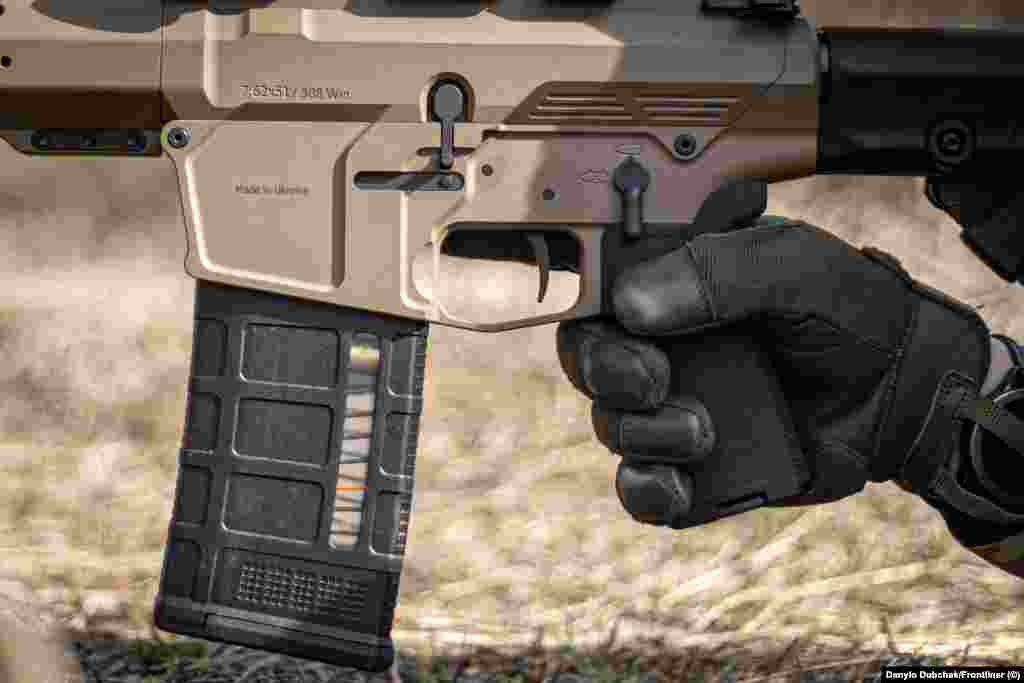
A sniper student operates a Ukrainian-made rifle.<br />
<br />
Many of the weapons the snipers use were developed in Ukraine, including the <a href="https://en.wikipedia.org/wiki/Zbroyar_Z-10">UAR-10 rifle</a>, and the <a href="https://en.wikipedia.org/wiki/Snipex_Alligator">Snipex Alligator</a>, an anti-materiel gun that uses cigar-sized bullets capable of piercing steel armor.&nbsp;
8/10 A sniper student operates a Ukrainian-made rifle.

Many of the weapons the snipers use were developed in Ukraine, including the UAR-10 rifle, and the Snipex Alligator, an anti-materiel gun that uses cigar-sized bullets capable of piercing steel armor. 
At a secret location within earshot of the fighting in Ukraine, camouflaged snipers receive specialized training in a fraction of the time it would have taken soldiers in peacetime.
Kateryna, a female sniper using a pseudonym, is photographed after speaking to journalists from beneath her kikimora. Kateryna is being trained in camouflage, an art in and of itself.<br />
<br />
&ldquo;If you&#39;ve chosen a position to lie in, you can&#39;t always monitor your legs, your weapon,&rdquo; Kateryna explains. &ldquo;For example, a belted knife can glint in the light. You need to take this into account,&quot; she says.<br />
<br />
During the course, &ldquo;instructors walk around, look at our positions, point out mistakes, take pictures, then we analyze it all,&quot; Kateryna says.
9/10 Kateryna, a female sniper using a pseudonym, is photographed after speaking to journalists from beneath her kikimora. Kateryna is being trained in camouflage, an art in and of itself.

“If you've chosen a position to lie in, you can't always monitor your legs, your weapon,” Kateryna explains. “For example, a belted knife can glint in the light. You need to take this into account," she says.

During the course, “instructors walk around, look at our positions, point out mistakes, take pictures, then we analyze it all," Kateryna says.
At a secret location within earshot of the fighting in Ukraine, camouflaged snipers receive specialized training in a fraction of the time it would have taken soldiers in peacetime.
A small Ukrainian flag patch tucked away inside a student&#39;s kikimora.<br />
<br />
Kateryna has served in the Ukrainian military for more than five years and has no desire to stay on in the restrictive environment beyond a hoped-for Ukrainian victory. &ldquo;I want to travel the world, to see Spain and Finland, and visit America again,&rdquo; she says.<br />
<br />
The hardest thing, she says, is facing up to the fact that the conflict sparked by Russia&rsquo;s invasion is not likely to end soon. &ldquo;You make a big contribution [to the defense of Ukraine], but you don&rsquo;t see where the end is, or whether you&rsquo;ll even live to see that end,&rdquo; she says.<br />
<br />
<em>This photo gallery is an adapted version of the original report by Olena Maksimenko and&nbsp;Danylo Dubchak, first&nbsp;<a href="https://www.frontliner.com.ua/alpha-bravo-snipers/">published by Frontliner.</a></em>
10/10 A small Ukrainian flag patch tucked away inside a student's kikimora.

Kateryna has served in the Ukrainian military for more than five years and has no desire to stay on in the restrictive environment beyond a hoped-for Ukrainian victory. “I want to travel the world, to see Spain and Finland, and visit America again,” she says.

The hardest thing, she says, is facing up to the fact that the conflict sparked by Russia’s invasion is not likely to end soon. “You make a big contribution [to the defense of Ukraine], but you don’t see where the end is, or whether you’ll even live to see that end,” she says.

This photo gallery is an adapted version of the original report by Olena Maksimenko and Danylo Dubchak, first published by Frontliner.
At a secret location within earshot of the fighting in Ukraine, camouflaged snipers receive specialized training in a fraction of the time it would have taken soldiers in peacetime.
Previous slide
Next slide

A $60 billion U.S. aid package has been stalled in the U.S. House of Representatives for months, blocked by a small number of Republicans who believe domestic matters should take priority, despite both the State Department and Defense Department pushing Congress to pass it.
Japan's prime minister told U.S. lawmakers that Ukraine risks collapsing under Russia's onslaught without U.S. support, a disaster that could embolden China and spark a new crisis in East Asia.

In the first speech to a joint meeting of the U.S. Congress by a Japanese leader in nine years, Fumio Kishida urged Americans on April 11 not to doubt their country's "indispensable" role in world affairs, and said Tokyo was undertaking historic military upgrades to support its ally.

On support for Ukraine, he asked, “Without U.S. support, how long before the hopes of Ukraine would collapse under the onslaught from Moscow?”

On April 10, the top U.S. general in Europe warned that Ukraine cannot sustain the fight against Russia alone.

General Christopher Cavoli, the commander of European Command, told the House Armed Services Committee on April 10 that the severity of the situation in Ukraine “can’t be overstated” as troops on the battlefield run short of ammunition and as the country’s air-defense capabilities are depleted.

Ukraine's parliament on April 11 moved to boost the number of troops available for duty by approving a law on military mobilization. The law expands the powers of Ukrainian authorities to issue draft notices -- including via an electronic system -- that is expected to help limit evasion.
Speaking in parliament on April 11, General Yuriy Sodol, who commands the troops in the Kharkiv, Donetsk and Luhansk regions, put in stark contrast the battlefield disadvantage Ukraine faces.

"The enemy outnumbers us by 7-10 times, we lack manpower," he said.

With reporting by Reuters
  • 16x9 Image

    RFE/RL's Ukrainian Service

    RFE/RL's Ukrainian Service has seen its audience grow significantly since Russia's full-scale invasion in February 2022 and is among the most cited media outlets in the country. Its bold, in-depth reporting from the front lines has won many accolades and awards. Its comprehensive coverage also includes award-winning reporting by the Donbas.Realities and Crimea.Realities projects and the Schemes investigative unit.

This item is part of
XS
SM
MD
LG