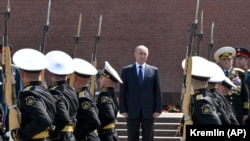
Russian President Vladimir Putin attends a ceremony in memory of those killed during World War II a the Tomb of Unknown Soldier in Moscow on June 22.
Russian President Vladimir Putin has marked the 80th anniversary of the Nazi invasion of the U.S.S.R. by hailing the sacrifices made by the Soviets during the war while claiming that European security has been "dramatically degraded" amid "escalating tensions."
Russia's relations with the West have been at their lowest point since the end of the Cold War after Moscow's annexation of Ukraine's Crimea in 2014.
Russia, the successor state of the U.S.S.R., has also been anxious about NATO's expansion eastward after the collapse of the communist system in Eastern Europe in the late 1980s and early 1990s, considering it a threat to its security.
"The day of June 22 continues to raise indignation and sorrow in the hearts of all generations, causing pain for the destroyed fates of millions of people, because what they went through in those terrible years was literally imprinted in our memories," Putin said after laying flowers at the Tomb of the Unknown Soldier at the Kremlin wall.
Despite having signed a nonaggression pact with Moscow, Nazi Germany launched a surprise attack against the Soviet Union on June 22, 1941.
Operation Barbarossa: The Nazi Invasion Of The U.S.S.R. 80 Years Ago
1/20This photo -- of German soldiers hauling a cannon past a Soviet border marker -- is one of the first images taken of Operation Barbarossa, the attack on the Soviet Union that was launched at dawn on June 22, 1941.
Nazi Germany led the largest-ever ground invasion force in an attack on the Soviet Union in 1941 that unleashed a brutal conflict that cost the lives of millions of people.
Show moreShow less
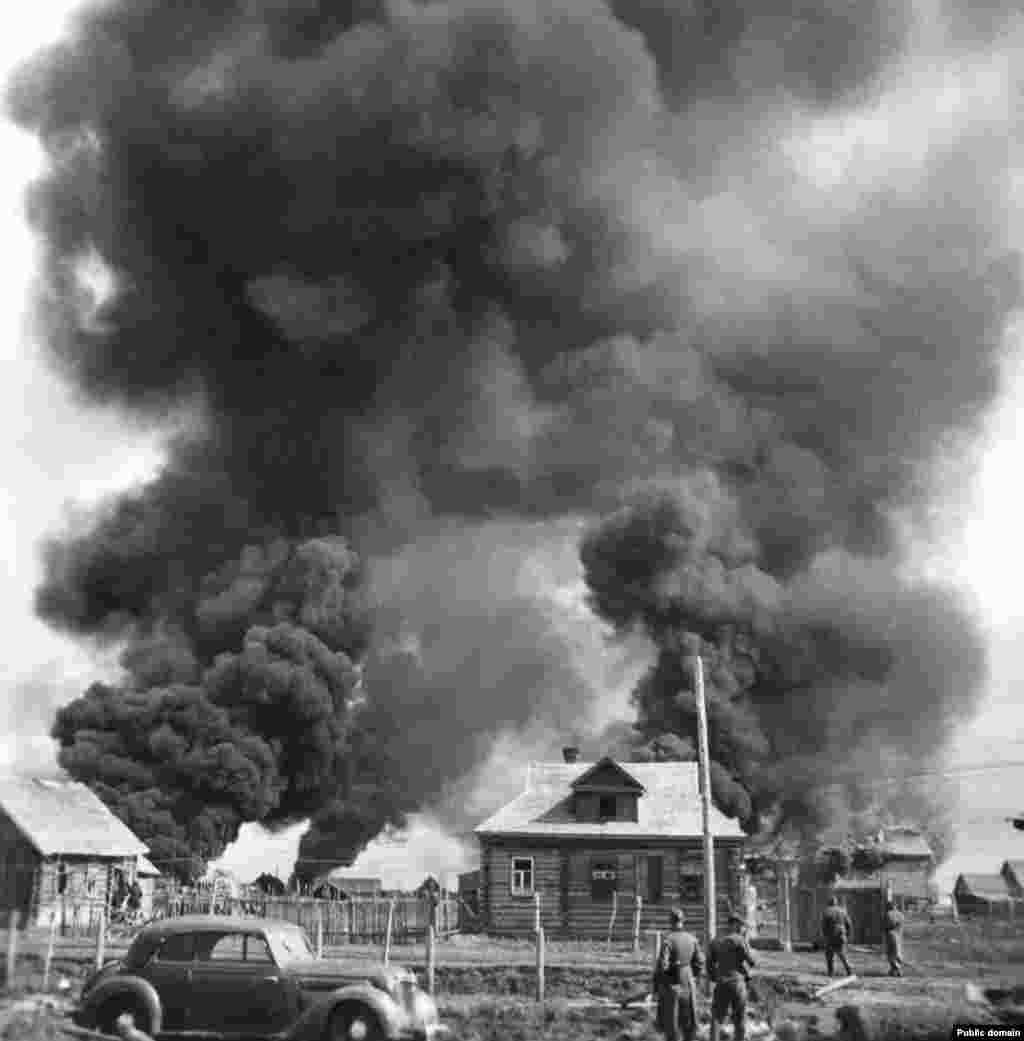
2/20German soldiers watch a Soviet village burn in June 1941.
Barbarossa was the largest military ground invasion in history, with some 3.8 million troops, thousands of tanks and aircraft, and more than half a million horses advancing across the entirety of Eastern Europe, from the Gulf of Finland to the Black Sea.
Nazi Germany led the largest-ever ground invasion force in an attack on the Soviet Union in 1941 that unleashed a brutal conflict that cost the lives of millions of people.
Show moreShow less
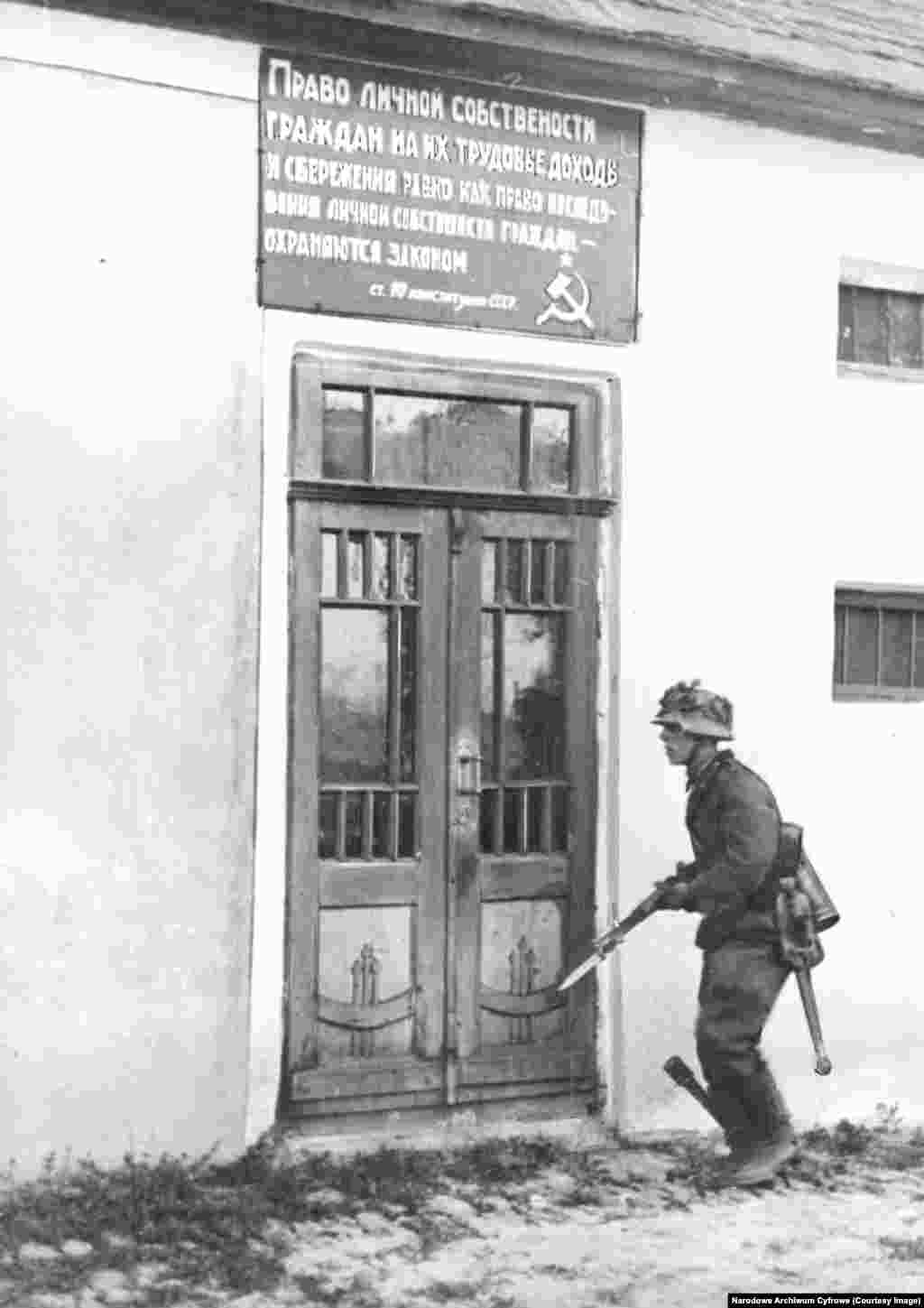
3/20A Nazi soldier with a grenade tucked in his boot moves through a Soviet village in June 1941.
Barbarossa was motivated in part by racial hatred for what Nazi leadership deemed "subhuman" Slavic people. In the Nazi "master plan for the East," most Slavs were to be killed or enslaved and the vast territories of the Soviet Union would be resettled with ethnic Germans.
Nazi Germany led the largest-ever ground invasion force in an attack on the Soviet Union in 1941 that unleashed a brutal conflict that cost the lives of millions of people.
Show moreShow less
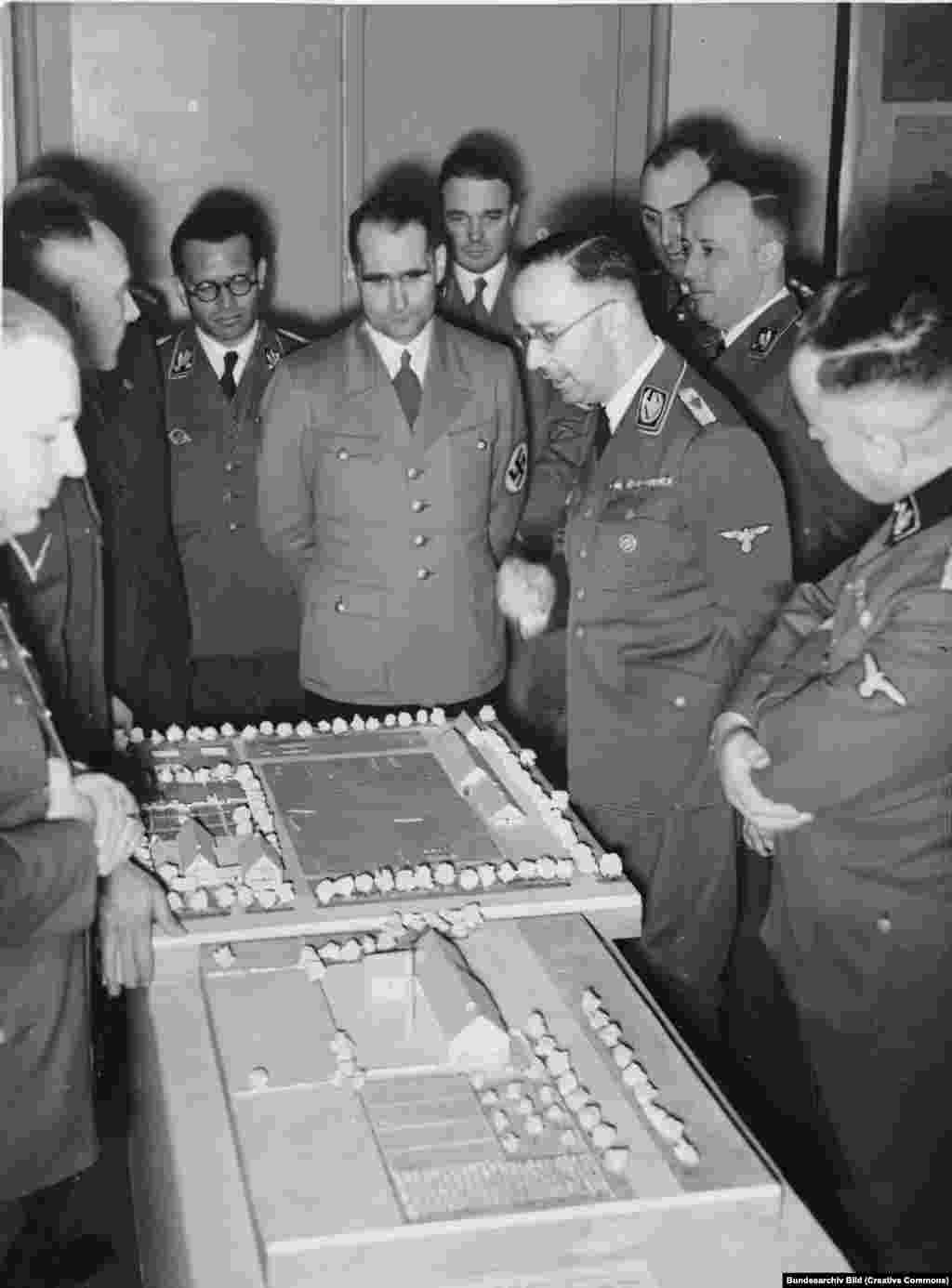
4/20Heinrich Himmler and other senior Nazis look at a plan for ethnic German rural settlements on Soviet territory in March 1941.
The invasion had been years in the making, and was hinted at in Nazi leader Adolf Hitler’s 1925 manifesto Mein Kampf when he wrote, "If we talk about new soil and territory in Europe today, we can think primarily only of Russia and its vassal border states."
Nazi Germany led the largest-ever ground invasion force in an attack on the Soviet Union in 1941 that unleashed a brutal conflict that cost the lives of millions of people.
Show moreShow less
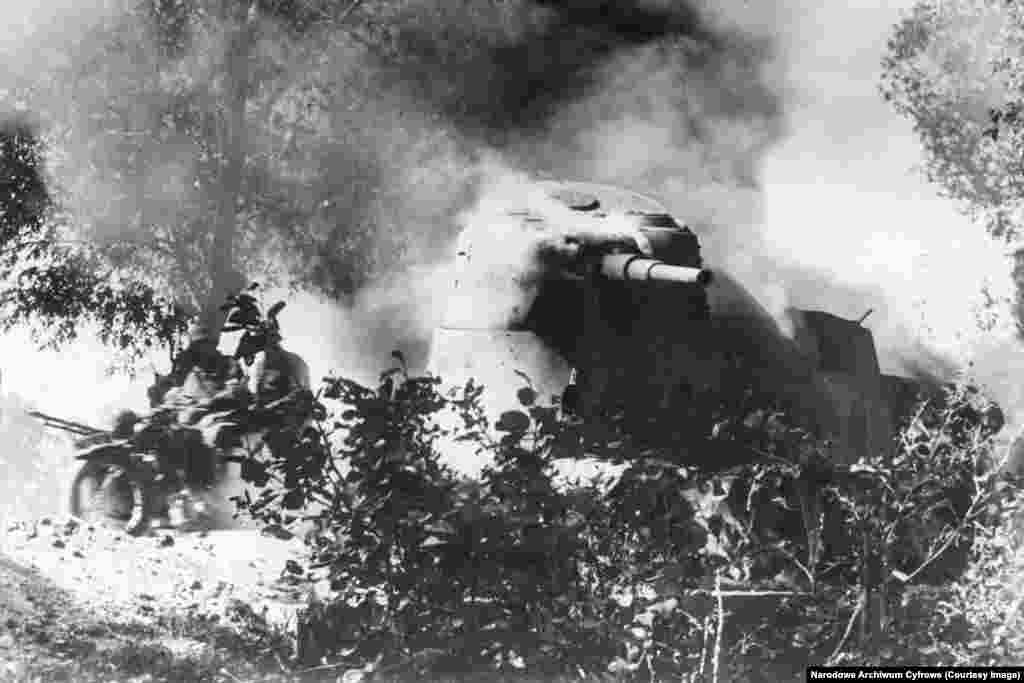
5/20Nazis on motorcycles ride past a burning Soviet tank in June 1941.
Despite receiving dozens of warnings of an impending attack, the June 22 invasion stunned Soviet leader Josef Stalin, who reportedly disappeared to his country house for two days after the invasion.
Nazi Germany led the largest-ever ground invasion force in an attack on the Soviet Union in 1941 that unleashed a brutal conflict that cost the lives of millions of people.
Show moreShow less
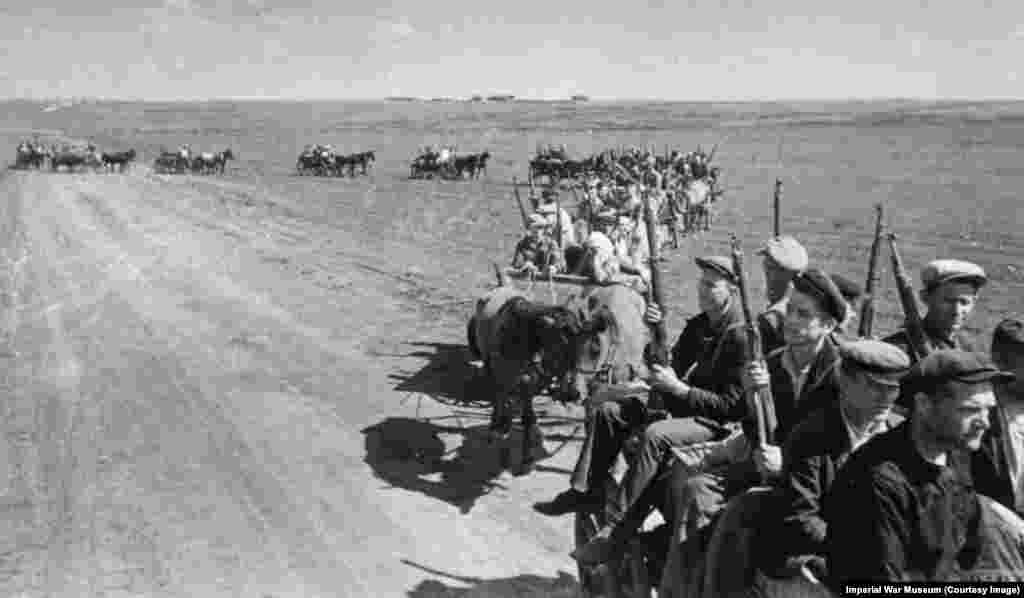
6/20Soviet citizens head to the front lines armed with tsarist-era Mosin-Nagant rifles.
On announcing the invasion to its citizens, the Soviet leadership astutely appealed to people's patriotism by calling for the defense of "our beloved country" rather than the usual appeals to international socialism or to Stalin.
Nazi Germany led the largest-ever ground invasion force in an attack on the Soviet Union in 1941 that unleashed a brutal conflict that cost the lives of millions of people.
Show moreShow less
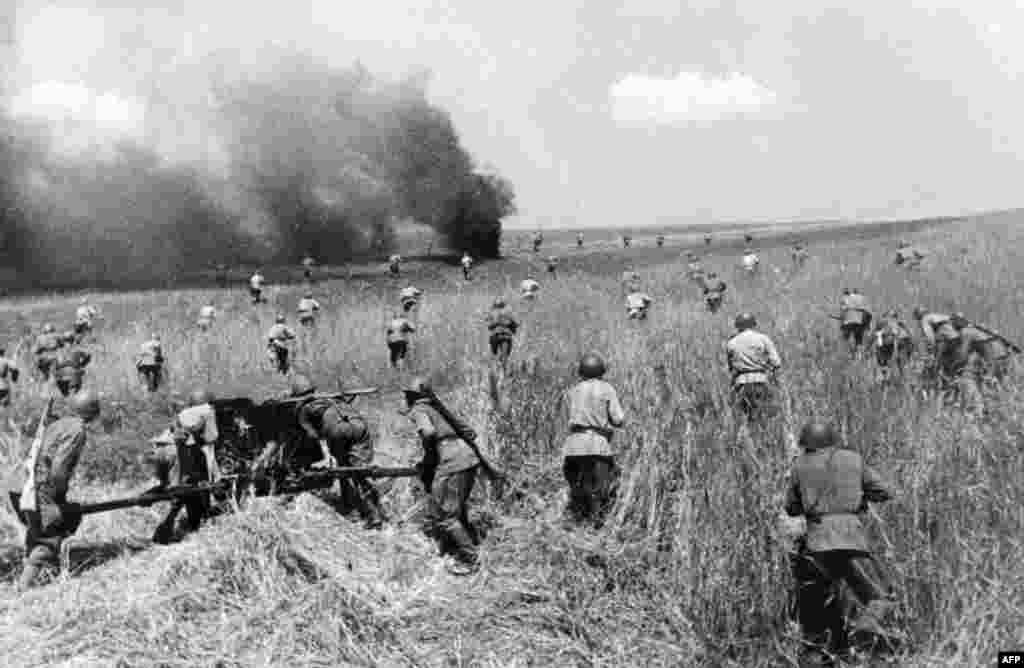
7/20Red Army units advance against the Nazi-led invasion force in an undated photo.
Once Stalin had snapped out of his apparent shock and taken leadership, Red Army fighters were faced with the Nazi war machine in front and political commissars in the rear who were authorized to execute deserters on the spot and arrest their families.
Nazi Germany led the largest-ever ground invasion force in an attack on the Soviet Union in 1941 that unleashed a brutal conflict that cost the lives of millions of people.
Show moreShow less
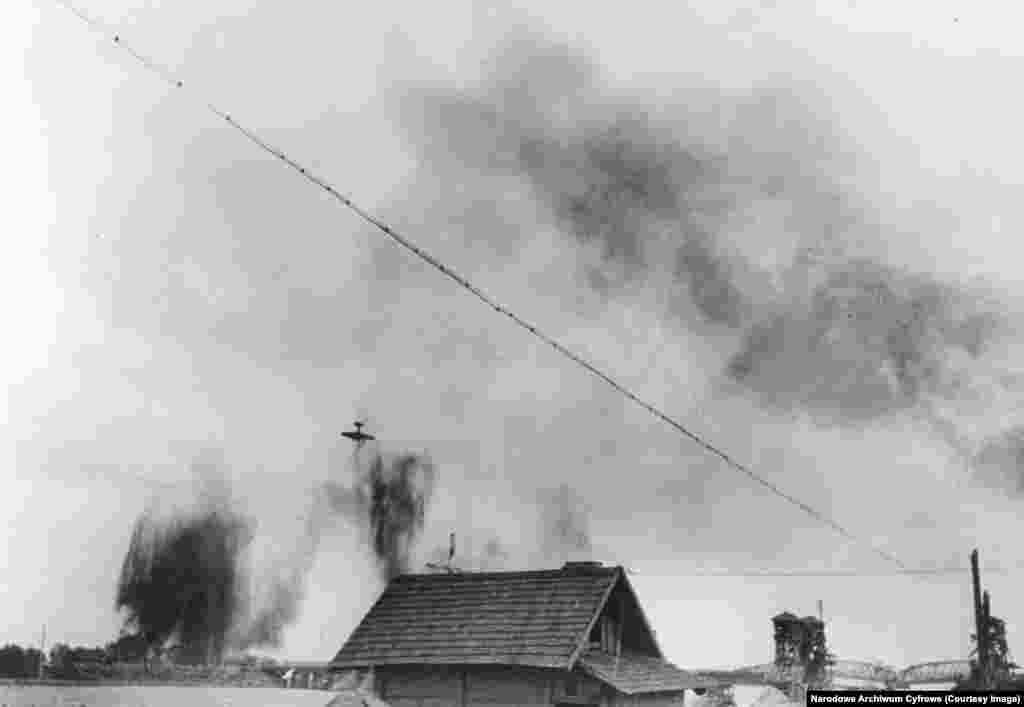
8/20A Soviet Tupolev bomber plunges to earth after being shot down during fighting in Berezina in July 1941 in what today is Belarus.
Nazi Germany led the largest-ever ground invasion force in an attack on the Soviet Union in 1941 that unleashed a brutal conflict that cost the lives of millions of people.
Show moreShow less
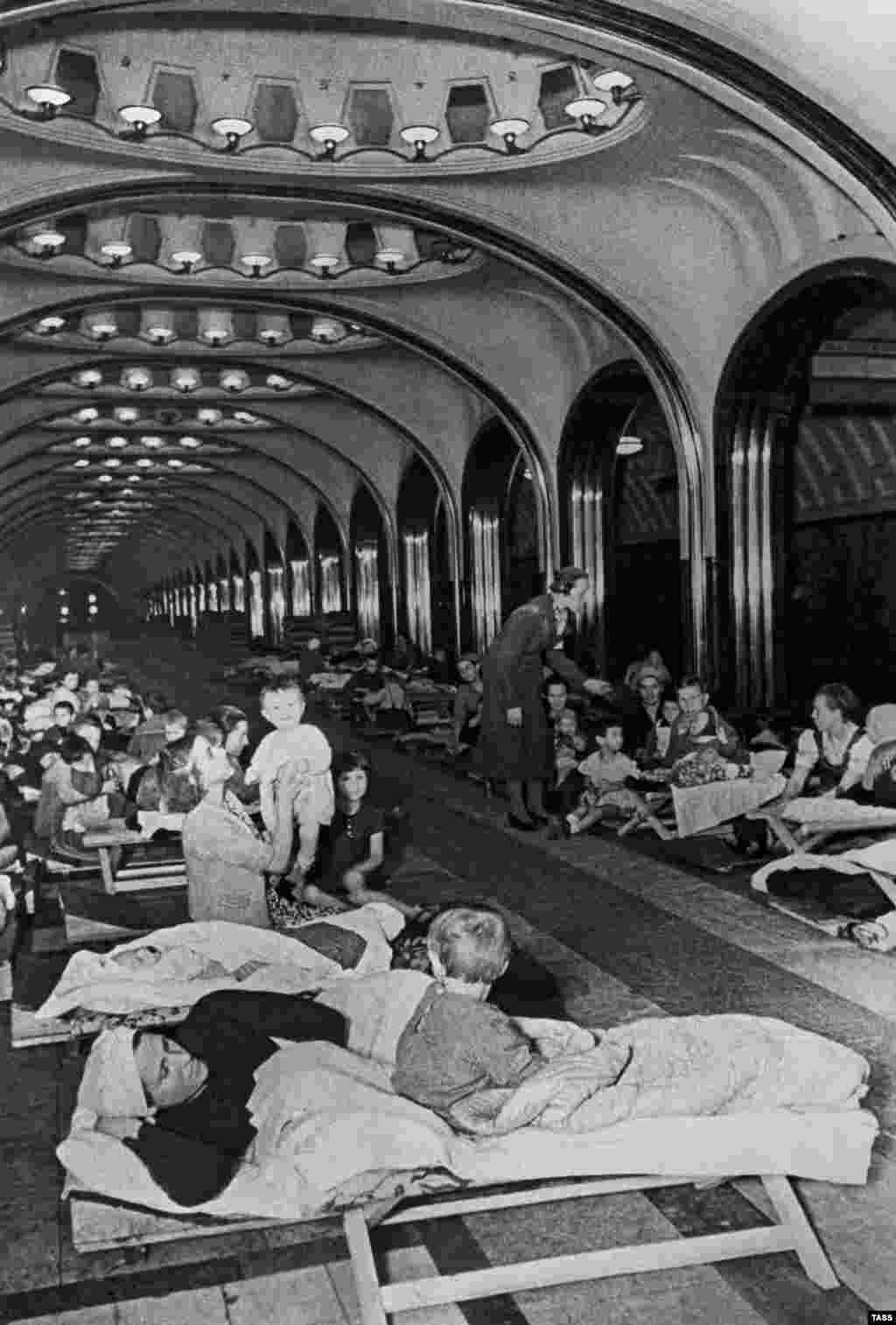
9/20Civilians shelter from aerial bombardment in the Mayakovskaya subway station as the Nazis close in on Moscow in August 1941.
Nazi Germany led the largest-ever ground invasion force in an attack on the Soviet Union in 1941 that unleashed a brutal conflict that cost the lives of millions of people.
Show moreShow less
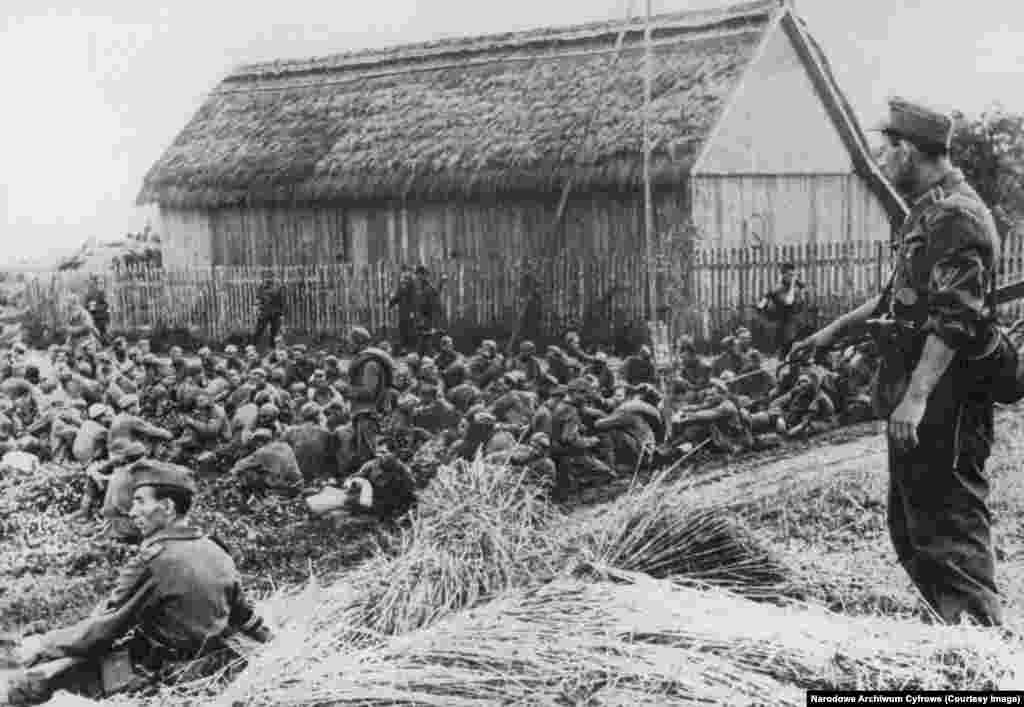
10/20A group of Soviet prisoners captured by Nazi forces. Around half of the Soviet POWs held by Germany died in captivity, compared to a less than 4 percent fatality rate for U.S. and British prisoners.
Nazi Germany led the largest-ever ground invasion force in an attack on the Soviet Union in 1941 that unleashed a brutal conflict that cost the lives of millions of people.
Show moreShow less
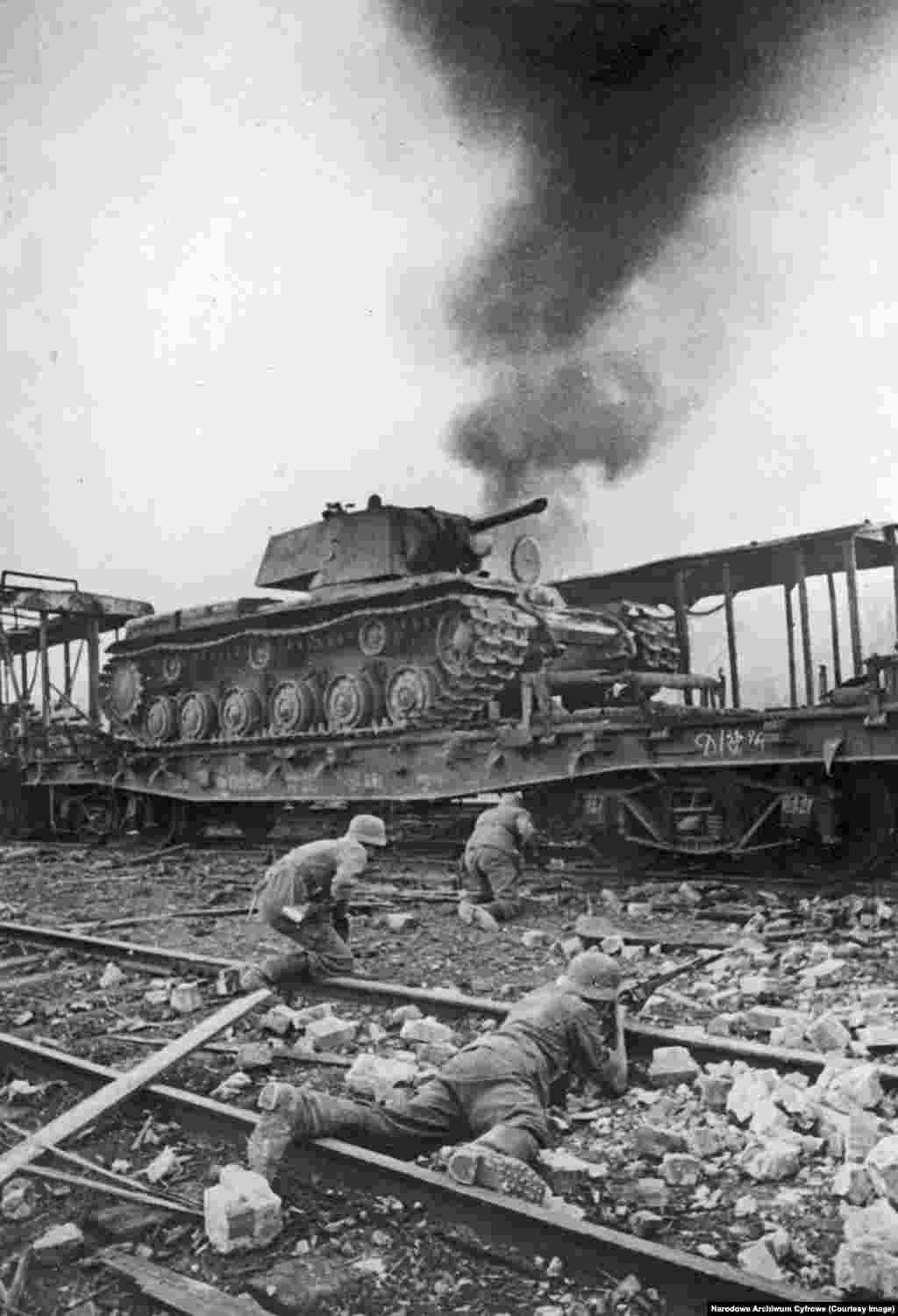
11/20Nazi troops engage in a firefight on the Moscow-Smolensk railway in August 1941. A Soviet KV-1 tank is caught in the middle of the shoot-out.
Despite Hitler's prediction of a swift capture of Moscow and Leningrad (now St. Petersburg), Nazi troops soon faced ferocious resistance and were unable to capture either city.
Nazi Germany led the largest-ever ground invasion force in an attack on the Soviet Union in 1941 that unleashed a brutal conflict that cost the lives of millions of people.
Show moreShow less
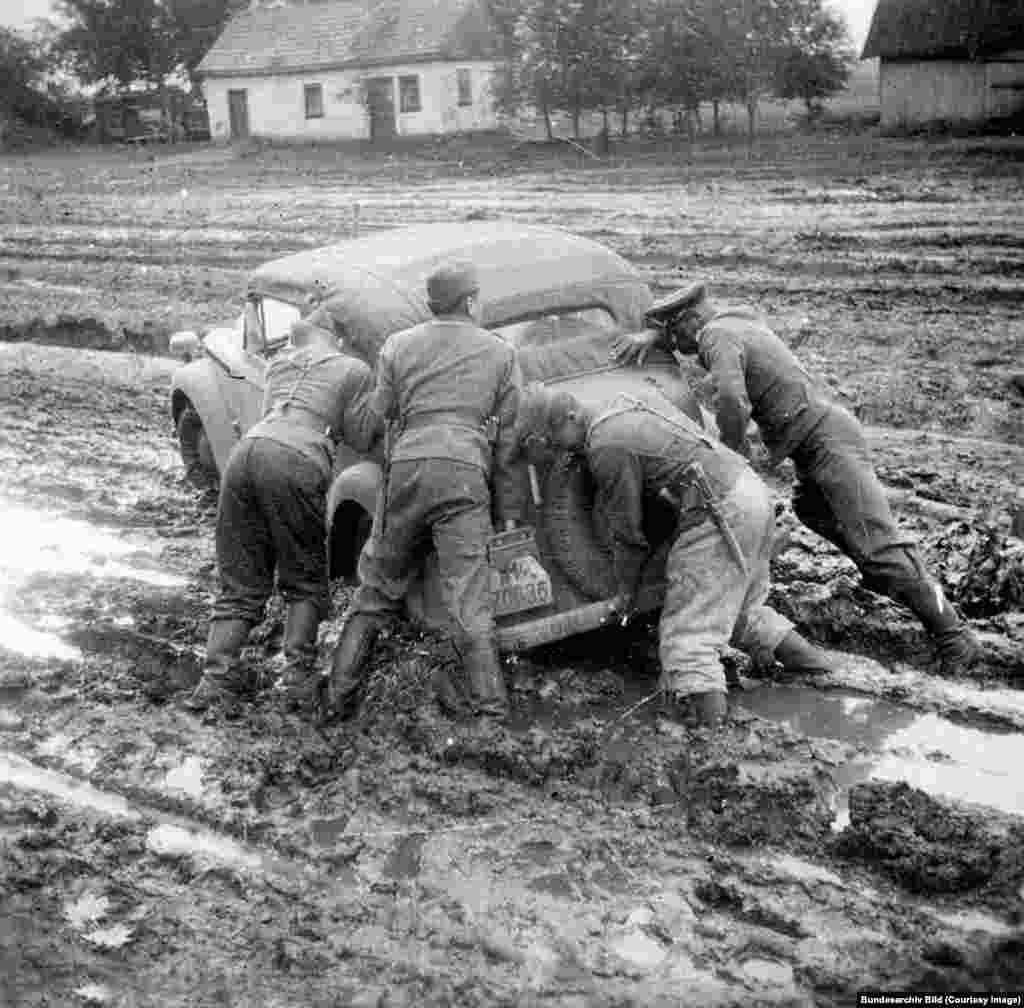
12/20German officers try to extract a vehicle from the mud in late 1941.
As autumn rains began to fall, Nazi commanders were forced to prepare for a drawn-out conflict as "General Mud" and vengeful Soviet fighters bogged down the German advance.
Nazi Germany led the largest-ever ground invasion force in an attack on the Soviet Union in 1941 that unleashed a brutal conflict that cost the lives of millions of people.
Show moreShow less
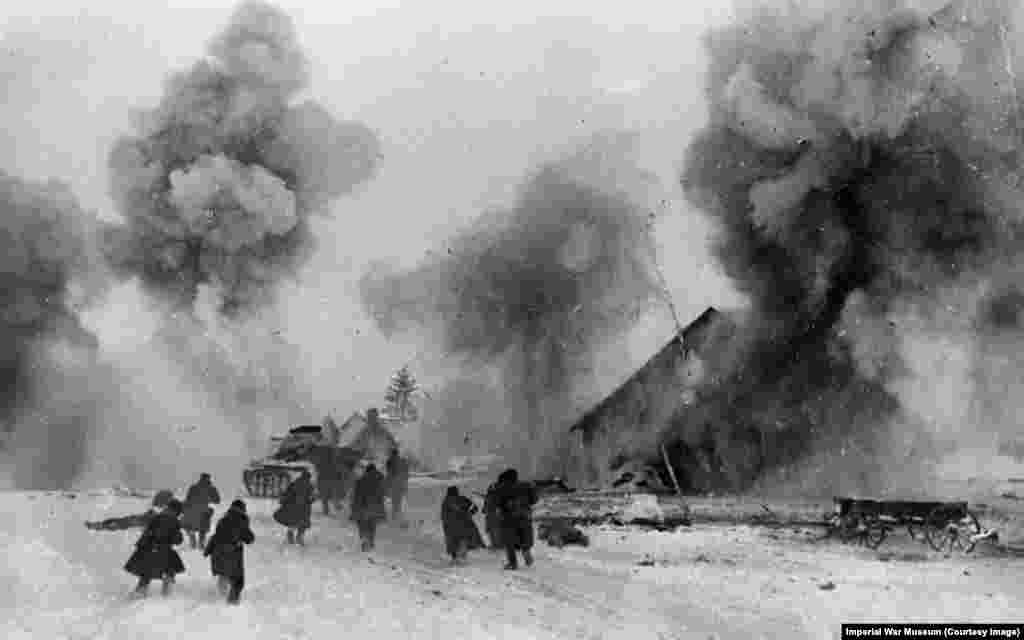
13/20Red Army soldiers supported by a T-34 tank advance through a village in a major counterattack against Nazi invaders.
Although many historians see the autumn and winter of 1941-42 as the beginning of the end for Hitler's invasion of the Soviet Union, the human suffering was only beginning.
Nazi Germany led the largest-ever ground invasion force in an attack on the Soviet Union in 1941 that unleashed a brutal conflict that cost the lives of millions of people.
Show moreShow less
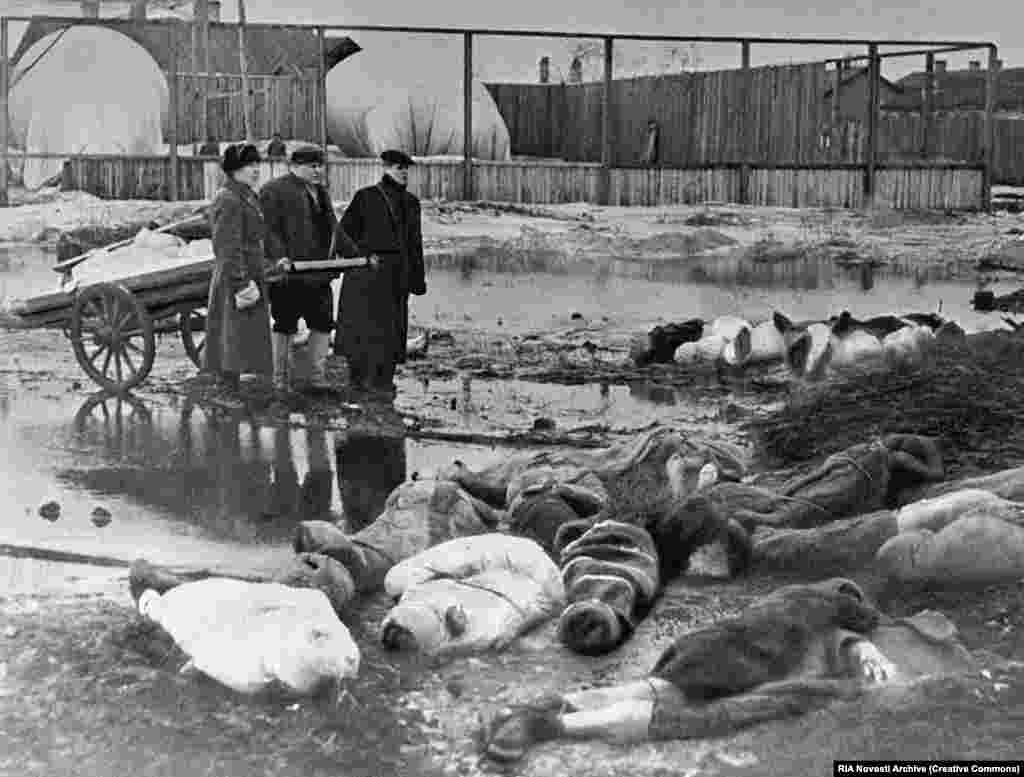
14/20Men arrive to collect the bodies of victims of the siege of Leningrad in October 1942.
Having failed to capture Leningrad, Nazi-led forces surrounded the northern city with the aim of starving the populace.
Nazi Germany led the largest-ever ground invasion force in an attack on the Soviet Union in 1941 that unleashed a brutal conflict that cost the lives of millions of people.
Show moreShow less
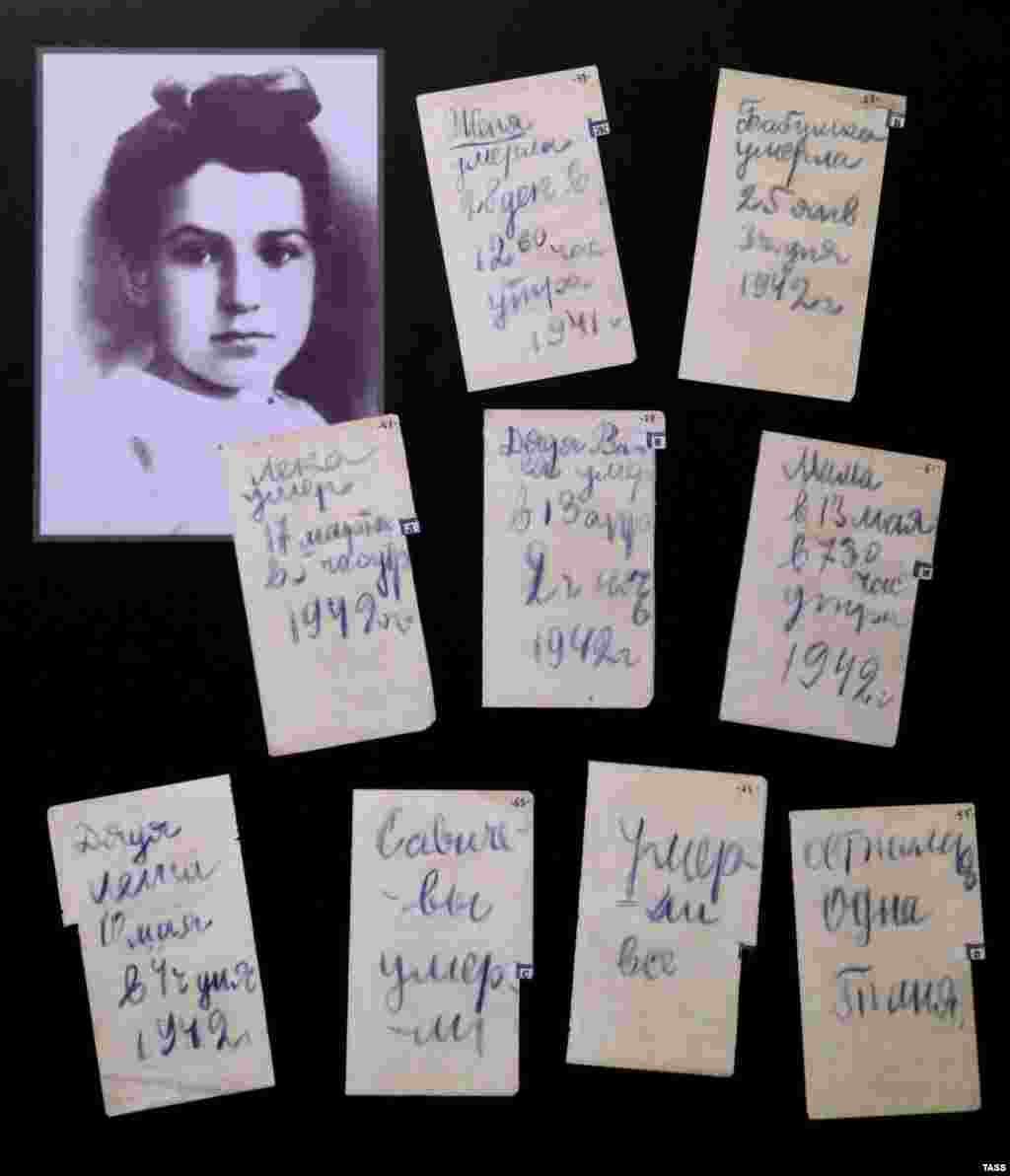
15/20These pages are from the diary of Tanya Savicheva, a girl who chronicled the passing -- one by one -- of her six family members as they died during the Leningrad siege. The first entry (top left) marks her sister Zhenya's death on "December 28 at noon, 1941." The last two pages at bottom right say, "everyone is dead.... Only Tanya is left." She died soon afterward from intestinal tuberculosis.
Nazi Germany led the largest-ever ground invasion force in an attack on the Soviet Union in 1941 that unleashed a brutal conflict that cost the lives of millions of people.
Show moreShow less
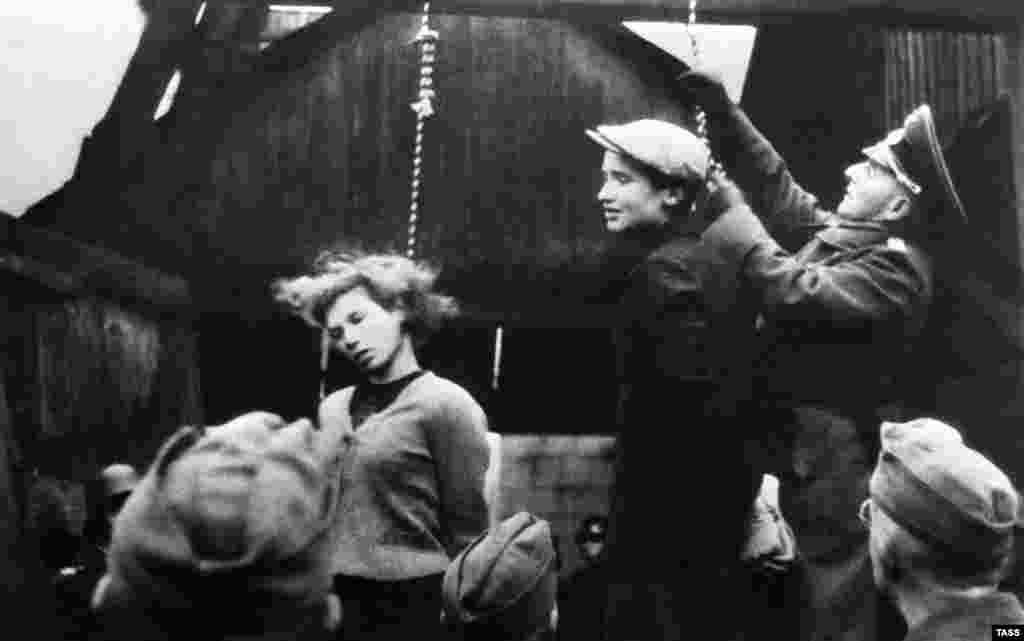
16/20German officers and soldiers prepare to execute Maria Bruskina and Vladimir Shcherbatsevich, members of the anti-Nazi resistance in Minsk in October 1941.
Shortly after Bruskina's arrest, the Jewish teenager wrote to her mother: "I swear to you that you will have no further unpleasantness because of me. If you can, please send me my dress, my green blouse, and white socks. I want to be dressed decently when I leave here."
Nazi Germany led the largest-ever ground invasion force in an attack on the Soviet Union in 1941 that unleashed a brutal conflict that cost the lives of millions of people.
Show moreShow less
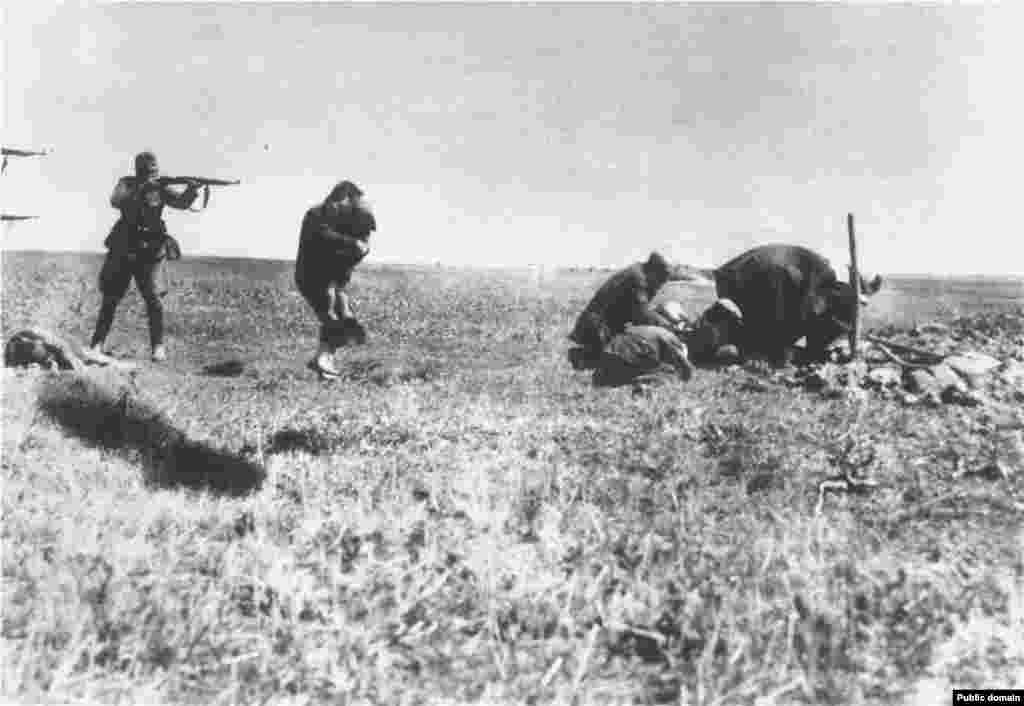
17/20A mother attempts to shield her child from Nazi bullets moments before being killed in a field near Ivangorod, Ukraine. At left is the body of another woman, and at right a group of people apparently digging a grave.
Nazi death squads -- in some cases supported by local populations -- executed millions of people, especially targeting Jews and "Asiatics" in the years following the Barbarossa invasion.
Nazi Germany led the largest-ever ground invasion force in an attack on the Soviet Union in 1941 that unleashed a brutal conflict that cost the lives of millions of people.
Show moreShow less
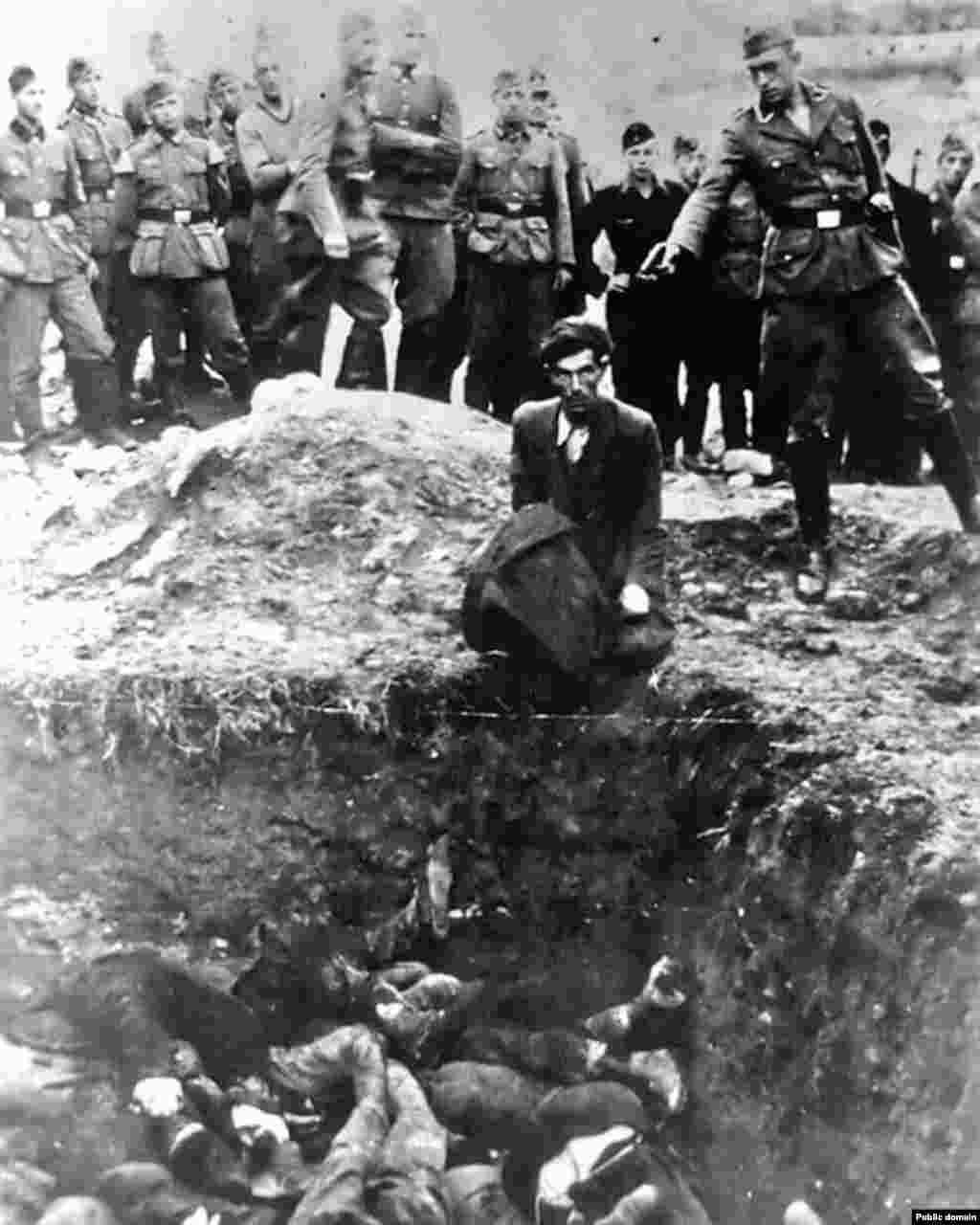
18/20A Jewish man about to be executed in Vinnytsia, Ukraine
British historian and author Jonathan Dimbleby says the atrocities carried out by the Nazis -- and to a lesser-extent the vengeful Red Army that he researched -- are "hardly bearable to talk about."
Nazi Germany led the largest-ever ground invasion force in an attack on the Soviet Union in 1941 that unleashed a brutal conflict that cost the lives of millions of people.
Show moreShow less
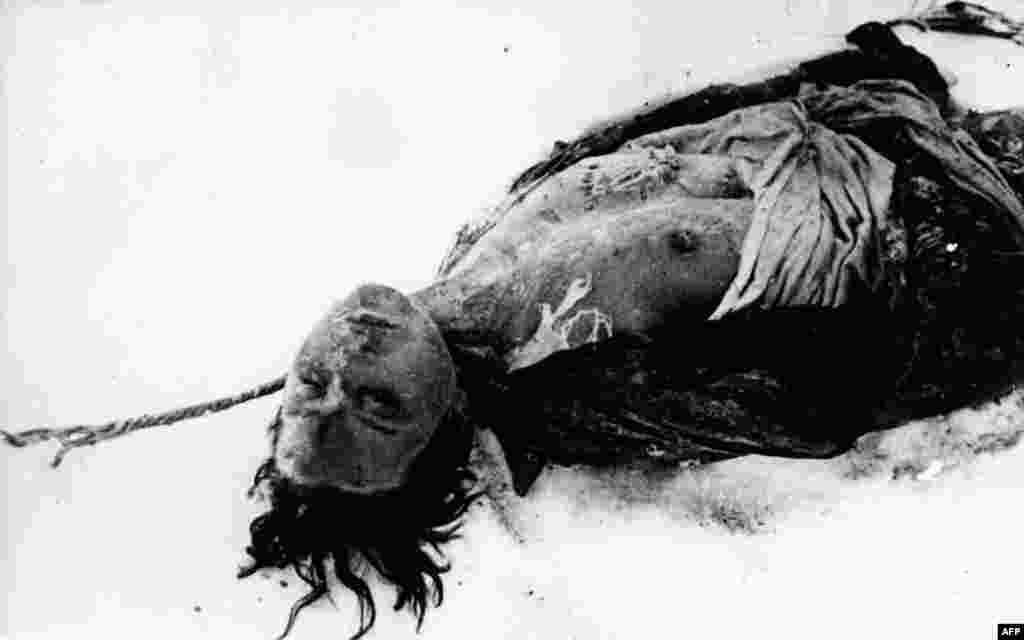
19/20A Russian girl partisan after being tortured and hanged by the Nazis.
Dimbleby notes that members of the Nazi death squads "were not drunks hauled off the street or drug addicts who had no mental capacity that would allow us to judge them. These were educated people, they were people who had been doctors who had been through university, were civil servants, who volunteered for this task."
Nazi Germany led the largest-ever ground invasion force in an attack on the Soviet Union in 1941 that unleashed a brutal conflict that cost the lives of millions of people.
Show moreShow less
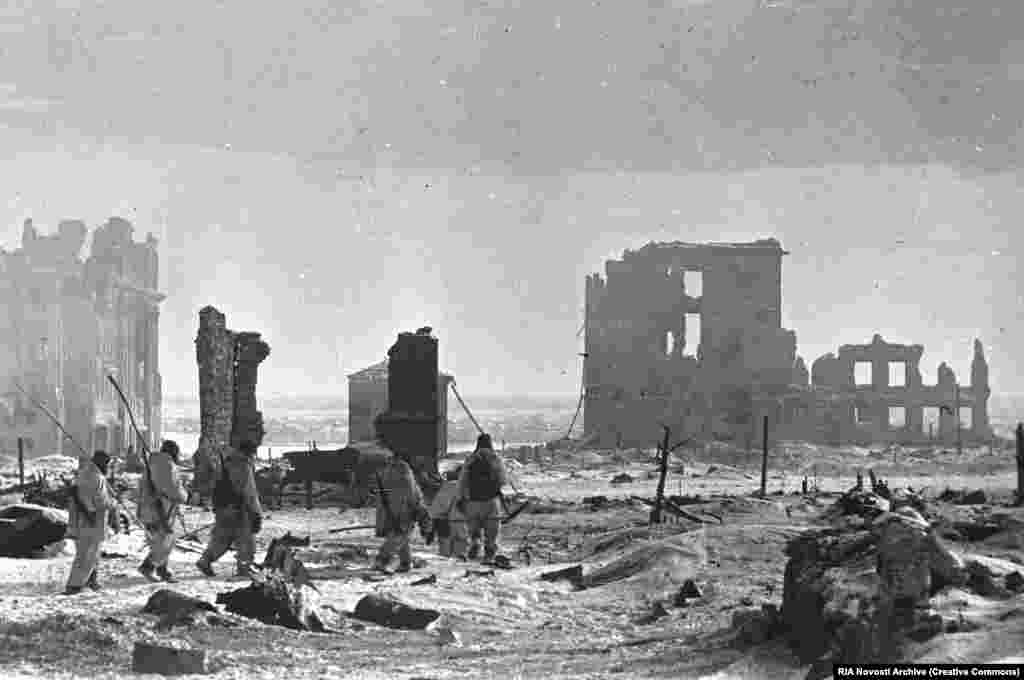
20/20Red Army soldiers in winter camouflage patrol the center of Stalingrad in 1943.
The battle for Stalingrad, won by the Red Army, was the high-water mark of the Nazi advance into the Soviet Union. From the spring of 1943 onward, German led-forces were in retreat and the Soviet military would eventually push them all the way back to Berlin.
Nazi Germany led the largest-ever ground invasion force in an attack on the Soviet Union in 1941 that unleashed a brutal conflict that cost the lives of millions of people.
Show moreShow less
Previous slide
Next slide
Over the next four years, the U.S.S.R., in alliance with the Western powers, managed to repel the Germans and eventually emerge victorious in World War II despite losing 27 million people during the whole conflict.
"Russia supports the idea of reviving a full-fledged partnership with Europe... The whole system of European security has dramatically degraded. Tension is being escalated, the risks of a new arms race are becoming real," Putin said.
Putin also reiterated his previous statements, saying that his country "will never allow the distortion of the truth" about the World War II.
In recent years, Putin frequently accused European countries of what he called the diminishing of the role of the Soviet Union in the defeat of Nazi Germany and the stressing of atrocities committed by Soviet forces, like the mass murder of Polish officers in the Katyn Forest in 1940 or the mass rapes of German women.
In an article published on June 22 in the German weekly Die Zeit, Putin emphasized that "despite attempts to rewrite the pages of the past that are being made today, the truth is that Soviet soldiers came to Germany not to take revenge on the Germans, but with a noble and great mission of liberation."
Western historians say the 1939 nonaggression pact between the Soviet Union and Nazi Germany facilitated the outbreak of World War II, which Russian officials vehemently disagree with.
In 2019, the world commemorated the 80th anniversary of the Nazi-Soviet nonaggression agreement known as the Molotov-Ribbentrop Pact whose secret protocol allowed the division of Central and Eastern Europe between Nazi Germany and the Soviet Union.
After the Nazis triggered World War II by invading Poland on September 1, 1939, the Soviets occupied the eastern part of the country, eventually massacring more than 20,000 Polish officers that they had taken prisoner at Katyn.
The Nazis ultimately betrayed the pact with their surprise invasion of the Soviet Union 80 years ago.
German Chancellor Angela Merkel called Putin on June 22 to "express empathy with the unmeasurable woes and suffering brought by the war that was launched by the Nazi regime," the Kremlin said.
"Both parties underlined the importance of preserving the historic memory of those tragic events" and noted that "overcoming mutual enmity and reconciliation of the Russian and German peoples had key importance for the destinies of postwar Europe," the Kremlin added.
"It was emphasized that preserving security on the continent now is also possible only through joint efforts."