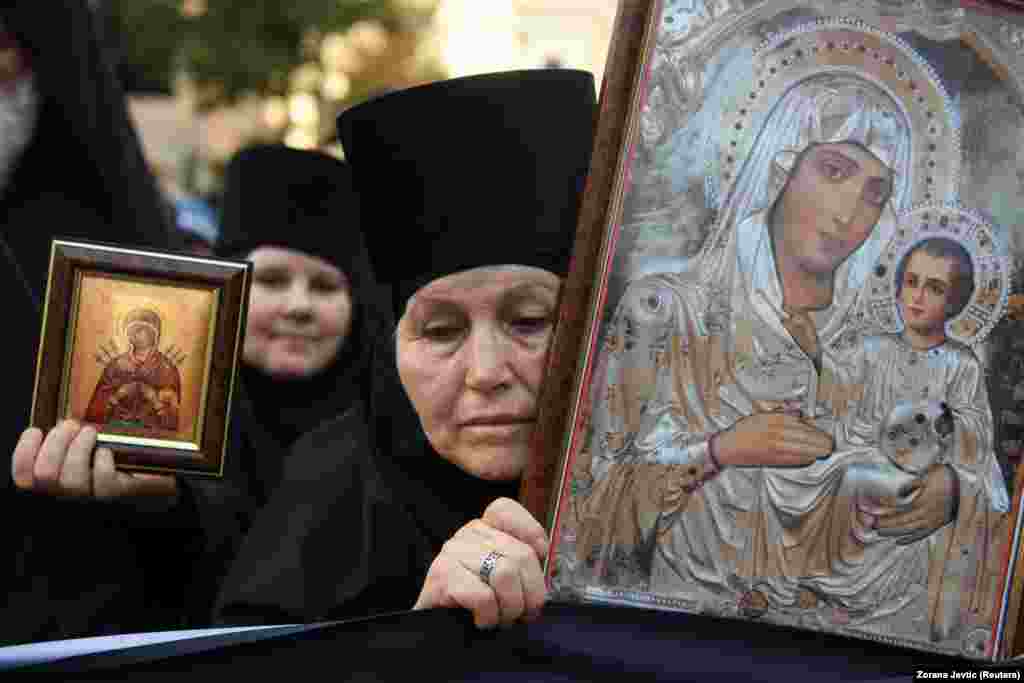
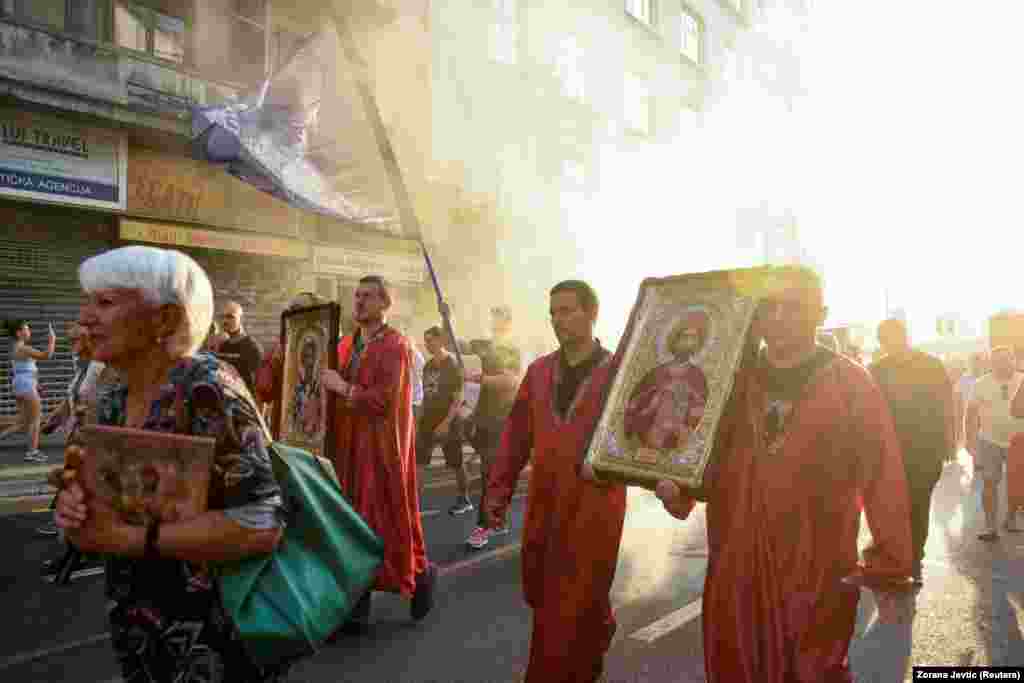
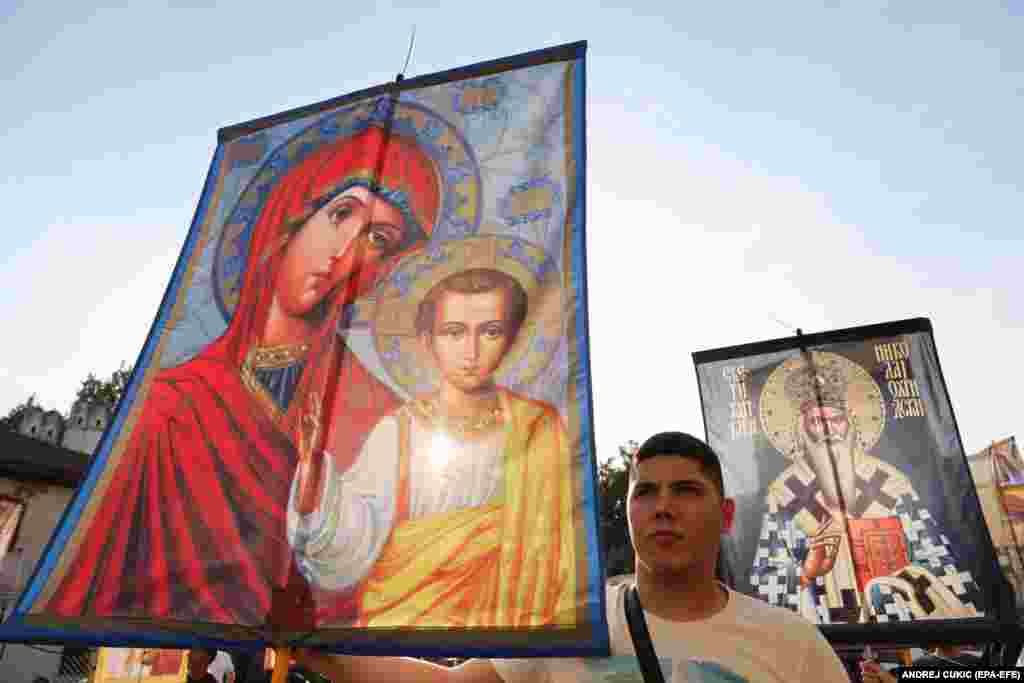
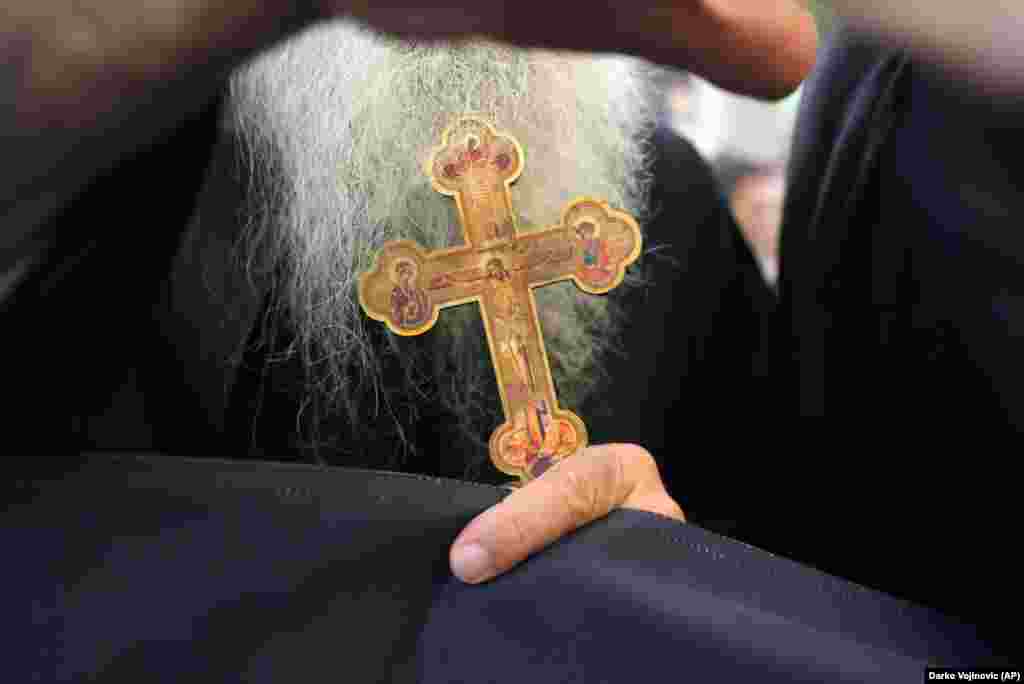
An Orthodox nun holds an icon during a protest against the international LGBT event EuroPride in Belgrade on August 28.
Opposition parties and global rights groups on August 28 blasted the Serbian government’s decision to cancel an international LGBTQ EuroPride event scheduled for next month.
Serbian President Aleksandar Vucic on August 27 acknowledged that the rights of sexual minorities are threatened in Serbia but said the government had come under intense pressure from right-wing groups and representatives of the Serbian Orthodox Church to cancel the event.
“It is not a question of whether [those pressures] are stronger,” Vucic said. “It’s just that at some point you can’t achieve everything, and that’s it.”
Vucic allowed for the possibility that the event could be held at a later date.
EuroPride promotes lesbian, gay, bisexual, transgender, and intersex pride at the pan-European level and is hosted by a different European city each year. The event includes a Pride Parade.
The UN’s Belgrade office said it was concerned about the cancellation, saying it would jeopardize “the right to freedom of assembly as guaranteed by the Serbian Constitution.”
Serbia's Orthodox Christians March Against EuroPride Event
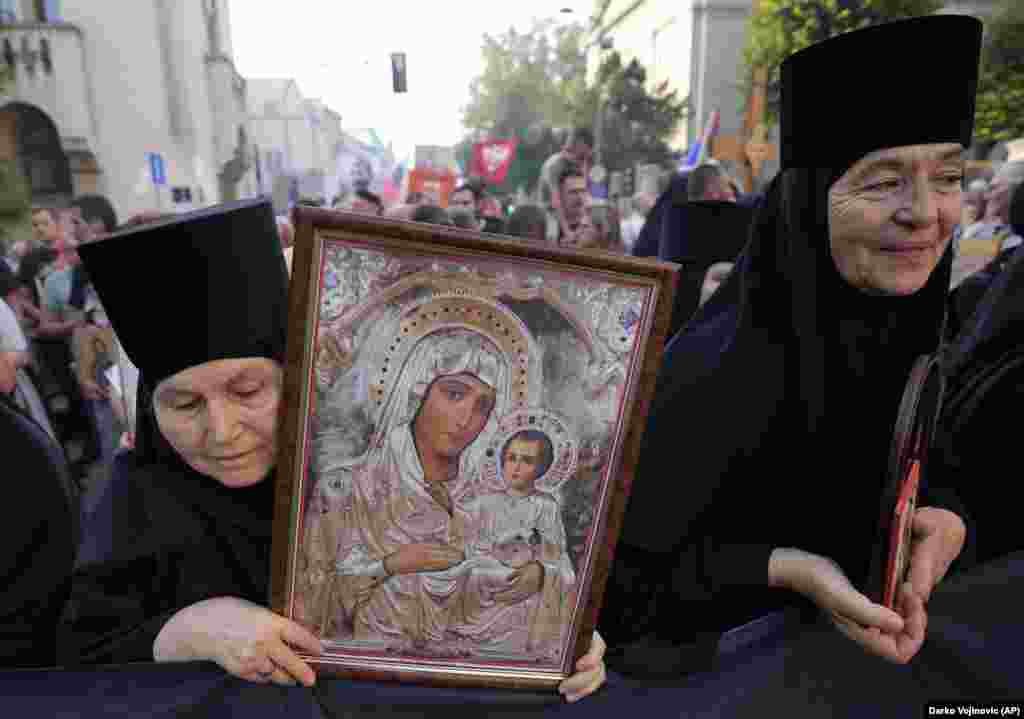
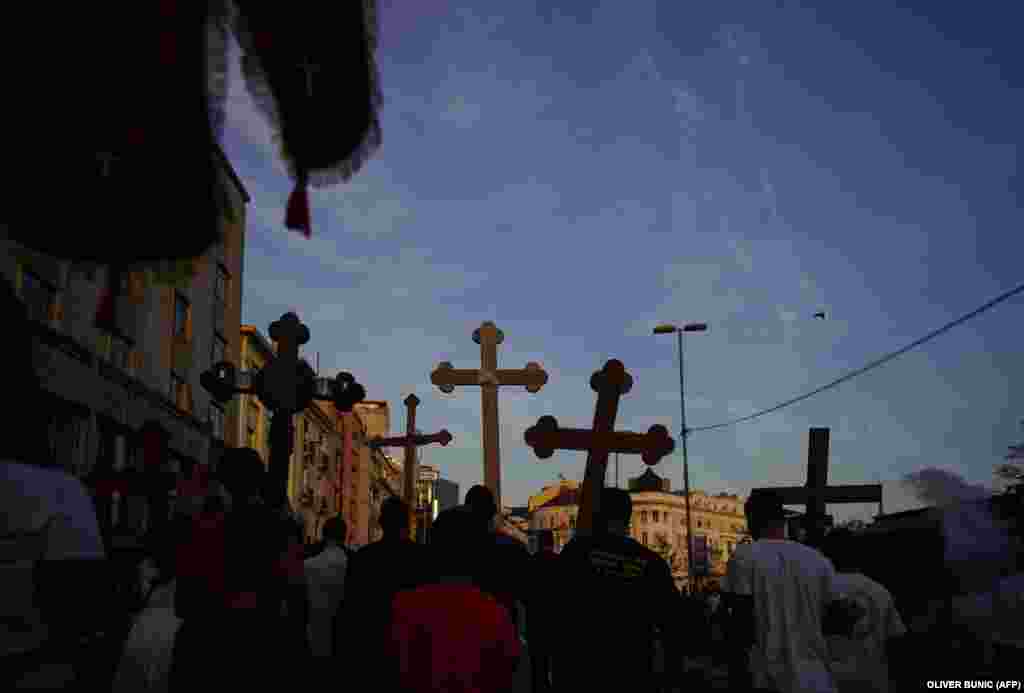
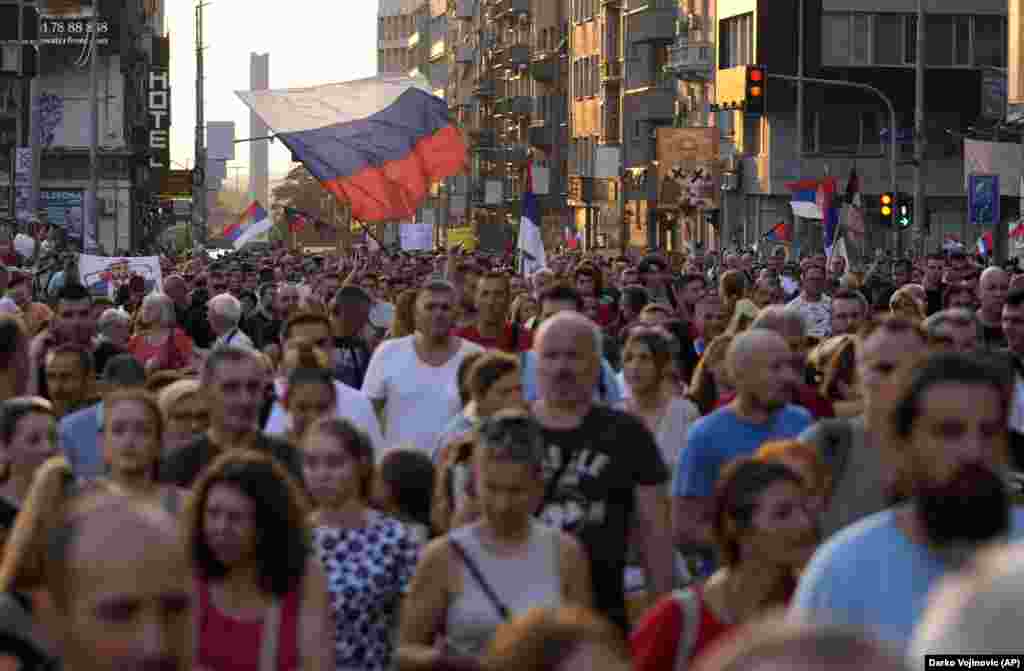
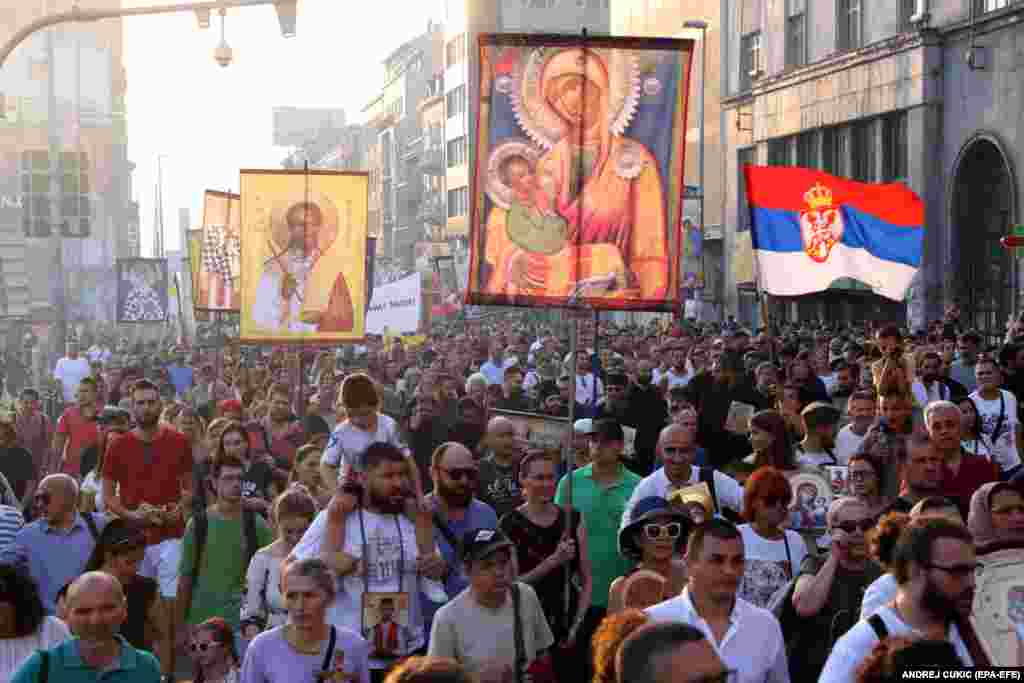
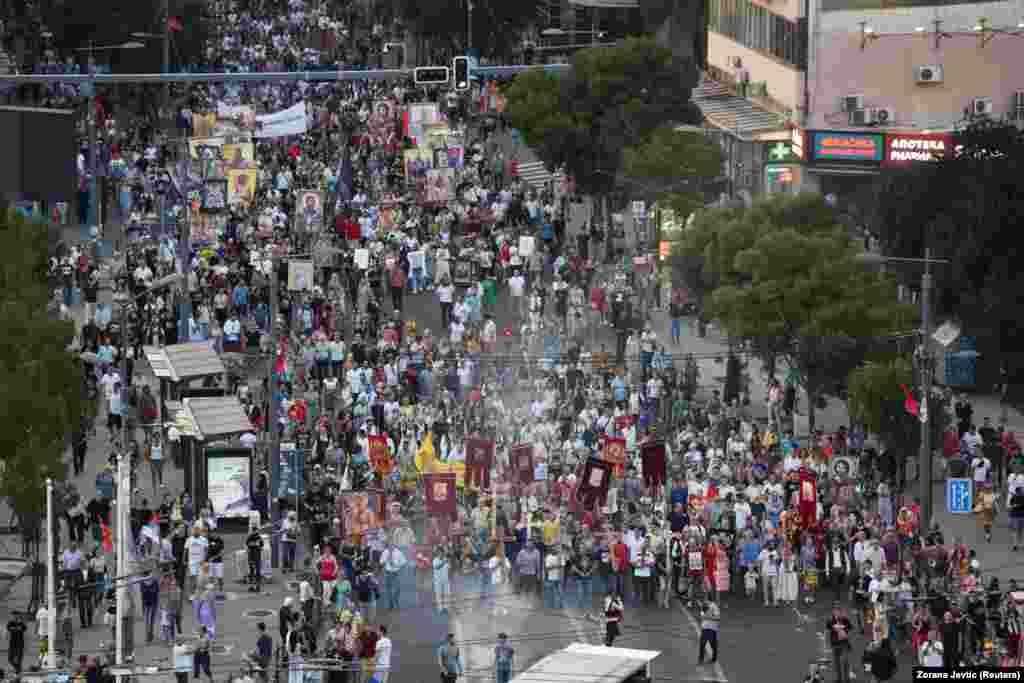
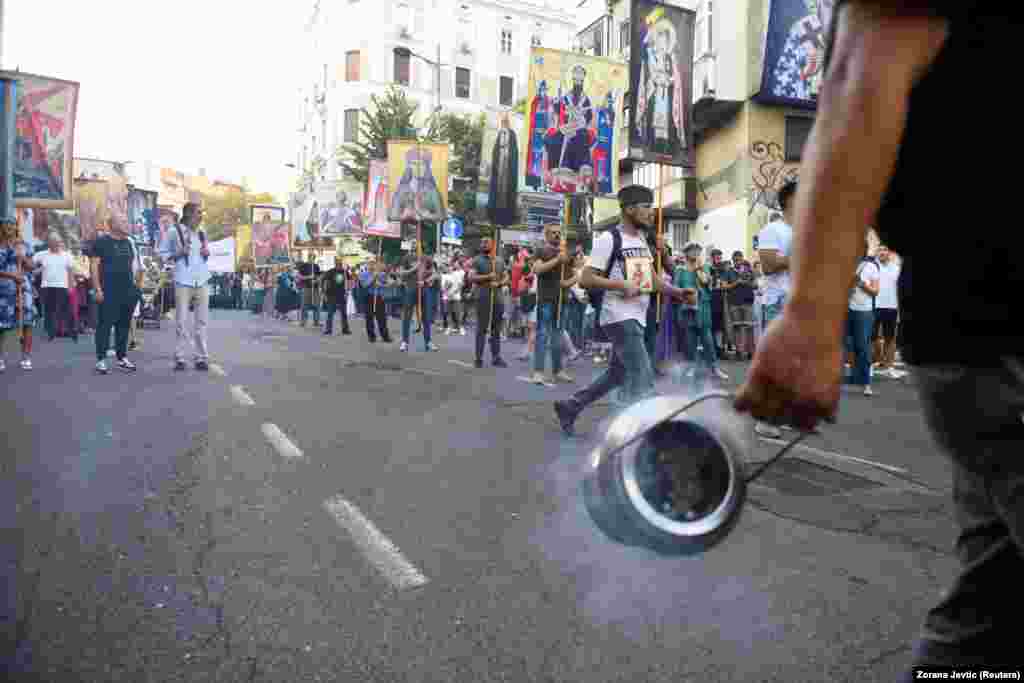
1/12Thousands of Orthodox Christians carrying crosses, religious icons, and banners chanted and prayed as they gathered outside the Church of St. Sava in Belgrade on August 28 to protest a gay pride event.
Thousands of protesters marched in Belgrade on August 28 to "save Serbia" in opposition to planned LGBT celebrations. Despite the Serbian authorities' decision to cancel the events, organizers have vowed to press on, stoking fears of possible violence.
Show moreShow less
2/12Serbian President Aleksandar Vucic declared on August 27 that the planned EuroPride celebrations would be "postponed or canceled." Nevertheless, organizers have vowed to hold the events, scheduled for September 12-18.
Thousands of protesters marched in Belgrade on August 28 to "save Serbia" in opposition to planned LGBT celebrations. Despite the Serbian authorities' decision to cancel the events, organizers have vowed to press on, stoking fears of possible violence.
Show moreShow less
3/12A Russian flag is held aloft during the protest.
Vucic said the government had come under intense pressure from right-wing groups and representatives of the Serbian Orthodox Church to cancel the event. He allowed for the possibility that the event could be held at a later date.
Thousands of protesters marched in Belgrade on August 28 to "save Serbia" in opposition to planned LGBT celebrations. Despite the Serbian authorities' decision to cancel the events, organizers have vowed to press on, stoking fears of possible violence.
Show moreShow less
4/12Serbian Orthodox Bishop Nikanor hailed the authorities' decision to reverse "the desecration of our country, our church, and our family." Nearly 85 percent of Serbians identify as Orthodox Christians.
Thousands of protesters marched in Belgrade on August 28 to "save Serbia" in opposition to planned LGBT celebrations. Despite the Serbian authorities' decision to cancel the events, organizers have vowed to press on, stoking fears of possible violence.
Show moreShow less
5/12Pride marches in Belgrade were marred by violence in 2001 and 2010. In other years, they have passed off peacefully, though with a strong police presence.
Thousands of protesters marched in Belgrade on August 28 to "save Serbia" in opposition to planned LGBT celebrations. Despite the Serbian authorities' decision to cancel the events, organizers have vowed to press on, stoking fears of possible violence.
Show moreShow less
6/12The UN office in Serbia said it was concerned about the announced ban, saying it would jeopardize “the right to freedom of assembly as guaranteed by the Serbian Constitution.”
Thousands of protesters marched in Belgrade on August 28 to "save Serbia" in opposition to planned LGBT celebrations. Despite the Serbian authorities' decision to cancel the events, organizers have vowed to press on, stoking fears of possible violence.
Show moreShow less
7/12Members of the European Pride Organizers Association chose Serbia’s capital three years ago to host the annual event, hoping it would represent a major breakthrough for a Slavic country that is traditionally conservative and under the strong influence of the Orthodox Church.
Thousands of protesters marched in Belgrade on August 28 to "save Serbia" in opposition to planned LGBT celebrations. Despite the Serbian authorities' decision to cancel the events, organizers have vowed to press on, stoking fears of possible violence.
Show moreShow less
8/12Belgrade's bid to host the event was supported by Prime Minister Ana Brnabic, who is the first woman and first openly gay person to hold that position in Serbia.
Brnabic has been accused by Serbia’s gay rights groups of not doing enough to help their status in the country. She joined Vucic in supporting the canceling of the EuroPride event.
Thousands of protesters marched in Belgrade on August 28 to "save Serbia" in opposition to planned LGBT celebrations. Despite the Serbian authorities' decision to cancel the events, organizers have vowed to press on, stoking fears of possible violence.
Show moreShow less
9/12Serbia is formally seeking European Union membership, while also seeking to maintains close ties to Russia, which has enacted repressive anti-LGBT legislation in recent years.
Thousands of protesters marched in Belgrade on August 28 to "save Serbia" in opposition to planned LGBT celebrations. Despite the Serbian authorities' decision to cancel the events, organizers have vowed to press on, stoking fears of possible violence.
Show moreShow less
10/12The opposition Civic Democratic Forum accused the Serbian president of “playing dictator” by modeling himself on Russian President Vladimir Putin.
Thousands of protesters marched in Belgrade on August 28 to "save Serbia" in opposition to planned LGBT celebrations. Despite the Serbian authorities' decision to cancel the events, organizers have vowed to press on, stoking fears of possible violence.
Show moreShow less
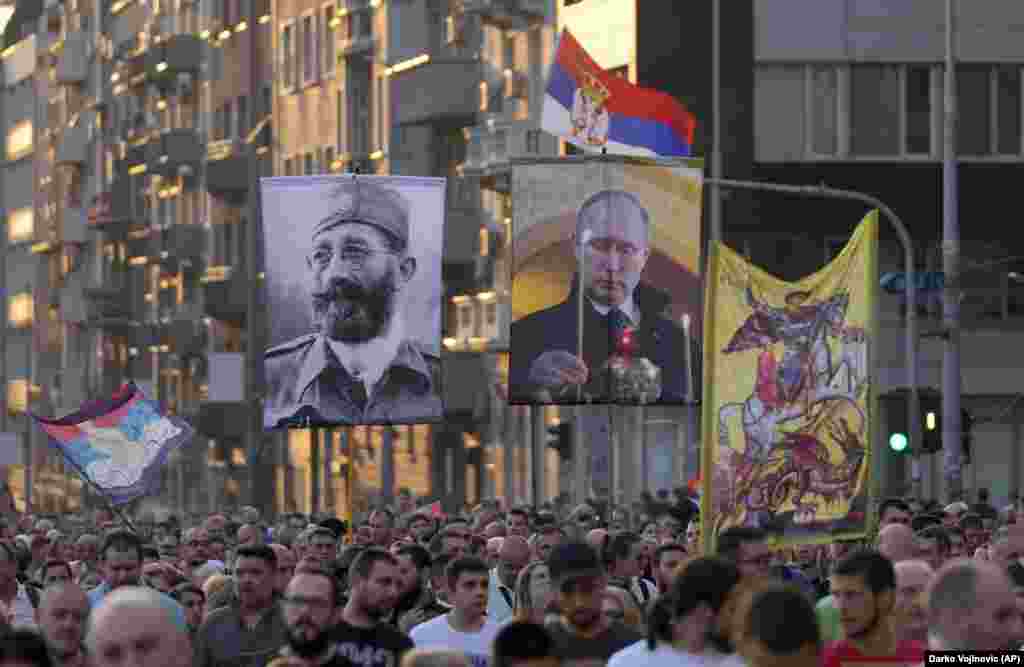
11/12During the August 28 march, pictures of Putin and Dragoljub "Draza" Mihailovica, a controversial Serb nationalist leader during World War II, were carried aloft.
In 2013, Russia introduced a law banning "propaganda of nontraditional sexual relations" among minors, punishable with fines and imprisonment.
Thousands of protesters marched in Belgrade on August 28 to "save Serbia" in opposition to planned LGBT celebrations. Despite the Serbian authorities' decision to cancel the events, organizers have vowed to press on, stoking fears of possible violence.
Show moreShow less
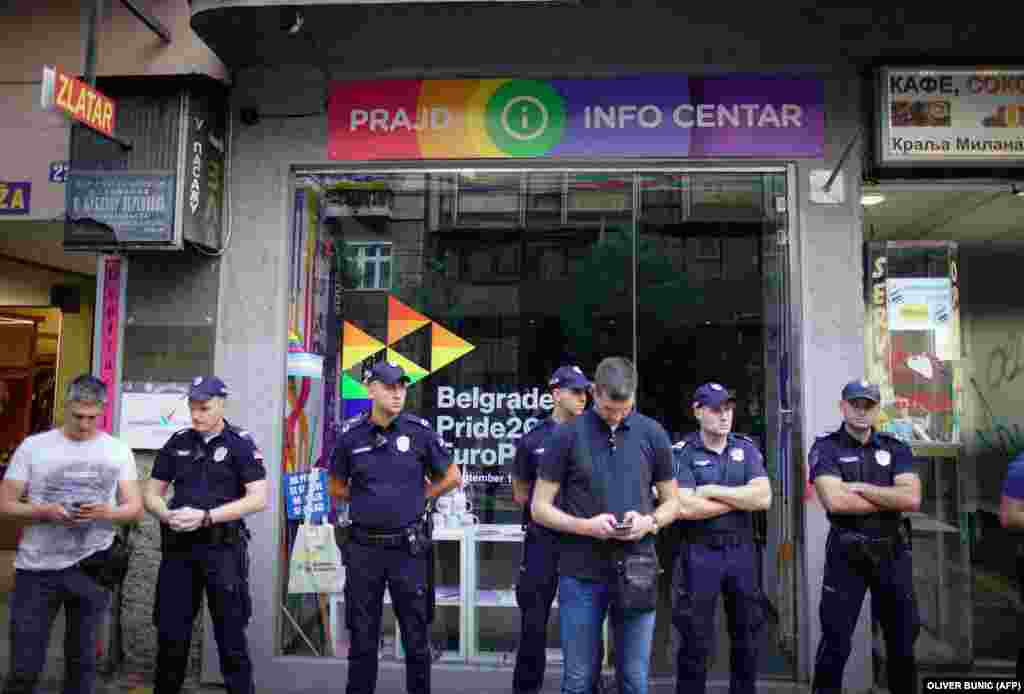
12/12Police secure an LGBT info center during the protest march in Belgrade on August 28.
Since 1992, a different European city has hosted the EuroPride event.
Thousands of protesters marched in Belgrade on August 28 to "save Serbia" in opposition to planned LGBT celebrations. Despite the Serbian authorities' decision to cancel the events, organizers have vowed to press on, stoking fears of possible violence.
Show moreShow less
Previous slide
Next slide
“The EuroPride is also an opportunity to celebrate the foundations of a strong and progressive society based on social equity, equality of all rights, solidarity, friendship, and love,” UN Resident Coordinator in Serbia Francoise Jacob said.
The Civic Democratic Forum opposition party accused Vucic of “playing dictator” and modeling himself after Russian President Vladimir Putin.
Forum leader Zoran Vuletic said Vucic “cannot cancel an event that he did not schedule and he cannot, according to the constitution, prohibit the gathering of people.”
Kristine Garina, president of the European Pride Organizers Association which licenses EuroPride, issued a statement saying the event would not be canceled despite Vucic’s remarks.
“The right to hold Pride has been ruled by the European Court of Human Rights to be a fundamental human right,” Garina said.
European Pride Organizers Association three years ago chose Belgrade to host the annual event, hoping it would represent a major breakthrough for a Slavic country that is traditionally conservative and under strong influence from the Orthodox Church.
Also on August 28, right-wing groups and political parties, church representatives, and others gathered in Belgrade in support of the cancellation of the EuroPride parade.
Many carried crosses, icons, and church symbols, with some displaying banners supporting Putin and the Russian invasion of Ukraine.
On the same day that Vucic announced the cancellation of the parade, he also proposed extending the term of Serbia’s prime minister, Ana Brnabic, who is a lesbian but who has been accused by Serbia’s gay rights groups of not doing enough to help their status in the country. She joined Vucic in supporting the canceling of the EuroPride event.
“No matter how you turn it, from any angle you look at it, the first inviolable thing is to ensure peace and stability in the country,” Brnabic said.
Serbia held its first gay-pride parade in 2001 and the event was met by violence and angry counterprotests by far-right and nationalist groups. At the next Belgrade pride parade, in 2010, more than 100 people were injured.
However, a third gay-pride parade was organized in 2014 and the event passed without serious incident. Since then, annual pride parades have been held peacefully in Belgrade each year, except for 2020 when the event was canceled due to the COVID-19 pandemic.
RFE/RL journalists report the news in 24 languages in 18 countries where a free press is banned by the government or not fully established. We provide what many people cannot get locally: uncensored news, responsible discussion, and open debate.