




The United States signaled it would press ahead with its aerial assault on Iran, as Tehran continued to volley missiles and drones at targets across the Gulf and Middle East amid fears the conflict could widen beyond the region.
US officials on March 2 announced that six American service members had died as a result of injuries suffered in Iranian retaliatory strikes and three US fighter jets were shot down by friendly fire over Kuwait.
Israel, meanwhile, widened its attacks on Hezbollah militants outside of Beirut, as the Iran-backed militants fired rockets into Israel.
In his first public comments since the war began, President Donald Trump characterized the threat from Tehran as imminent.
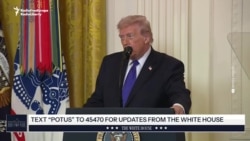

"This was our last best chance to strike...and eliminate the intolerable threats posed by this sick and sinister regime," Trump said at an event at the White House on March 2.
He further added that the Iranian regime's development of long-range missiles and nuclear weapons could have endangered not only the region, "but also the American people."
With many of Iran's top officials killed by Israeli and US strikes, including Supreme Leader Ayatollah Ali Khamenei, the country's remaining leadership scrambled to put new officials in place.
Ali Larijani, the chief of the country's Supreme National Security Council, rejected the idea of negotiations with Washington -- something Trump suggested was possible.

"We will not negotiate with the United States," he wrote on X, saying Iran was acting in self-defense.
In a combative news conference, Defense Secretary Pete Hegseth said Washington would not limit its options.
"There are no US troops in Iran," Hegseth told reporters at the Pentagon. "But we're not going to go into the exercise of what we will or will not do."
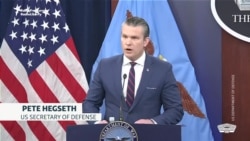
“This is not a so-called regime change war. But the regime sure did change. And the world is better off for it today," he said.
"We didn't start this war, but we'll finish it," he declared.
In a series of interviews with US media outlets, Trump has given various justification for why he ordered the assault, now in its third day. Among them are destroying Iran's missile capabilities, dismantling its missile production, targeting naval and security infrastructure, and blocking Iran from ever obtaining nuclear weapons.
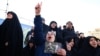
Hegseth, meanwhile, insisted the campaign would not resemble past US wars such as the 2003 invasion of Iraq, which many Americans turned against as the conflict became a quagmire.
But he also did not rule out the possibility of US military personnel actually being deployed on the ground in Iran.
"This is not Iraq. This is not endless," he said. "You don't have to roll 200,000 people in there and stay for 20 years. We've proven that you can achieve objectives that advance American interests without being foolish about it."
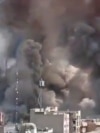
Six US Service Members Dead
Six American service members who died were critically wounded during Iran's initial retaliatory attacks, US Central Command announced in separate statements on March 2. Several others remain seriously injured.
Trump earlier cautioned that further casualties were possible.
"Sadly, there will likely be more before it ends," he said, adding that operations could last four weeks or "until all our objectives are achieved."
Three F-15 fighters jets crashed in Kuwait after being hit in error by Kuwaiti air defenses, US officials said. All six crew members parachuted to the ground and were taken to hospitals for treatment.
As the conflict intensifies, Tehran has sought diplomatic support beyond the region.
China reaffirmed its backing for Iran during a phone call between Foreign Minister Wang Yi and Iranian Foreign Minister Abbas Araqchi. Russia also voiced support for Tehran; President Vladimir Putin a day earlier condemned the killing of Khamenei and criticized escalating military action.
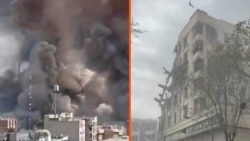
Fighting has spread across the region, with Israeli forces reporting a "broad wave" of strikes in Tehran and Iran launching missile and drone attacks targeting Israel and Gulf states hosting US bases.
A Saudi oil refinery was reportedly struck, while in Kuwait authorities moved commercial aircraft as missiles transited Gulf airspace.
The escalation has caused widespread aviation disruption.
Air India suspended several routes to Europe and the Gulf, and Etihad Airways temporarily halted flights to and from Abu Dhabi.
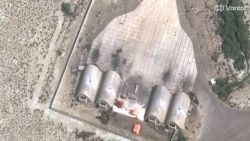
Israel's Ben Gurion Airport said flights would resume gradually depending on security conditions, while Jordan announced nightly partial airspace closures. Flight-tracking data showed aircraft avoiding large parts of the Middle East.
Some airlines canceled flights to and from Cyprus after drones targeted a British base on the island.

Britain said one of its bases on Cyprus appeared to have been targeted; Cypriot President Nikos Christodoulides said a Shahed drone had crashed into the Akrotiri air base, causing minor damage, and authorities evacuated the island's second-largest airport after intercepting additional drones.
Cyprus said it would seek assurances that bases on the island would be used only for humanitarian purposes.

