




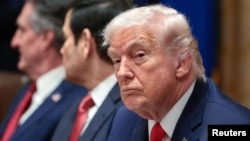
US President Donald Trump said he asked Russian President Vladimir Putin "not to fire into Kyiv and various towns for a week" amid freezing cold weather, as Russian forces continued to pound Ukrainian regions, killing multiple people.
"They've never experienced cold like that. And I personally asked President Putin not to fire into Kyiv and the various towns for a week. And he agreed to do that," Trump said.
"A lot of people said, 'Don't waste the call, you're not going to get that.' And he did it," he added at a cabinet meeting at the White House on January 29.

While there was no immediate confirmation from the Kremlin regarding a one-week agreement to halt strikes on Kyiv or other cities, Ukrainian President Volodymyr Zelenskyy welcomed Trump's statement, saying his country values efforts that help "to protect lives."
He added that the issue was discussed during three-way talks on ending the four-year war, which included US negotiators and were hosted by the United Arab Emirates last weekend.
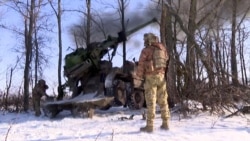

"Thank you, President Trump! Our teams discussed this in the United Arab Emirates. We expect the agreements to be implemented. De-escalation steps contribute to real progress toward ending the war," Zelenskyy wrote on X.
Temperatures across Ukraine dropped to as low as minus 20 degrees Celsius in January, making winter unbearable for millions of Ukrainians suffering under unprecedented energy blackouts caused by Russian air attacks that have severely damaged heating and electricity infrastructure across the country.
The country's emergency service warned that an even sharper drop in temperature will begin on February 1, affecting nearly all Ukrainian regions, easing only slightly on February 4.
On January 29, Kyiv authorities said that over 400 residential buildings remain without heating, with municipal services and energy workers working "around the clock" to bring warmth back to residents.
Energy outages were also reported in Ukraine's major regions of Dnipropetrovsk, Donetsk, and Zaporizhzhya.
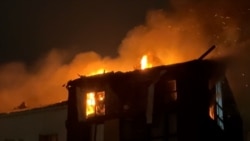
Meanwhile, Russia carried out multiple attacks on January 29, killing at least six people across Ukraine, including in the country's major cities of Kherson and Kryvyi Rih.
In Ukraine's war-torn Donetsk region, partly occupied by Russian forces, a gas service worker was killed by a drone while "on his way to restore gas supply to the people," Ukrainian Energy Minister Denys Shmyhal wrote on Telegram.
Authorities in other Ukrainian regions have warned residents that Russian military forces might continue attacks on the country's infrastructure, despite any reported negotiations between the parties to halt attacks on energy.
"Our enemy is such that it could take advantage of this and try to strike at the critical infrastructure of our cities," Lviv Mayor Anrdiy Sadoviy wrote on Telegram on January 29.

A new round of talks between Ukrainian and Russian negotiators is now set to kick off in Abu Dhabi on February 1, Russia's Interfax news agency cited the Kremlin as saying a day earlier.
Over the past week, there have been no signs of the war slowing on the front lines, nor any indication that Moscow is backing down from its long-held maximalist demands.
Asked about negotiations on January 29, Kremlin foreign policy aide Yury Ushakov said the territorial issue was not the only factor holding up a potential deal to end the largest war on the European continent since World War II.

