


Pompeo Says More Iran Leaders Could Be Hit As Iraqi Parliament Calls For U.S. Troops To Leave Country
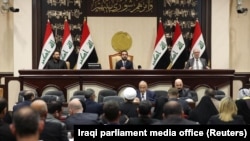
Members of the Iraqi parliament in Baghdad on January 5
Iraq's parliament has passed a resolution calling for foreign troops to leave the country in the wake of a U.S. air strike that killed Iran's top military commander, Qasem Soleimani, near Baghdad last week.
Meanwhile, U.S. Secretary of State Mike Pompeo said more Iranian leaders will be targeted if Tehran retaliates.
The Iraqi government "commits to revoke its request for assistance from the international coalition fighting [the Islamic State (IS) extremist group] due to the end of military operations in Iraq and the achievement of victory," the lawmakers said in the resolution adopted on January 5.
The government of Prime Minister Adil Abdul-Mahdi "must work to end the presence of any foreign troops on Iraqi soil and prohibit them from using its land, airspace, or water for any reason," they added.
U.S. State Department spokeswoman Morgan Ortagus said the United States was disappointed in the decision.
"While we await further clarification on the legal nature and impact of today's resolution, we strongly urge Iraqi leaders to reconsider the importance of the ongoing economic and security relationship between the two countries and the continued presence of the Global Coalition to Defeat ISIS," Ortagus said in a statement, using an alternate acronym for the Islamic State group.
Pompeo has since appeared on six U.S. news shows since Soleimani was killed.
He said if Iran uses its proxy forces -- in Iraq, Syria, Yemen, Lebanon, and elsewhere -- to strike U.S. targets, a response won't be limited to them.
"They will be borne by Iran and its leadership itself," Pompeo said. "Those are important things the Iranian leadership needs to put in its calculus as it makes its next decision."
The United States has some 5,000 military personnel in Iraq, mainly as advisers.
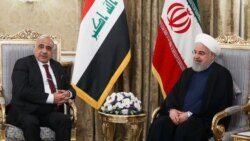
Iraqi Prime Minister Adil Abdul-Mahdi (left) meets with Iranian President Hassan Rohani in July.
Parliamentary resolutions are nonbinding, but Abdul-Mahdi had earlier urged parliament to take urgent measures and end the presence of foreign troops as soon as possible.
"Despite the internal and external difficulties that we might face, it remains best for Iraq on principle and practically," he told lawmakers in a speech.
Later in the day, Iraq's military said that two rockets had fallen inside Baghdad’s heavily fortified Green Zone, where the U.S. and other embassies are based, as well as the seat of Iraq's government.
Another rocket hit a nearby area, it said.
Several people were reportedly wounded in the attacks.
Soleimani, the commander of the Quds Force, the foreign arm of Iran's hard-line Islamic Revolutionary Guards Corps (IRGC), was killed on January 3 as he left Baghdad's airport in a convoy amid a regional tour.
The attack marked a significant escalation between Iran and the United States, with Tehran promising "harsh revenge."
Thousands of Iraqis attended a funeral procession for Soleimani before his body was flown to Iran, where hundreds of thousands of mourners on January 5 participated in processions honoring the commander.
In a series of January 4 tweets, President Donald Trump said he had ordered the strike on Soleimani because the Iranian commander had organized attacks on U.S. and Iraqi targets and that he was "preparing for additional hits in other locations."
"Iran is talking very boldly about targeting certain USA assets as revenge for our ridding the world of their terrorist leader who had just killed an American, & badly wounded many others, not to mention all of the people he had killed over his lifetime, including recently hundreds of Iranian protesters," Trump wrote.
"If Iran strikes any Americans, or American assets, we have targeted 52 Iranian sites (representing the 52 American hostages taken by Iran many years ago), some at a very high level & important to Iran & the Iranian culture," he also said.
Trump's reference to hostages taken by Iran refers to the takeover of the U.S. Embassy in Tehran in 1979 by Iranian revolutionaries, who held 52 Americans captive for 444 days.
The inclusion of "cultural" sites on a potential target list prompted immediate criticism from Iranian officials and observers.
How Soleimani Spread Iran's Influence Across The Middle East
1/18Qasem Soleimani became commander of the Quds Force in 1998, the foreign arm of Iran's Islamic Revolutionary Guards Corps. Under Soleimani's leadership, the Quds Force expanded Tehran's influence beyond Iran's borders and throughout the Middle East -- from Lebanon and Yemen to Iraq and Syria.
As leader of Iran's elite Quds Force, General Qasem Soleimani was instrumental in the spread of Iranian influence across the Middle East. He personally oversaw dozens of operations in the region and led Iran-backed militias in Iraq and Syria.
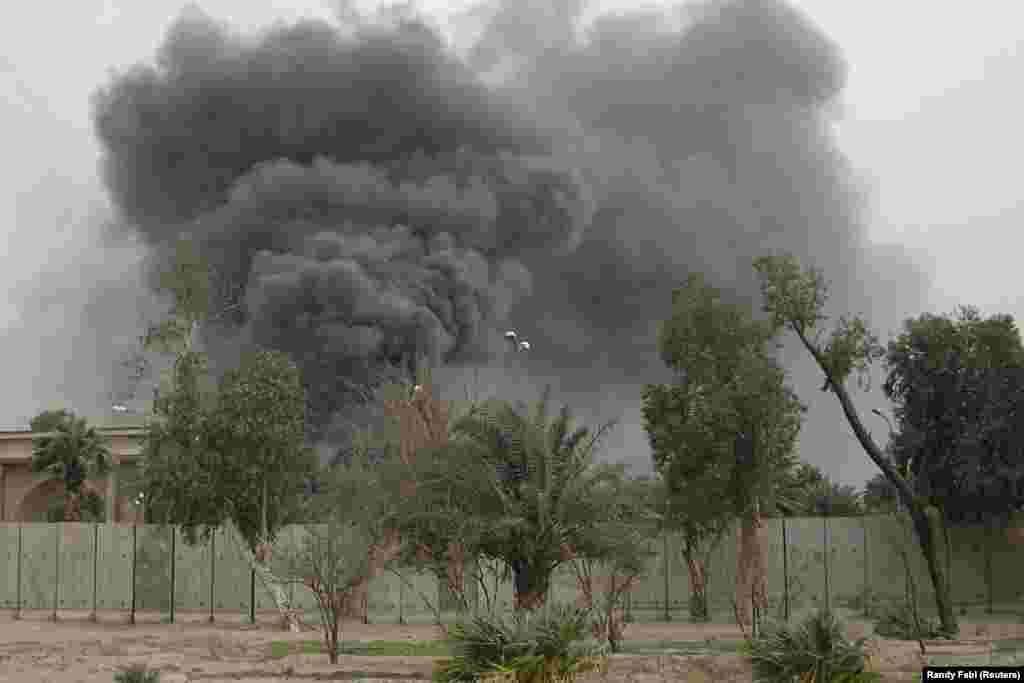
2/18Plumes of smoke rise from the U.S. Embassy compound in March 2008 after Iranian-backed militias shelled Baghdad's Green Zone. Quds Force commander Soleimani played such a pivotal role in Iraq’s security through various militia groups that U.S. General David Petraeus, the overall head of U.S. forces in Iraq at the time, sent messages to him through Iraqi officials.
As leader of Iran's elite Quds Force, General Qasem Soleimani was instrumental in the spread of Iranian influence across the Middle East. He personally oversaw dozens of operations in the region and led Iran-backed militias in Iraq and Syria.
3/18Soleimani personally oversaw dozens of operations by Iran-backed militias in Iraq and Syria.
As leader of Iran's elite Quds Force, General Qasem Soleimani was instrumental in the spread of Iranian influence across the Middle East. He personally oversaw dozens of operations in the region and led Iran-backed militias in Iraq and Syria.
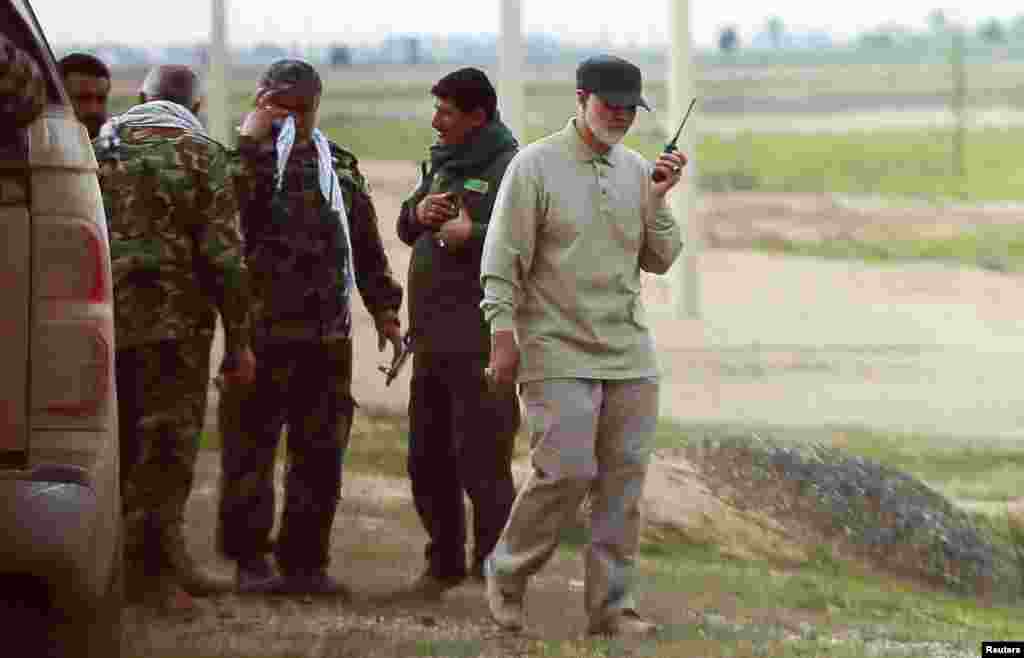
4/18Despite being rivals in the Middle East, the United States and Iran shared a mutual enemy -- Islamic State militants. Soleimani commanded Iran-backed militias in Iraq near the front line in Salahuddin Province during a 2015 offensive against IS fighters.
As leader of Iran's elite Quds Force, General Qasem Soleimani was instrumental in the spread of Iranian influence across the Middle East. He personally oversaw dozens of operations in the region and led Iran-backed militias in Iraq and Syria.
5/18Soleimani at the front line during operations against Islamic State militants in the Iraqi town of Tal Ksaiba on March 8, 2015.
As leader of Iran's elite Quds Force, General Qasem Soleimani was instrumental in the spread of Iranian influence across the Middle East. He personally oversaw dozens of operations in the region and led Iran-backed militias in Iraq and Syria.
6/18Soleimani appearing with Hizballah chief Hassan Nasrallah and Iranian Supreme Leader Ayatollah Ali Khamenei (left). Soleimani helped Iran strengthen its ties with Hizballah in Lebanon. Soleimani said he advised Hizballah during the 34-day war with Israel in 2006. More than 1,200 Lebanese and 160 Israelis were killed in the conflict.
As leader of Iran's elite Quds Force, General Qasem Soleimani was instrumental in the spread of Iranian influence across the Middle East. He personally oversaw dozens of operations in the region and led Iran-backed militias in Iraq and Syria.
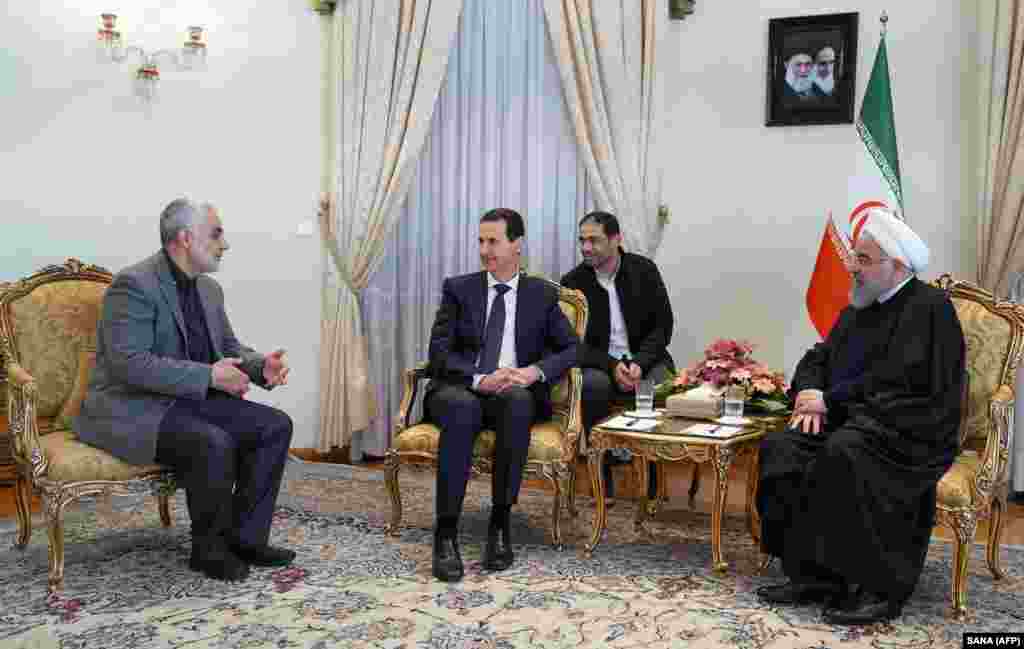
7/18Soleimani’s Quds Force shored up support for Syrian President Bashir al-Assad when he looked close to defeat in a civil war that has raged since 2011. Assad met with Soleimani and Iranian President Hassan Rohani during a visit to Tehran on February 25, 2019.
As leader of Iran's elite Quds Force, General Qasem Soleimani was instrumental in the spread of Iranian influence across the Middle East. He personally oversaw dozens of operations in the region and led Iran-backed militias in Iraq and Syria.
8/18Following the outbreak of civil war in Syria in 2011, Soleimani ordered some of his Iraqi militias into Syria to support Syrian government troops, seen here at the Kweiras air base east of Aleppo. In November 2015, U.S. officials said some 2,000 Iranian or Iran-backed forces were participating in the regime’s Aleppo operations.
As leader of Iran's elite Quds Force, General Qasem Soleimani was instrumental in the spread of Iranian influence across the Middle East. He personally oversaw dozens of operations in the region and led Iran-backed militias in Iraq and Syria.
9/18Iran's semiofficial Fars news agency claimed Soleimani was behind the rescue of a Russian pilot downed in Syria. The Russian jet was shot down in Turkish airspace on November 24, 2015. The pilot ejected over the border into Syria. The rescue was reportedly carried out by eight Hizballah fighters, 18 Syrian commandos, and with support from the Russian air force.
As leader of Iran's elite Quds Force, General Qasem Soleimani was instrumental in the spread of Iranian influence across the Middle East. He personally oversaw dozens of operations in the region and led Iran-backed militias in Iraq and Syria.
10/18After keeping a low profile for many years, Soleimani began appearing alongside Iranian Supreme Leader Khamenei. On March 27, 2015, he attended a religious ceremony in Tehran.
As leader of Iran's elite Quds Force, General Qasem Soleimani was instrumental in the spread of Iranian influence across the Middle East. He personally oversaw dozens of operations in the region and led Iran-backed militias in Iraq and Syria.
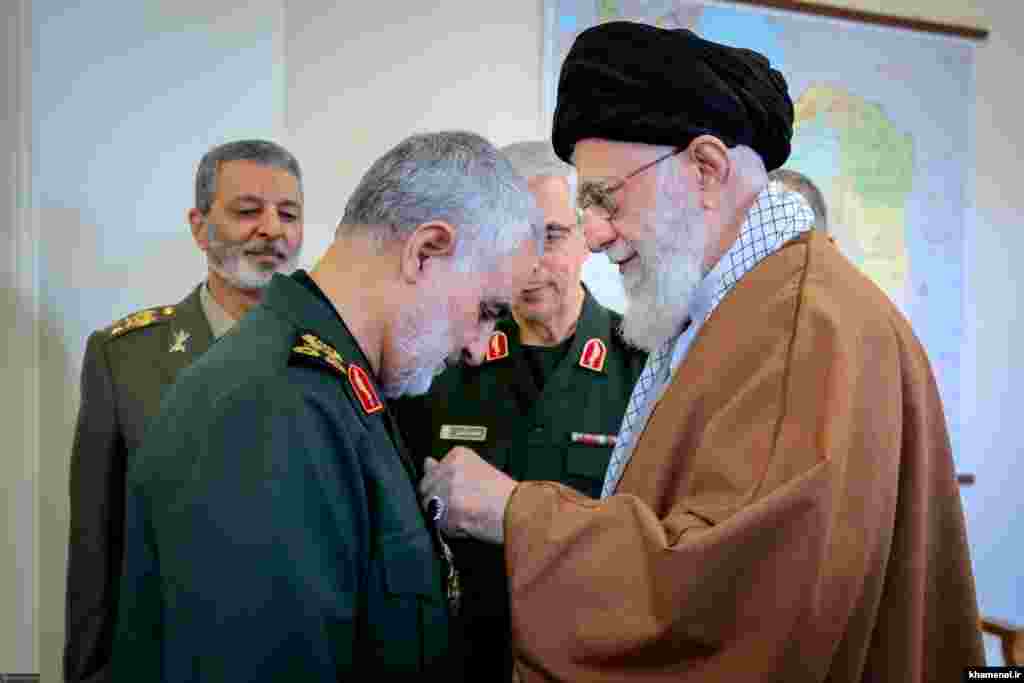
11/18Soleimani’s growing authority within Iran’s military establishment was apparent when he was awarded the Order of Zolfiqar medal on March 11, 2019, Iran’s highest military honor. It was the first time any commander had received the medal since the Islamic republic was established in 1979.
As leader of Iran's elite Quds Force, General Qasem Soleimani was instrumental in the spread of Iranian influence across the Middle East. He personally oversaw dozens of operations in the region and led Iran-backed militias in Iraq and Syria.
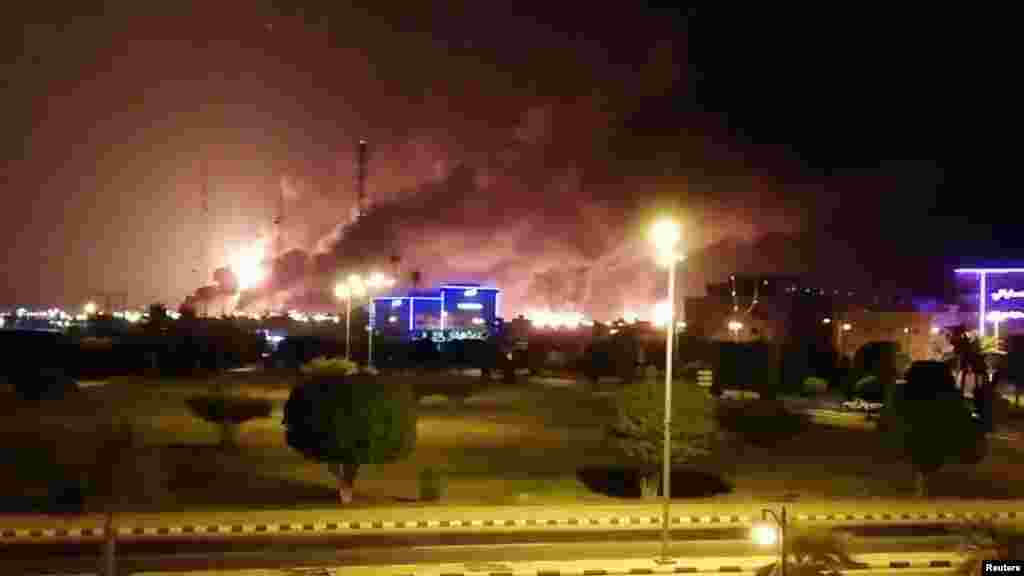
12/18Iran-backed Yemeni rebels took responsibility for destroying Saudi Arabia's Abqaiq oil-processing plant on September 20, 2019. Hours after the attacks, Soleimani posted a video praising the Huthis as part of Iran's “expanding” network of followers.
As leader of Iran's elite Quds Force, General Qasem Soleimani was instrumental in the spread of Iranian influence across the Middle East. He personally oversaw dozens of operations in the region and led Iran-backed militias in Iraq and Syria.
13/18Yemeni tribesmen loyal to Huthi rebels brandished their weapons in 2016. The Iran-backed rebels, who control the capital Sanaa, called for "swift reprisals" for the killing of Soleimani.
As leader of Iran's elite Quds Force, General Qasem Soleimani was instrumental in the spread of Iranian influence across the Middle East. He personally oversaw dozens of operations in the region and led Iran-backed militias in Iraq and Syria.
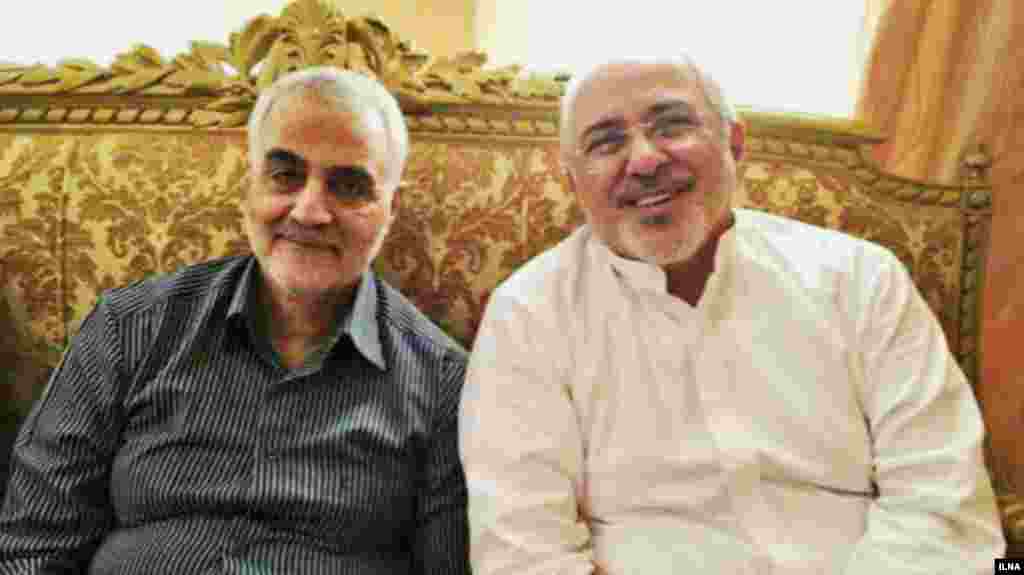
14/18Iranian Foreign Minister Mohammad Javad Zarif meeting with Soleimani in May 2017.
As leader of Iran's elite Quds Force, General Qasem Soleimani was instrumental in the spread of Iranian influence across the Middle East. He personally oversaw dozens of operations in the region and led Iran-backed militias in Iraq and Syria.
15/18"Soleimani has basically been running Iran's foreign policy in the region through alliances backed by force," said then-British Foreign Secretary Jack Straw.
As leader of Iran's elite Quds Force, General Qasem Soleimani was instrumental in the spread of Iranian influence across the Middle East. He personally oversaw dozens of operations in the region and led Iran-backed militias in Iraq and Syria.
16/18Iran's media has celebrated Soleimani as a national hero. Iranians carried his portrait in the streets of Tehran during a December 2017 protest against U.S. President Donald Trump's declaration of Jerusalem as Israel's capital.
As leader of Iran's elite Quds Force, General Qasem Soleimani was instrumental in the spread of Iranian influence across the Middle East. He personally oversaw dozens of operations in the region and led Iran-backed militias in Iraq and Syria.
17/18Members of an Iran-backed Shi'ite militia smash the bulletproof glass of the U.S. Embassy in Baghdad on December 31, 2019. The U.S. military said that Soleimani "approved the attack" and had organized several other attacks on U.S.-led coalition bases in Iraq over the past several months.
As leader of Iran's elite Quds Force, General Qasem Soleimani was instrumental in the spread of Iranian influence across the Middle East. He personally oversaw dozens of operations in the region and led Iran-backed militias in Iraq and Syria.
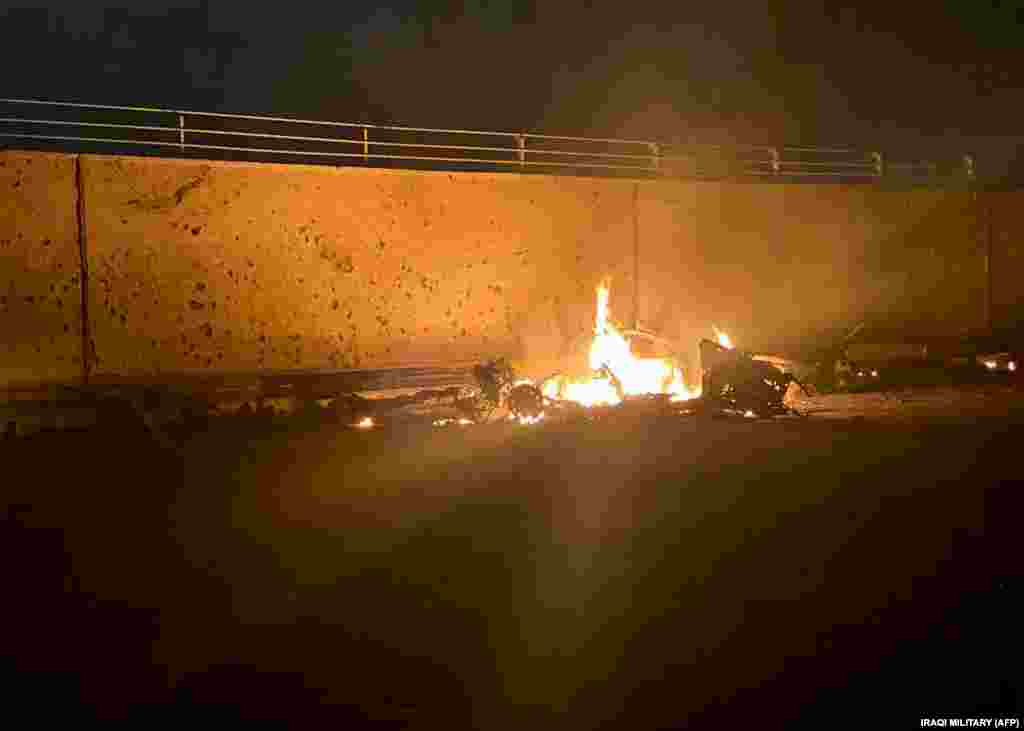
18/18Soleimani was killed in a U.S. air strike on two vehicles at Baghdad's international airport on January 3. The Iraqi military posted a photo on Facebook showing a vehicle in flames following the strike.
As leader of Iran's elite Quds Force, General Qasem Soleimani was instrumental in the spread of Iranian influence across the Middle East. He personally oversaw dozens of operations in the region and led Iran-backed militias in Iraq and Syria.
Previous slide
Next slide
Iranian Foreign Minister Mohammad Javad Zarif said the killing of Soleimani was a breach of international law and that any targeting of cultural sites would constitute a war crime.
"Those masquerading as diplomats and those who shamelessly sat to identify Iranian cultural & civilian targets should not even bother to open a law dictionary," Zarif wrote in a January 5 tweet. "Jus cogens refers to peremptory norms of international law, i.e. international red lines. That is, a big(ly) 'no no'."
Pompeo on January 5 defended the intelligence assessment that led to the air strike that killed Soleimani, saying not taking action would have posed a greater risk.
Pompeo on ABC television defended the U.S. strikes as lawful and said that any target the U.S. military may strike in Iran would be legal under the laws of armed conflict -- which prohibit the deliberate targeting of cultural sites under most circumstances.
"Every target that we strike will be a lawful target, and it will be a target designed with a singular mission -- defending and protecting America," he said.
Pompeo also said there was no doubt in his mind that Iran "gets clearly the message from the American leadership."
In remarks aired later in the day on Fox News, he said that "there is a real likelihood Iran will make a mistake and make a decision to go after some of our forces, military forces in Iraq or soldiers in northeast Syria."
Amid soaring tensions with Iran, the U.S.-led coalition battling the IS group in Iraq and Syria said on January 5 it had halted most of its operations against the militants for now to focus on protecting coalition forces and bases.
A spokesman said that the coalition could still carry out some operations and would act in self-defense against the militants.
As head of the Quds Force, the 62-year-old Soleimani helped orchestrate Tehran's overseas clandestine and military operations.
Both the force and the IRGC have been designated as terrorist organizations by the U.S. State Department.
Demonstrators took to the streets in many American cities to protest against the targeted killing by U.S. forces.
Many traditional U.S. allies have also expressed concerns that the military strike could ignite a wider conflict in the already tense Middle East, although some have defended the United States' right to defend itself.
Washington has blamed Iran for orchestrating attacks by Iraqi Shi’ite militias on U.S. and coalition sites, including an assault on the U.S. Embassy in Baghdad by a mob that included pro-Iran paramilitary groups on December 31. The attackers withdrew on January 1 and no staff was hurt.

RFE/RL journalists report the news in 24 languages in 18 countries where a free press is banned by the government or not fully established. We provide what many people cannot get locally: uncensored news, responsible discussion, and open debate.