


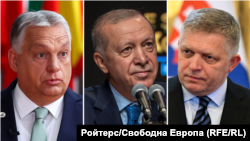
Turkish President Recep Tayyip Erdogan, Azerbaijan, and three Central Asian republics are, via Slovakia, pushing to get Russian-Uzbek oligarch Alisher Usmanov removed from the European Union’s sanctions list ahead of a 15 March rollover of the bloc’s extensive blacklist.
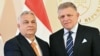
Slovakia, backed by Hungary, has for weeks lobbied to get Usmanov, as well as the Russian-Israeli oligarch Mikhail Fridman out from being under the EU sanctions, which consists of a visa ban and asset freezes on over 2,700 individuals and entities Brussels believes have played a role in undermining the territorial integrity of Ukraine.
The list has been extended unanimously by the 27 EU member states every March and September over the past four years.
In a new move, Slovak Prime Minister Robert Fico has circulated to other EU capitals a letter to him signed by Erdogan and dated March 2.
In the letter, seen by RFE/RL, the Turkish president notes that Ankara won’t circumvent EU and US sanctions imposed on the Kremlin since it launched its full-scale invasion of Ukraine in February 2022.
But he adds “third-country nationals subject to these sanctions may face certain difficulties in their relations with our country. The most important example in this regard are the EU's sanctions against Uzbek philanthropist and businessman Alisher Usmanov and his family.”
The letter states that “it is known that Mr. Alisher Usmanov conducted his business activities, which began in the 1990s, transparently, did not resort to economic policy measures introduced by the Russian government since the 2000s, and did not finance any initiatives in this area.
"Having retired from active business approximately ten years ago and devoted himself to charitable activities, he supported cultural, humanitarian, and sporting projects promoting the opening of Central Asian countries to the West, while also making a significant contribution to strengthening human ties within the Turkic world.”
'Particularly Close Ties' To Putin
The Turkish president also references a letter he sent together with the heads of the Organization of Turkic States, which include Turkey as well as Azerbaijan, Kazakhstan, the Kyrgyz Republic and Uzbekistan sent to the European Commission President Ursula von der Leyen and the then-president of the European Council, Charles Michel, on the issue some years ago.
He concludes his communication to Fico by saying that “considering Mr. Alisher Usmanov's sincere efforts to fully cooperate with EU institutions, as well as taking into account humanitarian considerations, I believe your support in removing him from the EU sanctions list and restoring his violated rights would be extremely valuable.”
When sanctioning Usmanov in 2022, the EU noted in its official legal act that “Usmanov has particularly close ties to Russian President Vladimir Putin, and considered to be one of the few who were entrusted with servicing financial flows.
The legal act also adds that Usmanov has “close ties” with Dmitry Medvedev, the deputy chairman of the Security Council and former president and prime minister “who benefitted from the personal use of luxurious residences controlled by Usmanov.”
Another reason for his blacklisting is his ownership of the Russian daily Kommersant, with Brussels pointing out that when he took control of the media organization “the freedom of the editorial staff was curtailed and the newspaper took a manifestly pro-Kremlin stance.”
Legal Avenues
Usmanov has tried to get off the EU blacklist via legal avenues, including the EU’s own court, which ruled in September last year that there were no legal reasons to delist him.
Analysts say the question now is which side will prevail: Hungary and Slovakia or the other 25 EU member states.
EU ambassadors will meet in Brussels on March 13 with the need to strike some sort of consensus before all sanctions expire on March 15.
EU officials from some of the 25 countries that RFE/RL has been in touch with are adamant that they don’t want to remove any oligarchs, with one also adding that Erdogan's letter hasn’t gone down well: “Should countries which don't even apply (Russia) sanctions and are helping with circumvention tell us who we should delete?”
Cyprus has tried to negotiate a deal, supported by the other 25 EU member states, to first have no so-called political delistings like Usmanov and Fridman and a rollover of 12 months and then another similar offer of just a six months roll over.
Slovakia has, however, rejected both and is backed by Hungary, claiming that getting Usmanov and Fridman off the list is “critical for them”.
Given the strict timelines, Cyprus may consider taking the same route as Poland when in March 2025 -- with Warsaw holding the presidency -- it opted to de-list oligarch Viatcheslav Moshe Kantor, Russian Sports Minister Mikhail Degtyaryov, and Usmanov’s sister, Gulbahor Ismailova, in order not to blow up the entire sanctions list.
The stand-off also comes amid Hungarian and Slovak anger that Russian oil isn't flowing via the Druzhba pipeline, with the two claiming that Ukraine is refusing to repair the Soviet-era energy infrastructure that crosses its territory before entering the EU.
As a result, both Bratislava and Budapest have blocked a 90 billion-euro ($105 billion) EU loan to Ukraine and the proposed 20th sanctions package on Russia proposed by the European Commission in January.
While EU officials familiar with the talks claim that Druzhba hasn’t featured in the negotiations about the sanctions renewal, they note that Hungary has indicated that they won’t “support any measure for the benefit of Ukraine until the Druzhba question is solved for them.”
Hungary has also separately asked the EU to lift other energy-related sanctions on Russia, citing the rising global energy prices due to the Iran war. These sectoral sanctions are however not up for renewal until July.