


Accessibility links

Breaking News

Western Tanks A 'Vital Part Of Recipe' As Ukraine Seeks To Drive Out Russian Forces

Updated
According to one analyst, Western tanks like the Leopard 2 are superior to Soviet-era tanks because they have better sight capabilities, enabling them to quickly find and target enemy armor, and better stabilization, allowing them to fire with accuracy while on the move.  (file photo)
According to one analyst, Western tanks like the Leopard 2 are superior to Soviet-era tanks because they have better sight capabilities, enabling them to quickly find and target enemy armor, and better stabilization, allowing them to fire with accuracy while on the move. (file photo)

WASHINGTON -- Leopard 2 and Abrams tanks pledged by the West will give Ukraine a substantial boost in its fight against invading Russian forces, but numbers are a key factor and time is of the essence as the war grinds on and both sides prepare for possible offensives in the coming months, experts said.

The promised deliveries are also an important sign of support from the United States and its European allies, but tanks are not the only weapons that Ukraine wants from the West as it struggles to fend off sustained attacks, regain territory, and ultimately drive Russian troops from the country.

After weeks of intense pressure from NATO allies and Kyiv, Germany has agreed to donate Leopard 2 advanced battle tanks to Ukraine. It has also given a green light to other NATO members, such as Poland, to to send the German-made tanks to Ukraine.

The German decision comes as the United States prepares to send 31 Abrams battle tanks to Ukraine, the equivalent of one battalion.

Berlin had reportedly sought to tie any donation of Leopard 2s to U.S. approval for the transfer of Abrams.

Ukraine is reportedly preparing for a spring offensive that will incorporate hundreds of tanks alongside other armored fighting vehicles, artillery, infantry, and aviation, an approach to warfare known as combined arms.

Tanks are "a vital part of the recipe," retired U.S. Army Major John Spencer, chair of Urban Warfare Studies at the Madison Policy Forum, a New York-based think tank focusing on security issues, told RFE/RL. "They need a tank that will overmatch that majority of Russian tanks."

Western tanks like the Leopard 2 and the Abrams are superior because they have better sight capabilities, enabling them to quickly find and target enemy armor, and better stabilization, allowing them to fire with accuracy while on the move, he said.

Experts say they are also safer than Russian models with tough blast doors separating the crew inside from the stored ammunition.

So far Germany, the United States, and the United Kingdom have agreed to transfer about 60 tanks, but more announcements are expected in the coming days and weeks. Earlier this month, the United Kingdom said it would send 14 Challenger 2 battle tanks to Ukraine.

'A Really Big Ask'

Valeriy Zaluzhniy, the commander-in-chief of Ukraine's armed forces, said in December that his country needs 300 tanks, 600-700 armored fighting vehicles, and 500 howitzers to push the Russians back, numbers that one former U.S. lieutenant general called "a really big ask."

Ukraine would need at least 100-150 Western tanks for them to have a real impact on the battlefield, Mark Cancian, a military analyst at the Center for Strategic and International Studies (CSIS), told RFE/RL.

"Scale is important," he said. While such a number of tanks is "not going to be a game changer, you'll notice that their armed forces are more effective."

Ukraine had about 850 tanks prior to the war and lost at least half of them, according to Oryx, a website that uses open-source tools to count destroyed equipment.

The actual loss is likely much higher. Ukraine does not disclose its tank count, saying it is a state secret.

NATO countries from Eastern Europe have donated hundreds of Soviet-made tanks to Ukraine during the first 11 months of the war, but their ability to supply such weapons is limited, making Western-made tanks the most obvious alternative.

Moreover, NATO has greater capacity to supply its own tanks with ammunition. NATO tanks use a 120-millimeter cannon that is readily produced in member states. The Soviet-era tanks use a 125-millimeter cannon and sourcing ammunition for this could become difficult, experts said.

The German-made Leopard 2, first produced in 1979, is the main battle tank used in Europe while the Abrams, which followed a year later, is the stalwart of the U.S. force.

Leopard 2 tanks could be deployed in a shorter time than the Abrams, which require a longer training period. Spencer said Ukraine could be ready to use the Leopard 2 within weeks.


The International Institute for Strategic Studies estimated that there are more than 2,000 Leopard 2 tanks in Europe, including Turkey, making it easy for nations to pool together their resources to reach a critical level of support.

However, many of the Leopard 2 tanks are older models that have been in storage for years and likely require maintenance and upgrades prior to their potential deployment.

Meanwhile, U.S. officials said it will take months before the 31 Abrams reach Ukraine. The Biden administration had dragged its feet on sending Abrams on the grounds that its gas turbines burn jet fuel and thus would be tougher to use, maintain, and supply compared with the Leopards.

Some experts have dismissed such concerns, saying Ukraine’s armed forces have shown their ability to adjust to new equipment.

The drawback of operating various Western tank models is that Ukraine will have to build out a supply chain for each one, complicating logistics.

Crucial For Urban Warfare

U.S. officials said the Western tanks will be a key component in the battles expected on the open terrain in eastern Ukraine in the coming weeks and months. Russia is also believed to be preparing for an offensive in the spring.

Spencer said that battle tanks are also crucial in urban warfare as seen in the fierce battles for Ukrainian towns.

"The Ukrainians need tanks in order to move forward and retake territories, especially urban territories. That is the fight," he said.

The tanks will operate alongside Western armored fighting vehicles.

The History Of The Abrams Tank
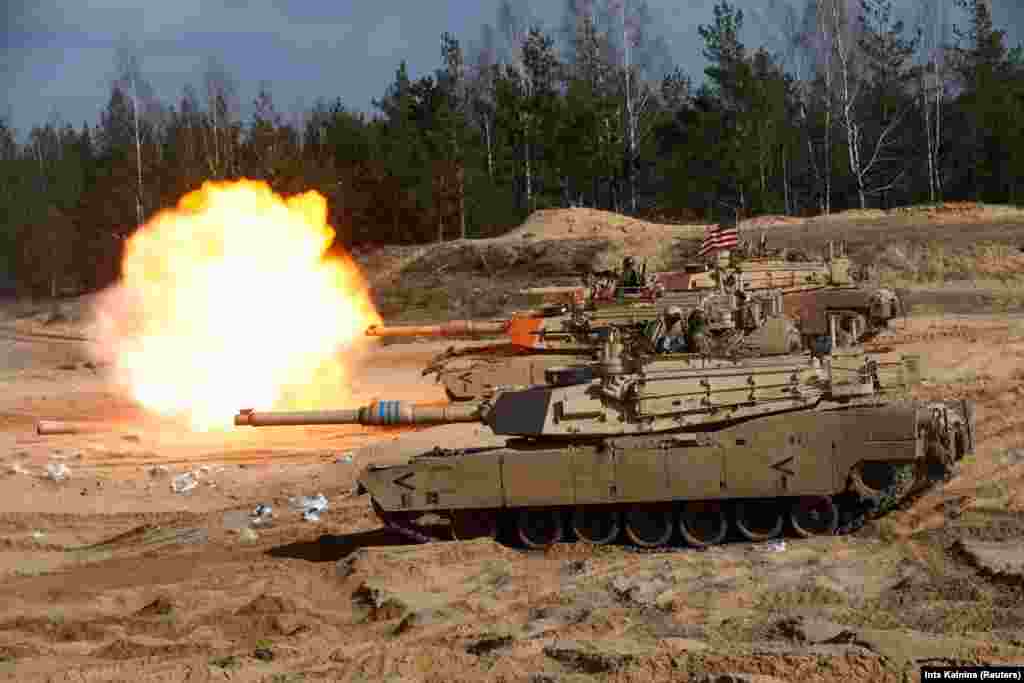
M1A1 Abrams tanks participate in a NATO exercise in Adazi, Latvia, on March 26, 2021. Moscow said providing the tanks to Ukraine would be a "blatant provocation."
1/10 M1A1 Abrams tanks participate in a NATO exercise in Adazi, Latvia, on March 26, 2021. Moscow said providing the tanks to Ukraine would be a "blatant provocation."
The Biden administration has announced it will send 31 M1 Abrams battle tanks to Ukraine in what Kyiv authorities are hailing as a possible game-changer in a war that is now 11 months old. RFE/RL takes a quick look at the Abrams's history and its specs.
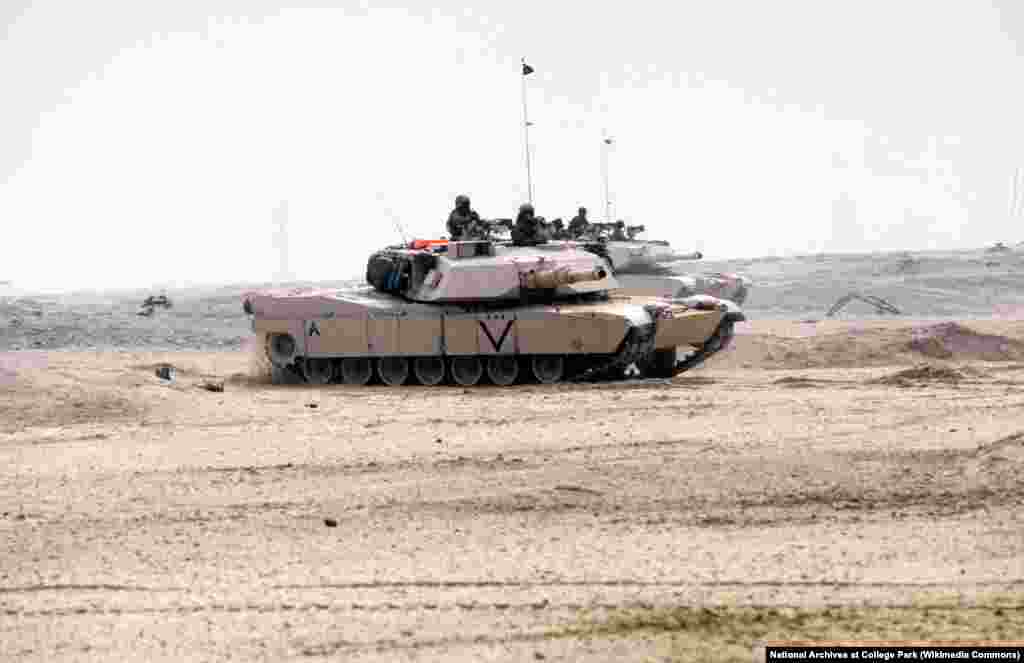
Two Marine Corps M-1A1 Abrams main battle tanks move across the desert during the ground phase of Operation Desert Storm on February 24, 1991.&nbsp;Though the M1 Abrams entered service in 1980, Desert Storm was its first time in combat.<br />
&nbsp;
2/10 Two Marine Corps M-1A1 Abrams main battle tanks move across the desert during the ground phase of Operation Desert Storm on February 24, 1991. Though the M1 Abrams entered service in 1980, Desert Storm was its first time in combat.
 
The Biden administration has announced it will send 31 M1 Abrams battle tanks to Ukraine in what Kyiv authorities are hailing as a possible game-changer in a war that is now 11 months old. RFE/RL takes a quick look at the Abrams's history and its specs.
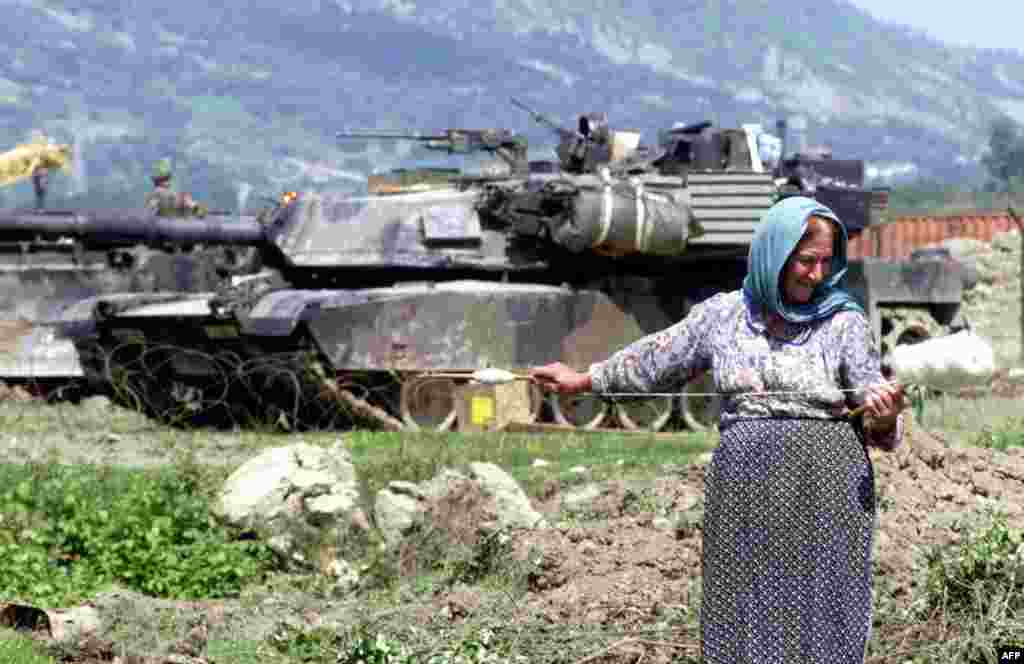
An Albanian woman spins wool in front of a U.S. M1 Abrams tank that was part of NATO&#39;s operation during the Kosovo conflict, outside the Rinas airbase on May 12, 1999.<br />
<br />
With a crew of four (commander, gunner, loader, and driver), the Abrams is one of the heaviest tanks in service at nearly 62 metric tons.<br />
&nbsp;
3/10 An Albanian woman spins wool in front of a U.S. M1 Abrams tank that was part of NATO's operation during the Kosovo conflict, outside the Rinas airbase on May 12, 1999.

With a crew of four (commander, gunner, loader, and driver), the Abrams is one of the heaviest tanks in service at nearly 62 metric tons.
 
The Biden administration has announced it will send 31 M1 Abrams battle tanks to Ukraine in what Kyiv authorities are hailing as a possible game-changer in a war that is now 11 months old. RFE/RL takes a quick look at the Abrams's history and its specs.
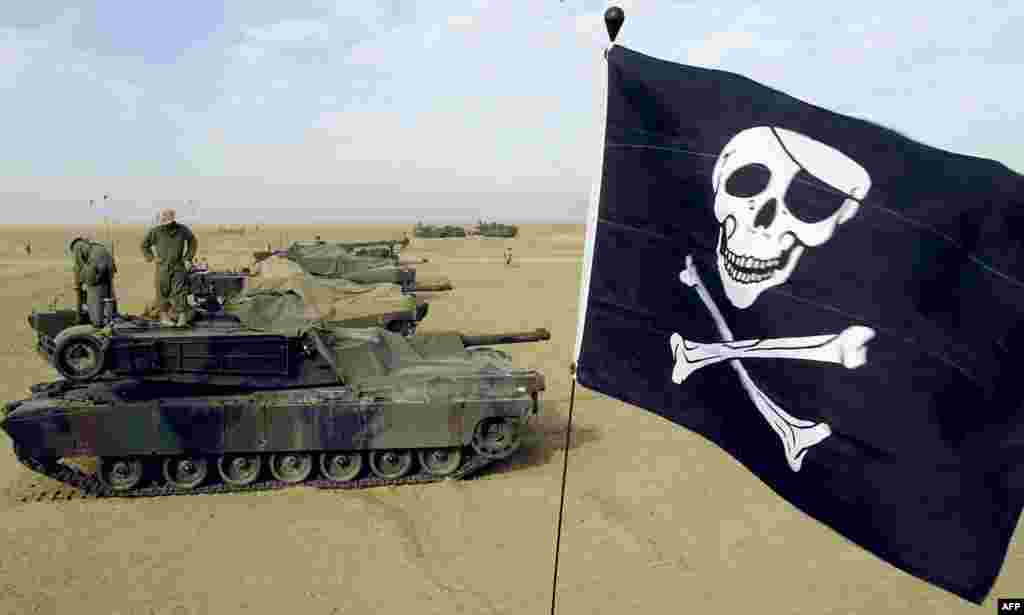
U.S. Marine Corps reservists fly their &quot;Jolly Roger&quot; on an M1A1 Abrams tank at U.S. Marine Corps Camp Grizzly in Kuwait on February 16, 2003.<br />
<br />
The Abrams has gone through various upgrades, resulting in the M1, M1A1, and M1A2 versions, with each having improvements in armament, protection, and electronics.<br />
<br />
&nbsp;
4/10 U.S. Marine Corps reservists fly their "Jolly Roger" on an M1A1 Abrams tank at U.S. Marine Corps Camp Grizzly in Kuwait on February 16, 2003.

The Abrams has gone through various upgrades, resulting in the M1, M1A1, and M1A2 versions, with each having improvements in armament, protection, and electronics.

 
The Biden administration has announced it will send 31 M1 Abrams battle tanks to Ukraine in what Kyiv authorities are hailing as a possible game-changer in a war that is now 11 months old. RFE/RL takes a quick look at the Abrams's history and its specs.
U.S. Marine Corps M1A1 Abrams tanks take up defensive positions during a firefight near the main traffic checkpoint in Fallujah, Iraq, on June 24, 2004.<br />
<br />
The export version of the Abrams is used by the armies of Australia, Egypt, Iraq, Kuwait, Poland, and Saudi Arabia.&nbsp;
5/10 U.S. Marine Corps M1A1 Abrams tanks take up defensive positions during a firefight near the main traffic checkpoint in Fallujah, Iraq, on June 24, 2004.

The export version of the Abrams is used by the armies of Australia, Egypt, Iraq, Kuwait, Poland, and Saudi Arabia. 
The Biden administration has announced it will send 31 M1 Abrams battle tanks to Ukraine in what Kyiv authorities are hailing as a possible game-changer in a war that is now 11 months old. RFE/RL takes a quick look at the Abrams's history and its specs.
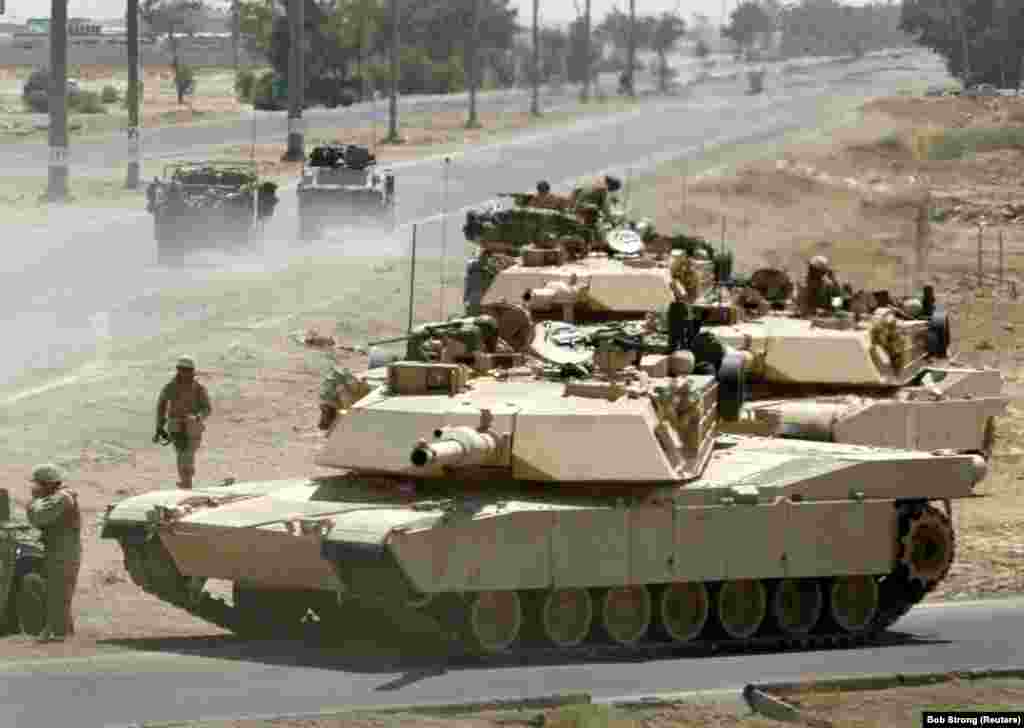
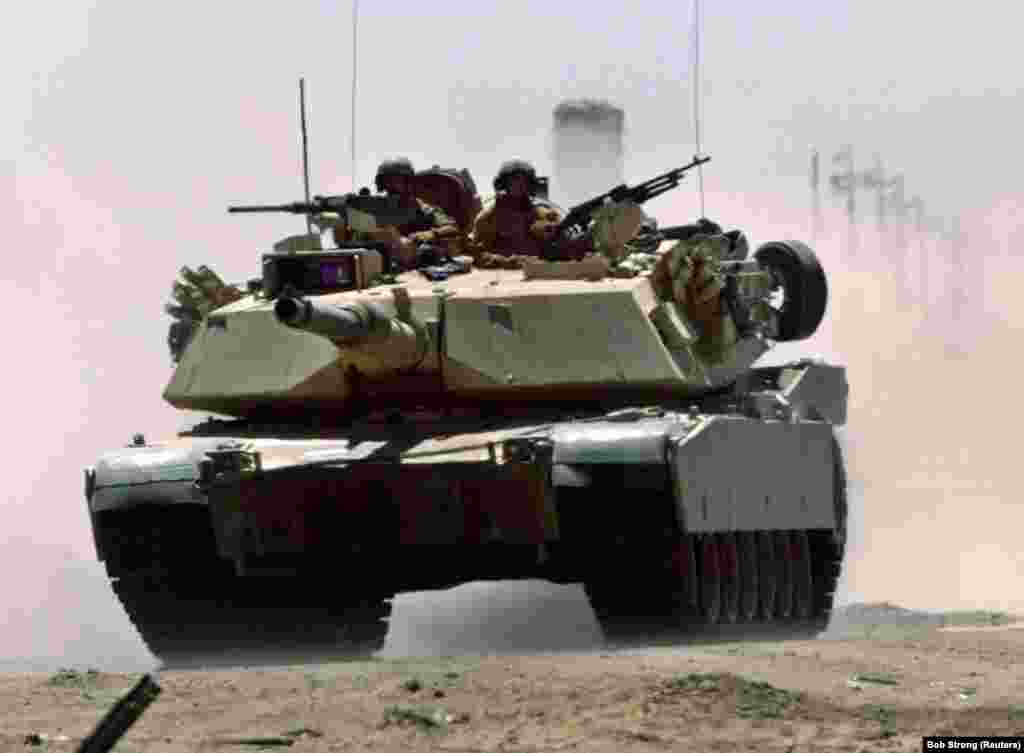
A U.S. Marine Corps M1A1 Abrams tank speeds down an Iraqi highway near a military traffic checkpoint in Fallujah on July 1, 2004.<br />
<br />
The U.S. Army is believed to have 2,509 Abrams in various versions, with an additional 3,700 in storage.
6/10 A U.S. Marine Corps M1A1 Abrams tank speeds down an Iraqi highway near a military traffic checkpoint in Fallujah on July 1, 2004.

The U.S. Army is believed to have 2,509 Abrams in various versions, with an additional 3,700 in storage.
The Biden administration has announced it will send 31 M1 Abrams battle tanks to Ukraine in what Kyiv authorities are hailing as a possible game-changer in a war that is now 11 months old. RFE/RL takes a quick look at the Abrams's history and its specs.
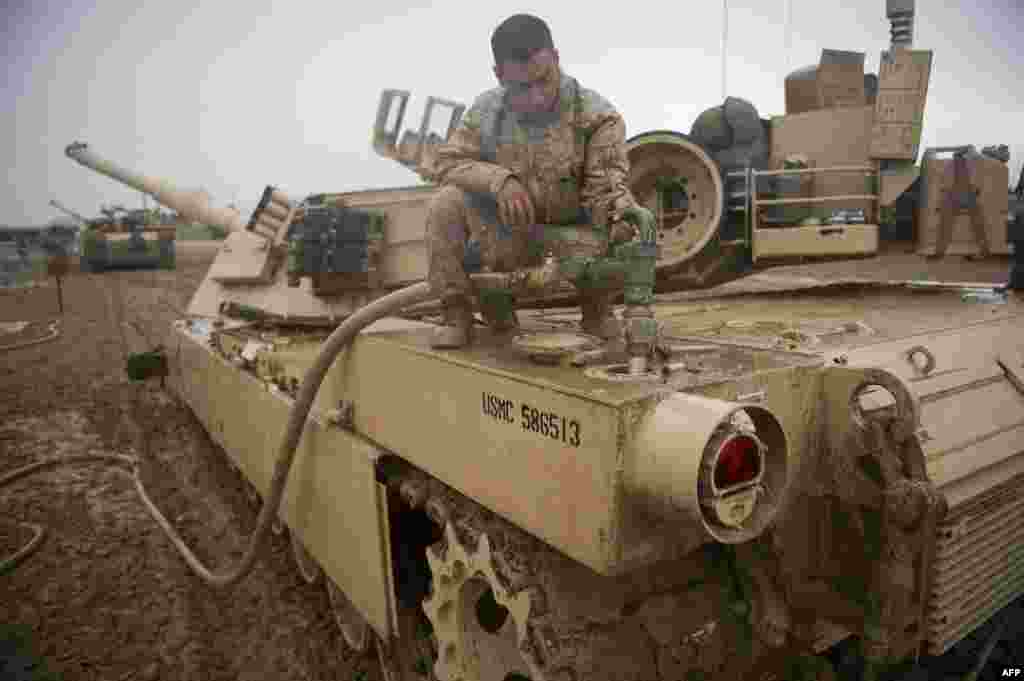
A U.S. Marine refuels his M1 Abrams tank at FOB Edinburgh in Helmand Province, Afghanistan on February 2, 2011.<br />
<br />
The current M1A2 Abrams can reach a top speed of 72 km/h (on paved roads) and 48 km/h&nbsp;off-road. The engine can use a variety of fuels, including jet fuel, gasoline, diesel, and marine diesel.<br />
<br />
<br />
<br />
<br />
<br />
<br />
<br />
&nbsp;
7/10 A U.S. Marine refuels his M1 Abrams tank at FOB Edinburgh in Helmand Province, Afghanistan on February 2, 2011.

The current M1A2 Abrams can reach a top speed of 72 km/h (on paved roads) and 48 km/h off-road. The engine can use a variety of fuels, including jet fuel, gasoline, diesel, and marine diesel.


The Biden administration has announced it will send 31 M1 Abrams battle tanks to Ukraine in what Kyiv authorities are hailing as a possible game-changer in a war that is now 11 months old. RFE/RL takes a quick look at the Abrams's history and its specs.
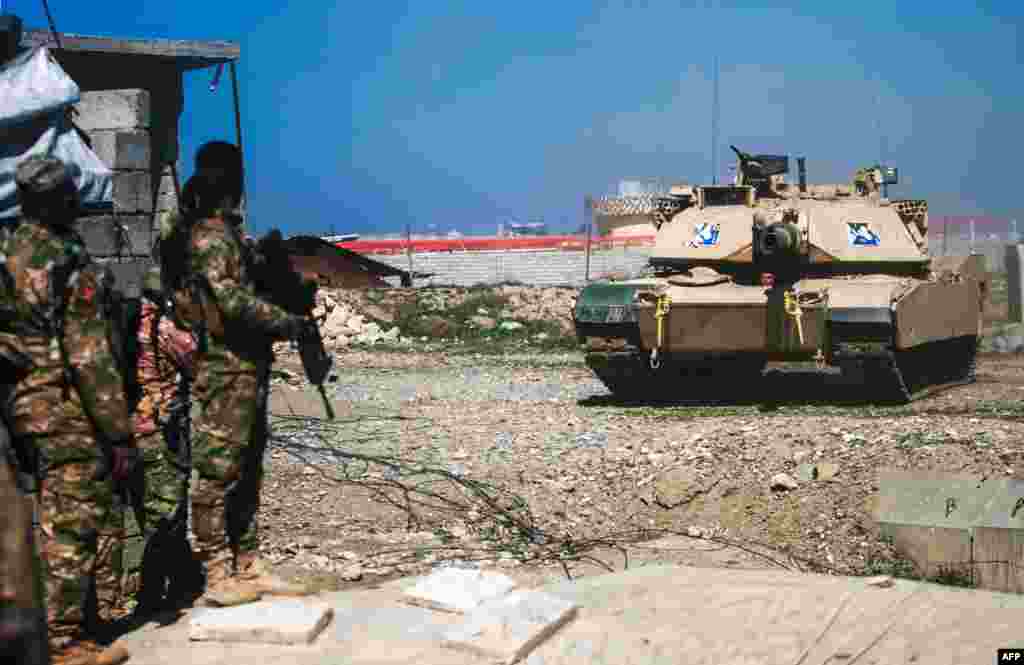
An Iraqi forces&#39; M1 Abrams tank advances toward Mosul, Iraq, during an offensive to retake the area from Islamic State (IS) militants on February 25, 2017.<br />
<br />
&nbsp;
8/10 An Iraqi forces' M1 Abrams tank advances toward Mosul, Iraq, during an offensive to retake the area from Islamic State (IS) militants on February 25, 2017.

 
The Biden administration has announced it will send 31 M1 Abrams battle tanks to Ukraine in what Kyiv authorities are hailing as a possible game-changer in a war that is now 11 months old. RFE/RL takes a quick look at the Abrams's history and its specs.
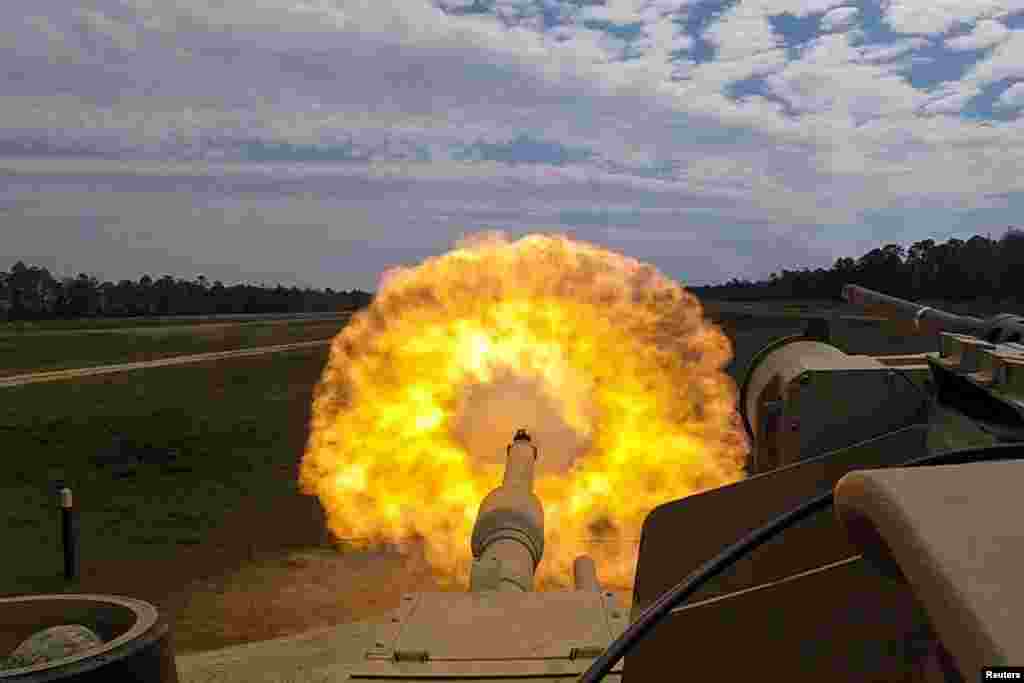
An M1A1 Abrams during target practice at Fort Stewart, Georgia, in the United States, on March 29, 2018.<br />
<br />
The tank commander controls a 120mm Rheinmetall M256A1 smoothbore main gun along with a Browning .50 cal. (12.7mm) M2HB antiaircraft heavy machine gun and two 7.62mm M240 machine guns.
9/10 An M1A1 Abrams during target practice at Fort Stewart, Georgia, in the United States, on March 29, 2018.

The tank commander controls a 120mm Rheinmetall M256A1 smoothbore main gun along with a Browning .50 cal. (12.7mm) M2HB antiaircraft heavy machine gun and two 7.62mm M240 machine guns.
The Biden administration has announced it will send 31 M1 Abrams battle tanks to Ukraine in what Kyiv authorities are hailing as a possible game-changer in a war that is now 11 months old. RFE/RL takes a quick look at the Abrams's history and its specs.
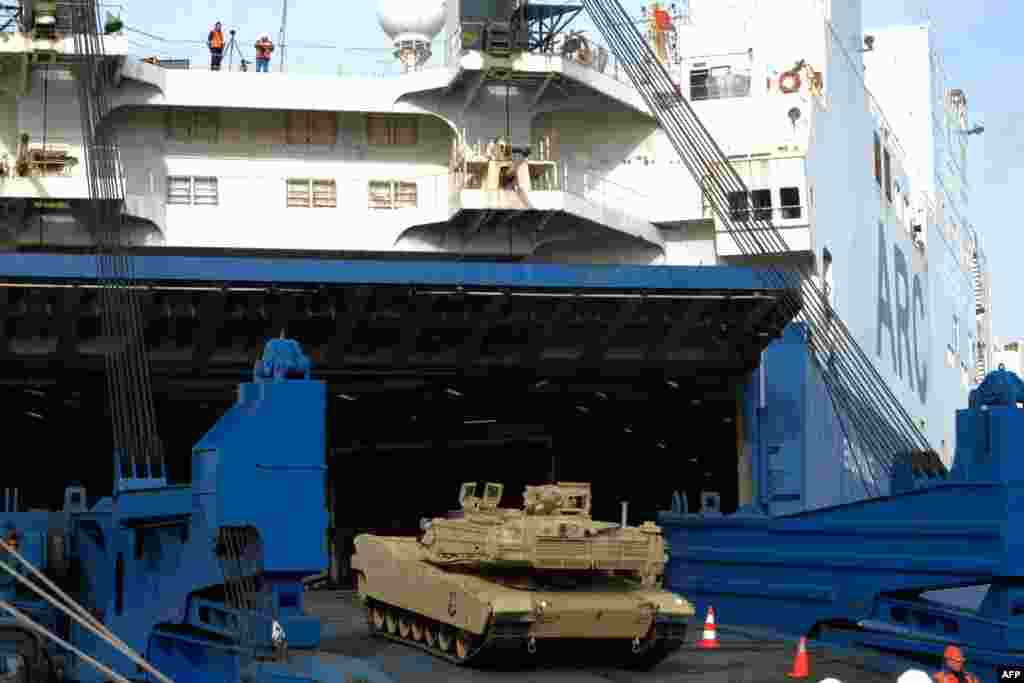
Military personnel unload M1 Abrams tanks at Bremerhaven, Germany, on February 21, 2020.<br />
<br />
Mark Hertling, a former commander of U.S. ground forces in Europe, estimated German-made Leopard 2 tanks could reach Ukraine&#39;s battlefields as soon as March while U.S. tanks, which need more logistical support, could be more than eight months away.<br />
&nbsp;
10/10 Military personnel unload M1 Abrams tanks at Bremerhaven, Germany, on February 21, 2020.

Mark Hertling, a former commander of U.S. ground forces in Europe, estimated German-made Leopard 2 tanks could reach Ukraine's battlefields as soon as March while U.S. tanks, which need more logistical support, could be more than eight months away.
 
The Biden administration has announced it will send 31 M1 Abrams battle tanks to Ukraine in what Kyiv authorities are hailing as a possible game-changer in a war that is now 11 months old. RFE/RL takes a quick look at the Abrams's history and its specs.
Previous slide
Next slide

The United States and its NATO allies earlier this month agreed to send hundreds of armored fighting vehicles, sometimes called "light tanks," to Ukraine.

Fighting vehicles are mainly used to transport troops around the battlefield but some are capable of destroying tanks.

While the decisions on the delivery of tanks are a major breakthrough and a big demonstration of unity in support of Kyiv, tanks are not the last weapon system Ukraine wants from the West.

Kyiv is still seeking Western jet fighters and long-range missiles. The United States has refused to send Ukraine ATACMS, precision missiles with a range of up to 300 kilometers, over concerns it could be escalatory.

John Herbst, the U.S. ambassador to Ukraine from 2003 to 2006, said long-range missiles are even more important than the Western tanks because of their ability to destroy Russian supply chains.

"As soon as Ukraine receives long-range missiles, Russian supply depots are toast," said Herbst. "Russia will have to set up new ones further from the front. If the Russians don’t have equipment, they are not going to send troops into battle."

Cancian of the CSIS said "the most important" thing for Ukraine is that military aid continues at a high level from the United States and its NATO allies.

"Looking long term that's much more important than any particular item in the aid package," he said. Ukraine "cannot survive or win if the amount of aid goes down substantially or dries up."

RFE/RL’s Ukrainian Service contributed to this report
  • 16x9 Image

    Todd Prince

    Todd Prince is a senior correspondent for RFE/RL based in Washington, D.C. He lived in Russia from 1999 to 2016, working as a reporter for Bloomberg News and an investment adviser for Merrill Lynch. He has traveled extensively around Russia, Ukraine, and Central Asia.

This item is part of
XS
SM
MD
LG