Ukrainian soldiers are seen inside a trench outside the frontline town of Bakhmut on March 4.
Residents were reportedly fleeing on foot from the devastated eastern Ukrainian city of Bakhmut as Russian forces shelled the area and the last remaining escape routes, with Kyiv saying the situation was “critical” for Ukrainian defenders even as they continued to repel multiple attacks in the region.
Ukrainian troops told AP on March 4 that a woman was killed and two men were severely injured by Russian shelling as they were attempting to cross a makeshift bridge out of Bakhmut a day after the head of Russia’s Wagner mercenary group said the city was nearly surrounded.
AP quoted an unnamed Ukrainian Army representative as saying it was now too dangerous for civilians to depart Bakhmut by vehicle because of Russian shelling and that most were forced to flee on foot.
Western military experts said the situation in Bakhmut remains critical and the Ukrainian defenders are coming under "increasingly severe pressure" in and around the city, which had a prewar population of about 70,000.
In the eastern region of Donetsk, the General Staff of the Armed Forces of Ukraine said in its daily bulletin that the Ukrainian military had repelled more than 150 attacks by Russian troops over the past day in the areas of Bakhmut, Lyman, Avdiyivka, and Shakhtarsk.
"The enemy is ceaselessly attempting to encircle Bakhmut," the General Staff said, adding that numerous attacks aimed at surrounding Bakhmut were repelled by Ukrainian fighters in the adjacent areas of Vasyukivka, Dubovo-Vasylivka, and Ivanivske.
Battlefield reports from either side could not immediately be verified.
Ukrainian officials have suggested that their troops might have to pull out of Bakhmut entirely once the defense of the city becomes too costly and withdraw to new positions in the west and northwest, where Ukrainians are reported to have far stronger defensive positions.
Despite the situation described by a Ukrainian commander as "critical," Kyiv's defenders were reportedly digging in at defensive sites and were not yet ready to give up the town.
"All units involved in the defense of Bakhmut clearly perform their tasks. Our soldiers are constantly working in extremely harsh conditions and doing everything to ensure that the number of enemy forces is reduced every day," General Viktor Khorenko, the commander of the Special Operations Forces, wrote on Facebook.
On March 3, Yevgeny Prigozhin, a Kremlin-linked businessman and founder of Russia’s notorious Wagner mercenary group, claimed in a video that Bakhmut -- which Moscow has been unsuccessfully trying to conquer for the past seven months -- is nearly surrounded, with only one final escape route remaining open.
The British Defense Ministry said in its daily intelligence bulletin that the Ukrainian defense of Bakhmut is "under increasingly severe pressure, with intense fighting taking place in and around the city."
British intelligence said in its report that regular Russian forces and Wagner mercenaries had made further advances into the northern suburbs of the city, which is now vulnerable to Russian attacks on three sides.
"Ukraine is reinforcing the area with elite units, and within the last 36 hours two key bridges in Bakhmut have been destroyed, including a vital bridge connecting the city to the last main supply route from Bakhmut to the city of Chasiv Yar," the report said.
Ukraine's Four-Pawed War Heroes
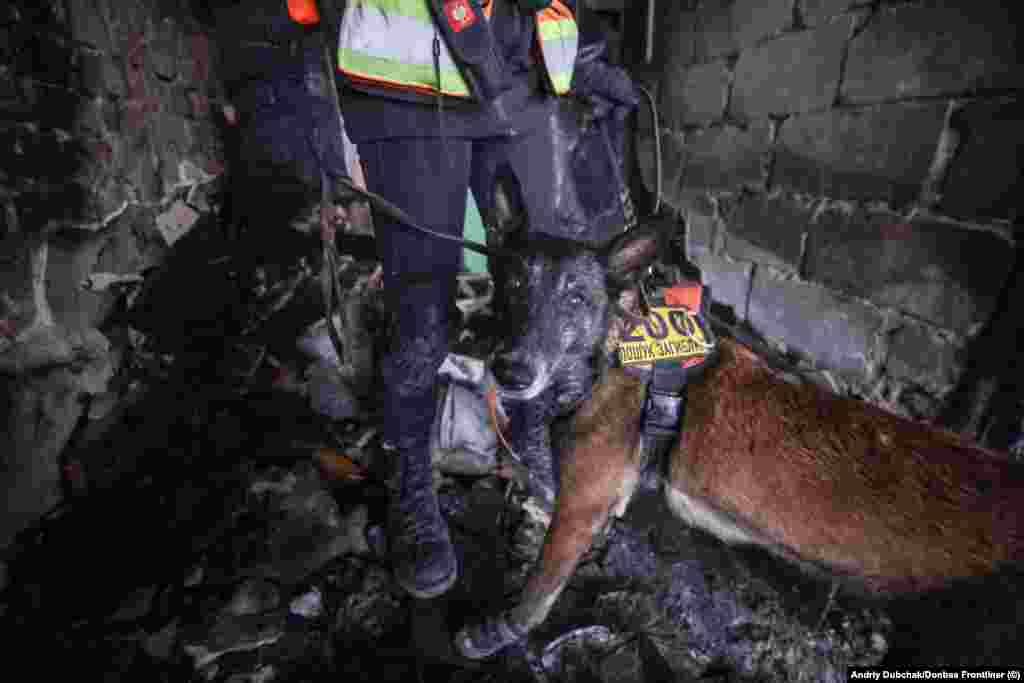
1/13These dogs and their two handlers belong to Antares, a canine search-and-rescue volunteer group based in Pavlohrad, near Dnipro in eastern Ukraine.
A team of volunteers and their highly trained dogs have become a vital part of Ukraine's war effort, searching for the living and retrieving the dead from buildings destroyed by Russian strikes.
Show moreShow less
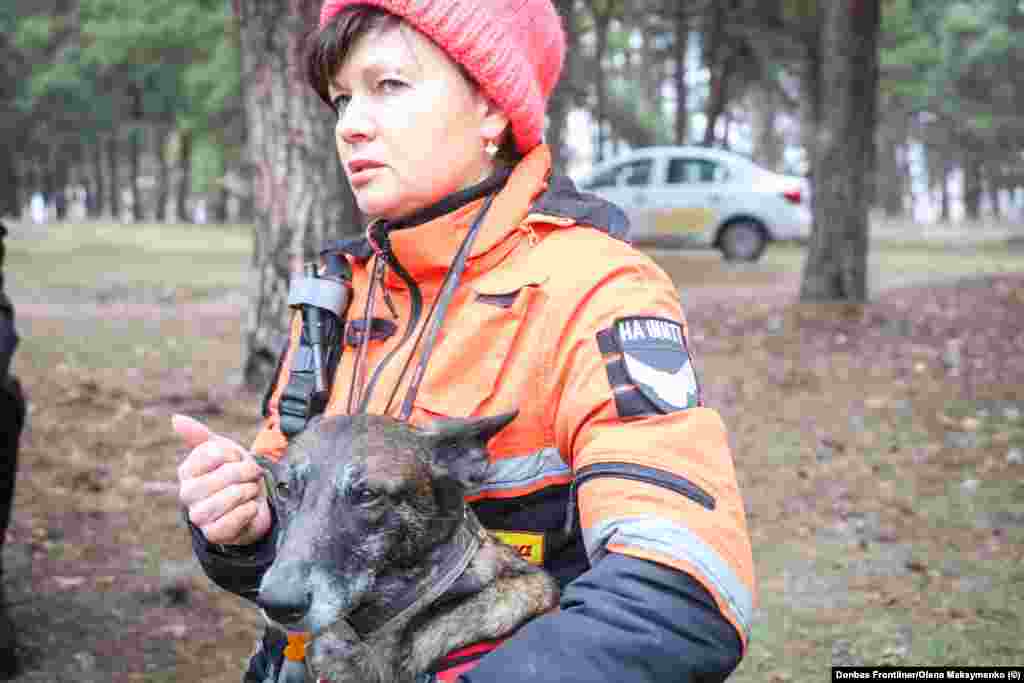
2/13The mostly female team was founded by Larisa Borysenko (pictured) in 2008, long before the current conflict between Russia and Ukraine began. Antares started as a volunteer group, largely for locating missing people in the Ukrainian wilderness.
A team of volunteers and their highly trained dogs have become a vital part of Ukraine's war effort, searching for the living and retrieving the dead from buildings destroyed by Russian strikes.
Show moreShow less
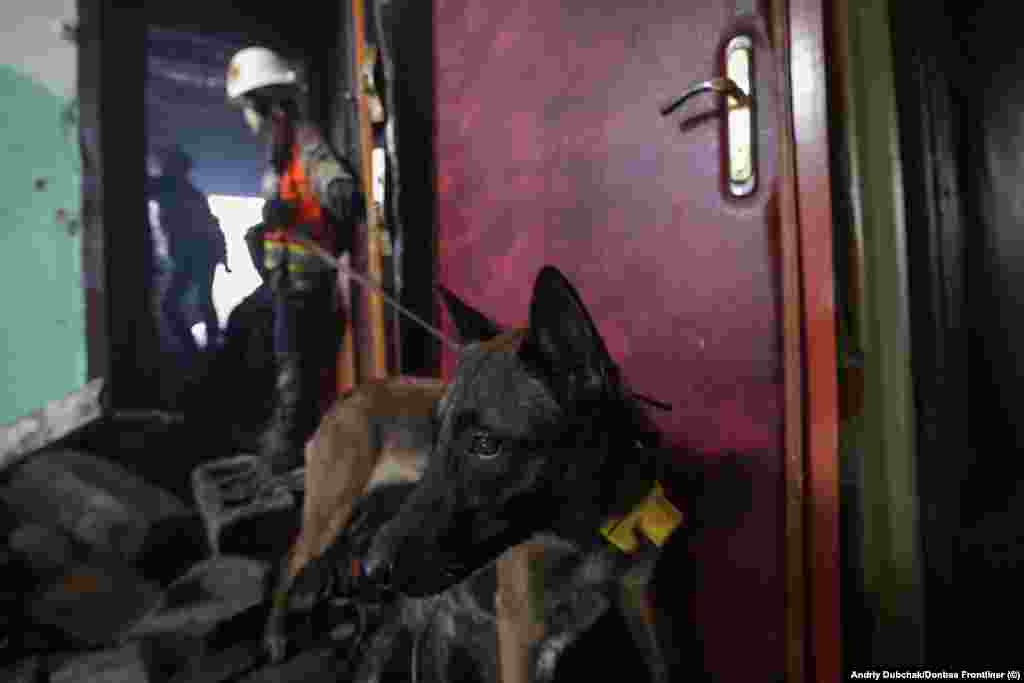
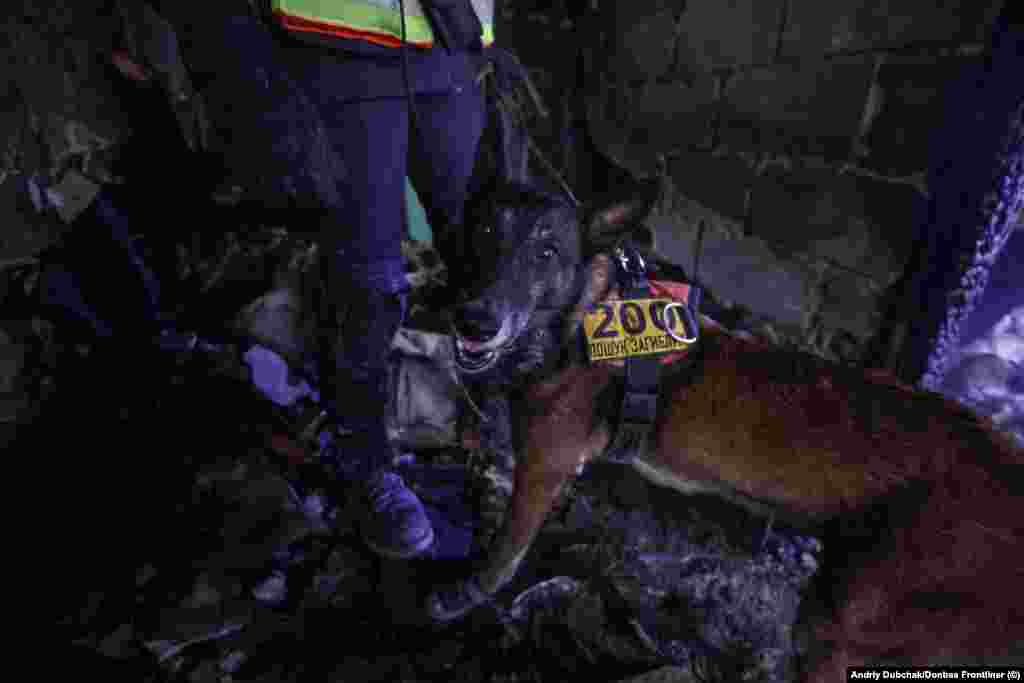
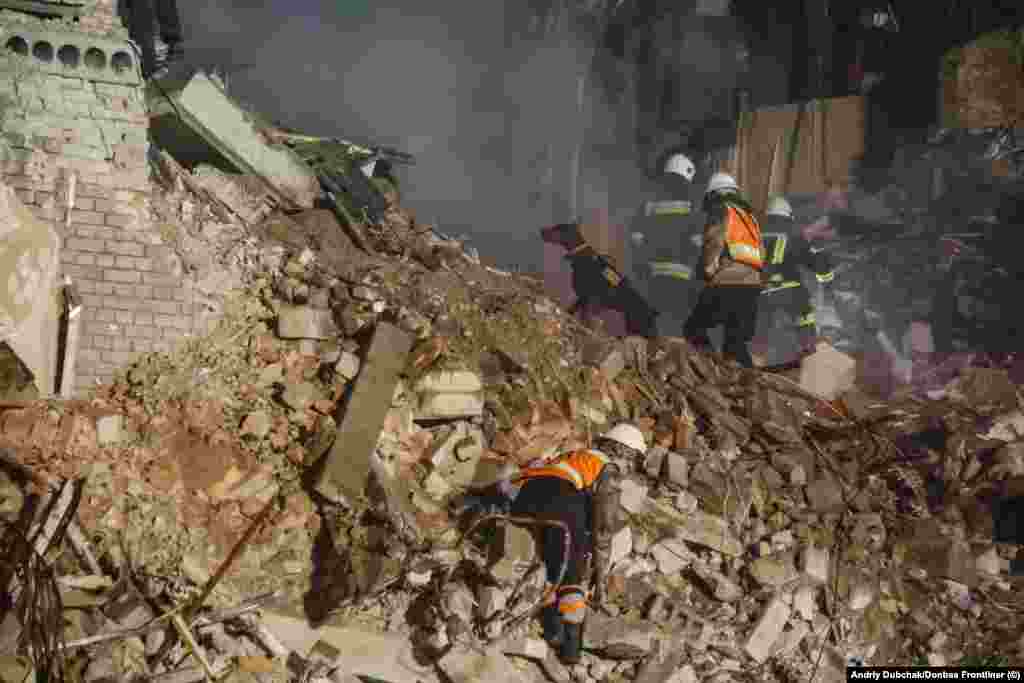
3/13Antares search dogs hunt through rubble for survivors or the bodies of those killed after a Russian missile strike in Zaporizhzhya in October 2022.
When Kremlin-backed forces began a war in eastern Ukraine in 2014 that eventually escalated into Russia's full-scale 2022 invasion, the Antares team became focused largely on searching through the rubble of buildings hit by missiles and rocket artillery.
A team of volunteers and their highly trained dogs have become a vital part of Ukraine's war effort, searching for the living and retrieving the dead from buildings destroyed by Russian strikes.
Show moreShow less
4/13"It's a game for them," Borysenko said of the urgent and grim task of hunting for survivors or bodies amid the rubble, "These dogs don't lose heart when they find dead bodies, no matter how strange it may sound, that's also a game for them."
A team of volunteers and their highly trained dogs have become a vital part of Ukraine's war effort, searching for the living and retrieving the dead from buildings destroyed by Russian strikes.
Show moreShow less
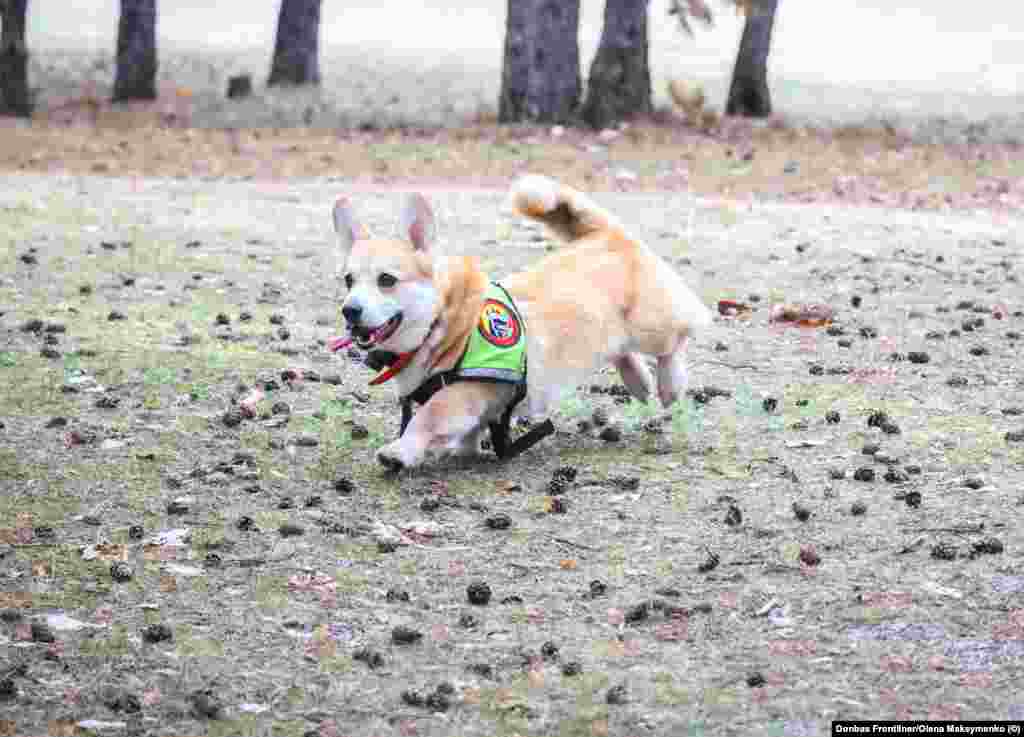
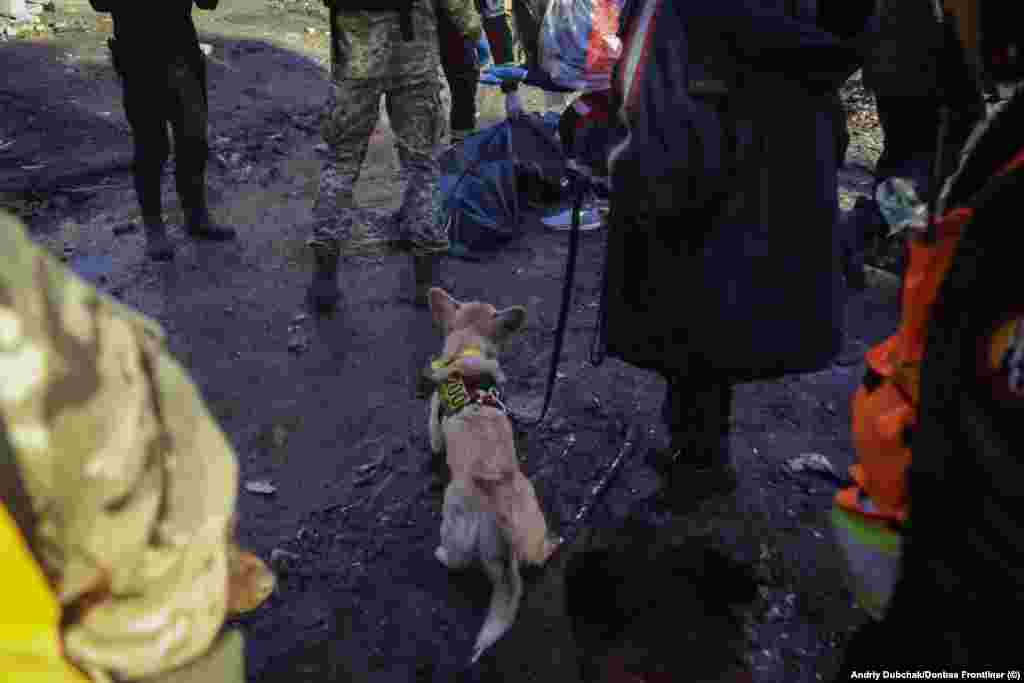
5/13Elton, the only certified search-and-rescue corgi dog in Ukraine, after the location of a body.
Antares has 14 dogs and around 30 people in its organization. The group was named after the first dog from post-Soviet Ukraine to represent the country at the world championships for search-and-rescue dogs.
A team of volunteers and their highly trained dogs have become a vital part of Ukraine's war effort, searching for the living and retrieving the dead from buildings destroyed by Russian strikes.
Show moreShow less
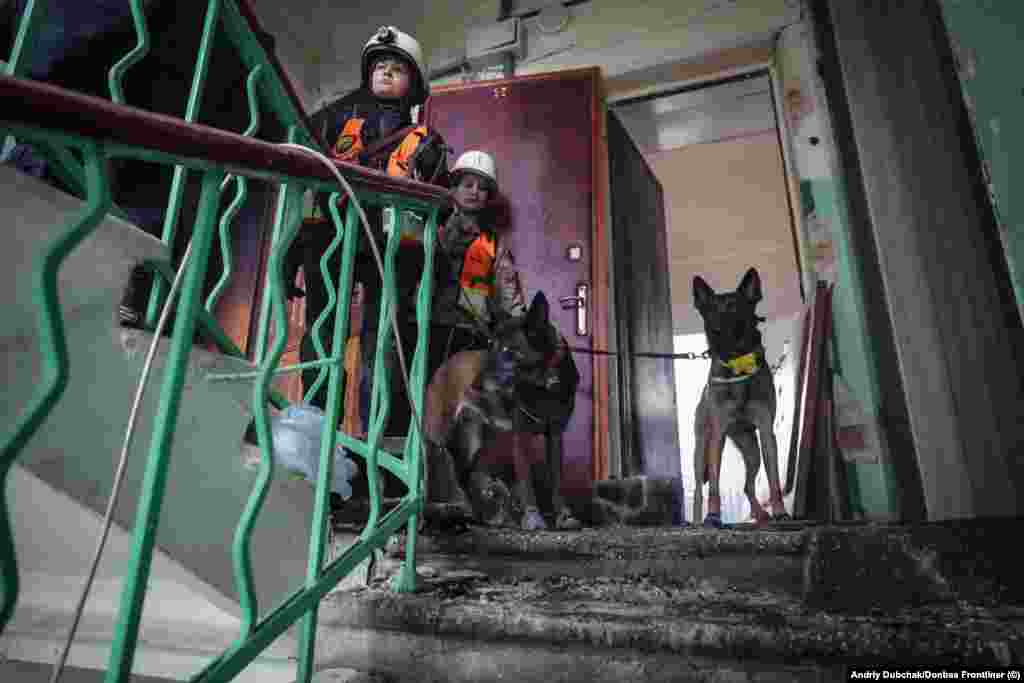
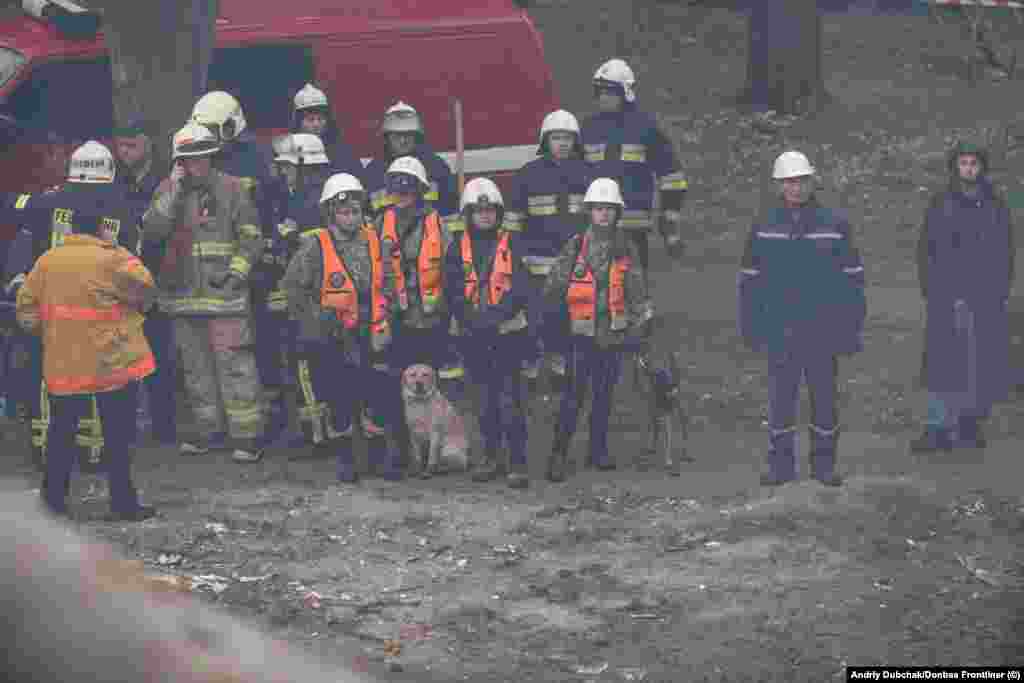
6/13Members of the Antares team gather at the site of a strike.
Borysenko says one of the toughest parts of the work comes after the dogs have thoroughly scoured the site of a strike for survivors. "It's a scary moment when I say, 'There’s no one left alive in this rubble,'" she said. "That means the heavy equipment gets sent in. It’s a big responsibility...what if there is a survivor in there? That person will never return home."
A team of volunteers and their highly trained dogs have become a vital part of Ukraine's war effort, searching for the living and retrieving the dead from buildings destroyed by Russian strikes.
Show moreShow less
7/13A member of the Antares team with its handler
Some of the dogs trained by the Ukrainian volunteers are specialists at finding bodies, others are "all-rounders" who can sniff out both survivors and victims.
A team of volunteers and their highly trained dogs have become a vital part of Ukraine's war effort, searching for the living and retrieving the dead from buildings destroyed by Russian strikes.
Show moreShow less
8/13Survivors are announced with a happy bark from the dogs. In contrast, according to Borysenko (pictured), "When bodies are found, some dogs also bark, but it's with a very different tone. Other dogs are silent, they lie down. It looks terrible, they shake and point to where the body is," she said.
A team of volunteers and their highly trained dogs have become a vital part of Ukraine's war effort, searching for the living and retrieving the dead from buildings destroyed by Russian strikes.
Show moreShow less
9/13In a February 2023 interview, Borysenko said that since Russia’s full-scale invasion of Ukraine was launched the team has not found anyone alive in the rubble of buildings.
A team of volunteers and their highly trained dogs have become a vital part of Ukraine's war effort, searching for the living and retrieving the dead from buildings destroyed by Russian strikes.
Show moreShow less
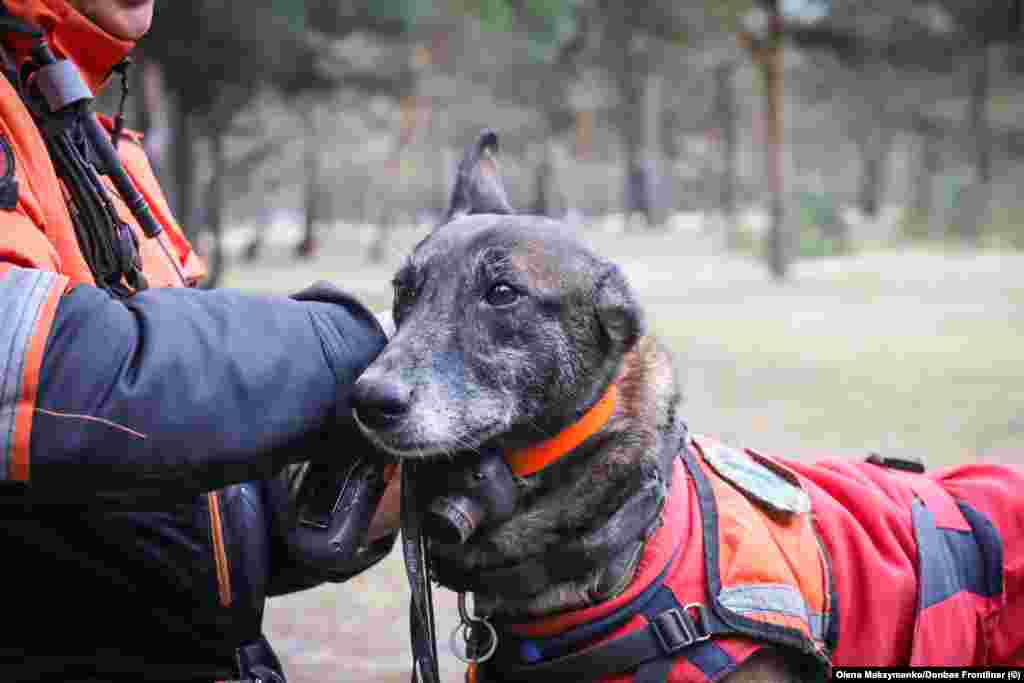
10/13The Antares dogs are equipped with harnesses that allow them to be lowered into spaces with a rope, and special shoes to protect their feet while picking through rubble. The dogs also wear beepers that indicate both where the dogs are, and whether the dogs are moving or stationary, depending on how rapidly the beepers sound.
A team of volunteers and their highly trained dogs have become a vital part of Ukraine's war effort, searching for the living and retrieving the dead from buildings destroyed by Russian strikes.
Show moreShow less
11/13Maria Romanova, pictured here with her corgi Elton, is the youngest member of the Antares team at 17. Her brother serves as a Ukrainian soldier.
"Until recently, we did not take young people on difficult missions," Borysenko said, "but the rush [of the Russian invasion] left us no choice, and if a 17-year-old girl can do something that millions of adults can't, then she is needed now."
A team of volunteers and their highly trained dogs have become a vital part of Ukraine's war effort, searching for the living and retrieving the dead from buildings destroyed by Russian strikes.
Show moreShow less
12/13Elton the corgi during a training run
Due to their stumpy stature corgis are almost never used for search and rescue, but Romanova says Elton, who is highly trained, worked for 22 hours nearly without a break after a recent missile strike in Dnipro. "It was difficult, because the rubble is quite slippery, the dogs had to balance on the slabs of concrete while wearing shoes," she recalled. "There was a lot of smoke, it made things difficult. But we worked well -- we found people, but unfortunately only those who had passed away."
A team of volunteers and their highly trained dogs have become a vital part of Ukraine's war effort, searching for the living and retrieving the dead from buildings destroyed by Russian strikes.
Show moreShow less
13/13Borysenko admits feeling guilty for the amount of work her dogs are sometimes put through. After one long search mission, she says one of her dogs jumped straight onto the sofa when they returned home, "Then she got up to walk into the kitchen for a drink of water. Soon we started wondering 'where is the dog?' She had fallen asleep next to the water bowl!"
The volunteer, who has worked with dogs since she was a child, said: "I feel so sorry for them. But we have high requirements, both for ourselves and for the dogs."
A team of volunteers and their highly trained dogs have become a vital part of Ukraine's war effort, searching for the living and retrieving the dead from buildings destroyed by Russian strikes.
Show moreShow less
Previous slide
Next slide
Western experts have questioned the Russian push for Bakhmut, saying it has less strategic and more symbolic value for the Kremlin.
In the northeast Kharkiv region, Ukrainian authorities, meanwhile, ordered a partial evacuation of the liberated city of Kupyansk because of constant and intensive Russian shelling.
The Russian Defense Ministry on March 4 said Defense Minister Sergei Shoigu visited near the front lines, stopping at a command post of Russian troops in eastern Ukraine. The ministry did not disclose Shoigu’s specific location.
Amid consistent battlefield setbacks over the past several months, Shoigu has come under increasing pressure from pro-war advocates inside Russia for the military’s performance, including from Wagner chief Prigozhin.
RFE/RL's Ukrainian Service has seen its audience grow significantly since Russia's full-scale invasion in February 2022 and is among the most cited media outlets in the country. Its bold, in-depth reporting from the front lines has won many accolades and awards. Its comprehensive coverage also includes award-winning reporting by the Donbas.Realities and Crimea.Realities projects and the Schemes investigative unit.







![Maria Romanova, pictured here with her corgi Elton, is the youngest member of the Antares team at 17. Her brother serves as a Ukrainian soldier. <br />
<br />
"Until recently, we did not take young people on difficult missions," Borysenko said, "but the rush [of the Russian invasion] left us no choice, and if a 17-year-old girl can do something that millions of adults can't, then she is needed now." <br />
<br />
<br />
<br />
](https://gdb.rferl.org/01000000-0aff-0242-f836-08db1b2433c9_w1024_q10_s.jpg)